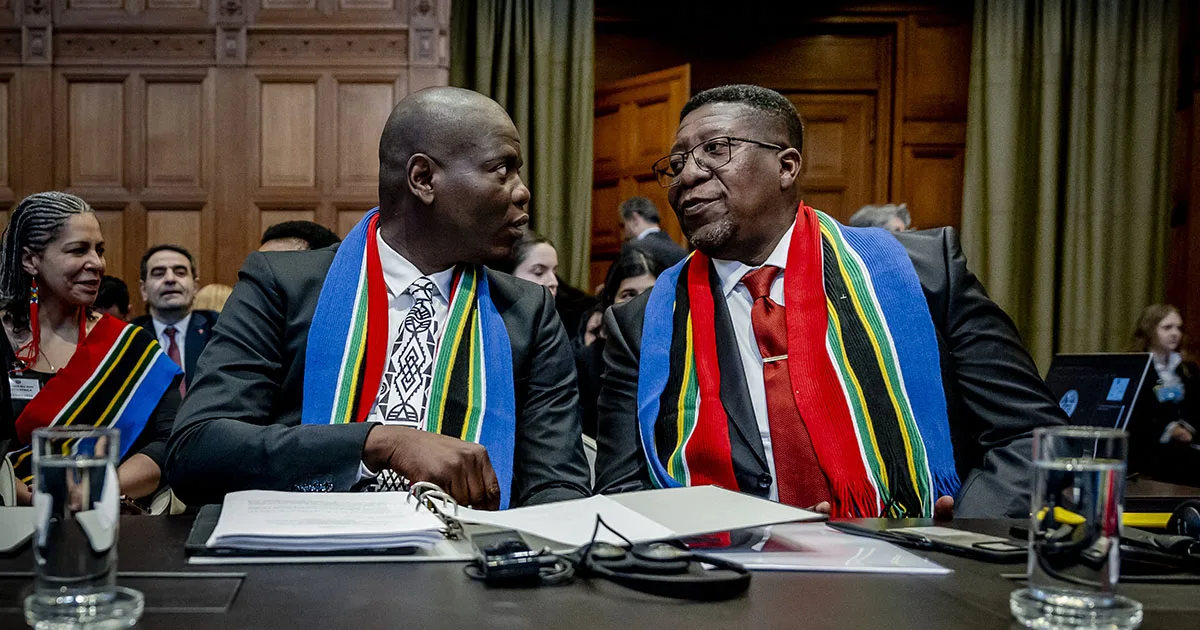
South Africa’s willingness to file a case with the International Court of Justice is a sign that the old tactics used to police discourse about genocide have lost much of their power.
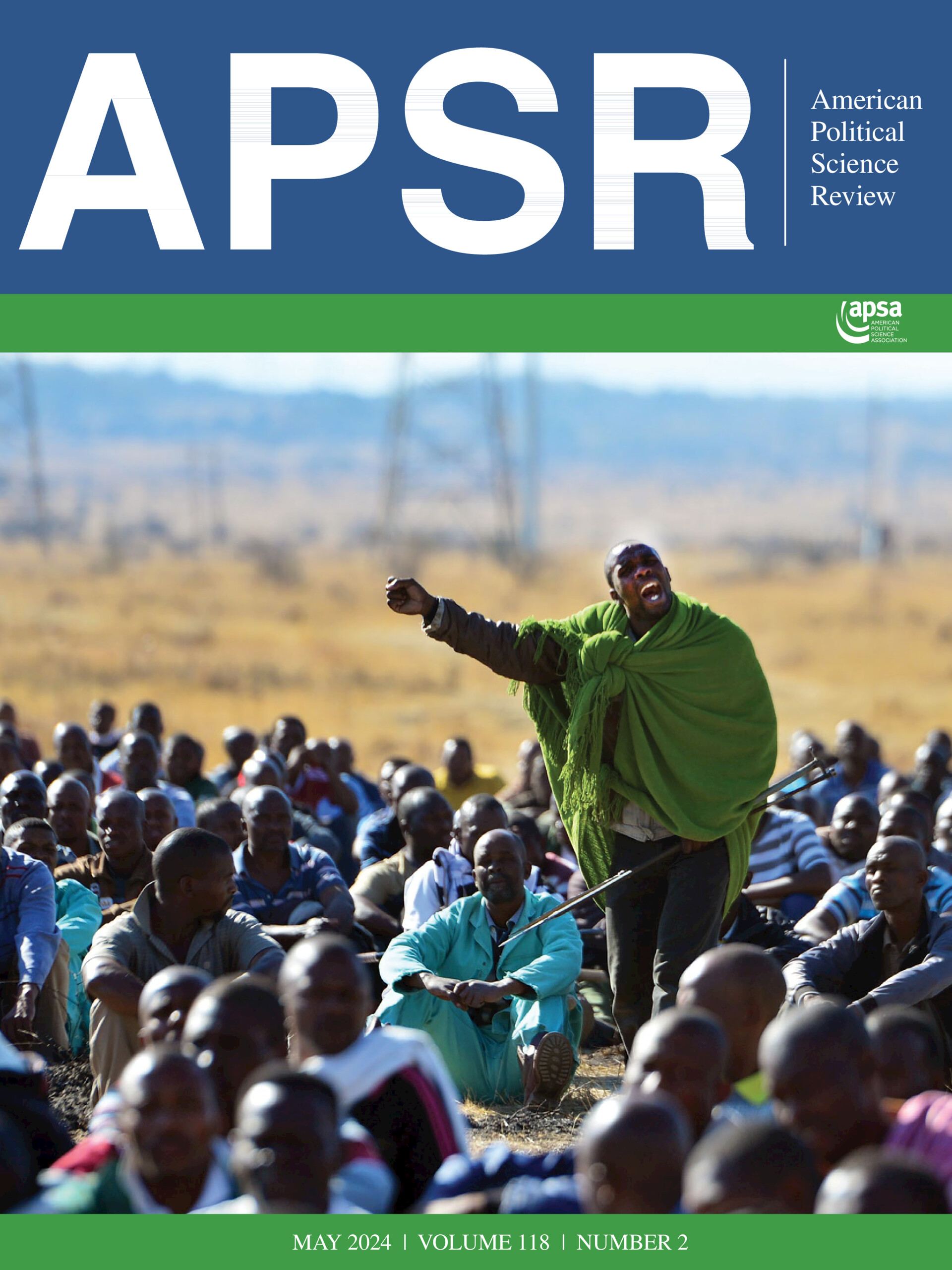
Deference, Dissent, and Dispute Resolution: An Experimental Intervention Using Mass Media to Change Norms and Behavior in Rwanda
Deference and dissent strike a delicate balance in any polity. Insufficient deference to authority may incapacitate government, whereas too much may allow leaders to orchestrate mass violence. Although cross-national and cross-temporal variation in deference to authority and willingness to express dissent has long been studied in political science, rarely have scholars studied programs designed to change these aspects of political culture. This study, situated in post-genocide Rwanda, reports a qualitative and quantitative assessment of one such attempt, a radio program aimed at discouraging blind obedience and reliance on direction from authorities and promoting independent thought and collective action in problem solving. Over the course of one year, this radio program or a comparable program dealing with HIV was randomly presented to pairs of communities, including communities of genocide survivors, Twa people, and imprisoned génocidaires. Changes in individual attitudes, perceived community norms, and deliberative behaviors were assessed using closed-ended interviews, focus group discussions, role-play exercises, and unobtrusive measures of collective decision making. Although the radio program had little effect on many kinds of beliefs and attitudes, it had a substantial impact on listeners' willingness to express dissent and the ways they resolved communal problems.
npj on Twitter / X
> The genocide hasn’t jolted the West into either awareness or guilt; there is only the instinct for self-preservation. It’s similar to what Karl Kraus observed about the First World War: “What is revealing is not the occurrence itself, but the numbing that supports and allows… https://t.co/Q0i4dex0Fh— npj (@TiltingatM3) April 30, 2026
How Radio Affects Violent Conflict: New Evidence from Rwanda
Researchers have long debated how radio broadcasts affected the dynamics of the 1994 genocide in Rwanda, with some arguing that the radio was highly consequential, and others suggesting such effects have been overstated. This article contributes to these debates—as well as to debates regarding the role of old and new media in collective action—by examining whether and how Radio Télévision Libre des Mille Collines (Radio RTLM) coverage was associated with two core aspects of the violence: (1) subnational onset of genocidal violence and (2) participation in genocidal violence across subnational spaces. Drawing on new data on Radio RTLM coverage, we find that areas with coverage were more likely to experience immediate onset of violence. However, our analysis of participation in the genocide—which uses more accurate measures of participation and of radio coverage than prior studies—finds no significant association between Radio RTLM coverage and subnational levels of participation. After illustrating that these results are robust to numerous model specifications, we theorize that information broadcast over the radio’s airways contributed to the creation of a critical mass that initiated genocide in localized spaces. We conclude by considering the importance of understanding the role of media in the subnational onset of violence.

Sudan Witness
We expose human rights violations & protect democracy through open-source investigations. We partner with local groups to document war crimes & disinformation, driving real change worldwide.
New evidence, new challenges: ICC judges’ perspectives on user-generated evidence and judging in an age of artificial intelligence
Evidence recorded on personal digital devices, or “user-generated evidence” (UGE), has profoundly shaped our ways of knowing about international crimes. UGE can be expected to play an important role in future cases before the International Criminal Court (ICC), yet few trials to date have relied extensively on UGE.. This research provides important insights into how ICC judges define UGE and perceive its strengths and weaknesses, and on the readiness of the Court to adapt to judging in an age of Artificial Intelligence. Using grounded theory to analyse interviews with ICC judges, we identified several key themes, including concerns about the perceived importance and potential bias of evidence sources; the practical challenges of employing UGE; the burden placed on the parties to ensure the reliability of the evidence, to rigorously challenge the opposing party’s evidence, and the importance of preparing legal professionals to address the risks associated with misinformation and disinformation.
Propaganda and Conflict: Evidence from the Rwandan Genocide *
Abstract This article investigates the role of mass media in times of conflict and state-sponsored mass violence against civilians. We use a unique village-level data set from the Rwandan genocide to estimate the impact of a popular radio station that encouraged violence against the Tutsi minority population. The results show that the broadcasts had a significant effect on participation in killings by both militia groups and ordinary civilians. An estimated 51,000 perpetrators, or approximately 10% of the overall violence, can be attributed to the station. The broadcasts increased militia violence not only directly by influencing behavior in villages with radio reception but also indirectly by increasing participation in neighboring villages. In fact, spillovers are estimated to have caused more militia violence than the direct effects. Thus, the article provides evidence that mass media can affect participation in violence directly due to exposure and indirectly due to social interactions.
Israel continues to commit genocide, atrocity crimes by deliberately targeting Palestinian children, UN independent commission finds
Israeli authorities and security forces have deliberately targeted Palestinian children, resulting in genocide and atrocity crimes in the Gaza Strip and war crimes in the West Bank, a UN independent commission of inquiry said in its latest report released on Tuesday.

A Letter on Justice and Open Debate
July 7, 2020 The below letter will be appearing in the Letters section of the magazine’s October issue. We welcome responses at letters@harpers.org Our cultural institutions are facing a moment of trial. Powerful protests for racial and social justice are leading to overdue demands for police reform, along with wider calls for greater equality and […]

Musk’s AI Grok bot rants about ‘white genocide’ in South Africa in unrelated chats
X chatbot tells users it was ‘instructed by my creators’ to accept ‘white genocide as real and racially motivated’

NYT: Boycott, Divest, Unsubscribe — WRITERS AGAINST THE WAR ON GAZA
The New York Times is not unique among media outlets in manufacturing consent for war, for exploitation, for genocide. It is, rather, exemplary. The Times’ reputation for liberalism, for rigor, for non-partisan independence is precisely what makes it so dangerous, because it hides what it really is: a publication that exists to serve the interests of U.S. imperialism.
Fanning the Flames
Since the conflict between the Sudanese Armed Forces (SAF) and the Rapid Support Forces (RSF) began in Sudan in April 2023, countless civilians have been killed, millions have been internally displaced, and millions face famine. There is a large and growing body of credible evidence documenting how, during their conduct in the conflict, the warring parties have committed widespread war crimes, crimes against humanity, and serious human rights violations, including in the Darfur region. For example, Human Rights Watch, among others, has documented devastating ethnic cleansing in West Darfur. Given the prevalence of such atrocities in the conflict, Human Rights Watch has called for the renewal and expansion of the existing arms embargo on Darfur to the rest of Sudan to prevent warring parties acquiring weapons or equipment likely to be used to perpetuate serious violations of international human rights and humanitarian law, harming civilians.

Meta surrenders to the right on speech
“I really think this a precursor for genocide,” a former employee tells Platformer

De Facto Journalism Co-op
Non-profit investigative journalism that shines a light on systems of power and abuses of rights and authority
Gaza genocide
The Gaza genocide is the ongoing, intentional, and systematic destruction of the Palestinian people in the Gaza Strip carried out by Israel during the Gaza war. It encompasses mass killings, the deliberate killing of children, deliberate starvation, infliction of serious bodily and mental harm, and prevention of births. Other acts include blockading, destroying civilian infrastructure, destroying healthcare facilities, killing healthcare workers and aid-seekers, causing mass forced displacement, committing sexual violence, and destroying educational, religious, and cultural sites. The genocide has been recognised by a United Nations special committee and commission of inquiry, the International Association of Genocide Scholars, multiple human rights groups, state governments, numerous genocide studies and international law scholars, and other experts.

Israel has committed genocide in the Gaza Strip, UN Commission finds
GENEVA – Israel has committed genocide against Palestinians in the Gaza Strip, the UN Independent International Commission of Inquiry on the Occupied Palestinian Territory, including East Jerusalem, and Israel said in a new report today.

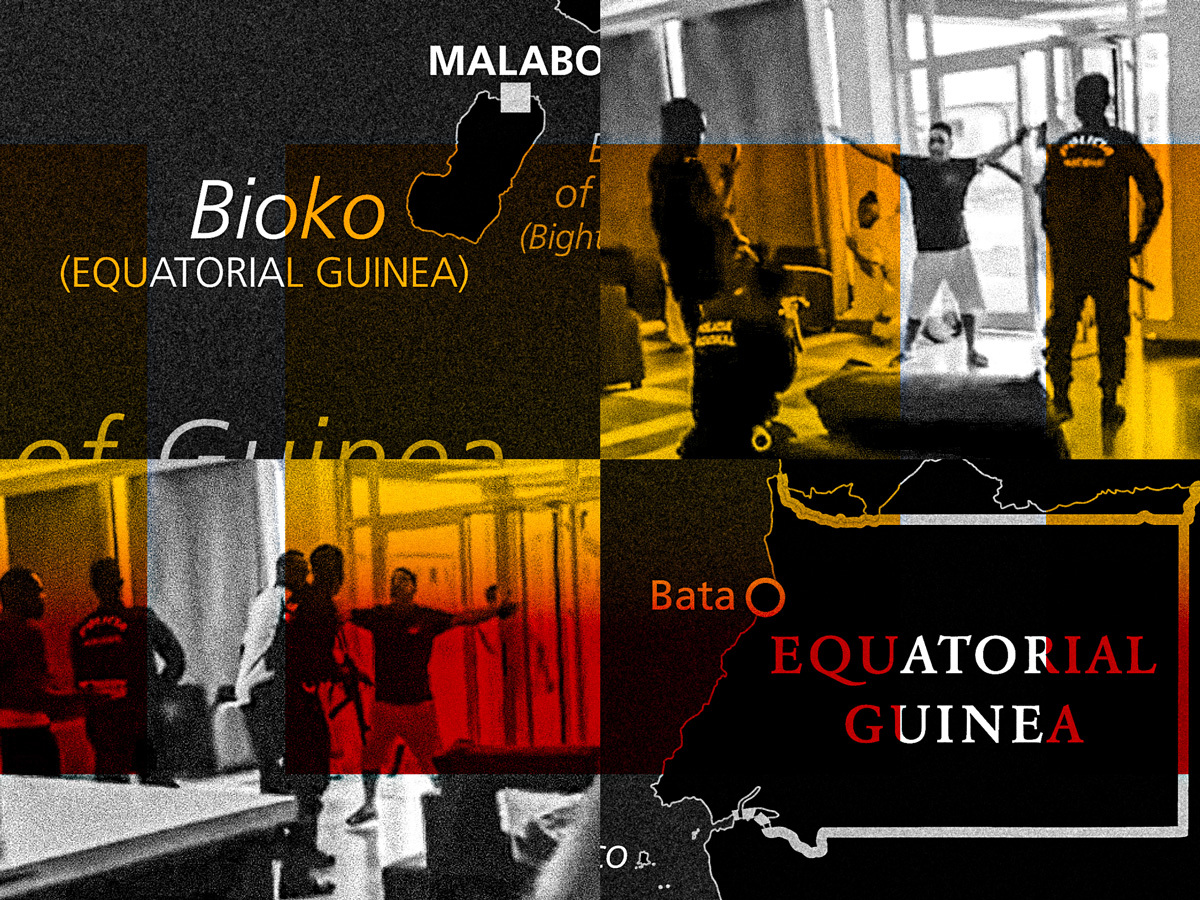
‘Shoot Him!’: Police Threaten Third-Country Nationals Imprisoned in African Hotel
‘I’m fighting for my life,’ said Ahmed Soliman after the latest in a string of abusive incidents in Equatorial Guinea, where ICE expelled him five months ago.