


Feminism is a natural ally to interaction design, due to its central commitments to issues such as agency, fulfillment, identity, equity, empowerment, and social justice. In this paper, I summarize the state of the art of feminism in HCI and propose ...
Feminist Technology
Feminist technology is not related to one specific community of practice, but it has been a field of research and has led to and is still leading to practices that are very valuable in the context of sustainable tech.
Foundations & Futures of HCI: a teach-in with Professor Kate Starbird
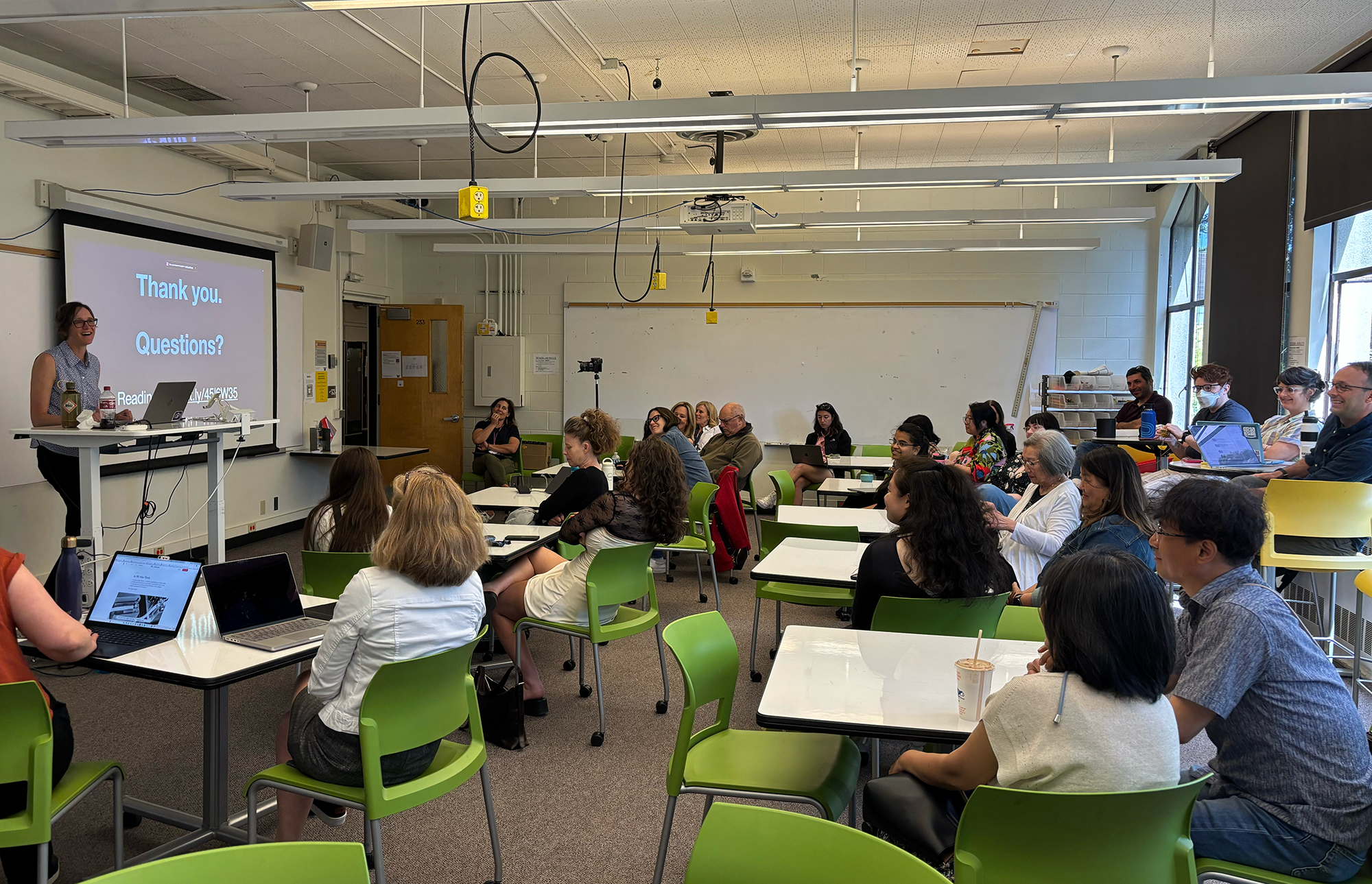
As part of HCDE’s 2025 graduation events, Professor Kate Starbird delivered a special teach-in exploring the foundations and future of human-computer interaction. Starbird traced how the technologies we use every day emerged from federally funded research, and emphasized the continued importance of inclusive, human-centered research. Her talk urged graduates and guests to recognize the role of public investment in shaping technology that serves people.
A Case for Feminism in Programming Language Design
As part of the Digital Library's transition to Open Access, new features for researchers are available in the Premium Edition. Click here to learn more.

Human-computer intra-action: a relational approach to digital media and technologies
The growing pervasiveness of digital technologies has exposed the entanglements of Human-Computer Interaction (HCI) with its surrounding context, from the immediate vicinity of interfaces to global issues. While often providing solutions to societal issues, interactive technologies also many times contribute to them. They impact and are impacted by the world, in a process of continuous mutual influence and co-constitution that raises important implications not only to user experience, effectiveness and efficiency, but also to ethics, social responsibility and environmental health. In this article, I draw on the new materialism notion of intra-action to propose a conceptual shift to a relational approach for HCI, which I refer to as Human-Computer Intra-Action (HCIA), capable of capturing from the outset the inherent relationships with the world that inform the design of interactive technology. To that end, I propose the notion of relationalities to reflect the synergies and antagonisms around those relationships, and discuss emerging notions of spatiality and temporality by considering the increasing hybridity of socio-technical engagements both in space (local versus remote) and in time (immediate versus stretched). Based on that, I propose a preliminary method for mapping intra-actions associated to interactive technologies, envisaged as a starting point to a relational take on their design process.

AI for Empowering Women in AI
Women remain significantly underrepresented in computing and artificial intelligence (AI), facing barriers such as limited access to tools, training, and opportunities. As AI becomes increasingly integral to daily life, it has the potential to address these disparities and foster greater inclusion. Realizing this potential requires fair access, inclusive design, and strategies that actively promote confidence, participation, and representation. This study explores these dimensions, identifying pathways for AI to serve as a catalyst for change.A key finding is the lack of tools explicitly designed to support women's participation in AI. Beyond reducing bias, fostering diversity in AI development requires designing artifacts that actively promote knowledge, skills, and confidence. Empowerment in this context refers to equipping individuals to engage with and influence AI, whether as users or developers. Women's participation in AI can thus be understood as a cyclical process, where increased engagement leads to further inclusion and representation in the field.The research objective of this study is to provide information on the relation between empowerment and women in AI, using the Systematic Literature Review (SLR) methodology. The SLR proposes and analyzes 14 studies that serve as a basis to understand the relationship between women, empowerment, and AI.The results show that there is still scarce research explicitly connected to AI artifacts designed for empowerment, but there is a growing recognition of its importance. The SLR also reveals various challenges and success factors related to the role of AI in fostering gender inclusivity and empowerment, which calls for further attention.As further work, the authors will conduct empirical research to validate the findings and gather new insights, while co-designing an artifact to empower women in AI.

Good Robot
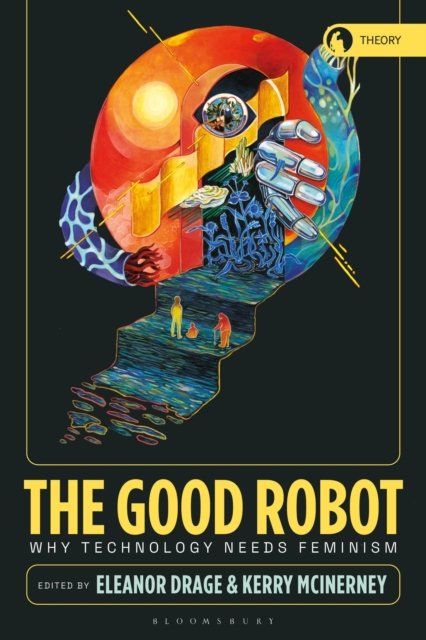
What is good technology? Is ‘good’ technology even possible? And how can feminism help us work towards it? The Good Robot addresses these crucial questions through the voices of leading feminist thinkers, activists and technologists. Each thinker provides a snapshot of key challenges, questions and provocations in the field of feminism and technology. While the question of whether various AI and technological advances can be ethical is not new, the embedded nature of feminist perspectives pulls out whether this perceived ‘goodness’ or ‘wrongness’ might actually impact our lives in the 21st century. This book explores both the radical possibilities of technology to disrupt practices of patriarchy, colonialism, racism and beyond but also provides a significant critique of how we can contain the ethical possibilities of entities we cannot predict. In exploring unjust technological practices and engaging critical voices in the tech industry, the existing moral issues are brought to light as well as the possible ethical quagmires. This book opens a new space of discussion on digital technologies – one that insists that the future of AI is an urgent feminist issue.
Calling for Ethical AI that Empowers Women and Protects Human Dignity
30 October 2024: Women4Ethical AI platform

Women, technology and AI: Five key takeaways for today’s world
To commemorate the International Day of Women and Girls in Science on 11 February, we spoke with Tamuna Kvintradze, Chief of Staff at Women in Tech Global. Ms. Kvintradze offered valuable insights into the barriers that women and girls encounter in STEM, highlighted the critical importance of their participation, and underscored the need to amplify their perspectives within mainstream and social media.

Artificial Intelligence and Its Unique Threat to Women | Capitol Technology University
With the rise of artificial intelligence, the world is undergoing a big transformation. However, technology has been seen to display biases – and for women, this presents a complex set of challenges.

The Gender Gap in AI: Why We Need More Women in Artificial Intelligence - EIT Campus
Artificial intelligence is shaping our future, but who is shaping AI? In this blog, we explore the insights of Megi Mejdrechová, co-founder of RoboTwin, a…

Women, AI, and the Power of Supporting Communities: A Digital Gender-Support Partnership
With the rapid development of the fields of data science and artificial intelligence, a dichotomy presents itself: more professionals are needed to fulfill the growing workfoce demand, and women continue to be underrepresented in all computer science-related jobs. Women AI Academy addresses both issues by inspiring, enabling, and targeting the employment of women in data science and artificial intelligence.

Challenging Ableism: A Critical Turn Toward Disability Justice in HCI
A reflection on our learnings from the CHI 2022 "Dreaming Disability Justice in HCI" workshop, and why we continue to call for disability justice, despite the limitations of how we practice it within academia and industry.

Feminism | The Paper Pilot
The Paper Pilot's digital garden of thoughts on philosophy, politics, and sociology
Human-Computer Insurrection: Notes on an Anarchist HCI
The HCI community has worked to expand and improve our consideration of the societal implications of our work and our corresponding responsibilities. Despite this increased engagement, HCI continues to lack an explicitly articulated politic, which we argue re-inscribes and amplifies systemic oppression. In this paper, we set out an explicit political vision of an HCI grounded in emancipatory autonomy - an anarchist HCI, aimed at dismantling all oppressive systems by mandating suspicion of and a reckoning with imbalanced distributions of power. We outline some of the principles and accountability mechanisms that constitute an anarchist HCI. We offer a potential framework for radically reorienting the field towards creating prefigurative counterpower - systems and spaces that exemplify the world we wish to see, as we go about building the revolution in increment.

Feminist Computing


Men in tech #YesAllMen - EMF 2026
Data Feminism for AI
quod.lib.umich.edu

Wired women : gender and new realities in cyberspace
www.bloomsbury.com

Programmed Inequality