


Successfully attaining consensus in the absence of a centralized coordinator is a fundamental problem in distributed multi-agent systems. We analyze progress in the Synod consensus protocol—which does not assume a unique leader—under the ...
Structured reasoning about actor systems | Proceedings of the 2013 workshop on Programming based on actors, agents, and decentralized control
Successfully attaining consensus in the absence of a centralized coordinator is a fundamental problem in distributed multi-agent systems. We analyze progress in the Synod consensus protocol—which does not assume a unique leader—under the ...
Holographic consensus—part 1
Decentralized governance is the field of protocols that coordinate large number of agents into a collective action, implemented with smart…
Emmett Shear: Alignment Protocols



Theorizing Protocolization II: Atomic Protocol Questions
Solving real coordination problems to discover the formal laws of protocols.

Cooperative Task Execution in Multi-Agent Systems
We propose a multi-agent system that enables groups of agents to collaborate and work autonomously to execute tasks. Groups can work in a decentralized manner and can adapt to dynamic changes in the environment. Groups of agents solve assigned tasks by exploring the solution space cooperatively based on the highest reward first. The tasks have a dependency structure associated with them. We rigorously evaluated the performance of the system and the individual group performance using centralized and decentralized control approaches for task distribution. Based on the results, the centralized approach is more efficient for systems with a less-dependent system G18subscript𝐺18G_{18}italic_G start_POSTSUBSCRIPT 18 end_POSTSUBSCRIPT (a well-known program graph that contains 18181818 nodes with few links), while the decentralized approach performs better for systems with a highly-dependent system G40subscript𝐺40G_{40}italic_G start_POSTSUBSCRIPT 40 end_POSTSUBSCRIPT (a program graph that contains 40404040 highly interlinked nodes). We also evaluated task allocation to groups that do not have interdependence. Our findings reveal that there was significantly less difference in the number of tasks allocated to each group in a less-dependent system than in a highly-dependent one. The experimental results showed that a large number of small-size cooperative groups of agents unequivocally improved the system’s performance compared to a small number of large-size cooperative groups of agents. Therefore, it is essential to identify the optimal group size for a system to enhance its performance.
The emergence of consensus: a primer
The origin of population-scale coordination has puzzled philosophers and scientists for centuries. Recently, game theory, evolutionary approaches and complex systems science have provided quantitative insights on the mechanisms of social consensus. However, the literature is vast and widely scattered across fields, making it hard for the single researcher to navigate it. This short review aims to provide a compact overview of the main dimensions over which the debate has unfolded and to discuss some representative examples. It focuses on those situations in which consensus emerges ‘spontaneously’ in the absence of centralized institutions and covers topics that include the macroscopic consequences of the different microscopic rules of behavioural contagion, the role of social networks and the mechanisms that prevent the formation of a consensus or alter it after it has emerged. Special attention is devoted to the recent wave of experiments on the emergence of consensus in social systems.

Agent Coordination on ATProto
How agents can coordinate tasks, share work, and communicate using the AT Protocol
Patterns and problems in multiagent systems
We ran experiments on swarms of Claude agents and found coordination failures, collusion, and sabotage. Here, we share what they mean for AI safety.

LangChain on Twitter / X
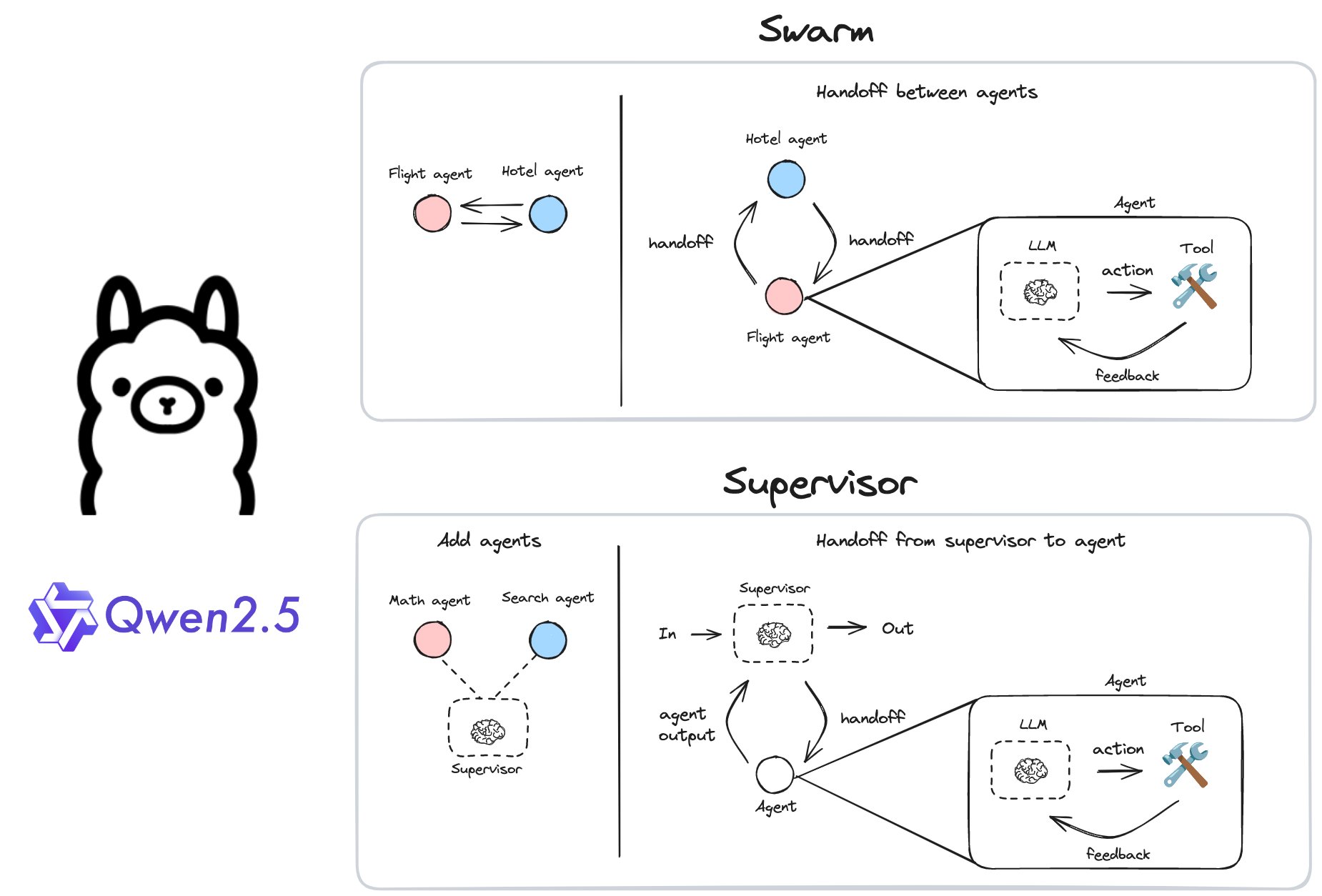
Fully local multi-agent systems with LangGraphWith the release of OpenAI agent SDK, there's high interest in multi-agent systems.We review Swarm and Supervisor based multi-agent systems and run both locally w/ @ollama + LangGraph.📽️:https://t.co/xoUlPob4xL pic.twitter.com/arrmeHu1Hm— LangChain (@LangChain) March 15, 2025
Rachel Thomas on Twitter / X
"We argue for a reorientation from autonomous to human-centered coding agents: systems designed not only to complete tasks, but to collaborate effectively with people."@ZhiruoW @jyangballin @KLierethttps://t.co/ncWiAUxwbo 1/— Rachel Thomas (@math_rachel) October 20, 2026
Turing-Complete Governance — The Collective Intelligence Project
It is fiendishly difficult to get lots of people to make decisions and work together both non-hierarchically and effectively. Because blockchain technology enables decentralized consensus at scale, the implications for human decision-making and coordination are immensely promising; if we can use it
Composing Action: Representative Agents and the Search for Viable Arrangements | shishyko!
Why promising ideas die between discovery and action, and how representative agents might help