


Productive and dedicated members are critical to the success of online production communities like Wikipedia. Many communities organize in subgroups where members voluntarily work on projects of shared interest. In this paper, we investigate how members' ...
Governing Together: Toward Infrastructure for Community-Run Social Media | Proceedings of the 2026 CHI Conference on Human Factors in Computing Systems
Collaborative and social computing theory, concepts and paradigms


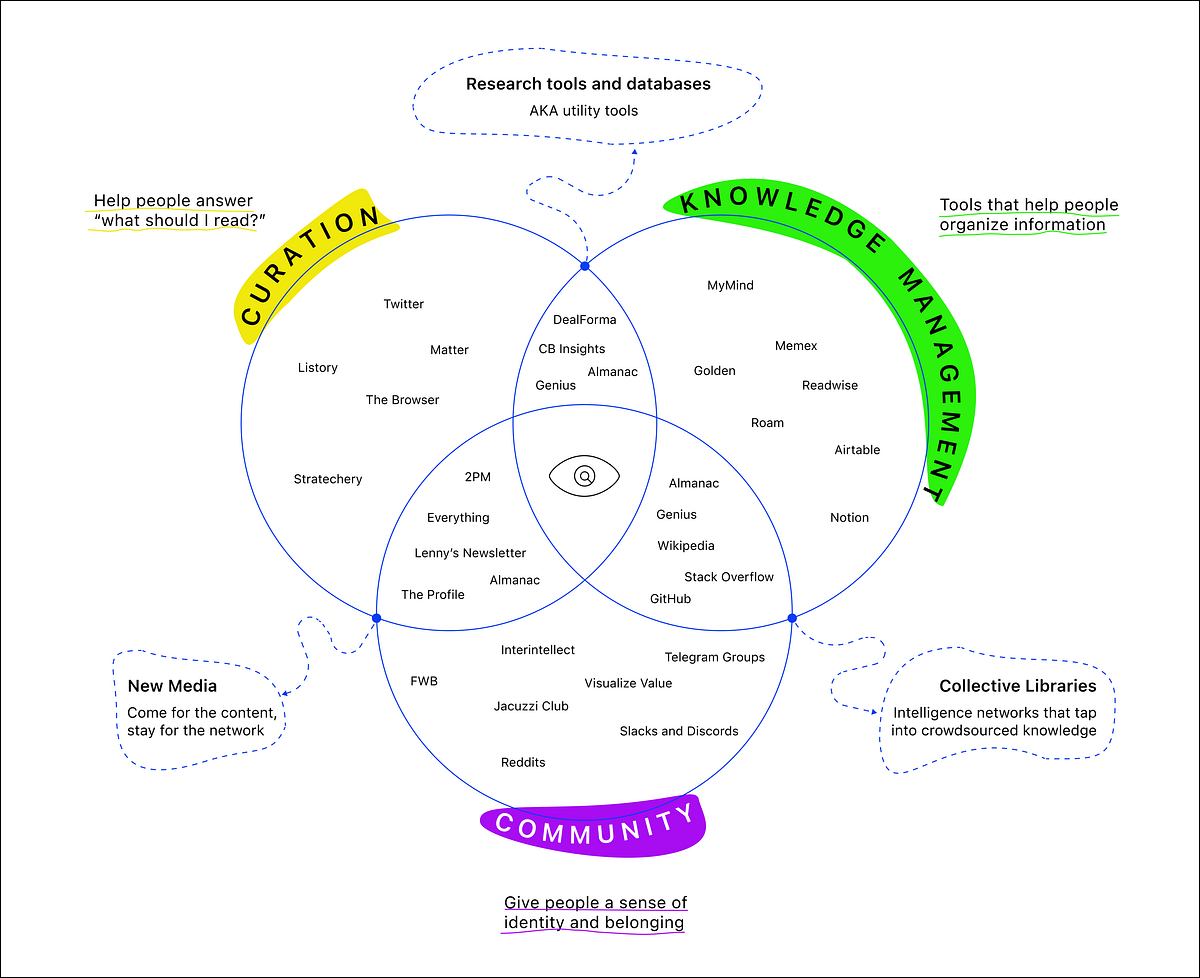
The rise of community-curated knowledge networks
The Internet put thousands of years of human thought at our fingertips, and enabled billions of people to create content. At least 2.5…
From groups to individuals, micro-computing and us, Paul Rony
From groups to individuals, micro-computing and us, Paul Rony
Stigmergic Collaboration: A Theoretical Framework for Mass Collaboration
"This thesis presents an application-oriented theoretical framework for generalised and specific collaborative contexts with a special focus on Internet-based mass collaboration. The proposed framework is informed by the author's many years of collaborative arts practice and the design, building and moderation of a number of online collaborative environments across a wide range of contexts and applications. The thesis provides transdisciplinary architecture for describing the underlying mechanisms that have enabled the emergence of mass collaboration and other activities associated with 'Web 2.0' by incorporating a collaboratively developed definition and general framework for collaboration and collective activity, as well as theories of swarm intelligence, stigmergy, and distributed cognition. "Accompanying this creative arts thesis is a DVD-Rom which includes offline versions of the three Internet based collaborative environments designed, built and implemented in accordance with the frameworks for digital stigmergy and mass collaboration developed in the written work. The creative works in conjunction with the written thesis help to explore and more rigorously define the collaborative process in general, while testing the theory that stigmergy is an inherent component of collaborative processes which incorporate collective material production. "Supported by a range of contemporary examples of Internet activity, including the accompanying creative works, it is found that stigmergy is a deeply rooted mechanism inherent in not only traditional material collaborative processes, but a range of emerging online practices which may be broadly categorised as digital stigmergic cooperation and collaboration. This latter class enables the extreme scaling seen in mass collaborative projects such as Wikipedia.org, open source software projects and the massive, multiplayer environment, Second Life. This scaling is achieved through a range of attributes which are examined, such as the provision of a localised site of individualistic engagement which reduces demands placed upon participants by the social negotiation of contributions while increasing capacity for direct and immediate creative participation via digital workspaces. Also examined are a range of cultural, economic and sociopolitical impacts which emerge as a direct result of mass collaboration's highly distributed, non-market based, peer-production processes, all of which are shown to have important implications for the further transformation of our contemporary information and media landscape."
Creative Computing Group by @tgoerke.bsky.social — Grain
Let's start a group at CODIP to explore creative computing. Let's not start by defining creativity nor computing. It would be a trap. Let's collect artifacts instead. Images, text, thoughts,...
Agency Among Agents: Designing with Hypertextual Friction in the Algorithmic Web
Today's algorithm-driven interfaces, from recommendation feeds to GenAI tools, often prioritize engagement and efficiency at the expense of user agency. As systems take on more decision-making, users have less control over what they see and how meaning or relationships between content are constructed. This paper introduces "Hypertextual Friction," a conceptual design stance that repositions classical hypertext principles--friction, traceability, and structure--as actionable values for reclaiming agency in algorithmically mediated environments. Through a comparative analysis of real-world interfaces--Wikipedia vs. Instagram Explore, and Are.na vs. GenAI image tools--we examine how different systems structure user experience, navigation, and authorship. We show that hypertext systems emphasize provenance, associative thinking, and user-driven meaning-making, while algorithmic systems tend to obscure process and flatten participation. We contribute: (1) a comparative analysis of how interface structures shape agency in user-driven versus agent-driven systems, and (2) a conceptual stance that offers hypertextual values as design commitments for reclaiming agency in an increasingly algorithmic web.
Your connected workspace for wiki, docs & projects | Notion
A new tool that blends your everyday work apps into one. It's the all-in-one workspace for you and your team.
Atmospheric Computer
A Dunbar-bounded cooperative for creative-computing practitioners on the AT Protocol Atmosphere. Member-owned PDS hosting, lexicon work, and AI affordances designed by members.

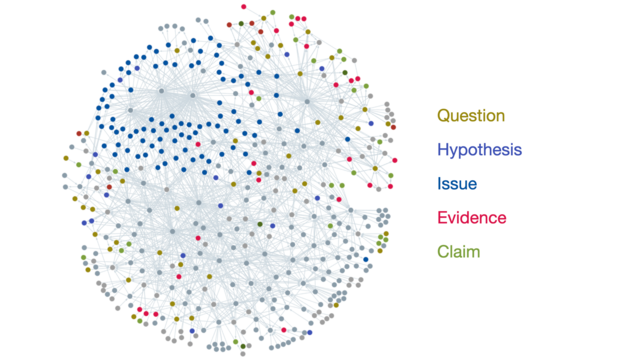
Sustainable coordination in research labs via graph-enabled idea boards
Our 'graph-enabled idea board' serves as a hub for capturing excess research ideas, allocating microprojects, and properly attributing credit. We'd like to investigate its potential for enabling newcomers to quickly and effectively contribute to ongoing projects.
AI Coding & Cloud | Meetup
This group started January 2016.We are about extraordinary advances in software creation, maintenance, and hosting.We are a gathering of good natured people for encouragement and support of what you do.This is your group! How you can help:1. Help to publicize events at work, with friends, and especi


Announcing co/core: a social computing experiment from the Graze team

co/core — an AI cooperative
console.cocore.dev
