


As part of the Digital Library's transition to Open Access, new features for researchers are available in the Premium Edition. Click here to learn more.
Denicek: Computational Substrate for Document-Oriented End-User Programming
As part of the Digital Library's transition to Open Access, new features for researchers are available in the Premium Edition. Click here to learn more.

The Spoofax language workbench | Proceedings of the ACM international conference companion on Object oriented programming systems languages and applications companion
As part of the Digital Library's transition to Open Access, new features for researchers are available in the Premium Edition. Click here to learn more.

Identifying Barriers to Adoption for Rust through Online Discourse (PLATEAU 2018) - SPLASH 2018
For PLATEAU 2019, see the workshop webpage at http://plateau-workshop.org/. Programming languages exist to enable programmers to develop software effectively. But programmer efficiency depends on the usability of the languages and tools with which they develop software. The aim of this workshop is to discuss methods, metrics and techniques for evaluating the usability of languages and language tools. The supposed benefits of such languages and tools cover a large space, including making programs easier to read, write, and maintain; allowing programmers to write more flexible and powerful ...

Cracking the cocoa nut: user interface programming at runtime
As part of the Digital Library's transition to Open Access, new features for researchers are available in the Premium Edition. Click here to learn more.

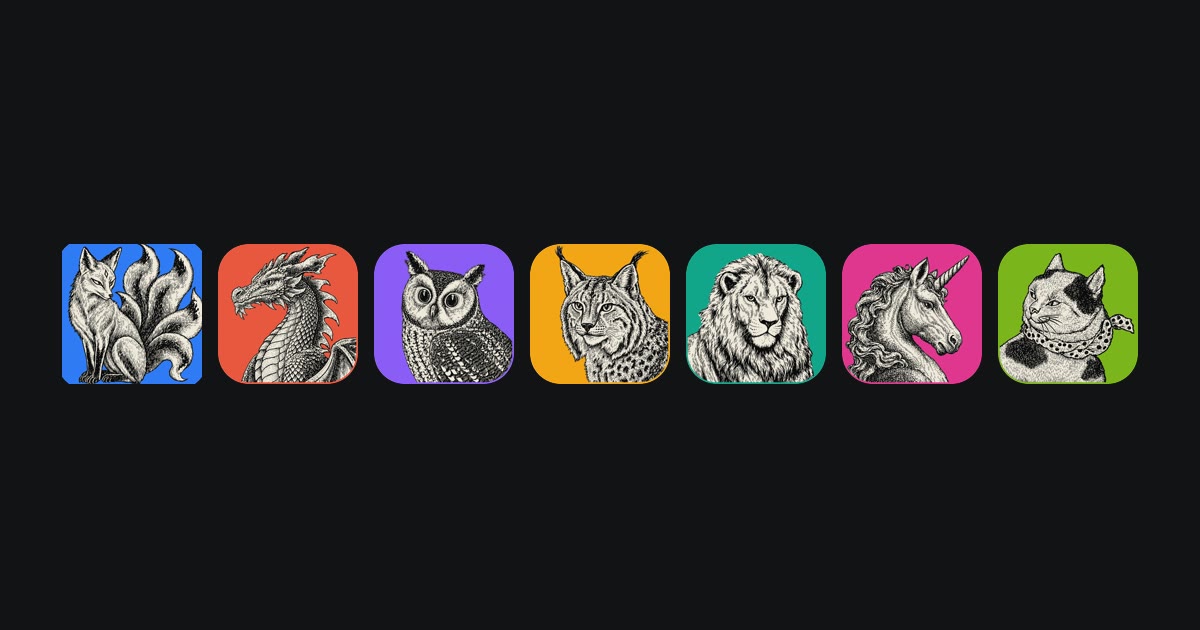
Crafting Apps: open-source creative tools
Image editing, vector illustration, video, photography, PDFs, motion graphics and page layout: seven native, open-source apps from the ArtCraft team, built in Rust and free to use.
As we may think
As part of the Digital Library's transition to Open Access, new features for researchers are available in the Premium Edition. Click here to learn more.
Tools for working with OpenAPI | OpenAPI.tools
A comprehensive and open source list of resources for developers working with OpenAPI.

Graffiti: Enabling an Ecosystem of Personalized and Interoperable Social Applications
As part of the Digital Library's transition to Open Access, new features for researchers are available in the Premium Edition. Click here to learn more.
Direct manipulation vs. interface agents
As part of the Digital Library's transition to Open Access, new features for researchers are available in the Premium Edition. Click here to learn more.
The world is not a desktop | Interactions
As part of the Digital Library's transition to Open Access, new features for researchers are available in the Premium Edition. Click here to learn more.
Varv: Reprogrammable Interactive Software as a Declarative Data Structure
This summary was generated using automated tools and was not authored or reviewed by the article's author(s). It is provided to support discovery, help readers assess relevance, and assist readers from adjacent research areas in understanding the work. It is intended to complement the author-supplied abstract, which remains the primary summary of the paper. The full article remains the authoritative version of record. Click here to learn more.

User-tailorable systems: pressing the issues with buttons
As part of the Digital Library's transition to Open Access, new features for researchers are available in the Premium Edition. Click here to learn more.
Temporal logic with "Until", functional reactive programming with processes, and concrete process categories
As part of the Digital Library's transition to Open Access, new features for researchers are available in the Premium Edition. Click here to learn more.

Introducing gpt-oss
We’re releasing gpt-oss-120b and gpt-oss-20b—two state-of-the-art open-weight language models that deliver strong real-world performance at low cost. Available under the flexible Apache 2.0 license, these models outperform similarly sized open models on reasoning tasks, demonstrate strong tool use capabilities, and are optimized for efficient deployment on consumer hardware.

the hermetic, self-hosted, self-sustainable, recursively exportable, offline-first, file-first, web-based reactive open-source programming substrate built on observable runtime is online finally! tomlarkworthy.github.io/lopecode/webpage.html I am hoping I can explain parts at @hytradboi.bsky.social 🤞
