


We study the historical connectivity query in temporal graphs where edges continuously arrive. Given an arbitrary time window, and two query vertices, the problem aims to identify if two vertices are connected by a path in the snapshot of the window. The state-of-the-art method designs an index based on the two-hop cover, and updating the index is costly when new edges arrive. In this paper, we propose a new framework and design a novel forest-based index for historical connectivity queries. The index enables us to answer queries by searching if two vertices are connected in the forest. We update the index by modifying a forest structure. Our techniques also work for connectivity query processing in a sliding window of temporal graphs. Extensive experiments have been conducted to show the considerable advantages of our approach compared with the state-of-the-art methods in both historical connectivity queries and sliding-window connectivity queries.
Span-reachability querying in large temporal graphs
Reachability is a fundamental problem in graph analysis. In applications such as social networks and collaboration networks, edges are always associated with timestamps. Most existing works on reachability queries in temporal graphs assume that two vertices are related if they are connected by a path with non-decreasing timestamps (time-respecting) of edges. This assumption fails to capture the relationship between entities involved in the same group or activity with no time-respecting path connecting them. In this paper, we define a new reachability model, called span-reachability, designed to relax the time order dependency and identify the relationship between entities in a given time period. We adopt the idea of two-hop cover and propose an index-based method to answer span-reachability queries. Several optimizations are also given to improve the efficiency of index construction and query processing. We conduct extensive experiments on eighteen real-world datasets to show the efficiency of our proposed solution.

Efficient Processing of Reachability and Time-Based Path Queries in a Temporal Graph
A temporal graph is a graph in which vertices communicate with each other at specific time, e.g., $A$ calls $B$ at 11 a.m. and talks for 7 minutes, which is modeled by an edge from $A$ to $B$ with starting time "11 a.m." and duration "7 mins". Temporal graphs can be used to model many networks with time-related activities, but efficient algorithms for analyzing temporal graphs are severely inadequate. We study fundamental problems such as answering reachability and time-based path queries in a temporal graph, and propose an efficient indexing technique specifically designed for processing these queries in a temporal graph. Our results show that our method is efficient and scalable in both index construction and query processing.

CompactLTJ: Space & Time Efficient Leapfrog Triejoin on Graph Databases
Leapfrog Triejoin (LTJ) is arguably the most practical and popular worst-case-optimal (wco) algorithm for solving basic graph patterns in graph databases. Its main drawback is that it needs the database triples (subject, predicate, object) represented as paths in a trie, for each of the six orders of subject, predicate, and object. The resulting blowup in space makes most systems disregard LTJ or implement it only partially, which makes their corresponding algorithms non-wco. In this paper we show that, by using compact data structures, it is possible to build an index that at the same time matches the query time performance of the fastest classic wco index, and uses a fraction of the space of non-wco indices (which are much slower). Concretely, we make use of compact tree representations to store functional tries using one bit per trie edge, instead of one pointer, and further reduce the space by storing partial tries. Our most compact variant uses 5–6 times less space than classic wco implementations and 2–3 times less than classic non-wco systems. At solving queries, it is on par with the fastest classic wco system, and 30–40 times faster than non-wco systems. We further incorporate improved query resolution strategies into CompactLTJ variants, which makes it considerably faster than classic wco systems as well, on queries that do not output too many results. Finally, we show how CompactLTJ can incorporate dynamism without altering its performance, even under very demanding update regimes. We leave a public fully-functional implementation of CompactLTJ that can be directly used by practitioners.

The SQLite R*Tree Module
An R-Tree is a special index that is designed for doing range queries. R-Trees are most commonly used in geospatial systems where each entry is a rectangle with minimum and maximum X and Y coordinates. Given a query rectangle, an R-Tree is able to quickly find all entries that are contained within the query rectangle or which overlap the query rectangle. This idea is easily extended to three dimensions for use in CAD systems. R-Trees also find use in time-domain range look-ups. For example, suppose a database records the starting and ending times for a large number of events. A R-Tree is able to quickly find all events that were active at any time during a given time interval, or all events that started during a particular time interval, or all events that both started and ended within a given time interval. And so forth.
A survey of community search over big graphs
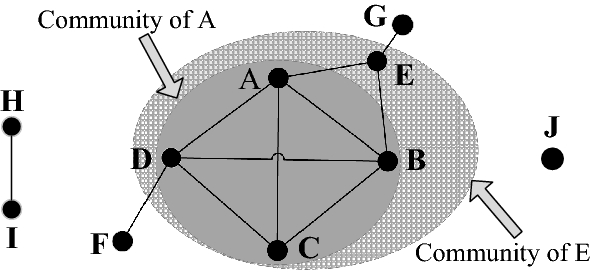
With the rapid development of information technologies, various big graphs are prevalent in many real applications (e.g., social media and knowledge bases). An important component of these graphs is the network community. Essentially, a community is a group of vertices which are densely connected internally. Community retrieval can be used in many real applications, such as event organization, friend recommendation, and so on. Consequently, how to efficiently find high-quality communities from big graphs is an important research topic in the era of big data. Recently, a large group of research works, called community search, have been proposed. They aim to provide efficient solutions for searching high-quality communities from large networks in real time. Nevertheless, these works focus on different types of graphs and formulate communities in different manners, and thus, it is desirable to have a comprehensive review of these works. In this survey, we conduct a thorough review of existing community search works. Moreover, we analyze and compare the quality of communities under their models, and the performance of different solutions. Furthermore, we point out new research directions. This survey does not only help researchers to have better understanding of existing community search solutions, but also provides practitioners a better judgment on choosing the proper solutions.
Connected Places - Links Collections
Semantic Data Modeling, Graph Query, and SQL, Together at Last?
Our teams advance the state of the art through research, systems engineering, and collaboration across Google.

Your Data Fits in Memory (GraphD Part 1)
We need a fast way to query multiple potentially large sets of data on-demand at interactive speeds. Sometimes the easiest solution to a hard problem is to build the right tool for the job.
How we made geo joins 400× faster with H3 indexes
Using H3 indexes to greatly speed up geospatial SQL Queries. Orders of magnitude improvements can be gained with the right data structures
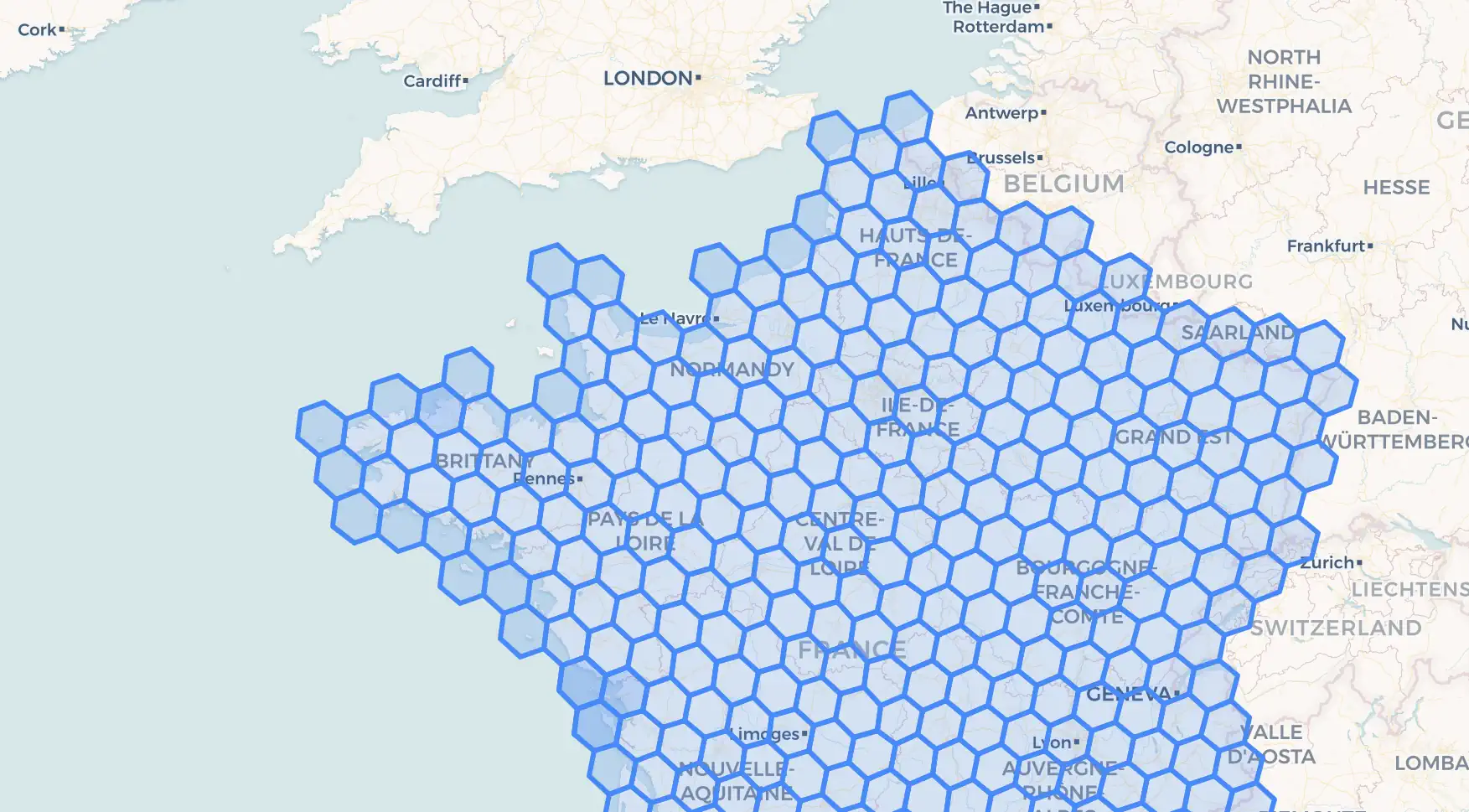
How we made geo joins 400× faster with H3 indexes
Using H3 indexes to greatly speed up geospatial SQL Queries. Orders of magnitude improvements can be gained with the right data structures
Exa on Twitter / X
We built a time machine for the web.Introducing Exa Snapshot: an index of 400 billion historical snapshots of webpages that lets you search as if it's the past.Snapshot is already being used for backtesting prediction models, RL at labs, exploring the pre-AI web, and more. pic.twitter.com/UHeknyUbeF— Exa (@ExaAILabs) September 17, 2026

Index Network
You know that moment when you meet the right person and your next move clicks into place? That sense of magic? You shouldn't have to wait for luck. Index helps your others find you.

Index Network
You know that moment when you meet the right person and your next move clicks into place? That sense of magic? You shouldn't have to wait for luck. Index helps your others find you.
Indexing Standard Site - AT Protocol
This guest post from Steve Simkins, creator of Sequoia and docs.surf, outlines the strategy he used to index standard.site records.

Made a tool for easier viewing of long and convoluted post threads and trees. Input a post URL and get a graph overview and concatenated runs of single author threads!

Atreeshake · eriskii.net
eriskii.net