


As part of the Digital Library's transition to Open Access, new features for researchers are available in the Premium Edition. Click here to learn more.
AI Suggestions Homogenize Writing Toward Western Styles and Diminish Cultural Nuances
As part of the Digital Library's transition to Open Access, new features for researchers are available in the Premium Edition. Click here to learn more.

Sharing Knowledge Openly: Author Gender, Race/Ethnicity, and Feminist Science
Open science is an increasingly important movement in contemporary social science. Many funders have begun to mandate open practices, newer journals like Socius are open access, and preprint servers have increased readership of paywalled articles. Feminist scholars have written about the values and pitfalls of open research. In this paper, we put those ideas in conversation with each other and empirical data on open-access publishing to develop a feminist framework for thinking about feminist knowledge, data, publishing, and audience. Using a survey of 19,462 social scientists, linked with their entire Web of Science publication history from 2000 to 2023 and all papers posted to SocArXiv, we replicate past work showing that articles by women are less likely to be some types of open access. We extend these findings to scholars of color and feminist scholarship, while also demonstrating a few surprising null results for all three groups.

As we may think
As part of the Digital Library's transition to Open Access, new features for researchers are available in the Premium Edition. Click here to learn more.
Reflective design
As part of the Digital Library's transition to Open Access, new features for researchers are available in the Premium Edition. Click here to learn more.
Anatomy of an Enduring Gender Gap: The Evolution of Women’s Participation in Computer Science
Given growing interest in computing fields, as well as a longstanding gender gap in computer science, this study used nationwide survey data on college students during 4 decades to: (a) document tr...

Denicek: Computational Substrate for Document-Oriented End-User Programming
As part of the Digital Library's transition to Open Access, new features for researchers are available in the Premium Edition. Click here to learn more.

Feminist Technology
Feminist technology is not related to one specific community of practice, but it has been a field of research and has led to and is still leading to practices that are very valuable in the context of sustainable tech.
Artificial Intelligence and Its Unique Threat to Women | Capitol Technology University
With the rise of artificial intelligence, the world is undergoing a big transformation. However, technology has been seen to display biases – and for women, this presents a complex set of challenges.

The Application and Its Consequences for Non-Standard Knowledge Work
As part of the Digital Library's transition to Open Access, new features for researchers are available in the Premium Edition. Click here to learn more.

Women, AI, and the Power of Supporting Communities: A Digital Gender-Support Partnership
With the rapid development of the fields of data science and artificial intelligence, a dichotomy presents itself: more professionals are needed to fulfill the growing workfoce demand, and women continue to be underrepresented in all computer science-related jobs. Women AI Academy addresses both issues by inspiring, enabling, and targeting the employment of women in data science and artificial intelligence.

Co-Writing with Opinionated Language Models Affects Users’ Views
As part of the Digital Library's transition to Open Access, new features for researchers are available in the Premium Edition. Click here to learn more.

Co-Writing with Opinionated Language Models Affects Users’ Views
As part of the Digital Library's transition to Open Access, new features for researchers are available in the Premium Edition. Click here to learn more.
Rethinking the human-readability infrastructure
As part of the Digital Library's transition to Open Access, new features for researchers are available in the Premium Edition. Click here to learn more.
AI for Empowering Women in AI
Women remain significantly underrepresented in computing and artificial intelligence (AI), facing barriers such as limited access to tools, training, and opportunities. As AI becomes increasingly integral to daily life, it has the potential to address these disparities and foster greater inclusion. Realizing this potential requires fair access, inclusive design, and strategies that actively promote confidence, participation, and representation. This study explores these dimensions, identifying pathways for AI to serve as a catalyst for change.A key finding is the lack of tools explicitly designed to support women's participation in AI. Beyond reducing bias, fostering diversity in AI development requires designing artifacts that actively promote knowledge, skills, and confidence. Empowerment in this context refers to equipping individuals to engage with and influence AI, whether as users or developers. Women's participation in AI can thus be understood as a cyclical process, where increased engagement leads to further inclusion and representation in the field.The research objective of this study is to provide information on the relation between empowerment and women in AI, using the Systematic Literature Review (SLR) methodology. The SLR proposes and analyzes 14 studies that serve as a basis to understand the relationship between women, empowerment, and AI.The results show that there is still scarce research explicitly connected to AI artifacts designed for empowerment, but there is a growing recognition of its importance. The SLR also reveals various challenges and success factors related to the role of AI in fostering gender inclusivity and empowerment, which calls for further attention.As further work, the authors will conduct empirical research to validate the findings and gather new insights, while co-designing an artifact to empower women in AI.

Sensibilities as Knowledge in Design Research
As part of the Digital Library's transition to Open Access, new features for researchers are available in the Premium Edition. Click here to learn more.

Feminist Computing


Data Refusal from Below: A Framework for Understanding, Evaluating, and Envisioning Refusal as Design

Re-enchanting the world: feminism and the politics of the commons

Glitch feminism: a manifesto
📚 AI & Women (by ♍ Bee 🐝) — Semble

The fetish of the click: a small history of the computer mouse as vulva
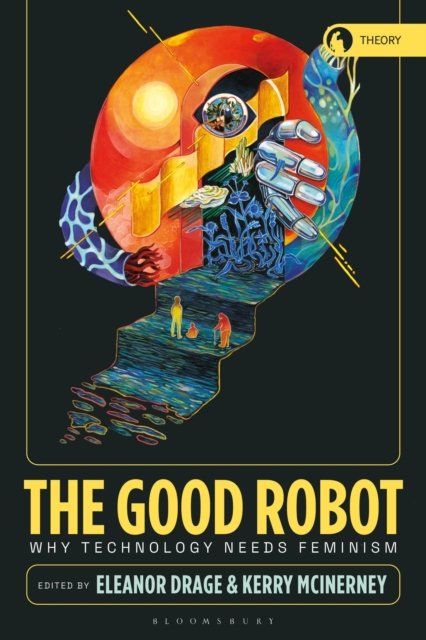
Good Robot