As part of the Digital Library's transition to Open Access, new features for researchers are available in the Premium Edition. Click here to learn more.
From novices to co-pilots: Fixing the limits on scientific knowledge production by accessing or building expertise
As part of the Digital Library's transition to Open Access, new features for researchers are available in the Premium Edition. Click here to learn more.

As we may think
As part of the Digital Library's transition to Open Access, new features for researchers are available in the Premium Edition. Click here to learn more.
The Application and Its Consequences for Non-Standard Knowledge Work
As part of the Digital Library's transition to Open Access, new features for researchers are available in the Premium Edition. Click here to learn more.


Building Bridges for Data Science Education
As part of the Digital Library's transition to Open Access, new features for researchers are available in the Premium Edition. Click here to learn more.

Rethinking the human-readability infrastructure
As part of the Digital Library's transition to Open Access, new features for researchers are available in the Premium Edition. Click here to learn more.
The Consensus Trap: Dissecting Subjectivity and the “Ground Truth” Illusion in Data Annotation
As part of the Digital Library's transition to Open Access, new features for researchers are available in the Premium Edition. Click here to learn more.

Reflective design
As part of the Digital Library's transition to Open Access, new features for researchers are available in the Premium Edition. Click here to learn more.
Sensibilities as Knowledge in Design Research
As part of the Digital Library's transition to Open Access, new features for researchers are available in the Premium Edition. Click here to learn more.

Helping Students Understand the Code’s Behavior and Purpose by Leveraging Concreteness Fading and Comics
As part of the Digital Library's transition to Open Access, new features for researchers are available in the Premium Edition. Click here to learn more.

Systems design 3: LLMs and the semantic revolution
Long ago in the 1990s when I was in high school, my chemistry+physics teacher pulled me aside. "Avery, you know how the Internet works, righ...
Research Fiction: Storytelling, Plot and Design
As part of the Digital Library's transition to Open Access, new features for researchers are available in the Premium Edition. Click here to learn more.

How to keep learning in the age of LLMs | Oğuzhan Olguncu
Notes on how I keep learning as a programmer in the age of LLMs
The open authorial principle: supporting networks of authors in creating externalisable designs
As part of the Digital Library's transition to Open Access, new features for researchers are available in the Premium Edition. Click here to learn more.

Compiling knowledge, not retrieving it: a hands-on deep dive into llm-wiki-compiler
The thesis of this piece is simple and uncomfortable: the problem of making an LLM “remember” what you’ve read isn’t solved with more…
Open science meets orange skies: K-12 educators’ engagement with computational notebooks to explore scientific events with human impacts
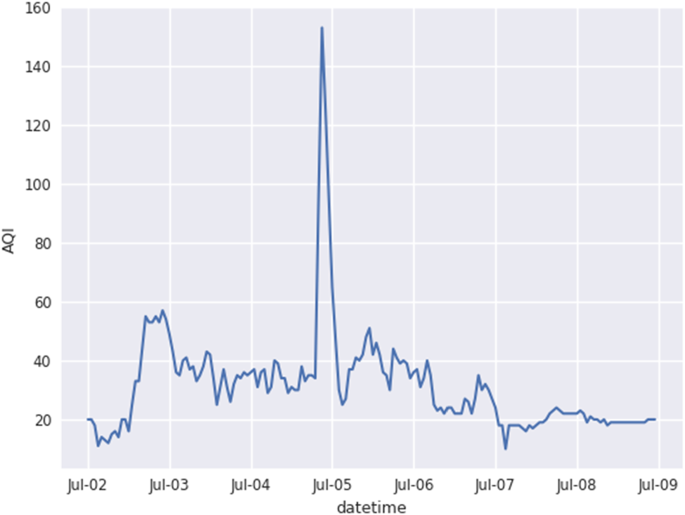
Computational notebooks are becoming a popular method to introduce mathematics, data, and scientific computing concepts to secondary students. Advocates argue computational notebooks encourage transparency and reproducibility in student work and can enable more personalized investigations of publicly available civic and scientific datasets. However, little is known about how teachers navigate these complex artifacts, let alone how they might support their students in doing so. In this paper, we investigate six pre-service and two in-service K-12 teachers’ sensemaking during a structured clinical think-aloud interview as they engaged with a computational notebook that examines disruptions in local air quality. The notebook presented a common event (annual fireworks) and an extreme event that impacted human health, during which the skies above the greater metropolitan San Francisco Bay region in California, USA turned orange due to wildfire pollution (“Orange Skies Day”, Sept 9, 2020). We examine the ideas that participants engaged as they interacted with the notebooks, and identify three ways in which they interacted with code in the notebook: to make sense of the scientific phenomenon (all participants), to make sense of the available data (6 out of 8 participants), and/or integrate these two dimensions (4 out of 8 participants). We present examples of each of these three forms of sensemaking, highlight their similarities and distinguishing features, and discuss implications for teacher education.