

Conventional software systems, such as those based on the “desktop metaphor,” are ill-equipped to manage the electronic information and events of the typical computer user. We introduce a new metaphor, Lifestreams, for dynamically organizing a user's personal workspace. Lifestreams uses a simple organizational metaphor, a time-ordered stream of documents, as an underlying storage system. Stream filters are used to organize, monitor and summarize information for the user. Combined, they provide a system that subsumes many separate desktop applications. This paper describes the Lifestreams model and our prototype system.
Plan B: an operating system for ubiquitous computing environments
The conventional approach for building pervasive environments relies on middleware to integrate different systems. Instead, we have built a system that can deal with these environments by exporting system resources through distributed virtual file systems. This requires no middleware, simplifies interoperation, and permits applying general purpose tools to any system resource. A constraint-based file system import mechanism allows the system to adapt to changes in the environment and permits users to customize the environment and tailor adaptation according to their needs. The system has been in use for over a year to carry out our daily work and is underlying the smart space that we built for our department
The Interfaces With Which We Think
The concepts in modern operating systems — apps, windows, desktops, notifications, and so on — have so permeated our understanding of personal computing, it’s hard to imagine anything else, let alone believe there could be anything better.
Basic | The Personal Computing Platform
We build products, tools, and standards to make computers more personal.

Unclutter for Mac
A new space on your desktop to store and organize your Files, Notes and Clipboard data.
Home
Platform created by the community to programmatically author, schedule and monitor workflows.
neodb-social/neodb
🧩 a self-hosted server tracking what you read/watch/listen/play, powering a global distributed community federating via ActivityPub and ATProto.
LiveStore: SQLite-based data layer for local-first apps
Introducing: LiveStore - the client-centric, local-first data layer for high performance applications.
~𝔐𝔦𝔩𝔰𝔢𝔱 on Twitter / X
To catch up on the current state of @urbit, check out Hawk: a sort of "namespace computer", rethinking how you manage data on your personal cloud. Over the next 15 short videos, you'll see how it unlocks a fully programmable environment you control. pic.twitter.com/gcB4l1iY1Z— ~𝔐𝔦𝔩𝔰𝔢𝔱 (@0xsyru) December 21, 2024

Pixie: A System for Recommending 3+ Billion Items to 200+ Million Users in Real-Time
User experience in modern content discovery applications critically depends on high-quality personalized recommendations. However, building systems that provide such recommendations presents a major challenge due to a massive pool of items, a large
Lexicon Embeds Overview
ATProto’s inside out structure provides an opportunity for open, permissionless building on top of any component in the network, including its extensible data schema definition system, Lexicons. One of the opportunities this presents is users sharing their data and records with multiple apps. Those apps may be direct substitutions (different clients for microblogging say), or apps that use that data in a variety of ways, such as Popfeed an app which aggregates posts about a variety of media ty...
Pixie: A System for Recommending 3+ Billion Items to200+ Million Users in Real-Time
User experience in modern content discovery applications critically depends on high-quality personalized recommendations. However, building systems that provide such recommendations presents a major challenge due to a …

surrealdb/surrealdb
A scalable, distributed, collaborative, document-graph database, for the realtime web
Roomy and community organizing for system change
Roomy is a group messaging app that gives online communities tools for autonomous collaboration — designable spaces not just for chat, but for cultivating a web of shared understanding together. We show how cheap, user-controlled, interoperable data on ATProto can enable online communities to channel impassioned mobilizing into sustained organizing in the shadow of Big Tech's empire.
Designing better file organization around tags, not hierarchies
Computer users organize their files into folders because that is the primary tool offered by operating systems. But applying this standard hierarchical model to my own files, I began to notice shortcomings of this paradigm over the years. At the same time, I used some other information systems not based on hierarchical path names, and they turned out to solve a number of problems. I propose a new way of organizing files based on tagging, and describe the features and consequences of this method in detail.
Some great looking software that should make organising your combined stream-based and owned music collection easier. parachord.com

Parachord
parachord.comATmospheric Apps

Things that use ATProto to create their own records (NOT Bluesky clients / Appviews)
stan.computer
Mycroft — connections, context, evidence
Semble Collect
comail
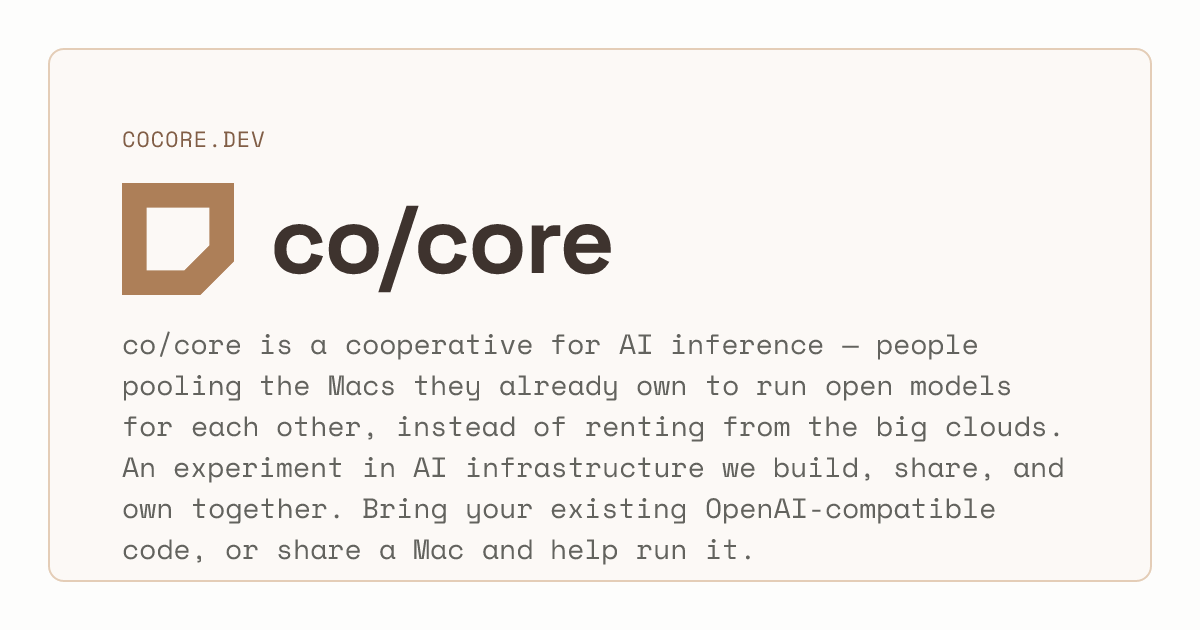
co/core — an AI cooperative
airspace
