


The Envoy Framework addresses a need for computer-based assistants or agents that operate in conjunction with users' existing applications, helping them perform tedious, repetitive, or time-consuming tasks more easily and efficiently. Envoys carry out missions for users by invoking envoy-aware applications called operatives and inform users of mission results via envoy-aware applications called informers. The distributed, open architecture developed for Envoys is derived from an analysis of the best characteristics of existing agent systems. This architecture has been designed as a model for how agent technology can be seamlessly integrated into the electronic desktop. It defines a set of application programmer's interfaces so that developers may convert their software to envoy-aware applications. A subset of the architecture described in this paper has been implemented in an Envoy Framework prototype.
New capabilities for building agents on the Anthropic API | Claude
Claude now offers code execution, MCP server connections, file storage, and extended prompt caching through the API—giving developers powerful tools to build agents that analyze data, connect to external systems, and maintain context for longer periods of time.

The Landscape of Emerging AI Agent Architectures for Reasoning, Planning, and Tool Calling: A Survey
This survey paper examines the recent advancements in AI agent implementations, with a focus on their ability to achieve complex goals that require enhanced reasoning, planning, and tool execution capabilities. The primary objectives of this work are to a) communicate the current capabilities and limitations of existing AI agent implementations, b) share insights gained from our observations of these systems in action, and c) suggest important considerations for future developments in AI agent design. We achieve this by providing overviews of single-agent and multi-agent architectures, identifying key patterns and divergences in design choices, and evaluating their overall impact on accomplishing a provided goal. Our contribution outlines key themes when selecting an agentic architecture, the impact of leadership on agent systems, agent communication styles, and key phases for planning, execution, and reflection that enable robust AI agent systems.

Dive into Claude Code: The Design Space of Today's and Future AI Agent Systems
Claude Code is an agentic coding tool that can run shell commands, edit files, and call external services on behalf of the user. This study describes its comprehensive architecture by analyzing the publicly available TypeScript source code and further comparing it with OpenClaw, an independent open-source AI agent system that answers many of the same design questions from a different deployment context. Our analysis identifies five human values, philosophies, and needs that motivate the architecture (human decision authority, safety and security, reliable execution, capability amplification, and contextual adaptability) and traces them through thirteen design principles to specific implementation choices. The core of the system is a simple while-loop that calls the model, runs tools, and repeats. Most of the code, however, lives in the systems around this loop: a permission system with seven modes and an ML-based classifier, a five-layer compaction pipeline for context management, four extensibility mechanisms (MCP, plugins, skills, and hooks), a subagent delegation mechanism with worktree isolation, and append-oriented session storage. A comparison with OpenClaw, a multi-channel personal assistant gateway, shows that the same recurring design questions produce different architectural answers when the deployment context changes: from per-action safety classification to perimeter-level access control, from a single CLI loop to an embedded runtime within a gateway control plane, and from context-window extensions to gateway-wide capability registration. We finally identify six open design directions for future agent systems, grounded in recent empirical, architectural, and policy literature.
Agent Plugins
A portable package format for reusable components that extend AI agents.
Agent experience: How to design products that agents can actually use — WorkOS
What engineers and founders need to know about designing APIs, tools, and interfaces for agent-driven workflows
New data agents across the Agentic Data Cloud | Google Cloud Blog
Learn about new data agents and tools for business analysts, data scientists, and database admins to integrate with the Agentic Data Cloud.
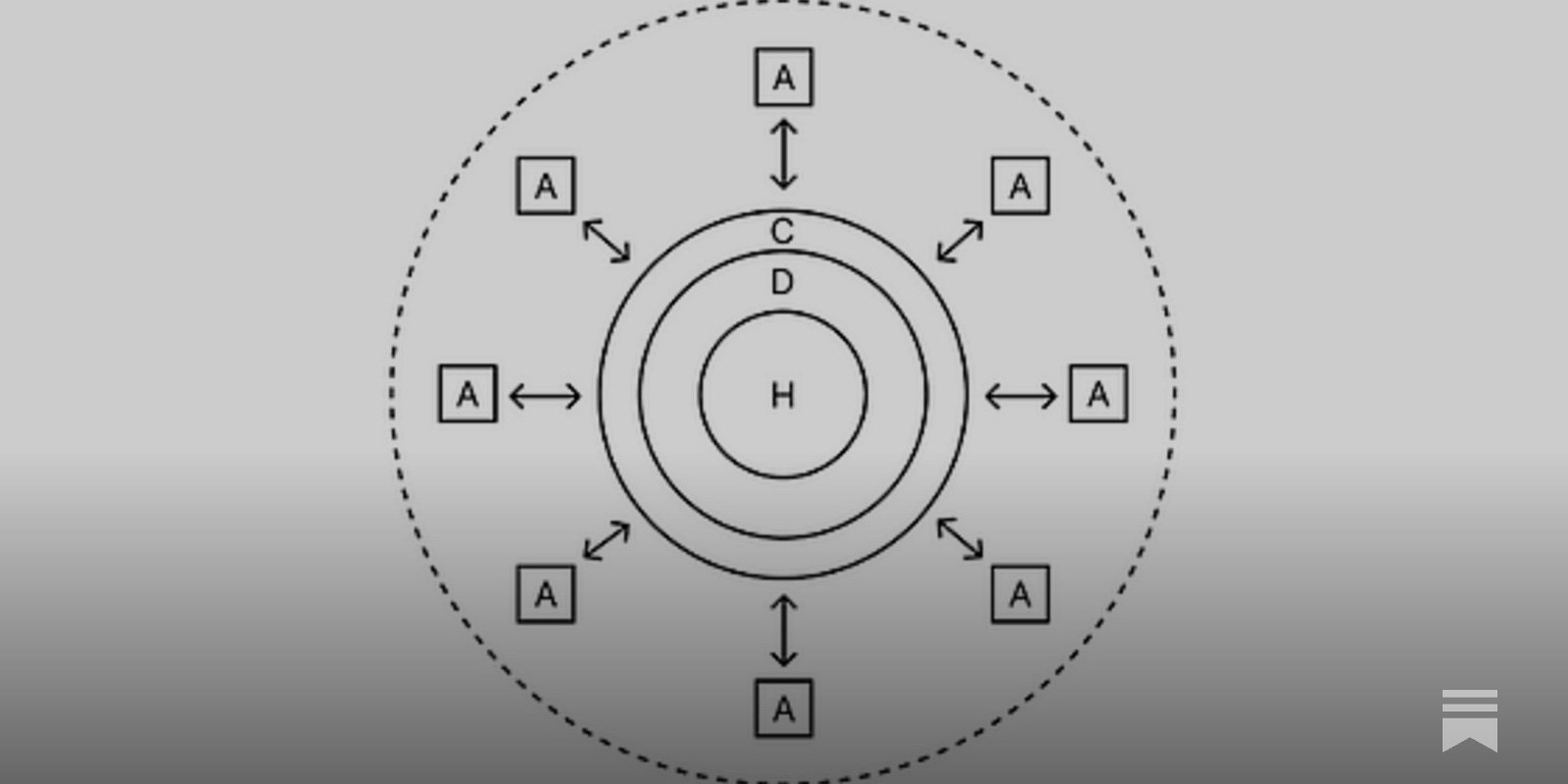
Joshua Gu on Twitter / X
Recent agentic systems (Claude Code, Codex, RLM, etc.) push context out of the prompt and into the environment (e.g., as files). This helps them maintain long-term knowledge about their goals and functionality.🚨 While this is a good idea, we show a surprising result: systems… pic.twitter.com/XHFVaDcr4l— Joshua Gu (@astrogu_) May 20, 2026

Introducing Open Intelligent UI | The Open-Source Alternative to ChatGPT's Intelligent UI

Environments in Managed Agents | Gemini API | Google AI for Developers
Learn about persistent execution environments for managed agents in the Gemini API, including pre-installed software, snapshots, and configuration options.
Building Managed Agents | Gemini API | Google AI for Developers
How to create and use custom agents with managed agents in the Gemini API.
LukeW | Agent Management Interface Patterns
As an increasing number of AI applications evolve to agents doing work for people, agent management becomes a critical part of these product's design. How can p...
Google for Developers Blog - News about Web, Mobile, AI and Cloud
An open specification for finding and verifying tools, skills, and agents across the web.Agents are ...

Google for Developers Blog - News about Web, Mobile, AI and Cloud
An open specification for finding and verifying tools, skills, and agents across the web.Agents are ...