


Most programs today are written not by professional software developers, but by people with expertise in other domains working towards goals for which they need computational support. For example, a teacher might write a grading spreadsheet to save time grading, or an interaction designer might use an interface builder to test some user interface design ideas. Although these end-user programmers may not have the same goals as professional developers, they do face many of the same software engineering challenges, including understanding their requirements, as well as making decisions about design, reuse, integration, testing, and debugging. This article summarizes and classifies research on these activities, defining the area of End-User Software Engineering (EUSE) and related terminology. The article then discusses empirical research about end-user software engineering activities and the technologies designed to support them. The article also addresses several crosscutting issues in the design of EUSE tools, including the roles of risk, reward, and domain complexity, and self-efficacy in the design of EUSE tools and the potential of educating users about software engineering principles.
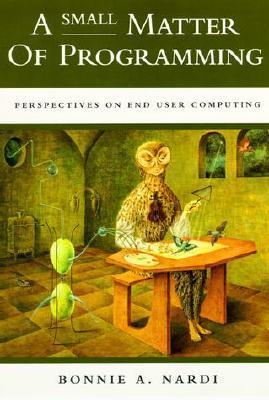
A small matter of programming: perspectives on end user computing
A Small Matter of Programming asks why it has been so d…
Things end users care about but programmers don't
A list of things I've noticed are important for end users but hard for programmers to understand or implement
Usage, Effects and Requirements for AI Coding Assistants in the Enterprise: An Empirical Study
The rise of large language models (LLMs) has accelerated the development of automated techniques and tools for supporting various software engineering tasks, e.g., program understanding, code generation, software testing, and program repair. As CodeLLMs are being employed toward automating these tasks, one question that arises, especially in enterprise settings, is whether these coding assistants and the code LLMs that power them are ready for real-world projects and enterprise use cases, and how do they impact the existing software engineering process and user experience. In this paper we survey 57 developers from different domains and with varying software engineering skill about their experience with AI coding assistants and CodeLLMs. We also reviewed 35 user surveys on the usage, experience and expectations of professionals and students using AI coding assistants and CodeLLMs. Based on our study findings and analysis of existing surveys, we discuss the requirements for AI-powered coding assistants.

Building personal tools by programming

The Next Two Years of Software Engineering
Exploring five critical questions shaping software engineering through 2026, with contrasting scenarios for each. These lenses help prepare for the evolving ...
Malleable Software in the Age of AI - Geoffrey Litt
Tantacrul – Achieving Excellence in Open Source Software Design #FOSSDesign
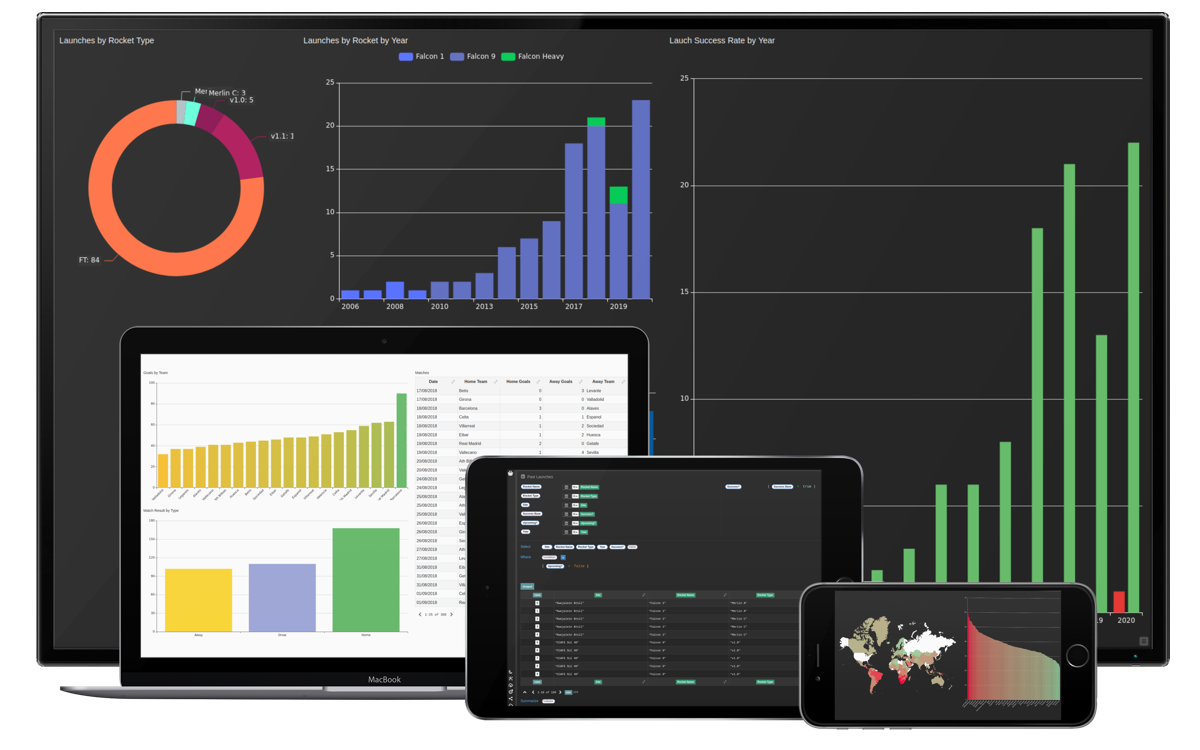
End-user Programming
A vision for empowered computing that reaches back forty years. Our research lab examines why it has been so hard to achieve.
psf (@psf@oldbytes.space)
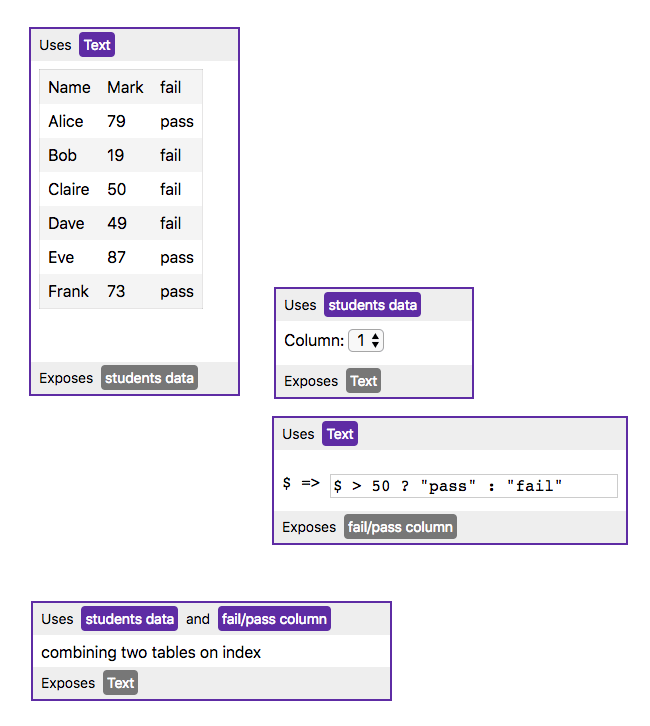
In their article ["Malleable Software"](https://www.inkandswitch.com/essay/malleable-software), Ink & Switch list various ways that modern software applications fail to serve the user: - Software is too rigid: users can’t tailor it to suit their workflow, except by entering the role of programmers. - Software applications are overspecialized "avocado slicers", not general tools like "knives", so their lack of tailorability is keenly felt. - Software doesn’t provide a reasonable learning curve from beginner to expert; in other words, time spent learning an application doesn’t unlock tailorability, instead the end user must learn an unrelated skill like a markup/scripting language or even the tool’s implementation language. - Software applications are increasingly siloed, so sharing data between apps, let alone orchestrating cross-app workflows, is overly difficult. These are real problems. From what I can tell, Ink & Switch are software researchers, and view the problems from a highly technical perspective, focusing on novel infrastructure that enables end-user programmability. They pose questions such as "how do we ease users into programming?" and "instead of shipping a dead, static binary, can we ship a living image containing programming tools allowing it to be modified in arbitrary ways while still running?" These ideas are technologically exquisite, but they fail to provide a gentle learning curve. (cont'd) 🧵
How software engineering is changing: a tale of two eras
We invited readers to write about how building software changed, in an essay challenge. Many of you took part, and today we’re sharing the winning piece from a strong set of entries
What We Know We Don't Know: Empirical Software Engineering
Empirical Software Engineering is the study of what actually works in programming. Instead of trusting our instincts we collect data, run studies, and peer-review our results. This talk is all about how we empirically find the facts in software and some of the challenges we face, with a particular focus on software defects and productivity. Talk doesn’t seem to be online yet; in the meantime, you can see a recording of an older version of the talk here.
The Software Engineering Identity Crisis - Annie Vella
Many of us became software engineers because we found our identity in building things. Not managing things. Not overseeing things. Building things. With our own hands, our own minds, our own code. But …
Software Engineering Productivity Research - Home
The Bulk of Software Engineering is Just Plumbing
I read a post online recently about how some software engineer was asked to complete a technically complex, jargon-filled coding challenge over the...

Dive into Claude Code: The Design Space of Today's and Future AI Agent Systems
Claude Code is an agentic coding tool that can run shell commands, edit files, and call external services on behalf of the user. This study describes its comprehensive architecture by analyzing the publicly available TypeScript source code and further comparing it with OpenClaw, an independent open-source AI agent system that answers many of the same design questions from a different deployment context. Our analysis identifies five human values, philosophies, and needs that motivate the architecture (human decision authority, safety and security, reliable execution, capability amplification, and contextual adaptability) and traces them through thirteen design principles to specific implementation choices. The core of the system is a simple while-loop that calls the model, runs tools, and repeats. Most of the code, however, lives in the systems around this loop: a permission system with seven modes and an ML-based classifier, a five-layer compaction pipeline for context management, four extensibility mechanisms (MCP, plugins, skills, and hooks), a subagent delegation mechanism with worktree isolation, and append-oriented session storage. A comparison with OpenClaw, a multi-channel personal assistant gateway, shows that the same recurring design questions produce different architectural answers when the deployment context changes: from per-action safety classification to perimeter-level access control, from a single CLI loop to an embedded runtime within a gateway control plane, and from context-window extensions to gateway-wide capability registration. We finally identify six open design directions for future agent systems, grounded in recent empirical, architectural, and policy literature.
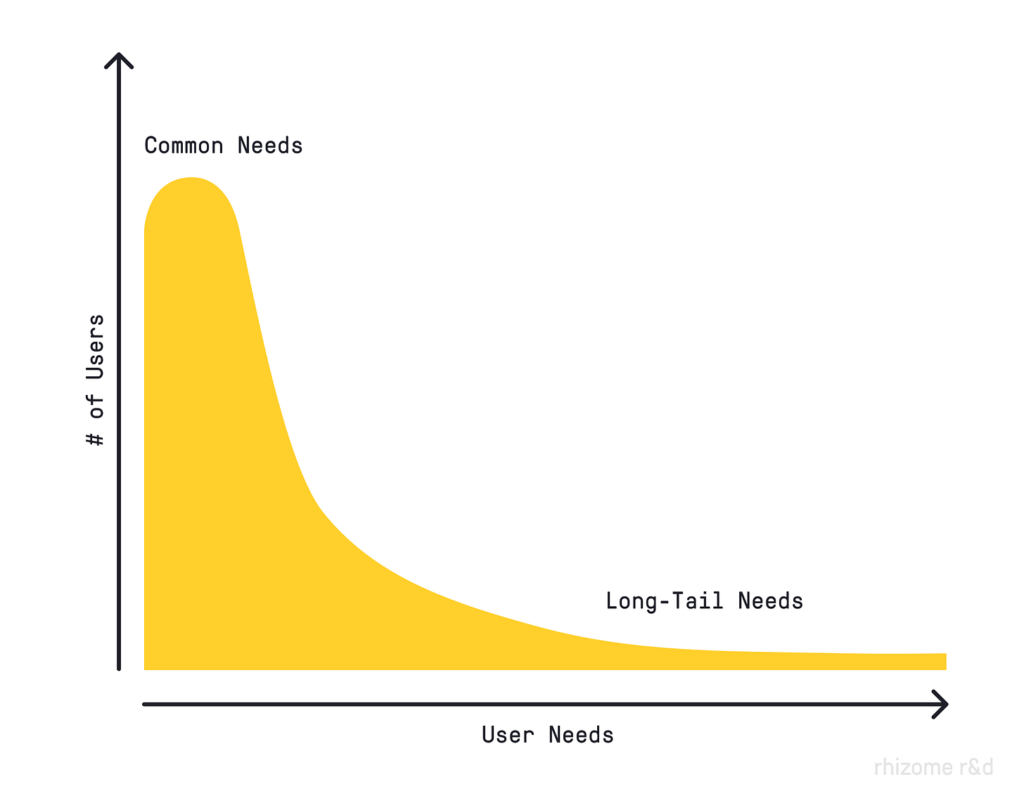
Long-tail of user needs

An analogy to understand how the rigidity of software interfaces fails to meet what we need from it.
User Agency in Other People's Websites - Orion Reed at JOTB25
When to Design for Emergence