

Please wait while we prepare your download. This may take up to 30 seconds depending on how many articles are included.
R. S. Doiel, Software Engineer/Analyst — Robert's ramblings
By R. S. Doiel, 2026-02-21 (revised: 2026-03-03, epilogue added 2026-03-27)
Practical Foundations for Programming Languages
Resugaring | Proceedings of the 35th ACM SIGPLAN Conference on Programming Language Design and Implementation
Syntactic sugar plays a crucial role in engineering programming languages. It offers convenient syntax and higher-level of abstractions, as witnessed by its pervasive use in both general-purpose and domain-specific contexts. Unfortunately, the ...

Boomerang | Proceedings of the 35th annual ACM SIGPLAN-SIGACT symposium on Principles of programming languages
Bidirectional programming languages are a practical approach to the view update problem. Programs in these languages, called lenses, define both a view and an update policy - i.e., every program can be read as a function mapping sources to views as well ...

The Green Side of the Lua
The United Nations' 2030 Agenda for Sustainable Development highlights the importance of energy-efficient software to reduce the global carbon footprint. Programming languages and execution models...

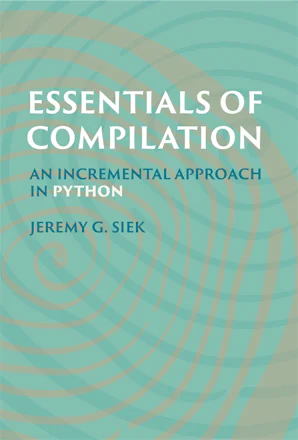
Essentials of Compilation
Compilers are notoriously difficult programs to teach and understand. Most books about compilers dedicate one chapter to each progressive stage, a structure ...
Modular: The Claude C Compiler: What It Reveals About the Future of Software
Compilers occupy a special place in computer science. They're a canonical course in computer science education. Building one is a rite of passage. It forces you to confront how software actually works, by examining languages, abstractions, hardware, and the boundary between human intent and machine execution.

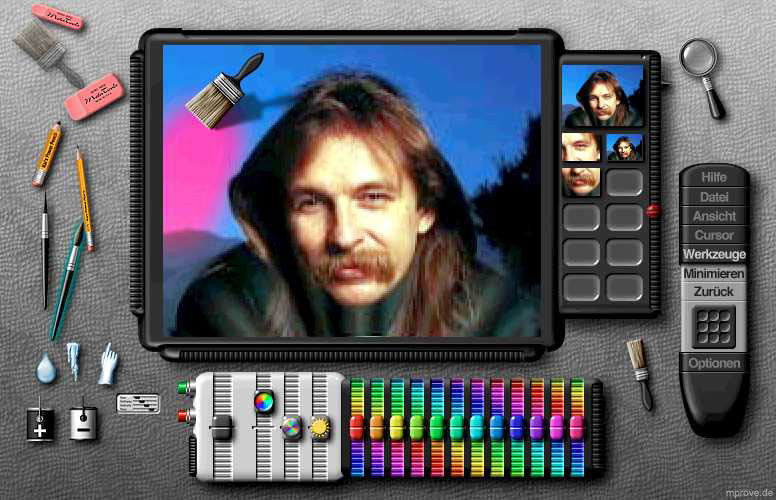
The Interface of Kai Krause's Software @mprove
Matthias Müller-Prove, Innovative Benutzungsschnittstellen, 1998/99, University of Hamburg
Foundations of Algebraic Specification and Formal Software Development
This book provides foundations for software specification and formal software development from the perspective of work on algebraic specification, concentrating on developing basic concepts and studying their fundamental properties. These foundations are built on a solid mathematical basis, using elements of universal algebra, category theory and logic, and this mathematical toolbox provides a convenient language for precisely formulating the concepts involved in software specification and development. Once formally defined, these notions become subject to mathematical investigation, and this interplay between mathematics and software engineering yields results that are mathematically interesting, conceptually revealing, and practically useful. The theory presented by the authors has its origins in work on algebraic specifications that started in the early 1970s, and their treatment is comprehensive. This book contains five kinds of material: the requisite mathematicalfoundations; traditional algebraic specifications; elements of the theory of institutions; formal specification and development; and proof methods. While the book is self-contained, mathematical maturity and familiarity with the problems of software engineering is required; and in the examples that directly relate to programming, the authors assume acquaintance with the concepts of functional programming. The book will be of value to researchers and advanced graduate students in the areas of programming and theoretical computer science.
The End of Programming as We Know It
With the O’Reilly learning platform, you get the resources and guidance to keep your skills sharp and stay ahead. Try it free for up to 14 days.

Welcome to Software Foundations in Coq
Learn C • Build Your Own Lisp
If you're looking to learn C, or you've ever wondered how to build your own programming language, this is the book for you.
OCaml Programming: Correct + Efficient + Beautiful — OCaml Programming: Correct + Efficient + Beautiful
A textbook on functional programming and data structures in OCaml, with an emphasis on semantics and software engineering. This book is the textbook for CS 3110 Data Structures and Functional Programming at Cornell University. A past title of this book was “Functional Programming in OCaml”.
The future of programming and computing

Trends and adjacent possibles for the future of how computers are used and programmed
SaaS Isn’t Dead. Sameness Is. - The Phoenix Architecture
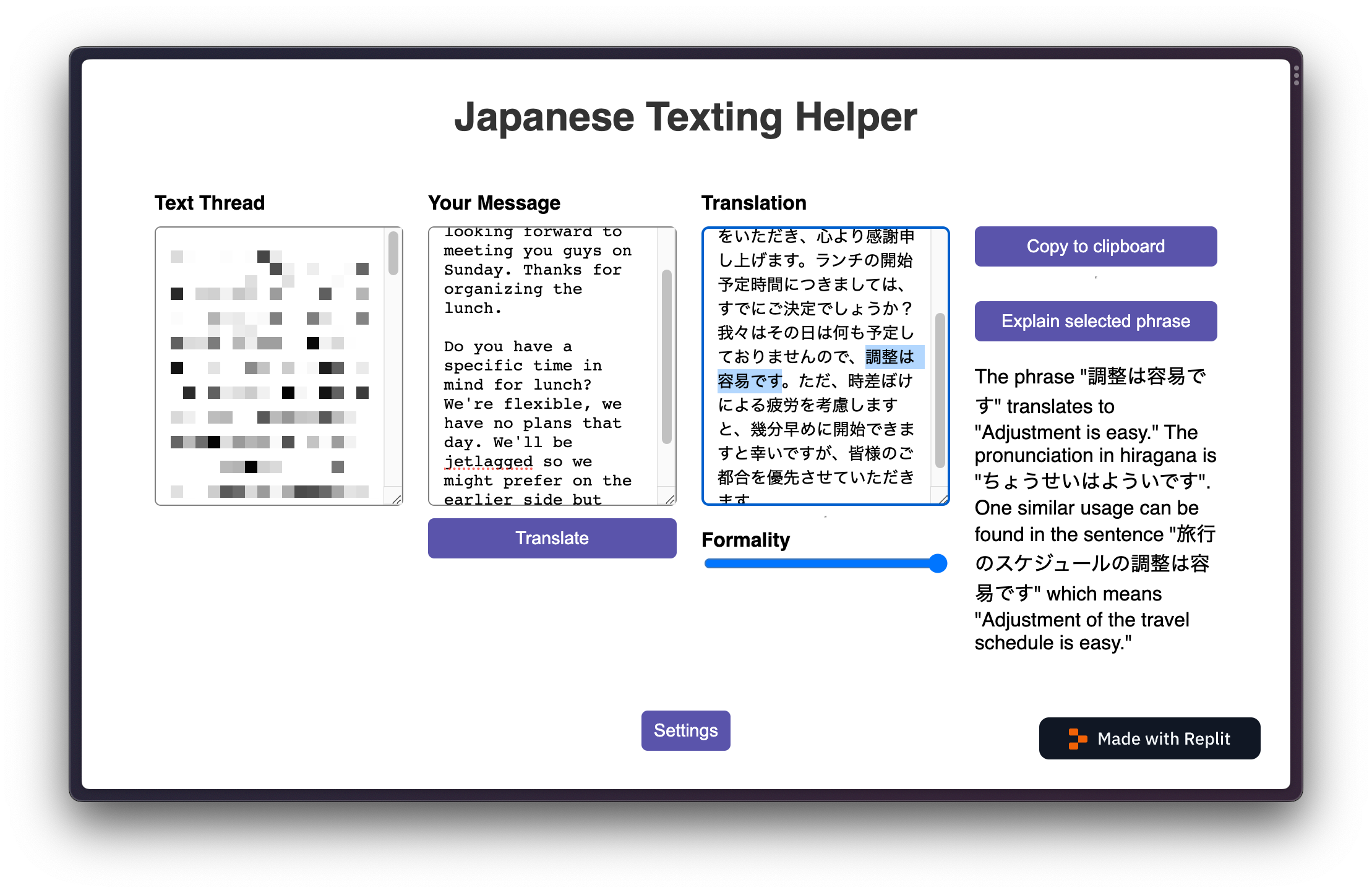
Codifying a ChatGPT workflow into a malleable GUI

MercuryOS
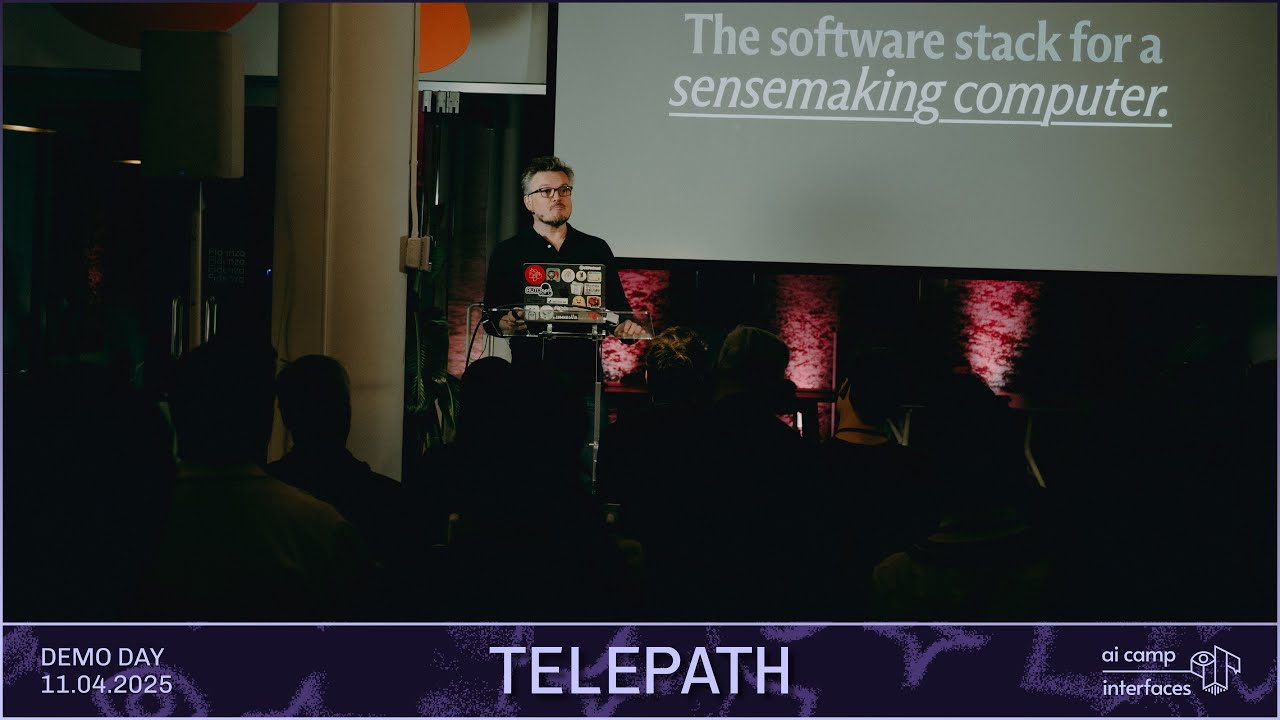
Telepath's Sensemaking Computer Upends Personal Computing

Vendo · Your product, shaped to every customer
block/buzz