

Five diverse technology companies show how it's done.
Knowledge Graphs
In this article, we provide a comprehensive introduction to knowledge graphs, which have recently garnered significant attention from both industry and academia in scenarios that require exploiting diverse, dynamic, large-scale collections of data. After some opening remarks, we motivate and contrast various graph-based data models, as well as languages used to query and validate knowledge graphs. We explain how knowledge can be represented and extracted using a combination of deductive and inductive techniques. We conclude with high-level future research directions for knowledge graphs.
Introducing the Knowledge Graph: things, not strings
We hope this will give you a more complete picture of your interest, provide smarter search results, and pique your curiosity.

Where Tech Companies Build Communities
The customizable, scalable community platform powering over 22,000 communities. Create knowledge through conversation.
See what you think
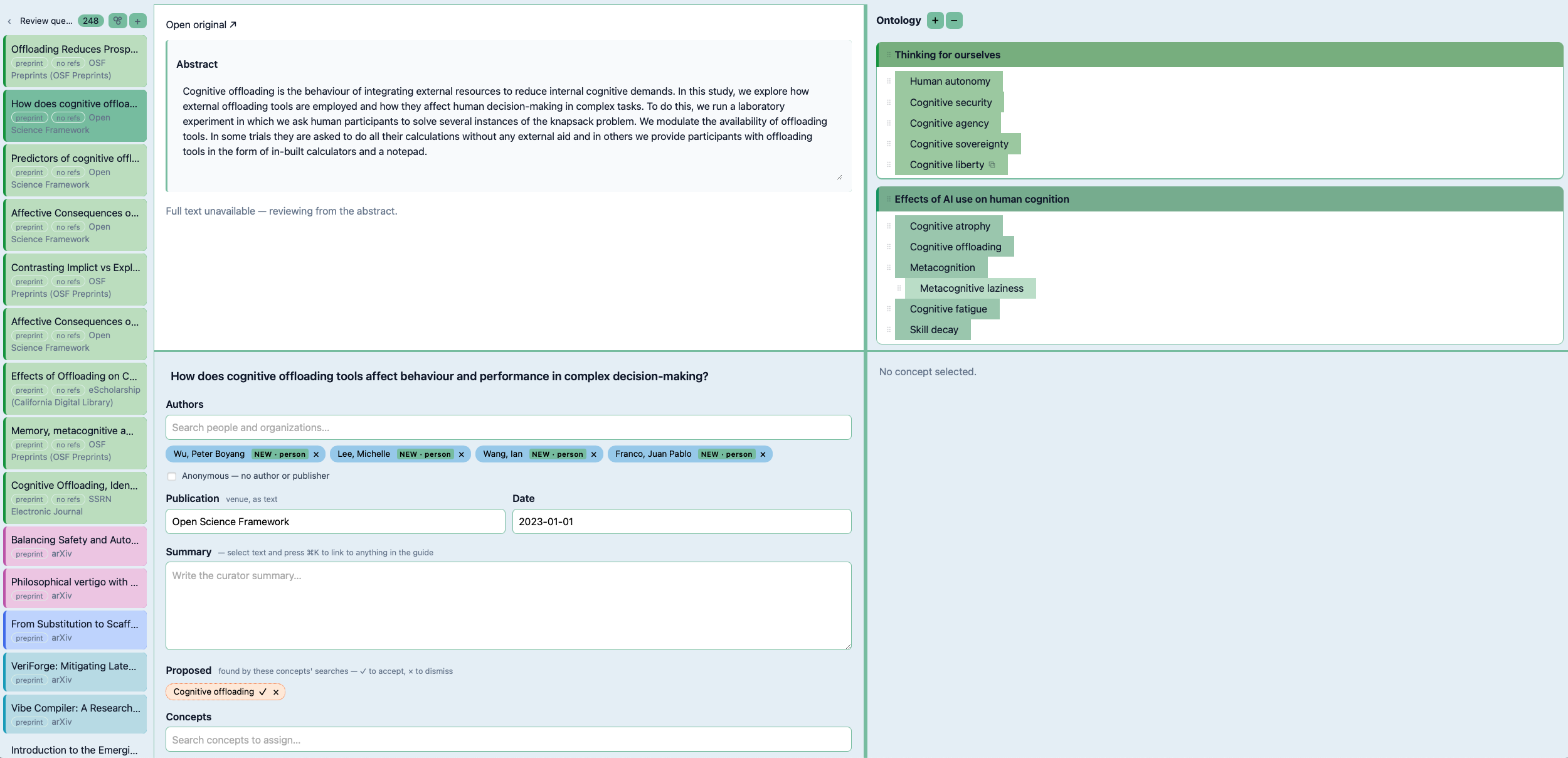
Allegra A. Beal Cohen's blog about knowledge curation, new interfaces, and large-scale qualitative data.
Santiago on Twitter / X
Knowledge graphs for representing information are unbeatable.After this, you will never build a RAG system without knowledge graphs.It will take you five lines of code to build a knowledge graph with your data.I recorded a video to show you how you can do this.I used… pic.twitter.com/1jQ6Gejczq— Santiago (@svpino) September 26, 2025

Orrery, a Knowledge Graph That Adapts to Its Corpus
Orrery is our open-source knowledge graph that gets deeper as you feed it: domains that hit critical mass earn their own custom extraction specs, agents get an API, and humans get a galaxy. The whole …
Outcomes Graph: A protocol for applied science coordination - DeepScience Ventures
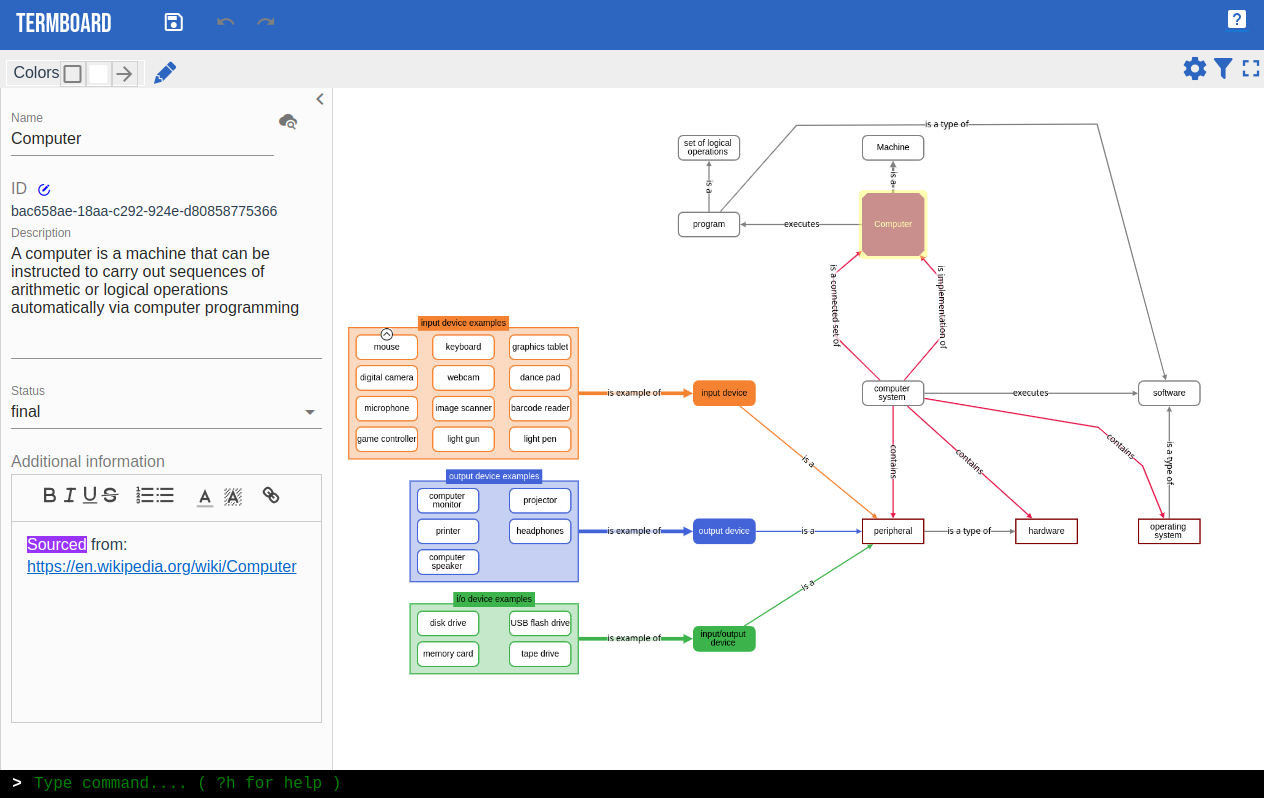
In this article, we explain how our Outcomes Graph works, including how the functions of scientific knowledge shape the features we've developed and how we're using it to harness the collective intelligence of venture scientists.

How NASA is Using Graph Technology and LLMs to Build a People Knowledge Graph
Missed NASA’s People Graph webinar? Catch the recap and see how graph technology and AI are shaping the future of workforce intelligence.
Scaling Engineering Teams: Lessons from Google, Facebook, and Netflix
After spending over a decade in engineering leadership roles at some of the world’s most chaotic innovation factories—Google, Facebook, and Netflix—I’ve learned one universal truth: scaling e…

Facebook, Amazon, Google, IBM and Microsoft come together to create the Partnership on AI | TechCrunch
The world's largest technology companies hold the keys to some of the largest databases on our planet. Much like goods and coins before it, data is
Rebuilding product strategy for the next era
For tech leaders navigating change, this is how we’re doing it differently. By Suba Vasudevan, COO, Mozilla.

Why Do the Biggest Companies Keep Getting Bigger? It’s How They Spend on Tech
The secret of success for Amazon, Google and Microsoft is how much they invest in their own technology.

Just-In-Time PM #4: Intermediate Packets - Forte Labs
In Part 3, I argued that having a personal knowledge base is the linchpin of success in a creative economy. A knowledge base allows you to reuse past work, draw from past experiences, share your knowledge in concrete form, and eventually, build products and services out of that knowledge. This requires strategically structuring your work in the first place, as a series of what I call intermediate packets.

Ontology-Driven Observability: Building an End-to-End Knowledge Graph at Netflix Scale
Prasanna Vijayanathan, Renzo Sanchez-Silva
