In this article, we provide a comprehensive introduction to knowledge graphs, which have recently garnered significant attention from both industry and academia in scenarios that require exploiting diverse, dynamic, large-scale collections of data. After some opening remarks, we motivate and contrast various graph-based data models, as well as languages used to query and validate knowledge graphs. We explain how knowledge can be represented and extracted using a combination of deductive and inductive techniques. We conclude with high-level future research directions for knowledge graphs.
Introducing the Knowledge Graph: things, not strings
We hope this will give you a more complete picture of your interest, provide smarter search results, and pique your curiosity.

Santiago on Twitter / X
Knowledge graphs for representing information are unbeatable.After this, you will never build a RAG system without knowledge graphs.It will take you five lines of code to build a knowledge graph with your data.I recorded a video to show you how you can do this.I used… pic.twitter.com/1jQ6Gejczq— Santiago (@svpino) September 26, 2025

AutoSchemaKG: Autonomous Knowledge Graph Construction through Dynamic Schema Induction from Web-Scale Corpora
In the current era of information abundance, transforming vast amounts of unstructured data into structured, machine-readable knowledge remains one of the most significant challenges in artificial intelligence. Knowledge Graphs (KGs) have emerged as the cornerstone technology for this transformation Zhao et al. (2024), providing the semantic backbone for applications ranging from search engines and question answering Wu et al. (2024); Chen et al. (2024c); Zong et al. (2024); Sun et al. (2024b) to recommendation systems Lyu et al. (2024) and complex reasoning tasks Li et al. (2024b). Yet despite their critical importance, current KG construction approaches remain hampered by an inherent paradox: they require predefined schemas created by domain experts, which fundamentally limits their scalability, adaptability, and domain coverage.
Orrery, a Knowledge Graph That Adapts to Its Corpus
Orrery is our open-source knowledge graph that gets deeper as you feed it: domains that hit critical mass earn their own custom extraction specs, agents get an API, and humans get a galaxy. The whole …

DevReal: Simple Knowledge Graphs with Outlines, neo4j, and Modal, Cameron Pfiffer
Industry-scale knowledge graphs: lessons and challenges
Five diverse technology companies show how it's done.
Triple Pattern Fragments: a Low-cost Knowledge Graph Interface for the Web
Does this article spark your interest? Then we should work together!
Semantic Data Modeling, Graph Query, and SQL, Together at Last?
Our teams advance the state of the art through research, systems engineering, and collaboration across Google.

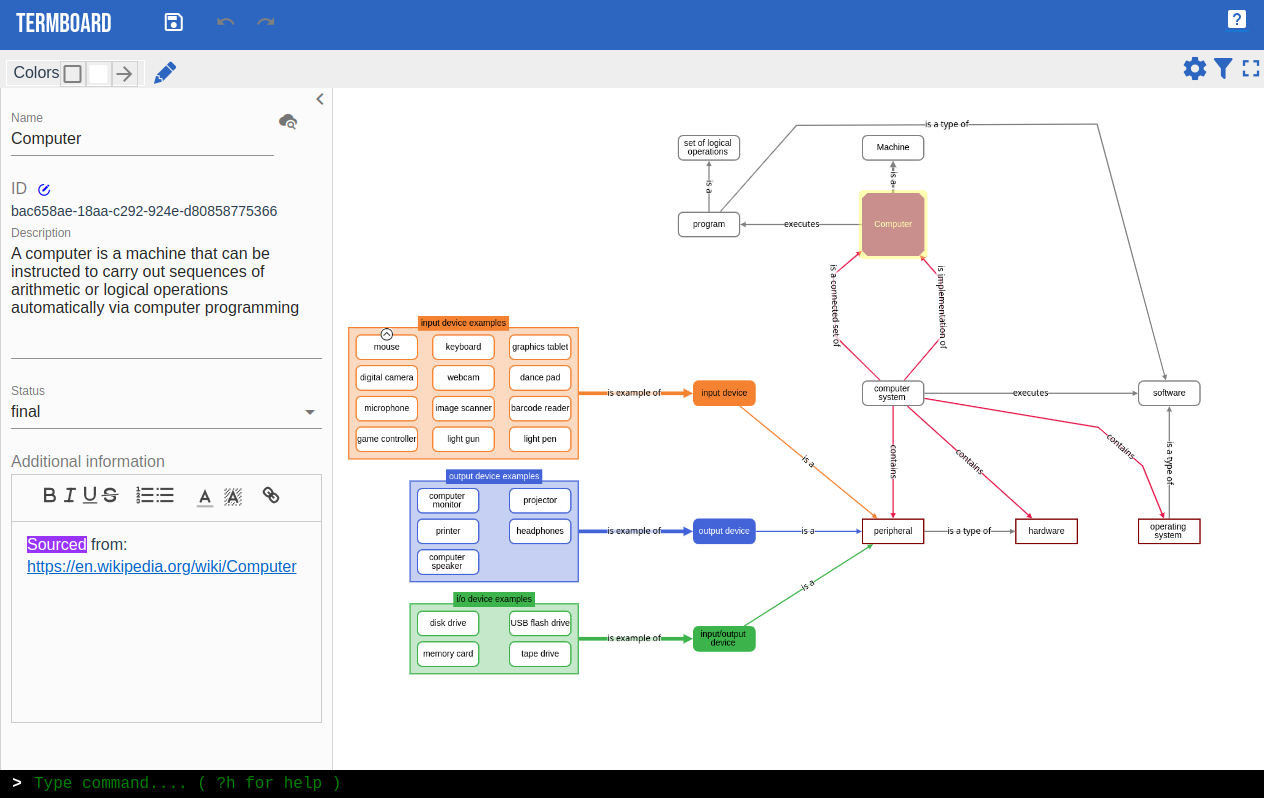
Chive's knowledge graph - Chive
How Chive's community-governed knowledge graph replaces hardcoded categories with a portable, extensible vocabulary.
Checking Reproducibility with the Open Research Knowledge Graph. Husein, Lorenz
KARMA: Leveraging Multi-Agent LLMs for Automated Knowledge Graph Enrichment
Maintaining comprehensive and up-to-date knowledge graphs (KGs) is critical for modern AI systems, but manual curation struggles to scale with the rapid growth of scientific literature. This paper presents KARMA, a novel framework employing multi-agent large language models (LLMs) to automate KG enrichment through structured analysis of unstructured text. Our approach employs nine collaborative agents, spanning entity discovery, relation extraction, schema alignment, and conflict resolution that iteratively parse documents, verify extracted knowledge, and integrate it into existing graph structures while adhering to domain-specific schema. Experiments on 1,200 PubMed articles from three different domains demonstrate the effectiveness of KARMA in knowledge graph enrichment, with the identification of up to 38,230 new entities while achieving 83.1% LLM-verified correctness and reducing conflict edges by 18.6% through multi-layer assessments.
Discover the Power of Knowledge Graphs with this n8n InfraNodus Node
GraphRAG: A Practitioner's Guide to 6 Advanced Architectural Patterns
Beyond basic graph retrieval: six production-oriented architectures for combining semantic search, knowledge graphs, and LLM reasoning.

Getting started - Docs
Discourse Graphs are a tool and ecosystem for collaborative knowledge synthesis, enabling researchers to map ideas and arguments in a modular, composable graph format.
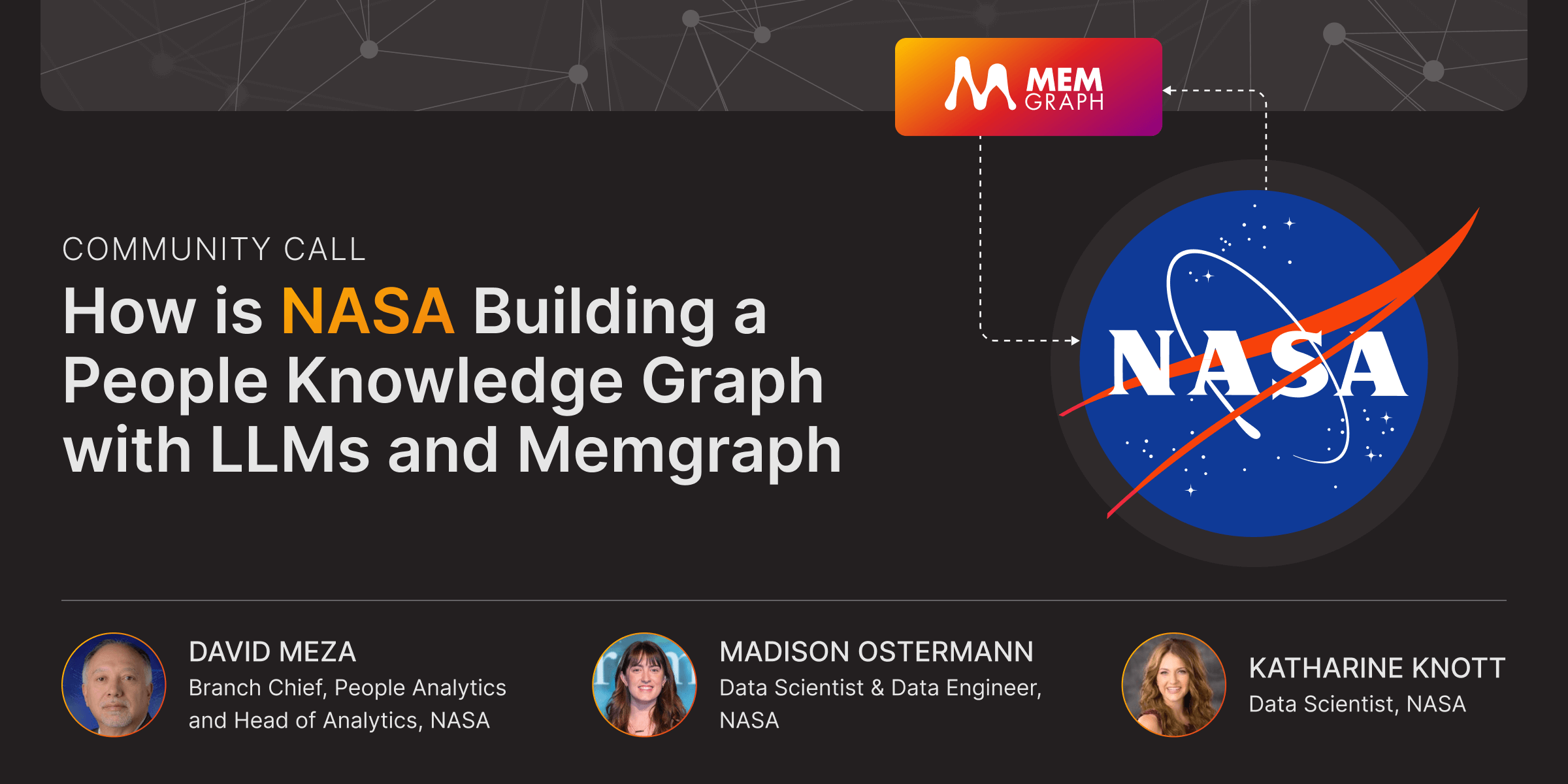
How NASA is Using Graph Technology and LLMs to Build a People Knowledge Graph
Missed NASA’s People Graph webinar? Catch the recap and see how graph technology and AI are shaping the future of workforce intelligence.