

Creative Technologists are moving from the margins to the center
Once an obscure job title, creative technology is becoming a new way of working, and a core capability inside modern product teams. Soon…
Creative Computing Group by @tgoerke.bsky.social — Grain
Let's start a group at CODIP to explore creative computing. Let's not start by defining creativity nor computing. It would be a trap. Let's collect artifacts instead. Images, text, thoughts,...
What Makes Us Smart?
Human creativity does not solely rely on our individual cognitive abilities, but instead emerges from the recombination of ideas, practices, and approaches that result from social interactions and id...

Knowledge sharing: Why smart creatives build in public
Knowledge sharing: Why smart creatives build in public
Creative Computing Institute
Working at the intersection of creativity and computational technologies.

Revisiting creative behaviour as an epistemic process: lessons from 12 computational artists and designers | Proceedings of the 35th Australian Computer-Human Interaction Conference
As part of the Digital Library's transition to Open Access, new features for researchers are available in the Premium Edition. Click here to learn more.

Combinatorial Creativity
Combinatorial creativity recombines existing ideas to spark novel, valuable innovations in cognition, AI, and design.
Creative Edinburgh
Creative Edinburgh unites creative thinkers across the city. Through events, career support and advocacy, we bring together and help grow the city’s creative community.
Creative limitation
Creative limitation is the concept of how purposely limiting oneself can actually drive creativity. At a 2013 TED conference, artist Phil Hansen made several remarks concerning the value of limitations, among them that "We need to first be limited in order to become limitless,” and “If you treat the problems as possibilities, life will start to dance with you in the most amazing ways.”[TED.com 1]
Artist Corporations: A groundbreaking structure for creative people
Creative people deserve the same economic advantages as everyone else. So we’re going to build it together.
Thinking outside the box means thinking outside the search engine
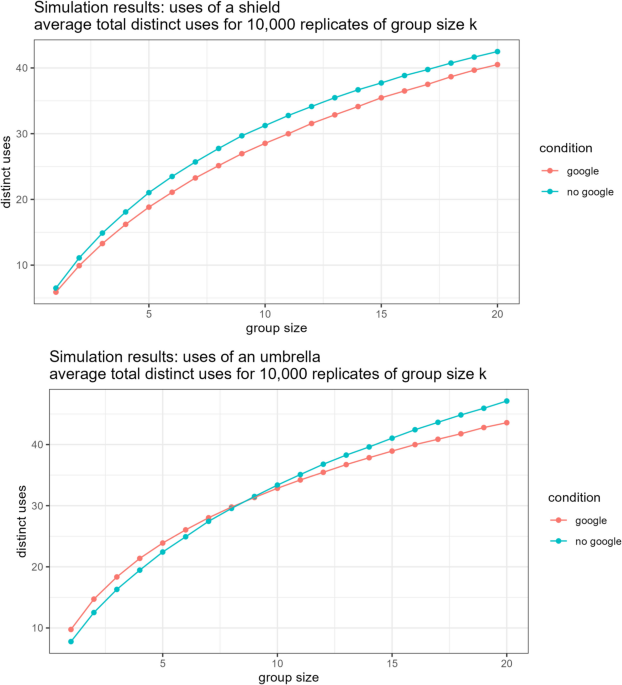
This study investigates the impact of internet access on creativity and identifies potential hidden costs of internet use for groups. Using the alternative uses task, we randomized participants (N = 244) into separate conditions to generate ideas for nonstandard uses for one of two common objects—a shield or an umbrella—either with or without internet access. Nominal group analysis reveals that while individual creativity may be enhanced by internet access, groups articulate fewer novel solutions when provided internet access, suggesting that internet access may constrain collective creative fluency. We also ran a reanalysis of previous data sets on creativity and internet use and found robust converging evidence across different paradigms, coders, and contexts. We further explore robustness by examining alternative operationalizations of fluency: quality of responses, as measured by coders’ evaluations of effectiveness, novelty, and subjective evaluations of creativity. While overall trends suggest an advantage for subjects who do not have internet access, this patterning depends to some degree on variation among coders. Implications for the way digital tools influence creative processes are discussed.
Great creative work is usually the product of a single person