

Location, Sensors, Voice, Photos?! Spotify Just Got Real Creepy With The Data It Collects On You
Spotify has updated its privacy policy, and users should be careful about what they agree to. The music streaming giant now wants phone sensor information to determine if users are moving or standing still, GPS location, photos, contacts and much more.

Tech Companies Are Trying to Shift the Entire Concept of Privacy
Privacy, which companies were once happy to claim was all about personal choice, is now primed to affect everyone around you even more than it already did.Meta and Google’s smart glasses can record
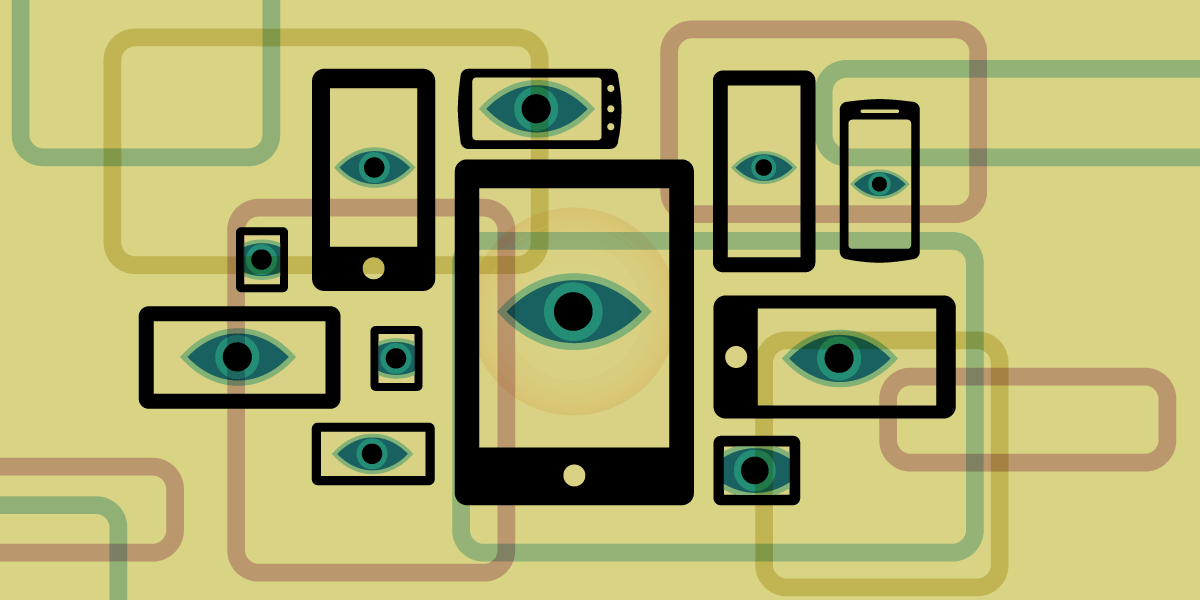
Privacy is a collective concern
When we tell companies about ourselves, we give away details about others, too.

Unique in the Crowd: The privacy bounds of human mobility
We study fifteen months of human mobility data for one and a half million individuals and find that human mobility traces are highly unique. In fact, in a dataset where the location of an individual is specified hourly and with a spatial resolution equal to that given by the carrier's antennas, four spatio-temporal points are enough to uniquely identify 95% of the individuals. We coarsen the data spatially and temporally to find a formula for the uniqueness of human mobility traces given their resolution and the available outside information. This formula shows that the uniqueness of mobility traces decays approximately as the 1/10 power of their resolution. Hence, even coarse datasets provide little anonymity. These findings represent fundamental constraints to an individual's privacy and have important implications for the design of frameworks and institutions dedicated to protect the privacy of individuals.

Privacy and human behavior in the age of information
This Review summarizes and draws connections between diverse streams of empirical research on privacy behavior. We use three themes to connect insights from social and behavioral sciences: people's uncertainty about the consequences of privacy-related behaviors and their own preferences over those consequences; the context-dependence of people's concern, or lack thereof, about privacy; and the degree to which privacy concerns are malleable—manipulable by commercial and governmental interests. Organizing our discussion by these themes, we offer observations concerning the role of public policy in the protection of privacy in the information age.
Measuring the Privacy Experience
How do you know that a product respects your privacy – other than by wading through the fine print? We’ve created a framework to measure the way people actually experience privacy in tech products.
Data anonymization doesn't make you anonymous. | Proton
Anonymized data can still be traced back to you. Here's how companies use it, and how you can protect your privacy.
Your Apps Know Where You Were Last Night, and They’re Not Keeping It Secret (Published 2018)
Dozens of companies use smartphone locations to help advertisers and even hedge funds. They say it’s anonymous, but the data shows how personal it is.

Debunking the Myth of “Anonymous” Data
Today, almost everything about our lives is digitally recorded and stored somewhere. Each credit card purchase, personal medical diagnosis, and preference about music and books is recorded and then
Data Harvesting at Google Not a Rogue Act, Report Finds (Published 2012)
Google’s collecting of personal information from unsuspecting households was a program supervisors knew about, according to new details from the full text of a regulatory report.

How Data Can Be Used Against People: A Classification of Personal Data Misuses
Even after decades of intensive research and public debates, the topic of data privacy remains surrounded by confusion and misinformation. Many people still str

Opinion | It’s Time to Panic About Privacy (Published 2019)
We claim to want it, companies claim to provide it, but we all just accept that, well, you have no privacy online.

Opinion | The Dark Market for Personal Data (Published 2014)
Companies should disclose the information they sell about us.

Nonrivalry and the Economics of Data
(September 2020) - Data is nonrival: a person's location history, medical records, and driving data can be used by many firms simultaneously. Nonrivalry leads to increasing returns. As a result, there may be social gains to data being used broadly across firms, even in the presence of privacy considerations. Fearing creative destruction, firms may choose to hoard their data, leading to the inefficient use of nonrival data. Giving data property rights to consumers can generate allocations that are close to optimal. Consumers balance their concerns for privacy against the economic gains that come from selling data broadly.
Privacy Not Included Has Moved
Privacy Not Included was launched in 2017 to help you understand the privacy risks of tech products that connect to the internet. We are continuing that work in the form of Product Reviews at our magazine Nothing Personal, where our privacy experts do hours of hands-on testing and research on the most popular consumer tech items and their privacy features.

Monitoring Data Minimisation
Data minimisation is a privacy enhancing principle, stating that personal data collected should be no more than necessary for the specific purpose consented by the user. Checking that a program...
