


Wer seine eigenen Internetdienste souverän anbieten und nutzen will, steht vor mehreren Herausforderungen. Hier ein Überblick über die Stolperfallen und ein
[39c3] Auf die Dauer hilft nur Power: Herausforderungen für dezentrale Netzwerke aus Sicht der Soziologie
Die Soziologie hat immer etwas mitzuteilen, sobald Fragen kollektiven Handelns auftreten. Dies gilt sowohl für soziale wie auch digitale Räume. So hat der Soziologe Peter Kollock bereits in den 1990er Jahren festgestellt, „the Internet is filled w...

USA sanktionieren italienisches Internetkollektiv
Die USA setzen ihren Kampf gegen linke zivilgesellschaftliche Projekte in Europa fort. Nun hat es das bekannte Internetkollektiv Autistici/Inventati getroffen. Das wehrt sich gegen die Vorwürfe und Sanktionen.

Netzbremse - Die Telekom drosselt das Netz!
Wenn du Kund:in der Deutschen Telekom bist und manche Webseiten einfach nicht laden wollen, dann haben wir vielleicht die Lösung für dein Problem!

Internetkollektiv Autistici/Inventati stellt Betrieb ein
Keine zwei Wochen, nachdem die US-Regierung das italienische Internetkollektiv Autistici/Inventati zur Terrorgefahr erklärt hatte, drehen die Aktivist:innen ihre kostenlosen Online-Dienste ab. Nutzer:innen sollten rasch handeln und ihre Daten sichern.

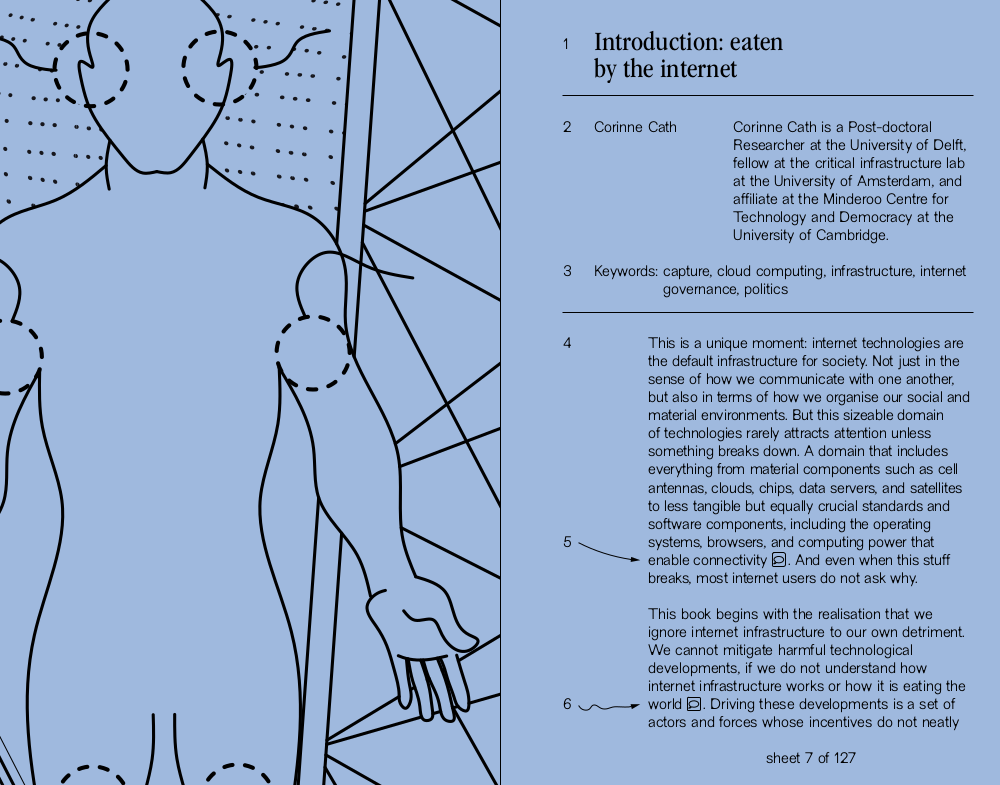
Eaten by the Internet
This book makes internet infrastructure visible as a force of political power, which is transforming the social world, from the bottom up—through fifteen chapters contributed by a global set of researchers, activists, and techies. We are living a unique moment: internet technologies are the default infrastructure for society, not just how we communicate but also how we organise our social life, politics, and economy, all the way down to our material environments, like cities. Our world is eaten by the internet. This means that those who control the internet control the bounds of public speech, economic production, social cohesion, and politics, making its infrastructure a core political terrain in the networked age. The book’s chapters cover a wide set of topics, spanning from the global politics of content moderation by internet infrastructure to the colonialism inherent in the race to plug the moon, from the harms wrought by blockchain companies in rural America to the particularities of online censorship across Asia. The chapters take on thorny topics, discussing power consolidation in the advertisement and cloud industry, the role of internet infrastructure in the war in Ukraine, and tech’s environmental impact—amongst others. In doing so, this book roots contemporary technology debates in the politics of internet infrastructure and urges us to ask how can we ensure our infrastructures sustain us, rather than consume us?
Internet à moda antiga: conheça a indie web, onde as pessoas ainda fazem seus próprios sites
Fora das redes sociais, há um rico ecossistema de sites feitos à mão, que tentam resgatar a estrutura e a filosofia do início da vida digital.
PublicSpaces conferentie 2026: Technology for democracy
PublicSpaces conferentie 2026: Technology for democracy
Internet for the People: The Fight for Our Digital Future
"For all the informational convenience the internet offers, it is deeply flawed. How can it be improved? Writer Ben Tarnoff proposes one possibility in this intriguing book, which urges the development of 'a public lane on the information superhighway.' It's worth checking out for yourself." – Seth MacFarlane Why is the internet so broken, and what could ever possibly fix it? In Internet for the People, leading tech writer Ben Tarnoff offers an answer. The internet is broken, he argues, because it is owned by private firms and run for profit. Google annihilates your privacy and Facebook amplifies right-wing propaganda because it is profitable to do so. But the internet wasn't always like this—it had to be remade for the purposes of profit maximization, through a years-long process of privatization that turned a small research network into a powerhouse of global capitalism. Tarnoff tells the story of the privatization that made the modern internet, and which set in motion the crises that consume it today. The solution to those crises is straightforward: deprivatize the internet. Deprivatization aims at creating an internet where people, and not profit, rule. It calls for shrinking the space of the market and diminishing the power of the profit motive. It calls for abolishing the walled gardens of Google, Facebook, and the other giants that dominate our digital lives and developing publicly and cooperatively owned alternatives that encode real democratic control. To build a better internet, we need to change how it is owned and organized. Not with an eye towards making markets work better, but towards making them less dominant. Not in order to create a more competitive or more rule-bound version of privatization, but to overturn it. Otherwise, a small number of executives and investors will continue to make choices on everyone’s behalf, and these choices will remain tightly bound by the demands of the market. It's time to demand an internet by, and for, the people now.
Internet for the People: The Fight for Our Digital Future
"For all the informational convenience the internet offers, it is deeply flawed. How can it be improved? Writer Ben Tarnoff proposes one possibility in this intriguing book, which urges the development of 'a public lane on the information superhighway.' It's worth checking out for yourself." – Seth MacFarlane Why is the internet so broken, and what could ever possibly fix it? In Internet for the People, leading tech writer Ben Tarnoff offers an answer. The internet is broken, he argues, because it is owned by private firms and run for profit. Google annihilates your privacy and Facebook amplifies right-wing propaganda because it is profitable to do so. But the internet wasn't always like this—it had to be remade for the purposes of profit maximization, through a years-long process of privatization that turned a small research network into a powerhouse of global capitalism. Tarnoff tells the story of the privatization that made the modern internet, and which set in motion the crises that consume it today. The solution to those crises is straightforward: deprivatize the internet. Deprivatization aims at creating an internet where people, and not profit, rule. It calls for shrinking the space of the market and diminishing the power of the profit motive. It calls for abolishing the walled gardens of Google, Facebook, and the other giants that dominate our digital lives and developing publicly and cooperatively owned alternatives that encode real democratic control. To build a better internet, we need to change how it is owned and organized. Not with an eye towards making markets work better, but towards making them less dominant. Not in order to create a more competitive or more rule-bound version of privatization, but to overturn it. Otherwise, a small number of executives and investors will continue to make choices on everyone’s behalf, and these choices will remain tightly bound by the demands of the market. It's time to demand an internet by, and for, the people now.
The Future of the Internet | Jonathan Zittrain | Talks at Google
La face cachée d'internet
Hackers, bitcoins, piratage, Wikileaks, Anonymous, darkweb, Tor, vote électronique, chiffrement…Internet, et globalement le numérique, est un des acteurs majeurs du monde dans lequel nous vivons. Pour autant, les menaces qu'il porte semblent s'intensifier. Mais de quoi parle-t-on lorsqu'on dit piratage, diffusion de malwares, surveillance des États, vol de données personnelles ?Qui a réellement intérêt à pirater les sites de rencontres ou votre profil Facebook ? Pourquoi et comment voler vos données ? Les hackers qui visaient les messages d'Hillary Clinton étaient-ils russes ? Comment ces choses arrivent-elles ? Qui sont les lanceurs d'alerte ? Et qu'est-ce que le darkweb où nous pouvons acheter, entre autres, des bitcoins ? Est-il si terrifiant – et dangereux – qu'on le dit ?Ce livre cartographie et clarifie avec nuance les actions et les acteurs de cet espace virtuel et pourtant si réel qu'est l'Internet. Il en révèle les dessous, les démystifie, en des termes clairs et à travers des éclairages de spécialistes du sujet. Il nous invite et nous aide à comprendre ce que ce monde en soi « cache », ses enjeux principaux, ses dangers réels. Pour moins en avoir peur, pour mieux le maîtriser, être plus autonome dans nos usages, plus libre en somme. Experte en gestion des risques et des crises, Rayna Stamboliyska est consultante auprès d'entreprises et d'organisations internationales et les conseille dans leur développement numérique. Elle a également étudié et enquêté sur l'impact des données et technologies de l'information dans de nombreux pays en situation de conflit ou post-conflit, notamment en Russie

W Social, le réseau social européen et open source qui ne l’était pas vraiment
Censé être un grand jour pour l’internet européen, le 17 juin dernier a pris des airs de farce. Le lancement de W, le réseau social européen, a

Rewilding the internet with ATProto
So far, many of the projects in the ATProtocol ecosystem have focused on bringing parity—making projects that replicate our existing tools and platforms, but with the affordances of the protocol instead. That's cool and we need to do that, but I think we can go much farther, and take this opportunity to challenge some of the biggest assumptions of what the modern internet is for, who builds it, and how we interact with it. This talk is in conversation with several of the talks from last year, and in I'll argue that we'll never get away from skeuomorphism until we've fundamentally changed the definition of what "the social internet" means in the first place.
The time is now: Bye Bye Big Tech
Bits of Freedom komt op voor internetvrijheid door de online grondrechten op communicatievrijheid en privacy te beschermen.
Fix the internet, save democracy

The internet has evolved into a state that is actively hostile towards global democracy. A thesis is emerging that to save global democracy, you must fix the internet.
The IndieWeb Is Punk Manifesto

The Retweeting Class

Funding The Web: From Cartel to Covenant

Protocols, Not Platforms: A Technological Approach to Free Speech

The architecture of the internet creates risks for democracy