

Manage your content with type safety.
EmDash
The Astro-native CMS. A modern successor to WordPress with type-safe content, plugin extensibility, and portable deployment.
Anytype — A safe haven for digital collaboration
Create notes, tasks, databases, and chats that only you can access. Your data stays on your device — fully owned, secure, and private. Free to start.
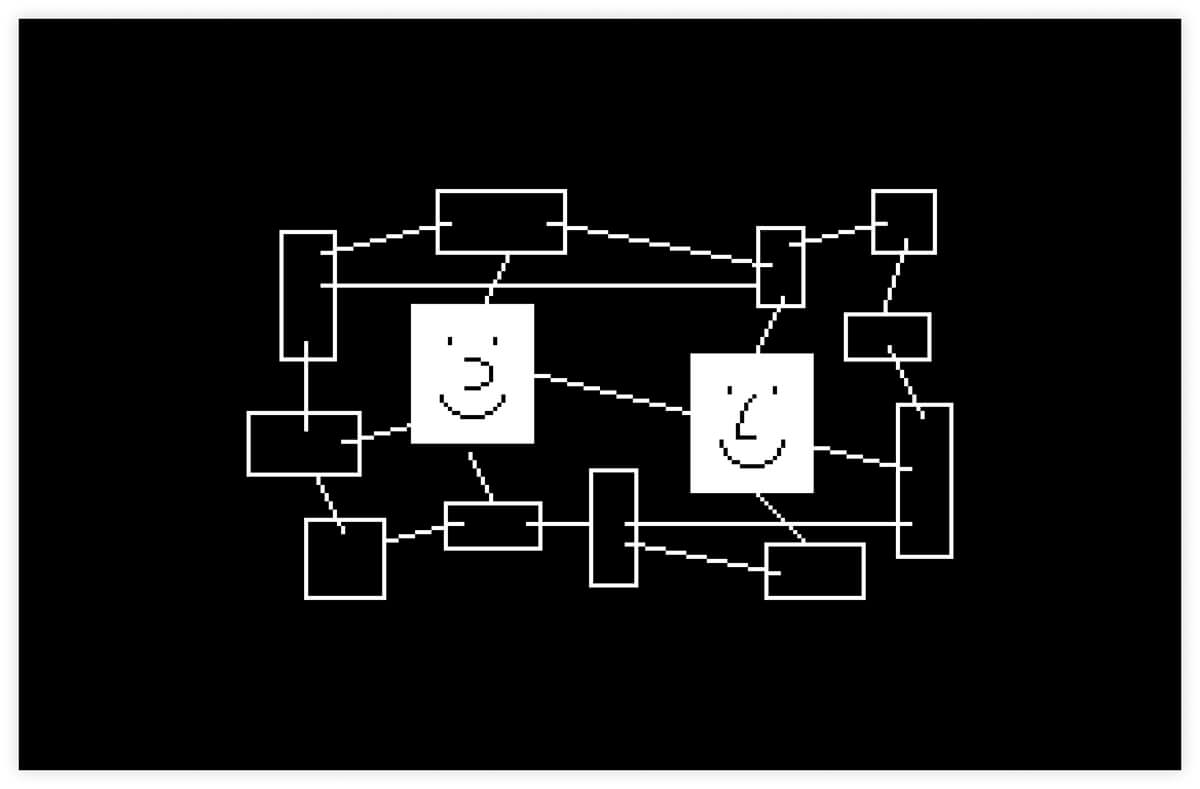
Collection (abstract data type)
In computer programming, a collection is an abstract data type that is a grouping of items that can be used in a polymorphic way.

Type-safety with TypeScript ORMs and query builders · thetutlage meta · Discussion #8
Alright, so I maintain a JavaScript ORM called Lucid. Lucid is built on top of knex, which isn't type-safe, and hence, Lucid isn't type-safe either. My gut feeling is that utilizing SQL to ...
CCFS cryptographically curated file system
The Internet was originally designed to be a next-generation phone system that could withstand a Soviet attack. Today, we ask the Internet to perform tasks that no longer resemble phone calls in the face of threats that no longer resemble Soviet bombardment. However, we have come to rely on names that can be subverted at every level of the stack or simply be allowed to rot by their original creators. It is possible for us to build networks of content that serve the content distribution needs of today while withstanding the hostile environment that all modern systems face. This dissertation presents the Cryptographically Curated File System (CCFS), which offers five properties that we feel a modern content distribution system should provide. The first property is Strong Links, which maintains that only the owner of a link can change the content to which it points. The second property, Permissionless Distribution, allows anyone to become a curator without dependence on a naming or numbering authority. Third, Independent Validation arises from the fact that the object seeking affirmation need not choose the source of trust. Connectivity, the fourth property, allows any curator to delegate and curate the right to alter links. Each curator can delegate the control of a link and that designee can do the same, leaving a chain of trust from the original curator to the one who assigned the content. Lastly, with the property of Collective Confidence, trust does not need to come from a single source, but can instead be an aggregate affirmation. Since CCFS embodies all five of these properties, it can serve as the foundational technology for a more robust Web. CCFS can serve as the base of a web that performs the tasks of today’s Web, but also may outperform it. In the third chapter, we present a number of scenarios that demonstrate the capacity and potential of CCFS. The system can be used as a publication platform that has been re-optimized within the constraints of the modern Internet, but not the constraints of decades past. The curated links can still be organized into a hierarchical namespace (e.g., a Domain Naming System (DNS)) and de jure verifications (e.g., a Certificate Authority (CA) system), but also support social, professional, and reputational graphs. This data can be distributed, versioned, and archived more efficiently. Although communication systems were not designed for such a content-centric system, the combination of broadcasts and point-to-point communications are perfectly suited for scaling the distribution, while allowing communities to share the burdens of hosting and maintenance. CCFS even supports the privacy of friend-to-friend networks without sacrificing the ability to interoperate with the wider world. Finally, CCFS does all of this without damaging the ability to operate search engines or alert systems, providing a discovery mechanism, which is vital to a usable, useful web. To demonstrate the viability of this model, we built a research prototype. The results of these tests demonstrate that while the CCFS prototype is not ready to be used as a drop-in replacement for all file system use cases, the system is feasible. CCFS is fast enough to be usable and can be used to publish, version, archive, and search data. Even in this crude form, CCFS already demonstrates advantages over previous state-of-the-art systems. When the Internet was designed, there were relatively fewer computers that were far weaker than the computers we have now. They were largely connected to each other over reliable connections. When the Internet was first created, computing was expensive and propagation delay was negligible. Since then, the propagation delay has not improved on a Moore’s Law Curve. Now, latency has come to dominate all other costs of retrieving content; specifically, the propagation time has come to dominate the latency. In order to improve the latency, we are paying more for storage, processing, and bandwidth. The only way to improve propagation delay is to move the content closer to the destination. In order to have the content close to the demand, we store multiple copies and search multiple locations, thus trading off storage, bandwidth, and processing for lower propagation delay. The computing world should re-evaluate these trade-offs because the situation has changed. We need an Internet that is designed for the technologies used today, rather than the tools of the 20th century. CCFS, which regards the trade-off for lower propagation delay, will be better suited for 21st-century technologies. Although CCFS is not preferable in all situations, it can still offer tremendous value. Better robustness, performance, and democracy make CCFS a contribution to the field. Robustness comes from the cryptographic assurances provided by the five properties of CCFS. Performance comes from the locality of content. Democracy arises from the lack of a centralized authority that may grant the right of Free Speech only to those who espouse rhetoric compatible with their ideals. Combined, this model for a cryptographically secure, content-centric system provides a novel contribution to the state of communications technology and information security.
OASIS Darwin Information Typing Architecture (DITA) TC — Subcommittee | OASIS
Advancing a document creation and management specification that builds content reuse into the authoring process
Content guidelines overview
The section covers the naming and content of Internet-Drafts (I-Ds) including the required and recommended sections. There are lots of rules governing the content, developed over many years in order, which aim to ensure the readability and consistency of I-Ds. Please follow this section closely. The pages in this section are:
Standard Reader - Chrome Web Store
Save articles and follow publications on the standard.site network.

openPDS/SafeAnswers - The privacy-preserving Personal Data Store
Protecting the Privacy of Metadata through SafeAnswers
this is what I am *TALKING* about. I'm sure I'm late but this is such a cool idea from @semble.so. Collections are not new but mapping the specific kind of relationship between two things?? And this is publicly usable shared knowledge? Social knowledge as a service, beautiful.

taurean
to be fair we are also getting that from projects, I am just greedy and want to see even more. For example with @germnetwork.com, E2EE messaging is not new but multiple sub-identities in one inbox is. Show us something weird and new if/when you adopt an existing experience but for atproto.
Is this a thing? Something about private data on AT Proto, where a person could purchase content and have a copy of said content injected into their Private Data, so it could not be removed without their consent? I’m thinking “I’ve bought a copy of a book, and now the book blob lives in my PDS”
Collection of collections: Bookmarks

Tools, trackers, databases, apps, etc. (as opposed to articles, studies, etc.)
Collection of collections: Miscellaneous
Other collections that may eventually be sorted into new collections of collections
AT Protocol status pages (by あ) — Semble
AI* tools (by あ) — Semble
Public health (by あ) — Semble
Design archives (by あ) — Semble
Design* tools (by あ) — Semble
Unsorted (by あ) — Semble
Wikipedia (by あ) — Semble
Domains/TLDs (by あ) — Semble
ICE agents (by あ) — Semble
ICE statistics (by あ) — Semble
Disaster preparedness (unsorted) (by あ) — Semble
Loneliness epidemic (by あ) — Semble


