

Claude API Documentation
Comparing the memory implementations of Claude and ChatGPT
Shlok Khemani has been doing excellent work reverse-engineering LLM systems and documenting his discoveries. Last week he wrote about ChatGPT memory. This week it's Claude. Claude's memory system has two …
ellen livia ᯅ on Twitter / X
here's how Claude Code actually handles memory : all 8 phases 🧵Our team at @mem0ai use @claudeai a lot, we deeply care about memory. here is a summary of how it works 👇User Input -> Context Assembly -> History System -> API / Query -> Response -> SummaryPhase 1: session… pic.twitter.com/hcZbJzbUxB— ellen livia ᯅ (@ellen_in_sf) March 31, 2026
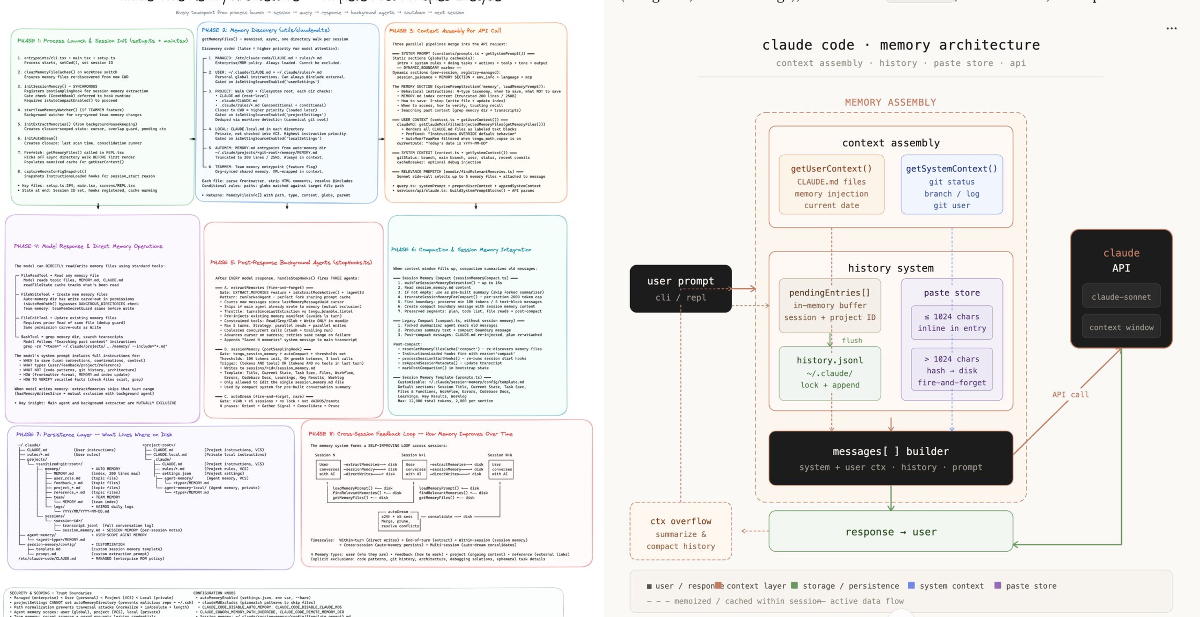
Anthropic's Opinionated Memory Bet
A deep dive into Claude's new memory tool—how it works, the architectural bets they're making, and whether it's the right fit for your application.
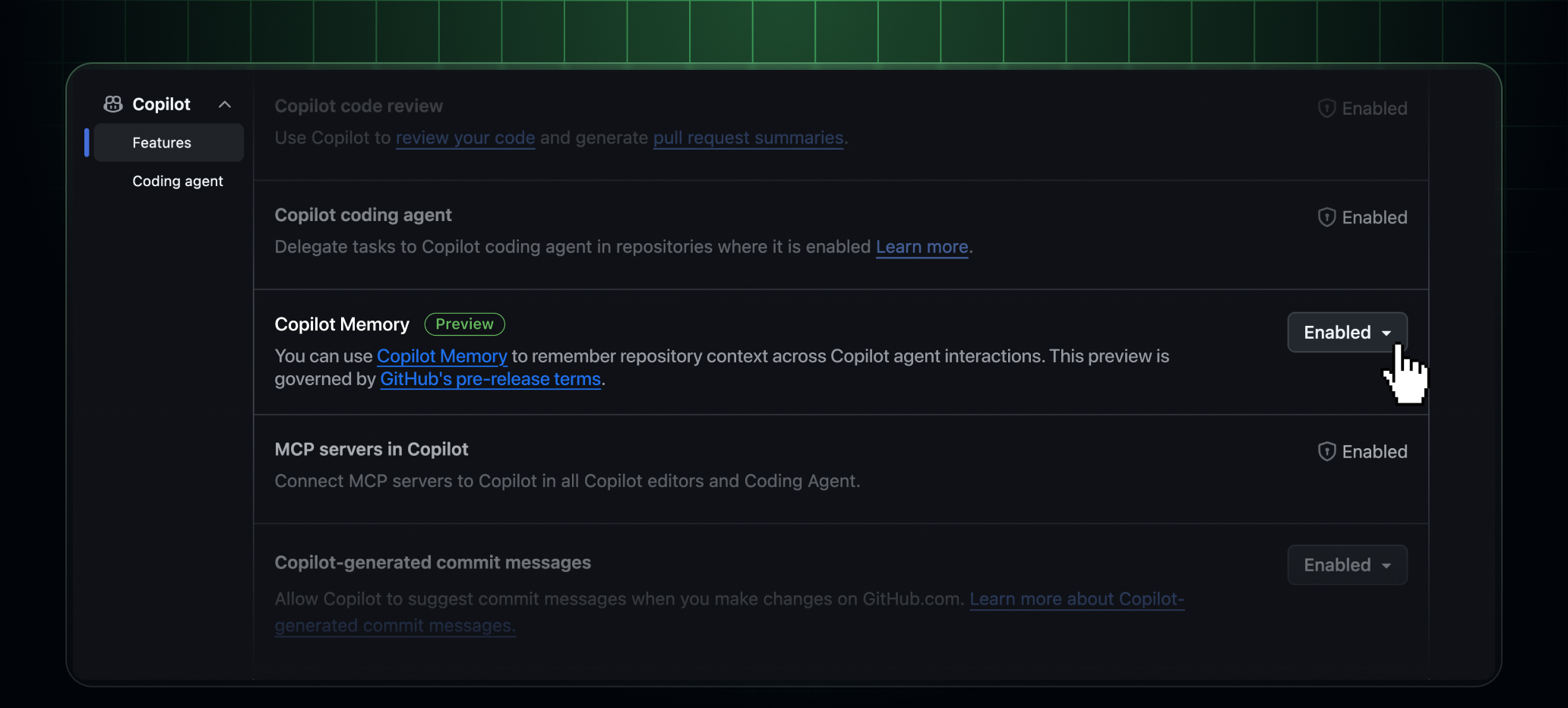
Copilot memory early access for Pro and Pro+ - GitHub Changelog
Copilot memory is now available in public preview for GitHub Copilot Pro and Pro+ users, with support in Copilot coding agent and Copilot code review. Copilot memory Copilot memory enables…
nanomem: An Extremely Simple, Inference-Time Memory Module
nanomem is an extremely simple, user-owned memory module that casts memory management as LLM calls / agent loops on a markdown file tree. You interact with the tree with natural language commands like nanomem add <fact>, nanomem retrieve <query>, and nanomem import <chatgpt>. As such, nanomem is by design interpretable, partitionable, portable, and versioned.
CaviraOSS/OpenMemory
Local persistent memory store for LLM applications including claude desktop, github copilot, codex, antigravity, etc.
Client SDKs
Official SDKs for building with the Claude API in Python, TypeScript, Java, Go, Ruby, C#, and PHP.
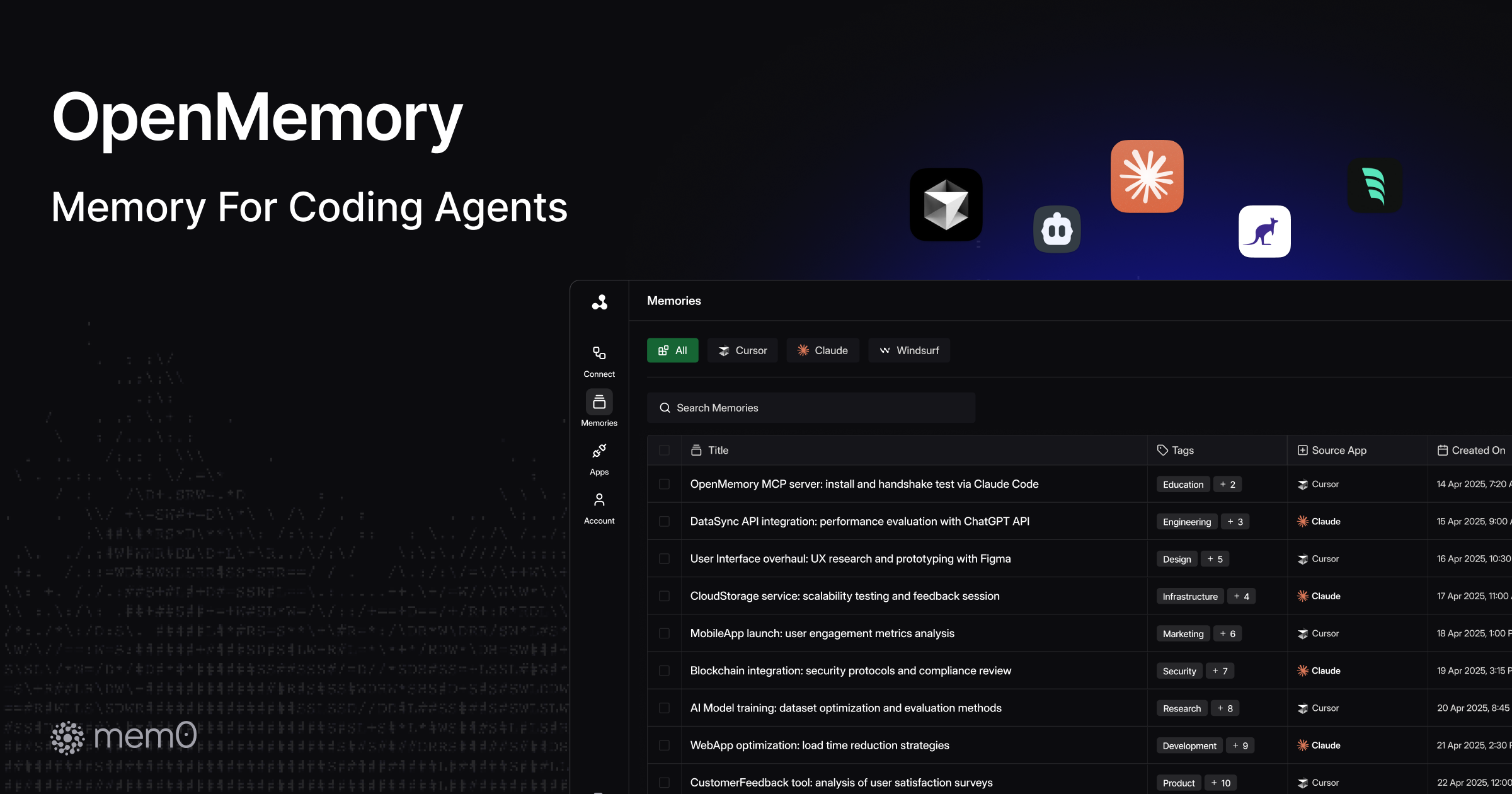
OpenMemory - AI Memory MCP Server for Coding Agents | Mem0
With OpenMemory, add persistent, project-aware memory to Cursor, Windsurf, and VS Code agents. Store preferences, patterns, and context that get retrieved automatically.
prime-radiant-inc/engineering-notebook
CLI tool that ingests Claude Code sessions, generates LLM summaries, and serves a browsable engineering journal
Tool use with Claude
Connect Claude to external tools and APIs. Learn where tools execute and how the agentic loop works.
I Reverse Engineered Claude's Memory System, and Here's What I Found!
When I reverse-engineered ChatGPT’s memory system, I found it uses pre-computed summaries injected into every prompt. But Claude’s approach is different. Through extensive experimentation, I discovered Claude uses on-demand tools and selective retrieval, a fundamentally different architecture. But how does this actually work? And how does it compare to ChatGPT’s approach? This is the second post in a series where I reverse-engineer the memory systems of popular AI assistants. The first post focused on ChatGPT’s memory system. In this post, we’ll do the same exercise for Claude—and the differences are fascinating.
A practical guide to WebAssembly memory | radu's blog
Memory in WebAssembly is one of the topics that creates confusion for newcomers, particularly for those with experience in languages with memory management features like garbage collection, such as JavaScript, Go, or Java. In this article we explore using memory in WebAssembly in various scenarios - passing JavaScript arrays to Rust and AssemblyScript modules, checking for some basic memory leaks using Valgrind, or exchanging strings between runtimes and modules using Wasmtime.