FRAMEWORKS v0.2 Many of the thoughts in this document draw on and synthesize concepts from economics, math, physics, chemistry, biology, and psychology. Here are a handful of core concepts that are often relied on as inputs: Activation energy Behavioral economics Cognitive biases Darwinism En...
562 – Ecological Cognition III: Radical Embodied Cognitive Science (part 1)
562 Continuing the journey in understanding the Ecological approach to cognition by looking at Tony Chemero’s book: Radical Embodied Cognitive Science. Conceptualizing cognition in terms of agent-environment dynamics instead of computation and representation. What is RECS, and where did these ideas come from?Download link

Economics for the future – Beyond the superorganism
Our environment and economy are at a crossroads. This paper attempts a cohesive narrative on how human evolved behavior, money, energy, economy and th…
Maximum power in evolution, ecology and economics
Ludwig Boltzmann suggested that natural selection was fundamentally a struggle among organisms for available energy. Alfred Lotka argued that organisms that capture and use more energy than their competition will have a selective advantage in the evolutionary process, i.e. the Darwinian notion of evolution was based on a fundamental, generalized energy principle. He extended this general principle from the energetics of a single organism or species to the energetics of entire energy pathways through ecosystems. Howard Odum and Richard Pinkerton, building on Lotka, extended this concept to ‘The maximum power principle’ and applied it to many biological and physical systems including human economies. We examine this history and how these ideas relate to concepts from other disciplines including philosophy. But there has been considerable confusion in understanding and applying these concepts which we attempt to resolve while providing various examples from routine life and discussing some unresolved issues. This article is part of the theme issue ‘Thermodynamics 2.0: Bridging the natural and social sciences (Part 2)’.
We don’t have a hundred biases, we have the wrong model
Behavioral economics has identified dozens of cognitive biases that stop us from acting 'rationally'. But instead of building up a messier and messier picture of human behavior, we need a new model.
What is a framework? Understanding their purpose, value, development and use
Many frameworks exist across the sciences and science-policy interface, but it is not always clear how they are developed or can be applied. It is also often vague how new or existing frameworks are positioned in a theory of science to advance a specific theory or paradigm. This article examines these questions and positions the role of frameworks as integral but often vague scientific tools, highlighting benefits and critiques. While frameworks can be useful for synthesizing and communicating core concepts in a field, they often lack transparency in how they were developed and how they can be applied. Positioning frameworks within a theory of science can aid in knowing the purpose and value of framework use. This article provides a meta-framework for visualizing and engaging the four mediating processes for framework development and application: (1) empirical generalization, (2) theoretical fitting, (3) application, and (4) hypothesizing. Guiding points for scholars and policymakers using or developing frameworks in their research are provided in closing.

The Fabric and the Brain
Articulating agent ecologies with high-personality planetary computation

Mental Models: The Best Way to Make Intelligent Decisions (~100 Models Explained)
The smartest people in the world use mental models to make intelligent decisions, avoid stupidity, and increase productivity. Let's take a look at how ...
‘AI gravity’ is pulling you toward dependency. Here’s how to push back | MIT Sloan
AI systems hold the promise of competitive advantage, but they can usher in cognitive decline among workers, says MIT Sloan School of Management’s Eric So. Learn how to protect cognitive capital.
‘AI gravity’ is pulling you toward dependency. Here’s how to push back | MIT Sloan
AI systems hold the promise of competitive advantage, but they can usher in cognitive decline among workers, says MIT Sloan School of Management’s Eric So. Learn how to protect cognitive capital.
Summary: Thinking in Systems (by Donella H. Meadows)
The main argument of the book: Everything in this world is made of systems. While we cannot fully understand systems, we can observe them…
The Physics and Metaphysics of Social Powers: Bridging Cognitive Processing and Social Dynamics, a New Perspective on Power through Active Inference
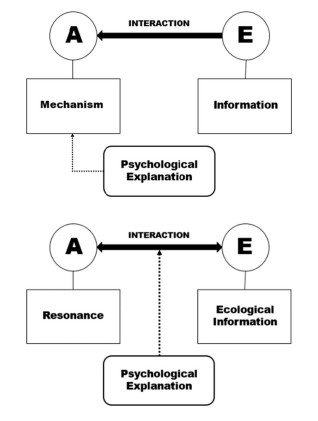
560 – Ecological Cognition II: Resonance
560 What the heck does the brain do in Ecological Dynamics, if it isn’t computing, processing, or representing? An introduction to the concept of Resonance.Download link
Strategy Letter V
When I was in college I took two intro economics courses: macroeconomics and microeconomics. Macro was full of theories like “low unemployment causes inflation” that never quite stood u…

Strategy Letter V
When I was in college I took two intro economics courses: macroeconomics and microeconomics. Macro was full of theories like “low unemployment causes inflation” that never quite stood u…
Cognitive Bias Lab | Learn to Make Better Decisions
Explore cognitive biases with interactive tests, simulations, and real-world examples. Free platform to sharpen decision-making and critical thinking — no sign-up needed.