

All About Octothorpes
Octosphere, an experiment in decentralised science with ATProto – Andreas Varotsis
Bridging Octopus and the Atmosphere with lots of vibes

Home - Octosphere
Octosphere bridges the gap between academic publishing and the social web. It automatically syncs your research publications from Octopus to the AT Protocol (the atmosphere) — an open, decentralized network for social apps like Bluesky.
The invasive soft coral Xenia umbellata has been confirmed in Cuban waters
Octocoral colonies with unusual morphology were detected in September 2022 and October 2023 in two coastal areas east of Havana, Cuba, and tentatively identified as Unomia stolonifera. U. stolonifera is an invasive octocoral from the Indo-Pacific that was first reported in the Caribbean off Venezuela in the 2000s, where it has spread rapidly, smothering coral reefs and substantially altering benthic communities. After obtaining tissue samples from a Cuban octocoral colony, we re-examined the specimen using molecular barcoding of three mitochondrial regions (16S/ND2, mtMutS, COI) and the nuclear large ribosomal subunit (28S rRNA), and we unequivocally identified it as Xenia umbellata. X. umbellata, a native of the Red Sea, was first identified in southern Puerto Rico in October 2023 and has since been found in various marine ecosystems along the southern coast of the island. The presence of either invasive octocoral species in Cuba or elsewhere in the Caribbean would be of a serious environmental concern due to their documented tolerance, totipotentiality, propagation capacity and significant negative interactions with local benthic fauna. Attempts to eradicate the invasive soft coral colonies from Cuban waters have been initiated with apparent success, helping to control further expansion. The most likely introduction pathway is the accidental or intentional releases from the aquarium trade but transport via ballast water cannot be ruled out. We cannot discount the possibility of independent invasion events from different routes to Puerto Rico and Cuba occurring within a year of each other. Propagation from Cuba to Puerto Rico, or vice versa, which we consider highly improbable, would likely imply that soft coral populations may also have been established on Hispaniola but have remained undetected in the Dominican Republic and Haiti to date.

A common red algal origin of the apicomplexan, dinoflagellate, and heterokont plastids
The discovery of a nonphotosynthetic plastid in malaria and other apicomplexan parasites has sparked a contentious debate about its evolutionary origin. Molecular data have led to conflicting conclusions supporting either its green algal origin or red algal origin, perhaps in common with the plastid of related dinoflagellates. This distinction is critical to our understanding of apicomplexan evolution and the evolutionary history of endosymbiosis and photosynthesis; however, the two plastids are nearly impossible to compare due to their nonoverlapping information content. Here we describe the complete plastid genome sequences and plastid-associated data from two independent photosynthetic lineages represented by Chromera velia and an undescribed alga CCMP3155 that we show are closely related to apicomplexans. These plastids contain a suite of features retained in either apicomplexan (four plastid membranes, the ribosomal superoperon, conserved gene order) or dinoflagellate plastids (form II Rubisco acquired by horizontal transfer, transcript polyuridylylation, thylakoids stacked in triplets) and encode a full collective complement of their reduced gene sets. Together with whole plastid genome phylogenies, these characteristics provide multiple lines of evidence that the extant plastids of apicomplexans and dinoflagellates were inherited by linear descent from a common red algal endosymbiont. Our phylogenetic analyses also support their close relationship to plastids of heterokont algae, indicating they all derive from the same endosymbiosis. Altogether, these findings support a relatively simple path of linear descent for the evolution of photosynthesis in a large proportion of algae and emphasize plastid loss in several lineages (e.g., ciliates, Cryptosporidium , and Phytophthora) .

Ecdysis
Ecdysis is the moulting of the cuticle in many invertebrates of the clade Ecdysozoa. Since the cuticle of these animals typically forms a largely inelastic exoskeleton, it is shed during growth and a new, larger covering is formed. The remnants of the old, empty exoskeleton are called exuviae.

Parrhesiastes Apertus on Twitter / X
« Il faut accepter que certaines personnes occuperont à jamais une place dans votre cœur sans pour autant avoir de place dans votre vie. »— Haruki Murakami— Parrhesiastes Apertus (@P_arrhesiastes) October 14, 2026
The Daily Planet #124: The Anatomical Compiler - The Daily Planet
HuggingFace Attack Postmortem: Fleshing Out the Facts
The consensus reaction to the OpenAI Technical Report is that it contains and confirms a lot of good information.


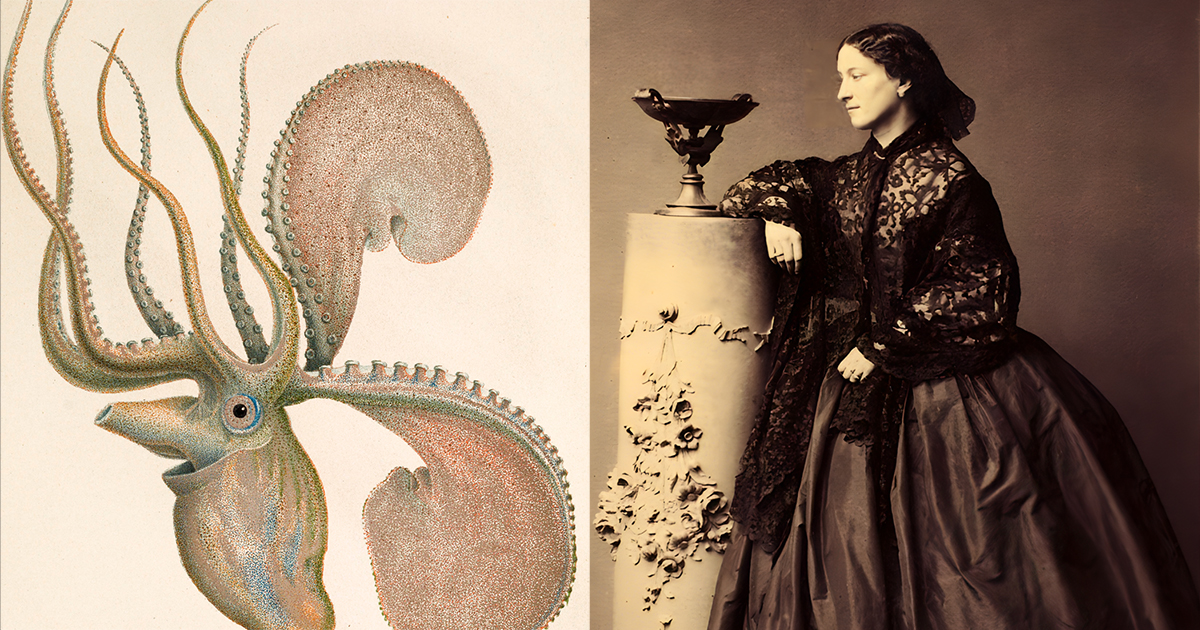
The Seamstress Who Solved the Ancient Mystery of the Argonaut, Pioneered the Aquarium, and Laid the Groundwork for the Study of Octopus Intelligence
“I armed myself with patience and courage, and only after several months managed to dissolve my doubts and see my research crowned with happy confirmation.”

Our last post was posted as part of our first #ATProto integration demo, which also sent it to @leaflet.pub. Check out the video and the canonical webpage for more: youtube.com/watch?v=UFBXdFAKgWI and demo.ideastore.dev/publish-to-at #octothorpes joins the #atmosphere

OP and ATProto integration preview
www.youtube.cominspired by @pfrazee.com's demo at @seattle.atprotocol.community. askmosphere: events edition asking it about @atproto.nyc #atprototype


