

In traditional monetary systems, money is issued by the state. Participants of the market can then use the money issued by the state to buy and sell goods and services in the market.
Families' Use of Payment Instruments During a Decade of Change in the U.S. Payment System
The Federal Reserve Board of Governors in Washington DC.
Keys to Economic Systems - GDKeys
Currencies, sources, sinks, inflation, economic tools, currency protections, economic pillars... In this extensive "Keys to" article we tackle everything you need to know to create your very own, efficient, and self-sustaining economic systems!

What is Money, Anyway?
Editor’s Note: This topic is now comprehensively covered in my book, Broken Money. Money is a surprisingly complex subject. People spend their lives seeking money, and in some ways it seems so straightforward, and yet what humanity has defined as money has changed significantly over the centuries. How could something so simple and so universal, […]

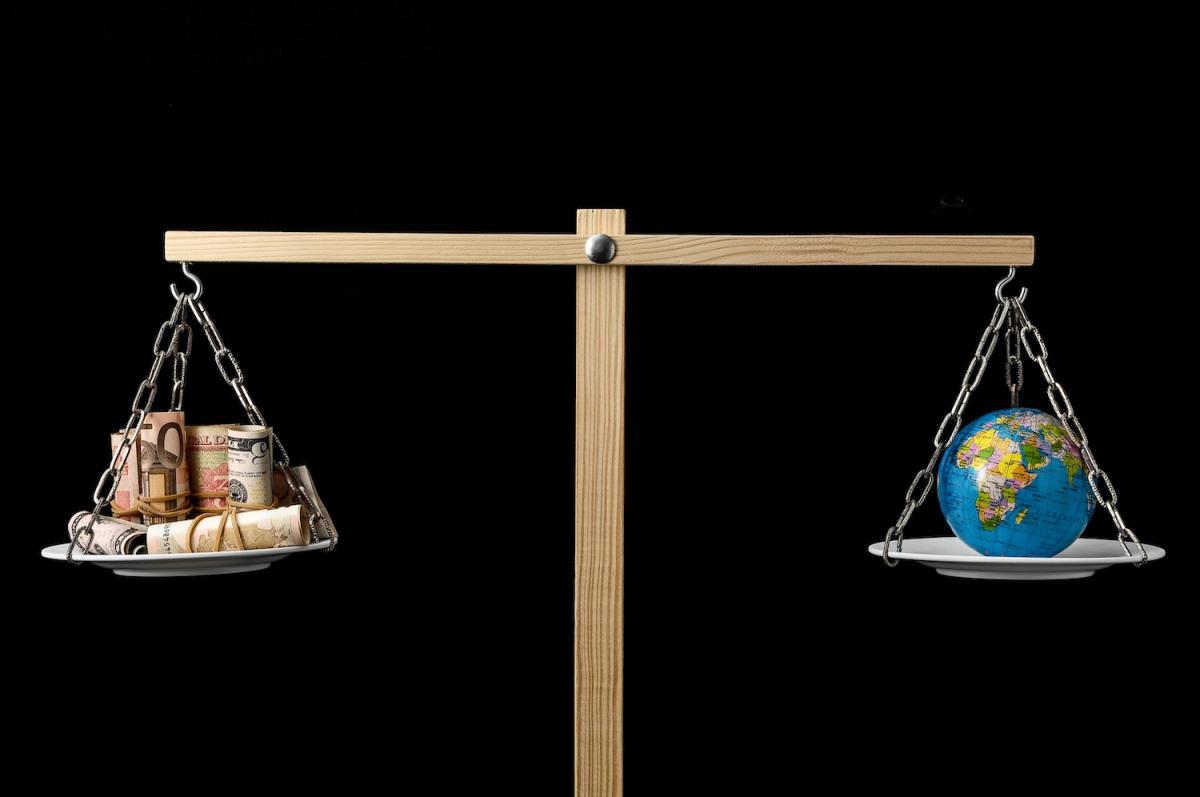
Looking for a “fair” international monetary system
President Trump’s Chief Economic Adviser, Stephen Miran, has claimed that the international monetary system in which the US provides the rest of the world with a safe, liquid asset is “unfair” as it supposedly prevents the US from eliminating its current account deficit. His proposed solution is to lower the value of the dollar through coordinated currency market intervention by foreign central banks. This column finds the idea that there could be lasting reversal of exchange rates following an international currency agreement highly speculative, and argues that a multipolar system would attenuate the Triffin dilemma and provide the US with a deficit-adjustment tool.
Explaining adoption and use of payment instruments by US consumers
Motivated by recent policy intervention into payments markets, we develop and estimate a structural model of adoption and use of payment instruments by U.S. consumers. Our structural model differentiates between the adoption and use of payment instruments. We evaluate substitution among payment instruments and welfare implications. Cash is the most significant substitute to debit cards in retail settings, whereas checks are the most significant in bill‐pay settings. Furthermore, low income consumers lose proportionally more than high income consumers when debit cards become more expensive, whereas the reverse is true when credit cards do.

Scenarios That Shape Our System - ATProtoFans Blog
Part 3 of our "Building Recurring Payments in Public" series where we give describe real-world scenarios based on our behaviors, constraints, and definitions.
Is the US dollar's reserve currency status eroding? | Brookings
Robin Brooks analyzes changes in the U.S. dollar's reserve currency status during the second Trump administration.
DISTRIBUTIONS OF MONEY IN MODEL MARKETS OF ECONOMY
We study the distributions of money in a simple closed economic system for different types of monetary transactions. We know that for arbitrary and random sharing with locally conserving money transactions, the money distribution goes to the Gibb's distribution of statistical mechanics. We then consider the effects of savings, etc. and see how the distribution changes. We also propose a new model where the agents invest equal amounts of money in each transaction. We find that for short time-period, the money distribution obeys a power-law with an exponent very close to unity, and has an exponential tail; after a very long time, this distribution collapses and the entire amount of money goes to a tiny fraction of the population.
How the Economic Machine Works [Animation] by Ray Dalio
In this animation, Ray Dalio explains How The Economic Machine Works. He covers important points such as credit, interest rates, leveraging and deleveraging.
On the immaturity of tokenized value capture mechanisms
Pursuing value in an age of borderless-ness, experimental monetary policies, costless forks and unlimited innovation.

Who Pays For Your Rewards? Redistribution in the Credit Card Market
The Federal Reserve Board of Governors in Washington DC.
The U.S. Dollar’s Role as a Reserve Currency
One of the U.S. dollar’s influential international roles is as the dominant reserve currency, widely used in international foreign exchange reserves, which are rainy day funds for governments.

Money Illusion
Abstract. The term “money illusion” refers to a tendency to think in terms of nominal rather than real monetary values. Money illusion has significant impl

The State and Revolution — Chapter 5
The State and Revolution: Chapter 5: The Economic Basis of the Withering Away of the State
Monetary incentives, what are they good for?
This paper is a critical reflection on the use of monetary incentives in economic experiments. The argument is that incentives have their effect through their influence on one or more of three fact...

Money & Macro