

What Polytoken is and why it exists.
polytoken
Polytoken is a coding harness and I think it is good enough to tell people it's worth their time.
Niklas Luhmann: What is Autopoiesis?
The term autopoiesis (self-creation) is a neologism coined in 1972 by Varela and Maturana, Chilean cellular biologists and systems theorists, to describe

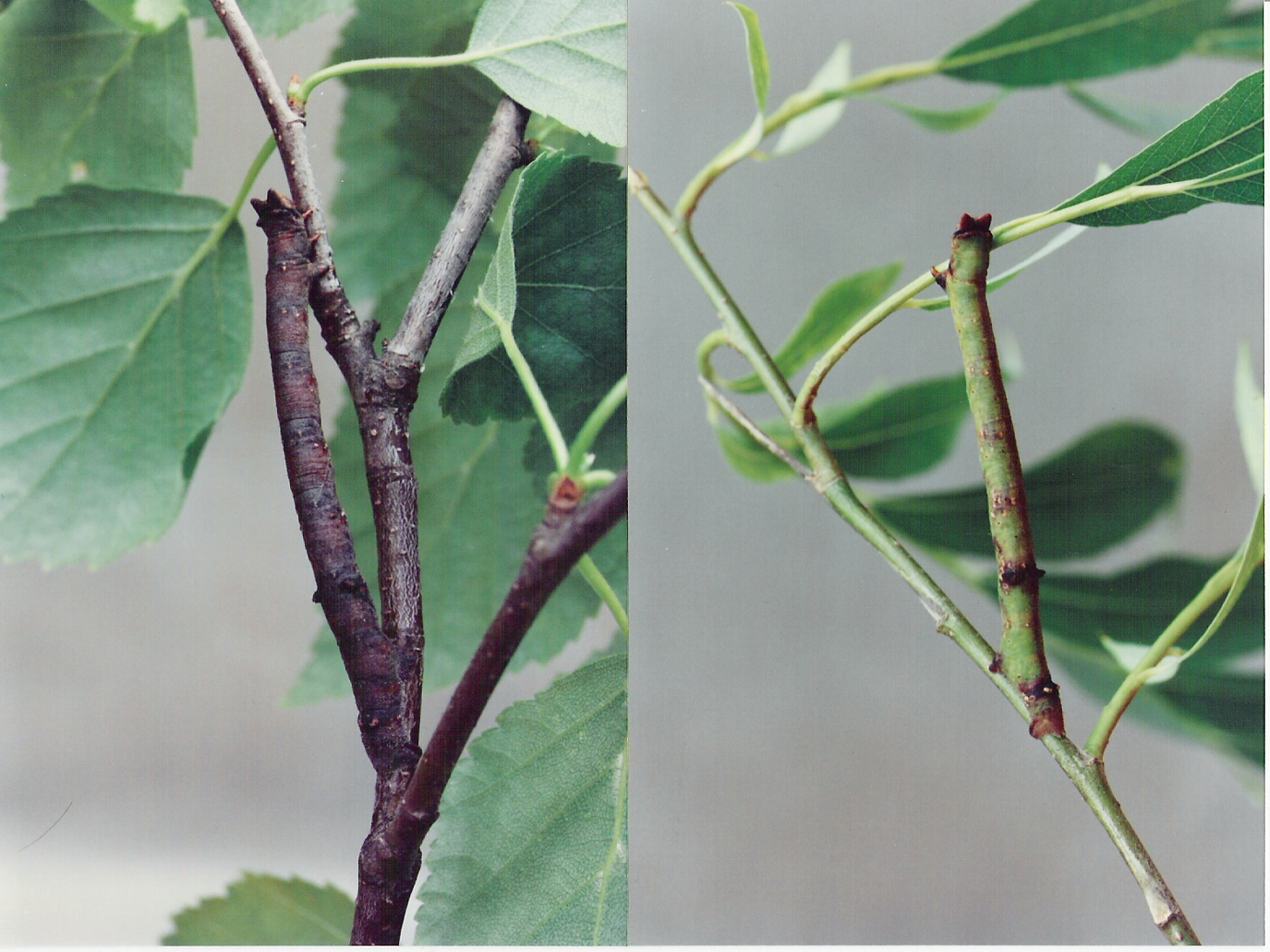
Polyphenism
A polyphenic trait is a trait for which multiple, discrete phenotypes can arise from a single genotype as a result of differing environmental conditions. It is therefore a special case of phenotypic plasticity.
Updates on Osteoimmunology: What's New on the Cross-Talk Between Bone and Immune System
The term osteoimmunology was coined many years ago to describe the research field that deals with the cross-regulation between bone cells and the immune system. As a matter of fact, many factors that are classically considered immune-related, such as interleukins (i.e. IL-6, -11,-17 and -23), tumor necrosis factor (TNF)-α, receptor-activator of nuclear factor kappa B (RANK) and its ligand (RANKL), nuclear factor of activated t-cell, cytoplasmatic-1 (NFATc1) and others have all been found to be crucial in osteoclast and osteoblast biology. Conversely, bone cells, which we used to think would only regulate each other and take care of remodeling bone, actually regulate immune cells, by creating the so-called “endosteal niche”. Both osteoblasts and osteoclasts participate to this niche, either by favoring engraftment, or mobilization of hematopoietic stem cells (HSCs). In this review, we will describe the main milestones at the base of the osteoimmunology and present the key cellular players of the bone-immune system cross-talk, including HSCs, osteoblasts, osteoclasts, bone marrow macrophages, osteomacs, T- and B-lymphocytes, dendritic cells and neutrophils. We will also briefly describe some pathological conditions in which the bone-immune system cross-talk plays a crucial role, with the final aim to portray the state of the art in the mechanisms regulating the bone-immune system interplay, and some of the latest molecular players in the field. This is important to encourage investigation in this field, to identify new targets in the treatment of bone and immune diseases.

RCCX Genetic Module Theory
NOTE: This page is modified from a summary of findings available at the RCCX and Illness website.

Serum vaccine antibody concentrations in adults exposed to per- and polyfluoroalkyl substances: A birth cohort in the Faroe Islands
Per- and polyfluoroalkyl substances (PFASs) are highly persistent in the environment and may cause depressed immune function. Previous studies have linked PFAS exposure to lower vaccine responses i...

On cell types and cell states
The advent of single-cell genomics has brought about new efforts to characterize and catalog all of the cell types in the human body. Despite these efforts, the very definition of a “cell type” is under debate. In this post, I will discuss a conceptual framework for defining cell types as subsets of states in an underlying cellular state space. Moreover, I will link the cellular state space to biomedical ontologies that attempt to capture biological knowledge regarding cell types.
Functional Information: Towards Synthesis of Biosemiotics and Cybernetics
Biosemiotics and cybernetics are closely related, yet they are separated by the boundary between life and non-life: biosemiotics is focused on living organisms, whereas cybernetics is applied mostly to non-living artificial devices. However, both classes of systems are agents that perform functions necessary for reaching their goals. I propose to shift the focus of biosemiotics from living organisms to agents in general, which all belong to a pragmasphere or functional universe. Agents should be considered in the context of their hierarchy and origin because their semiosis can be inherited or induced by higher-level agents. To preserve and disseminate their functions, agents use functional information - a set of signs that encode and control their functions. It includes stable memory signs, transient messengers, and natural signs. The origin and evolution of functional information is discussed in terms of transitions between vegetative, animal, and social levels of semiosis, defined by Kull. Vegetative semiosis differs substantially from higher levels of semiosis, because signs are recognized and interpreted via direct code-based matching and are not associated with ideal representations of objects. Thus, I consider a separate classification of signs at the vegetative level that includes proto-icons, proto-indexes, and proto-symbols. Animal and social semiosis are based on classification, and modeling of objects, which represent the knowledge of agents about their body (Innenwelt) and environment (Umwelt).
Polysecure: Attachment, Trauma and Consensual Nonmonoga…
Attachment theory has entered the mainstream, but most …
The OAuth mechanism and its most common flows
Every single time when you want to sign in to an application and you click on “Login with Google”, you are starting a protocol called…

Osteoimmunology: The Nexus between bone and immune system
Osteoimmunology is an interdisciplinary research field which combines the existing fields of osteology (bone biology) and immunology under one umbrella. The observation that contributed enormously to the emergence of osteoimmunology as an independent field of investigation was the enhanced bone loss in various inflammatory bone diseases such as rheumatoid arthritis, osteoporosis and periodontitis. T helper cells (Th1, Th2, Treg and Th17) along with various other immune cells (B cells, DC, macrophages etc.) are actively involved in bone homeostasis. The present review thus provides an overview of the nexus between these two prominent systems (Bone and Immune system) of an organism, which reside in a common niche (bone marrow) and thus cross-communicate to modulate their respective development. Investigations in the field of osteoimmunology thus promise the advent of new era in the field with novel therapeutics for bone loss in various inflammatory conditions. A molecular insight into the field of osteoimmunology can lead to novel approaches for the prevention and treatment of diverse inflammatory conditions such as osteoporosis, rheumatoid arthritis and osteoarthritis.
The Bitter Lesson is coming for Tokenization
Highlights the desire to replace tokenization with a general method that better leverages compute and data. We'll see tokenization's fragility and review the Byte Latent Transformer arch.
Why Does Inflammation Seem to Underlie All Sickness?
It’s a culprit in diseases ranging from arthritis to depression

using umans.ai with @polytoken.dev
