

Implement UCAN-based authorization with conciseness and ease!
UCAN - User Controlled Authorization Network
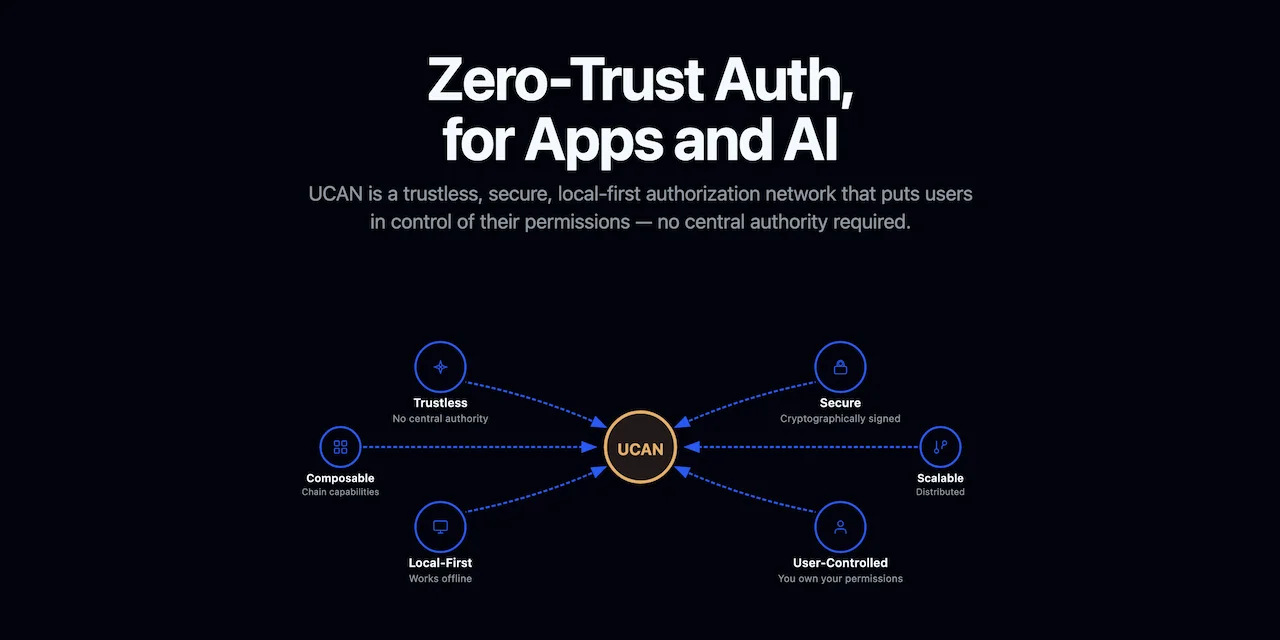
A trustless, secure, local-first, user-originated, distributed authorization scheme.
`rs-ucan`: Rust crates to support UCAN-based authz · Issue #668 · filecoin-project/devgrants
Open Grant Proposal: rs-ucan Name of Project: rs-ucan Proposal Category: core-dev Proposer: @cdata (Optional) Technical Sponsor: @autonome Do you agree to open source all work you do on behalf of t...
UCAN Working Group
Decentralized Auth — User Controlled Authorization Networks - UCAN Working Group

Cache8063/atauth
AT Protocol (Bluesky) authentication library for Rust, TypeScript, and Node.js
One year of Rust | Rust Blog
Empowering everyone to build reliable and efficient software.

Announcing Rust 1.12.1 | Rust Blog
Empowering everyone to build reliable and efficient software.
Rust for Java developers
Introduction to the Rust programming language for java developers, (complete with code sampes) with a focus on shared concepts.

The Rust Programming Language - The Rust Programming Language
by Steve Klabnik, Carol Nichols, and Chris Krycho, with contributions from the Rust Community

Place Capability Graphs: A General-Purpose Model of Rust’s Ownership and Borrowing Guarantees
Rust’s novel type system has proved an attractive target for verification and program analysis tools, due to the rich guarantees it provides for controlling aliasing and mutability. However, fully understanding, extracting and exploiting these guarantees is subtle and challenging: existing models for Rust’s type checking either support a smaller idealised language disconnected from real-world Rust code, or come with severe limitations in terms of precise modelling of Rust borrows, composite types storing them, function signatures and loops.
rust-lang/rust is adopting an LLM policy | Inside Rust Blog
Want to follow along with Rust development? Curious how you might get involved? Take a look!
Rust Programming Language
A language empowering everyone to build reliable and efficient software.
Tree Borrows | Proceedings of the ACM on Programming Languages
The Rust programming language is well known for its ownership-based type system, which offers strong guarantees like memory safety and data race freedom. However, Rust also provides unsafe escape hatches, for which safety is not guaranteed automatically ...
