The API supports idempotency for safely retrying requests without accidentally performing the same operation twice. When creating or updating an object, use an idempotency key. Then, if a connection error occurs, you can safely repeat the request without risk of creating a second object or performing the update twice.
Stripe unveils AI foundation model for payments, reveals ‘deeper partnership’ with Nvidia | TechCrunch
Fintech giant Stripe announced Wednesday a slew of new product launches at its annual Stripe Sessions user event. The highlights include a new AI

How Stripe’s document databases supported 99.999% uptime with zero-downtime data migrations
In this blog post we’ll share an overview of Stripe’s database infrastructure and discuss the design and application of the Data Movement Platform.

Adding payments to your LLM agentic workflows
This post discusses integrating the Stripe agent toolkit with large language models (LLMs) to enhance automation workflows, enabling financial services access, metered billing, and streamlined operations across agent frameworks.
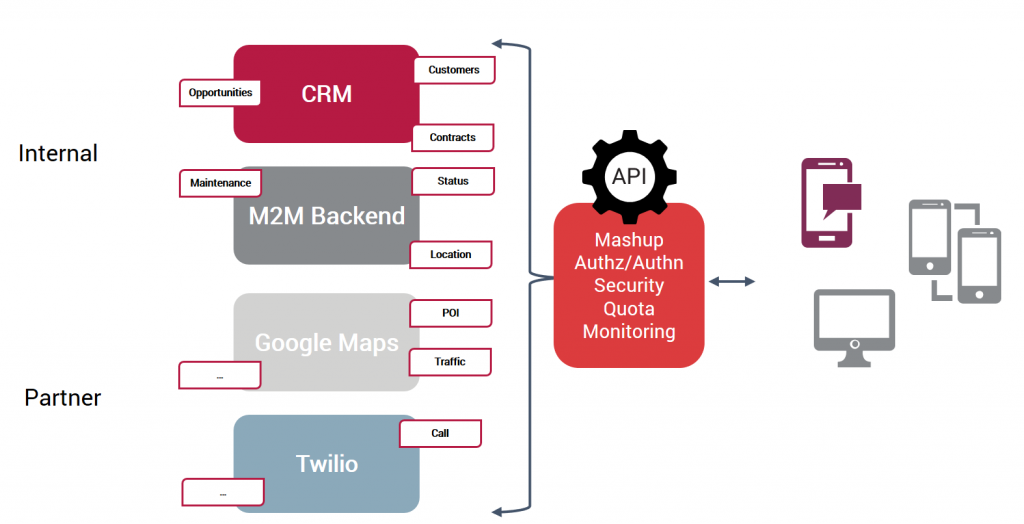
Orchestration API
An orchestrator API internally calling multiple other APIs together to get required response. Typically, this is used to merge API calls…
Stripe Press — Maintenance
An in-depth exploration of maintenance, and a powerful argument for its civilizational importance.

Brazil-specific payout schedule and payment availability
In order for you to receive funds, Stripe (or your platform) makes payouts to your bank account. See more details for payout schedules and payment…
Stripe will reportedly acquire AI gateway startup OpenRouter for $7B+ | TechCrunch
OpenRouter's CEO recently described the startup as Stripe for AI.

What if you never had to get an API key?
Accept Pix Payments | Stripe
Accept Pix payments with Stripe. Convert more customers and offer the most popular payment methods trusted globally.
Introduction to the DataCite REST API
About the DataCite REST API The DataCite REST API enables retrieval, creation, and update of DataCite DOI metadata records and account information. The API is generally RESTful and returns results in JSON (following the JSON:API specification). REST API Reference 📘 Access the REST API Reference to ...
.%20REST%20API%20Reference%20%F0%9F%93%98%20Access%20the%20REST%20API%20Reference%20to%20...&logoUrl=https%3A%2F%2Ffiles.readme.io%2Ffb9347b-small-DataCite-Logo_secondary.png&color=%23243B54&variant=light)
AI gateway capabilities | Apigee | Google Cloud Documentation
Learn how to use Apigee AI gateway features to govern, optimize, and scale AI traffic.

Transferable objects - Web APIs | MDN
Transferable objects are objects that own resources that can be transferred from one context to another, ensuring that the resources are only available in one context at a time. Following a transfer, the original object is no longer usable; it no longer points to the transferred resource, and any attempt to read or write the object will throw an exception.

Introducing Tap: Repository Synchronization Made Simple | Bluesky
Just about every app built on AT needs data from a repository at some point. For many use cases – feed generators, labelers, bots – streaming live data through a Relay or Jetstream works well. But some applications need to go beyond what Jetstream was designed for, like tracking specific subsets of a repo, automatically backfilling a database when adding new repos to monitor, or even mirroring the entire Atmosphere.

savearoundtrip
Publish an HTTPS DNS record. Let browsers reach HTTP/3 on the first connection instead of wasting a round trip.
Outbox Pattern in .NET: Reliable Event Publishing Beyond Idempotent APIs
Learn how the Outbox Pattern solves dual-write failures in .NET systems. Covers EF Core implementations, MassTransit, NServiceBus, observability, migration strategies, and high-performance optimizations for event-driven architectures.

Cross-Origin Storage API: Stop Downloading Twice
The Cross-Origin Storage API lets sites share one cached copy of a file (a JS library, font, or AI model) across origins by SHA-256 hash. Here's how it works.