The revolt of the reader | The Observation Deck
Reading is important to me. While I’m not a quick reader nor an especially voracious one, I have found that long-form reading has had a profound influence on me over my life. And because reading is important to me, writing is too: writing not only allows us to convey our ideas, but the very act forces us to test and distill them — at once making our ideas more robust while providing the vehicle by which to share them.
Food, foragers, and folklore: the role of narrative in human subsistence
Narrative is a species-typical, reliably developing, complex cognitive process whose design is unlikely to have emerged by chance. Moreover, the folklore record indicates that narrative content is consistent across widely divergent cultures. I have argued elsewhere that a storyteller may use narrative to manipulate an audience's representations of the social and/or physical environment to serve his or her own fitness ends. However, my subsequent research suggests that such manipulation results from a broader selection pressure which narrative effectively alleviates: information acquisition. By substituting verbal representations for potentially costly first-hand experience, narrative enables an individual to safely and efficiently acquire information pertinent to the pursuit of fitness in local habitats. If this hypothesis is true, narrative should be rich with information useful to the pursuit of fitness. One class of information integral to the accomplishment of this task is foraging knowledge. In this paper, then, I present evidence that foraging peoples use narrative to transmit subsistence information: specifically, I demonstrate how various narrative devices (e.g., setting, description, mimicry, anthropomorphism) are used to communicate foraging knowledge.
What the Unfinished Saga of a Still-Not-Built Subway Exit Taught Me About Public Consultation | The Local
One community volunteer traces 20 years of botched communication, unanswered questions, and delays—and asks what public consultation is actually worth.

Trails and public spaces — Rafael M. Batista
A reply to Kenny Peng and colleagues on designing social media around trails — and why the campground or the piazza may be the better analogy.
Green Screen: The Lack of Female Road Narratives and Why it Matters
This essay has been drawn from Vol. 1 No. 4 of the American Reader, available here. Our October 2012 interview with Veselka can be found here.
Electric Vehicles | The Paper Pilot
The Paper Pilot's digital garden of thoughts on philosophy, politics, and sociology
Disinformation and grievance narratives
Synthese - Disinformation is often defined as misleading content intended to instill false beliefs. But this definition is too narrow. We need to focus instead on its broader epistemic effects....

Home - Participant
A pioneer of socially conscious storytelling, Participant drives real-world impact and awareness around today's most vital issues.
Being in a crowd doesn’t make you part of a mindless mob | Psyche Ideas
It’s often assumed people lose their minds in a crowd. Research on riots, festivals and sports tells a more uplifting story

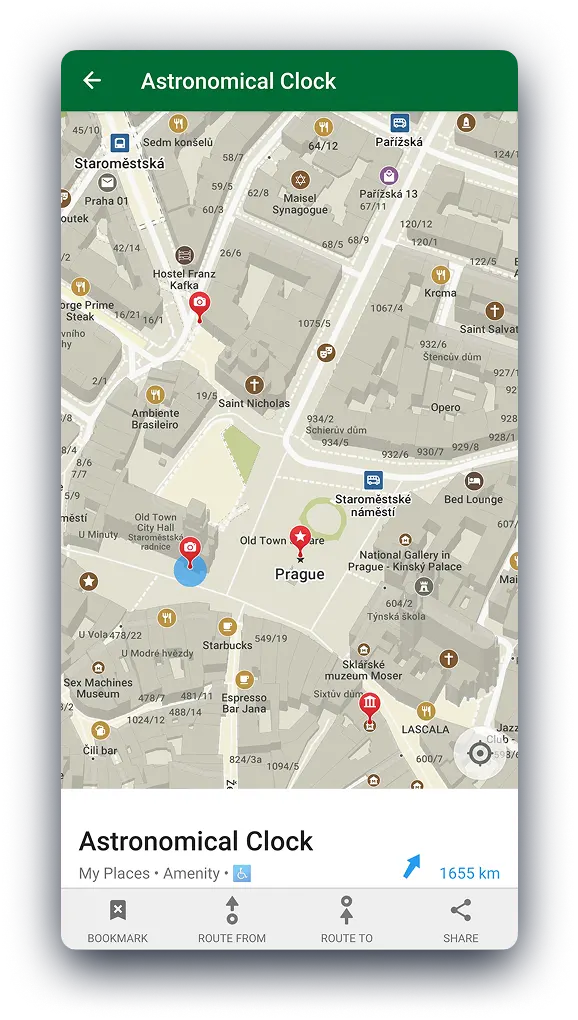
Hike, Bike, Drive Offline – Navigate with Privacy
Discover more of your journey - Powered by the community

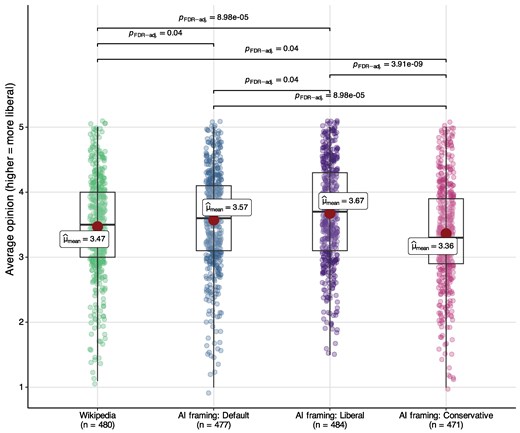
How latent and prompting biases in AI-generated historical narratives influence opinions
Abstract. Large language models (LLMs) can be used to persuade people on a range of issues, particularly through user-driven strategies such as personalizi
Cheating in the Lab Predicts Fraud in the Field: An Experiment in Public Transportation
We conduct an artefactual field experiment using a diversified sample of passengers of public transportation to study attitudes toward dishonesty. We find that the diversity of behavior in terms of (dis)honesty in laboratory tasks and in the field correlate. Moreover, individuals who have just been fined in the field behave more honestly in the lab than the other fare dodgers, except when context is introduced. Overall, we show that simple tests of dishonesty in the lab can predict moral firmness in life, although fraudsters who care about social image cheat less when behavior can be verified ex post by the experimenter. Data and the online appendix are available at https://doi.org/10.1287/mnsc.2016.2616 . This paper was accepted by Uri Gneezy, behavioral economics.

Storyteller.fit | Blog your own cycling, running and sport stories. Powered by Strava
Create beautiful stories based on the activities you recorded on Strava. From single activities to entire seasons collect the adventures and achievements of your active life.
epistemic garden - mapping how ideas spread online
We're building tools to help communities understand their information landscape and protect against harmful coordinated narratives.