

Theories of Truth: A Critical Introduction
Theories of Truth provides a clear, critical introduction to one of the most difficult areas of philosophy. It surveys all of the major philosophical theories of truth, presenting the crux of the issues involved at a level accessible to nonexperts yet in a manner sufficiently detailed and original to be of value to professional scholars. Kirkham's systematic treatment and meticulous explanations of terminology ensure that readers will come away from this book with a comprehensive general understanding of one of philosophy's thorniest set of topics.Included are discussions of the correspondence, coherence, pragmatic, semantic, performative, redundancy, appraisal, and truth-as-justification theories. There are also chapters or sections of chapters on the liar paradox, three-valued logic, Field's critique of Tarski, Davidson's program, Dummett's theory of linguistic competence, satisfaction, recursion, the extension/intension distinction, and an explanation of how theories of justification, properly understood, differ from theories of truth.A persistent theme is that philosophers have too often failed to recognize that not all theories of truth are intended to answer the same question. When the various questions are made distinct, it is apparent that many of the "debates" in this field are really cases of philosophers talking past one another. There is much less disagreement within the field than has commonly been thought.

Epistemic Infrastructure: Building Shared Truth in an Era of Disaggregation
The Construct of Collective Perception

Epistemic Courage and Open-Mindedness
Epistemic courage requires me to sometimes adopt a belief even in the face of doubts. Open-mindedness requires me to be able to reconsider my beliefs. It is generally assumed that we should have bo...

Why major life decisions should be approached with ‘epistemic humility’ | Psyche Videos
At a crossroads in life? No matter how much you deliberate, one unknowable remains: the person you will be on the other side

How To Think Real Good | Meta-rationality
Practical epistemology: heuristics for how to think about difficult things, particularly using formal methods.
a post-truth thought experiment · discrete blogarithm
Imagine that you had a magic machine. You tell the machine what your goals are. The machine tells you, in any situation, the optimal statement to say in order to achieve your goals, and who to say it to. The statement may or may not be true.
On the epistemic structure of voluntary servitude in the infosphere
This paper introduces the concept of Voluntary Epistemic Servitude (VES) to describe a social-epistemic pathology generated by the contemporary infosphere. Drawing on Étienne de La Boétie’s Discours de la Servitude Volontaire as a theoretical resource, we argue that algorithmic systems produce conditions in which agents not only delegate their core belief-forming processes to nontransparent architectures but come to prefer and actively reproduce this delegation through social mechanisms structurally isomorphic to those La Boétie identified in political tyranny. We show that VES is irreducible to existing social-epistemic categories such as epistemic injustice (Fricker 2007), epistemic bubbles and echo chambers (Nguyen 2020), and veritistic failure (Goldman 1999) because it operates at the level of epistemic preference formation rather than credibility attribution or informational access. The paper identifies a preference-laundering mechanism by which algorithmic systems colonize the second-order epistemic desires of agents, thereby undermining the conditions of epistemic autonomy that social epistemology has largely presupposed. We further develop a precise account of reflective access that distinguishes algorithmic opacity from ordinary preference opacity, introduce the concept of epistemic counterfactual capacity with a modal analysis connecting it to Williamson’s (2000) safety condition, situate VES as a structurally induced epistemic vice (Cassam 2019) and a form of misaligned extended cognition (Clark and Chalmers 1998), and provide a typology of three algorithmic architectures through which VES operates. We conclude by stating an explicit normative bridge principle and drawing on La Boétie’s positive ideal of free horizontal epistemic bonds to sketch the preconditions for epistemic liberation in algorithmically mediated environments.
AI Epistemic Risks: Emerging Mechanisms & Evidence
<p>Advances in artificial intelligence pose risks to humanity's collective capacity to form accurate beliefs, reason well, and maintain a healthy information en

A Knowledge Commons for the 21st Century
Truth-seeking infrastructure at scale
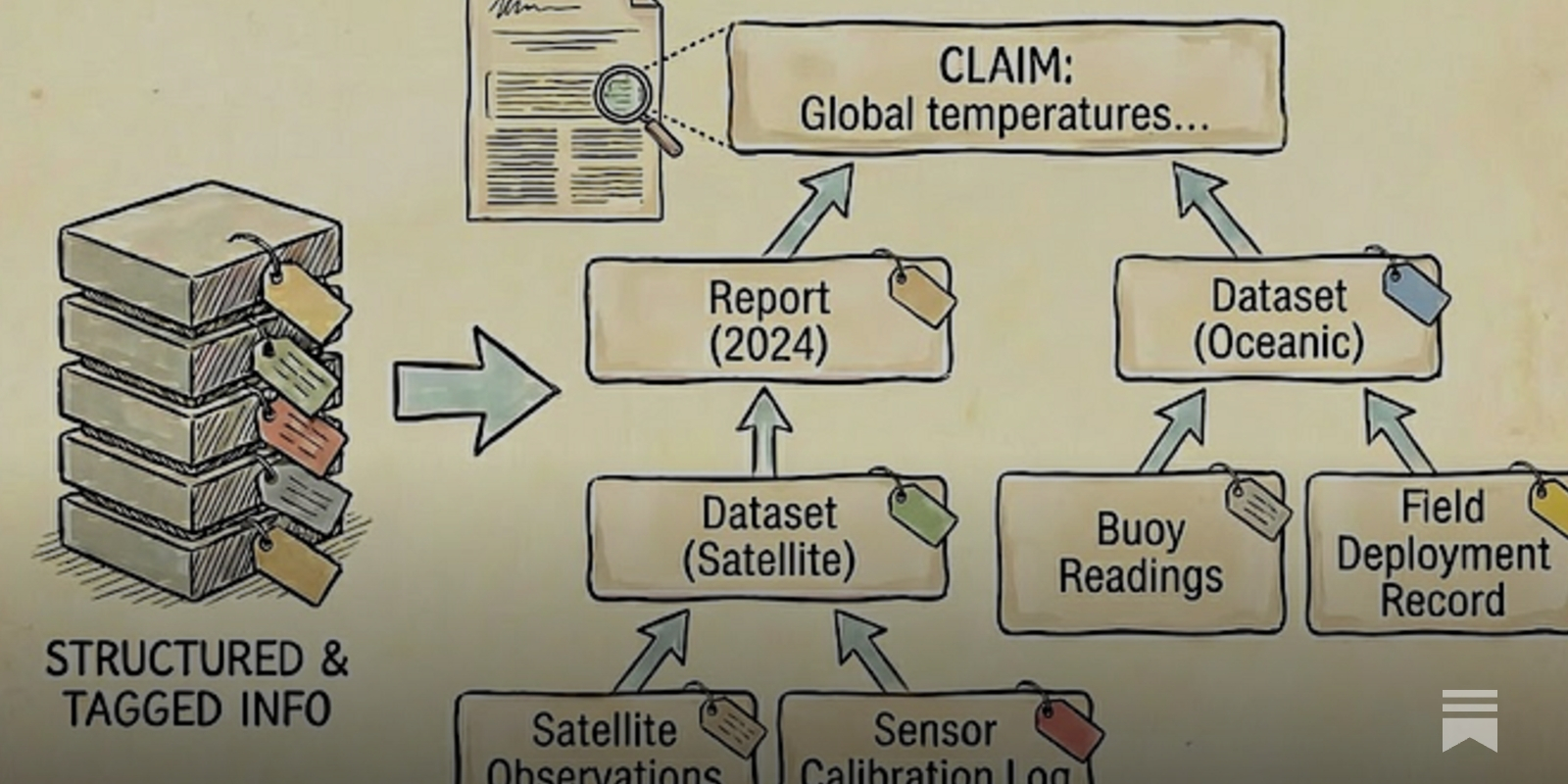
When Truth Becomes Hazardous: Navigating Information Through the Metacrisis | Frankly 153
A Bayesian Truth Serum for Subjective Data
Subjective judgments, an essential information source for science and policy, are problematic because there are no public criteria for assessing judgmental truthfulness. I present a scoring method for eliciting truthful subjective data in situations ...

Unsimple Truths: Science, Complexity, and Policy
Amazon.com: Unsimple Truths: Science, Complexity, and Policy eBook : Mitchell, Sandra D.: Kindle Store

Epistemic assholes
In this paper, I develop and defend the concept epistemic assholes. An epistemic asshole is someone who exhibits a distinctive form of epistemic badness characterized not by gross irrationality or hostility to truth, but by a stable, entitled disregard for one’s epistemic relations with others. Drawing on Aaron James’s (2012) account of moral assholes, I examine how people can systematically exploit epistemic cooperation by allowing themselves special advantages—such as “freedom from inquiry”, “doxastic comfort”, and “freedom to criticize”—while remaining insulated from criticism by an entrenched sense of entitlement. The resulting view, the Relational Approach to Epistemic Assholes (REA), explains why epistemic assholes are not epistemically the worst, yet are nonetheless deeply galling. After motivating the need for this concept, I show how REA captures both “impure” cases (involving both epistemic and moral assholery) and “pure” epistemic assholes, whose objectionable conduct is driven by epistemic aims themselves. I further explore connections between epistemic assholes and epistemic vice, and the causal role that epistemic assholery can play in active ignorance and epistemic exploitation. Through this latter connection, I argue that epistemic assholes play an insidious causal role in sustaining objectionable social power dynamics. The concept of epistemic assholes provides a valuable lens for understanding important but often-hidden hazards in our social epistemic environment.

Epistemic courage
"'Epistemic Courage' is a timely and thought-provoking exploration of the ethics of belief. Drawing on a wide range of examples, from conspiracy theories to medical misinformation, Ichikawa shows why epistemology is no mere academic abstraction - the question of what to believe couldn't be more urgent. And, he argues, many mainstream ideas about what to believe - those emphasizing the importance of ensuring that one doesn't believe with insufficient evidence - are incomplete and distorting in important and harmful ways. A skeptical, negative bias about belief is connected to a conservative bias that reinforces the status quo. Throughout the book, Ichikawa argues that we need to shift our focus from avoiding false beliefs to actively seeking out true ones. Throughout the book, Ichikawa uses engaging and timely examples to illustrate his points. He tackles important questions, such as how moral considerations interact with evidential ones in deciding what to believe, and how to navigate the complex ethical issues around testimony, rape culture, and epistemic injustice. Accessible and rigorous, 'Epistemic Courage' invites readers to consider the importance of belief, and how it shapes our lives and the world around us. With its insightful analysis and compelling case studies, this book is an essential read for philosophers and anyone else interested in belief, social justice, and the pursuit of truth."--

Mindfulness is loaded with (troubling) metaphysical assumptions | Aeon Essays
Mindfulness promotes itself as value-neutral but it is loaded with (troubling) assumptions about the self and the cosmos

A Novel Kuhnian Ontology for Epistemic Classification of STM...
Despite rapid gains in scale, research evaluation still relies on opaque, lagging proxies. To serve the scientific community, we pursue transparency: reproducible, auditable epistemic...
