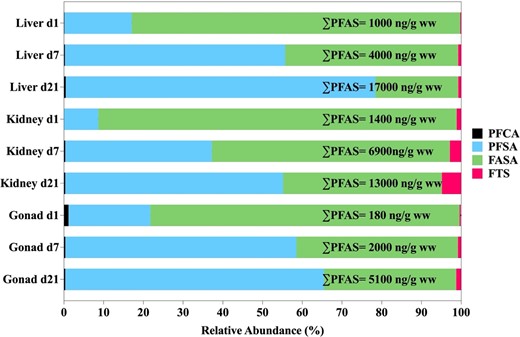
Abstract Exposure to per- and polyfluoroalkyl substances (PFAS) has been associated with toxicity in wildlife and negative health effects in humans. Decades of fire training activity at Joint Base Cape Cod (MA, USA) incorporated the use of aqueous film-forming foam (AFFF), which resulted in long-term PFAS contamination of sediments, groundwater, and hydrologically connected surface waters. To explore the bioconcentration potential of PFAS in complex environmental mixtures, a mobile laboratory was established to evaluate the bioconcentration of PFAS from AFFF-impacted groundwater by flow-through design. Fathead minnows (n = 24) were exposed to PFAS in groundwater over a 21-day period and tissue-specific PFAS burdens in liver, kidney, and gonad were derived at three different time points. The ∑PFAS concentrations in groundwater increased from approximately 10,000 ng/L at day 1 to 36,000 ng/L at day 21. The relative abundance of PFAS in liver, kidney, and gonad shifted temporally from majority perfluoroalkyl sulfonamides (FASAs) to perfluoroalkyl sulfonates (PFSAs). By day 21, mean ∑PFAS concentrations in tissues displayed a predominance in the order of liver > kidney > gonad. Generally, bioconcentration factors (BCFs) for FASAs, perfluoroalkyl carboxylates (PFCAs), and fluorotelomer sulfonates (FTS) increased with degree of fluorinated carbon chain length, but this was not evident for PFSAs. Perfluorooctane sulfonamide (FOSA) displayed the highest mean BCF (8700 L/kg) in day 21 kidney. Suspect screening results revealed the presence of several perfluoroalkyl sulfinate and FASA compounds present in groundwater and in liver for which pseudo-bioconcentration factors are also reported. The bioconcentration observed for precursor compounds and PFSA derivatives detected suggests alternative pathways for terminal PFAS exposure in aquatic wildlife and humans. Environ Toxicol Chem 2024;43:1795–1806. © 2024 The Author(s). Environmental Toxicology and Chemistry published by Wiley Periodicals LLC on behalf of SETAC. Flow-through dosing experiments utilizing aqueous film-forming foam (AFFF)–contaminated groundwater revealed positive linear correlations between fluorinated carbon chain length and logarithm-transformed bioconcentration factors (BCFs) for perfluoroalkyl sulfonamides identified in fathead minnow (Pimephales promelas) liver via target analysis and suspect screening using high-resolution mass spectrometry. FBSA = perfluorobutane sulfonamide; FHxSA = perfluorohexane sulfonamide; FOSA = perfluorooctane sulfonamide; FPeSA= perfluoropentane sulfonamide; FPrSA = perfluoropropane sulfonamide.
Uptake of Per- and Polyfluoroalkyl Substances by Fish, Mussel, and Passive Samplers in Mobile Laboratory Exposures using Groundwater from a Contamination Plume at a Historical Fire Training Area, Cape Cod, Massachusetts - Chemical and Biological Data from August to September 2018
This data release presents chemical and biological results from an investigation of the uptake of per- and polyfluoroalkyl substances (PFAS) from groundwater contaminated by fire training activities on Cape Cod, Massachusetts. Exposure experiments were conducted from August 29 to September 21, 2018 using groundwater from a relatively uncontaminated reference site and a fire training area contaminated site. To assess the uptake characteristics of the PFAS mixtures present in the 2 groundwater sources, 21-day mobile laboratory exposure experiments were conducted using fathead minnows (Pimephales promelas), polar organic chemical integrative samplers, and polyethylene tube samplers. Freshwater mussel (Ligumia subrostrata) exposure experiments were conducted for 14 days, beginning on day 7 of the fish and passive sampler exposures. Groundwater samples were collected daily (with a few exceptions). Samples for male fish and passive samplers were collected on days 0, 4, 7, 14, and 21. Samples for female fish were collected on days 0, 7, 14, and 21. The 14 day mussel exposures began on day 7 of the fish and passive sampler exposures, and mussel samples were collected on days 7, 11, 14, and 21. Groundwater site locations and well characteristics are presented in Table 1. Information on the various PFAS and co-occurring contaminants measured in the different media are presented in Table 2. Quality assurance results for PFAS analysis of the different media are presented in Table 3. Results for PFAS in groundwater are presented in Table 4. Results for co-occurring contaminants in groundwater are presented in Table 5. Results for fish biomarkers are presented in Table 6. Results for PFAS in male and female fish tissue are presented in Table 7. Results for PFAS in mussel tissue are presented in Table 8. Results for PFAS in polar organic chemical integrative samplers are presented in Table 9. Results for PFAS in polyethylene tube samplers are presented in Table 10.
A review of the pathways of human exposure to poly- and perfluoroalkyl substances (PFASs) and present understanding of health effects
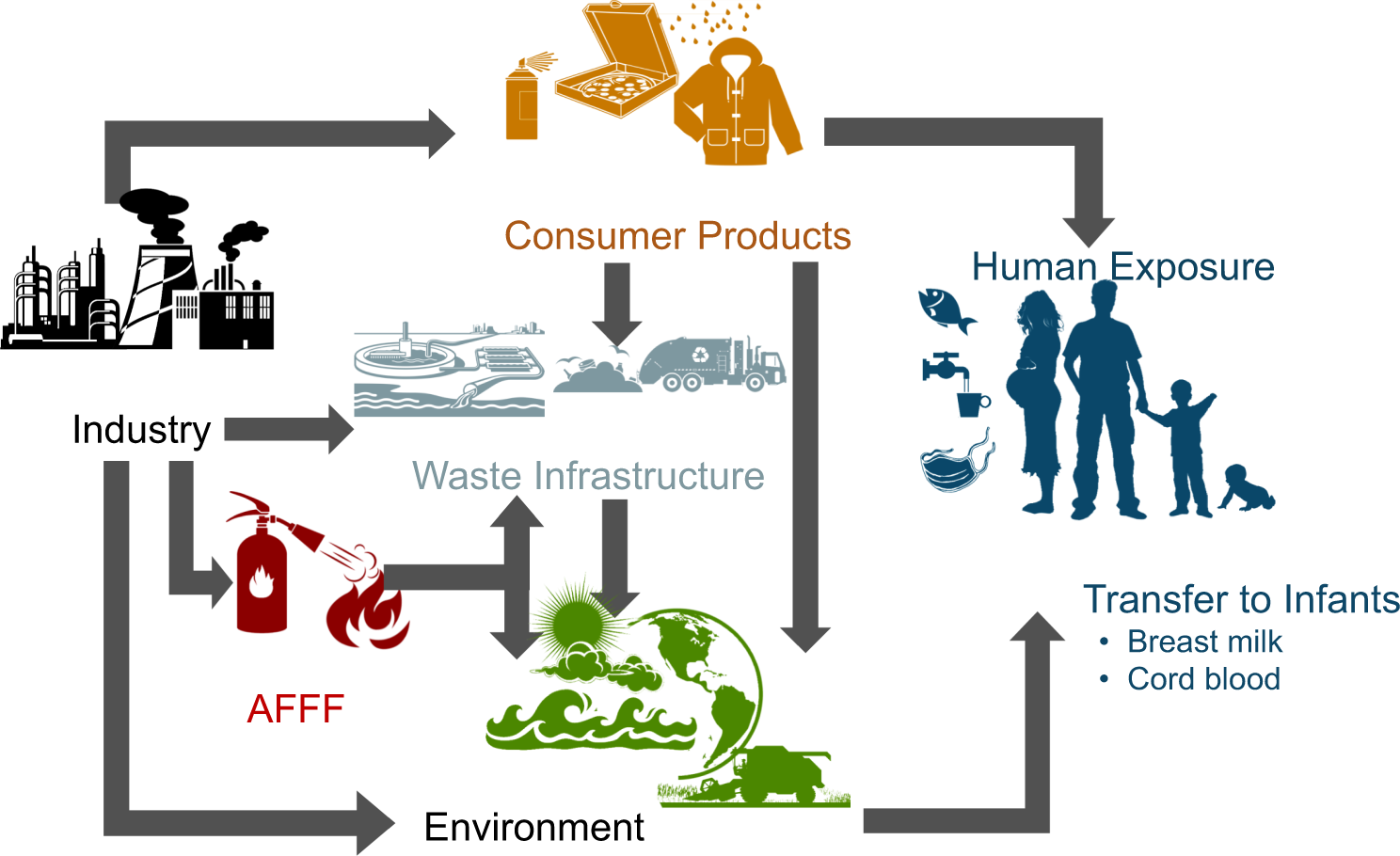
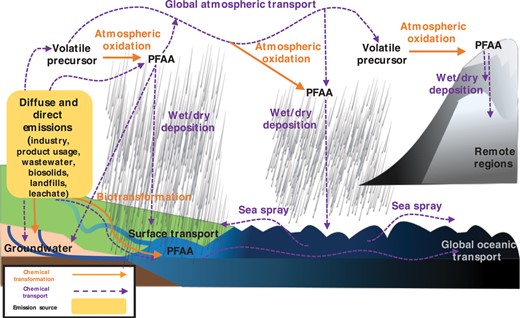
Here, we review present understanding of sources and trends in human exposure to poly- and perfluoroalkyl substances (PFASs) and epidemiologic evidence for impacts on cancer, immune function, metabolic outcomes, and neurodevelopment. More than 4000 PFASs have been manufactured by humans and hundreds have been detected in environmental samples. Direct exposures due to use in products can be quickly phased out by shifts in chemical production but exposures driven by PFAS accumulation in the ocean and marine food chains and contamination of groundwater persist over long timescales. Serum concentrations of legacy PFASs in humans are declining globally but total exposures to newer PFASs and precursor compounds have not been well characterized. Human exposures to legacy PFASs from seafood and drinking water are stable or increasing in many regions, suggesting observed declines reflect phase-outs in legacy PFAS use in consumer products. Many regions globally are continuing to discover PFAS contaminated sites from aqueous film forming foam (AFFF) use, particularly next to airports and military bases. Exposures from food packaging and indoor environments are uncertain due to a rapidly changing chemical landscape where legacy PFASs have been replaced by diverse precursors and custom molecules that are difficult to detect. Multiple studies find significant associations between PFAS exposure and adverse immune outcomes in children. Dyslipidemia is the strongest metabolic outcome associated with PFAS exposure. Evidence for cancer is limited to manufacturing locations with extremely high exposures and insufficient data are available to characterize impacts of PFAS exposures on neurodevelopment. Preliminary evidence suggests significant health effects associated with exposures to emerging PFASs. Lessons learned from legacy PFASs indicate that limited data should not be used as a justification to delay risk mitigation actions for replacement PFASs.
Uptake of Per- and Polyfluoroalkyl Substances by Fish, Mussel, and Passive Samplers in Mobile-Laboratory Exposures Using Groundwater from a Contamination Plume at a Historical Fire Training Area, Cape Cod, Massachusetts
Abstract. Aqueous film-forming foams historically were used during fire training activities on Joint Base Cape Cod, Massachusetts, and created an extensive
Characterizing the Areal Extent of PFAS Contamination in Fish Species Downgradient of AFFF Source Zones
Abstract. Most monitoring programs next to large per- and polyfluoroalkyl substances (PFAS) sources focus on drinking water contamination near source zones

Characterizing the Areal Extent of PFAS Contamination in Fish Species Downgradient of AFFF Source Zones
Dataset of targeted PFAS and extractable organofluorine concentrations in water, sediment, and biological tissue samples that support data included in two papers: "Characterizing the Areal Extent of PFAS Contamination in Fish Species Downgradient of AFFF Source Zones" and "Bioaccumulation of Perfluoroalkyl Sulfonamides (FASA)"
PFAS and Precursor Bioaccumulation in Freshwater Recreational Fish: Implications for Fish Advisories
Abstract. Per- and polyfluoroalkyl substances (PFAS) are a diverse class of fluorinated anthropogenic chemicals that include perfluoroalkyl acids (PFAA), w

Isolating the AFFF Signature in Coastal Watersheds Using Oxidizable PFAS Precursors and Unexplained Organofluorine
Abstract. Water supplies for millions of U.S. individuals exceed maximum contaminant levels for per- and polyfluoroalkyl substances (PFAS). Contemporary an

PFAS Exposure Pathways for Humans and Wildlife: A Synthesis of Current Knowledge and Key Gaps in Understanding
Abstract. We synthesize current understanding of the magnitudes and methods for assessing human and wildlife exposures to poly‐ and perfluoroalkyl substanc
Sociodemographic Factors Are Associated with the Abundance of PFAS Sources and Detection in U.S. Community Water Systems
Abstract. Drinking water contaminated by per- and polyfluoroalkyl substances (PFAS) is a widespread public health concern, and exposure–response relationsh
Phospholipid Levels Predict the Tissue Distribution of Poly- and Perfluoroalkyl Substances in a Marine Mammal
Abstract. Exposure to poly- and perfluoroalkyl substances (PFASs) has been linked to many negative health impacts in humans and wildlife. Unlike neutral hy

Addressing Urgent Questions for PFAS in the 21st Century
Abstract. Despite decades of research on per- and polyfluoroalkyl substances (PFAS), fundamental obstacles remain to addressing worldwide contamination by

Large declines in organofluorine contamination indicated by subarctic marine mammal tissues
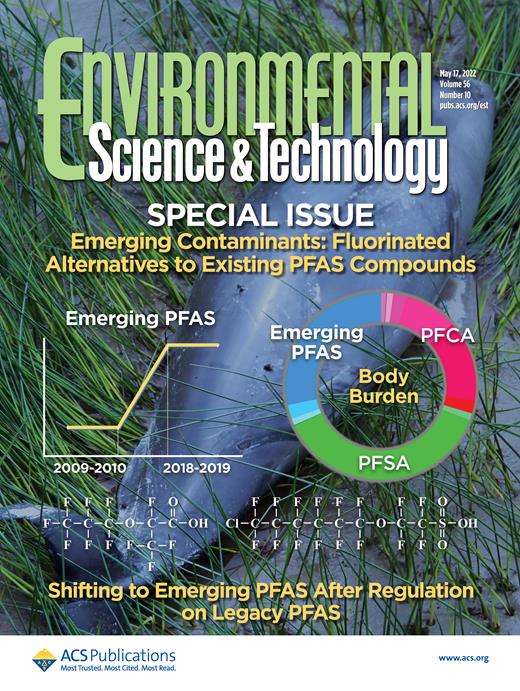
The ocean is thought to be the terminal sink for per- and polyfluoroalkyl substances (PFAS), persistent organofluorine chemicals used widely in modern commerce for decades. Industry and stewardship programs phased out the most abundantly produced legacy PFAS in the early 2000s due to toxicity concerns. However, they have since been replaced by shorter carbon chain and “novel” chemistries, and past work hypothesized likely increases in these replacement PFAS that were not previously quantifiable. To address this gap, we measured bulk extractable organofluorine (EOF) in archived liver and muscle tissues from pelagic Subarctic pilot whales over the last several decades. Results show EOF concentrations peaked in 2011 and declined by over 60% by 2023. Among a broad suite of targeted and suspect PFAS measured using high-resolution mass spectrometry, only one was consistently increasing through 2023. Tissue concentrations of four main legacy PFAS that accounted for over 75% of EOF were all decreasing by 2023. The timing of peak concentrations depended primarily on whether they were transported to the subarctic by ocean circulation or atmospheric deposition, with the latter declining much faster. Oceanic transport and bioaccumulation modeling suggests that decadal-scale lags between production and food web bioaccumulation are primarily driven by marine transport processes. Large declines in tissue concentrations in this study reinforce the effectiveness of phase-outs in chemical production. However, other work showing stable or increasing EOF in human serum suggests many emerging PFAS with more neutral physicochemical properties may be preferentially accumulating in terrestrial and nearshore environments compared to legacy PFAS.

Centurial Persistence of Forever Chemicals at Military Fire Training Sites
Abstract. Drinking water contamination by per- and polyfluoroalkyl substances (PFAS) is widespread near more than 300 United States (U.S.) military bases t
Characterization of the Potential Long-Term Impact from Sedimentary PFAS at a Historically Contaminated Textile Waste Site
Abstract. Per- and polyfluoroalkyl substances (PFAS) are pervasive pollutants at historically contaminated sites throughout the United States and beyond. T
Characterization of the Potential Long-Term Impact from Sedimentary PFAS at a Historically Contaminated Textile Waste Site
Abstract. Per- and polyfluoroalkyl substances (PFAS) are pervasive pollutants at historically contaminated sites throughout the United States and beyond. T
Stability of Per- and Polyfluoroalkyl Substances in Solvents Relevant to Environmental and Toxicological Analysis
Abstract. Per- and polyfluoroalkyl substances (PFASs) are widely used anthropogenic chemicals. For environmental and toxicological analysis, it is importan