


Abstract Introduction The potential benefits of supportive interactions on social networking sites on adolescents’ mental health are promising; however, no systematic evaluation has been conducted on this topic. This review examined empirical research on the relationship between social support derived from social networking sites and adolescents’ mental health both theoretically and empirically. Methods Followed PRISMA guidelines, we conducted a systematic literature search on six English and three Chinese databases in February 2020. Four thousand one hundred and seventy‐seven articles were screened first by title, then abstract, and lastly, full articles. Results Fourteen studies (five English and nine Chinese) were identified, with total sample of 11,616 adolescents (age: 10–19 years; females: 42.7%–56.3%). Meta‐analysis showed that the correlation of online social support with self‐esteem was moderate and significant ( r = .29), but with depression was small and insignificant ( r = −.09). Sensitivity analysis indicated that social support from acquaintances on the internet may not be as beneficial as from real‐life acquaintances. Despite that there isn't enough research on other specific mental health outcomes to run a quantitative synthesis, individual studies suggest that online social support (OSS) may be associated with increased self‐identity and life satisfaction, decreased loneliness and social anxiety, it also counteracts the negative effect of stress and cyberbullying on mental health. Conclusions OSS might be beneficial for adolescents' mental health, especially self‐esteem, although the causal relationship requires longitudinal studies to confirm, and the underlying mechanisms need further investigation.
The Impact of Social Media on Adolescent Mental Health: A Meta-Analysis
Introduction: The proliferation of social media has raised significant concerns about its potential effects on the mental health of adolescents. This meta-analysis aims to provide a comprehensive assessment of the existing research on the relationship between social media use and various mental health outcomes in adolescents. Methods: A systematic search of electronic databases (PubMed, PsycINFO, Scopus, Web of Science) from January 2018 to June 2024 was conducted to identify relevant studies. Studies were included if they examined the association between social media use and mental health outcomes in adolescents (aged 10-19) and reported quantitative data. Effect sizes were calculated and pooled using random-effects models. Results: A total of 45 studies (N = 153,285 adolescents) met the inclusion criteria. The meta-analysis revealed small but significant associations between increased social media use and increased depressive symptoms (r = 0.12), anxiety (r = 0.10), and loneliness (r = 0.15). Furthermore, a significant negative association was found between social media use and self-esteem (r = -0.08). The analysis also identified several moderators of these effects, including gender, age, and type of social media platform. Conclusion: The findings of this meta-analysis suggest that increased social media use is associated with a range of negative mental health outcomes in adolescents. However, the effects are small, and the relationship is complex, with several moderating factors. Further research is needed to understand the mechanisms underlying these associations and to develop effective interventions to mitigate the potential negative effects of social media on adolescent mental health.
Loneliness in the United States: A 2018 National Panel Survey of Demographic, Structural, Cognitive, and Behavioral Characteristics
Purpose: To inform health behavior intervention design, we sought to quantify loneliness and its correlates, including social media use, among adults in the United States. Design: Cross-sectional research panel questionnaire. Setting: Responses were gathered from individuals in all 50 states surveyed via Internet from February 2018 to March 2018. Participants: A total of 20 096 US panel respondents aged 18+. Measures: The University of California at Los Angeles (UCLA) Loneliness Scale (theoretical score range = 20-80) was administered along with demographic, structural, cognitive, and behavioral items. Analysis: After calibrating the sample to population norms, we conducted multivariable linear regression analysis. Results: The overall mean survey-weighted loneliness score was 44.03 (standard error = 0.09). Social support (standardized β [sβ] = −0.19) and meaningful daily interactions (sβ = −0.14) had the strongest associations with lower loneliness, along with reporting good relationships, family life, physical and mental health, friendships, greater age, being in a couple, and balancing one’s daily time. Social anxiety was most strongly associated with greater loneliness (sβ = +0.20), followed by self-reported social media overuse (sβ = +0.05) and daily use of text-based social media (sβ = +0.03). Conclusion: Our findings confirm that loneliness decreases with age, and that being in a relationship as well as everyday behavioral factors in people’s control are most strongly related to loneliness. Population health promotion efforts to reduce loneliness should focus on improving social support, decreasing social anxiety, and promoting healthy daily behaviors.

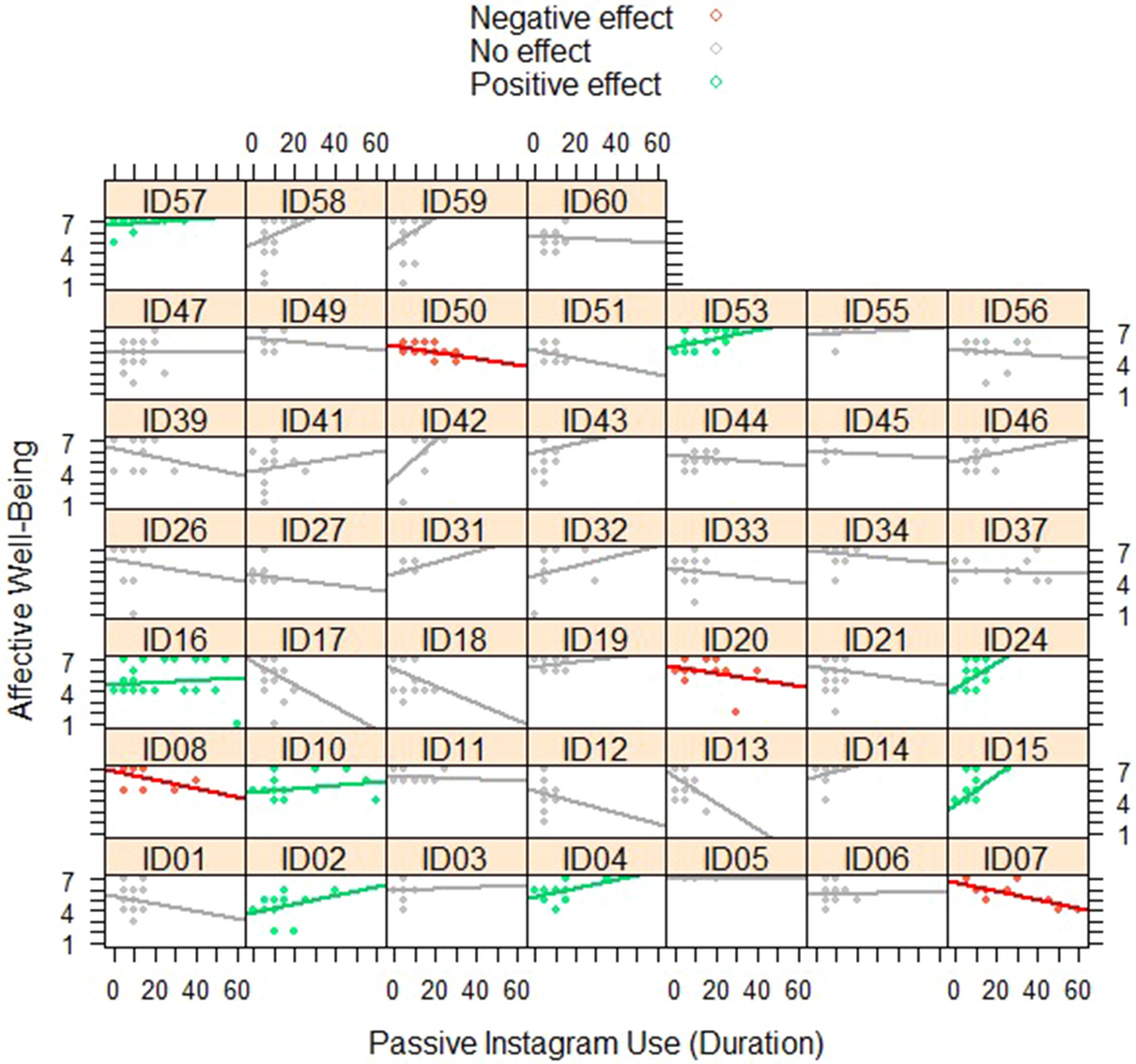
The effect of social media on well-being differs from adolescent to adolescent
The question whether social media use benefits or undermines adolescents’ well-being is an important societal concern. Previous empirical studies have mostly established across-the-board effects among (sub)populations of adolescents. As a result, it is still an open question whether the effects are unique for each individual adolescent. We sampled adolescents’ experiences six times per day for one week to quantify differences in their susceptibility to the effects of social media on their momentary affective well-being. Rigorous analyses of 2,155 real-time assessments showed that the association between social media use and affective well-being differs strongly across adolescents: While 44% did not feel better or worse after passive social media use, 46% felt better, and 10% felt worse. Our results imply that person-specific effects can no longer be ignored in research, as well as in prevention and intervention programs.
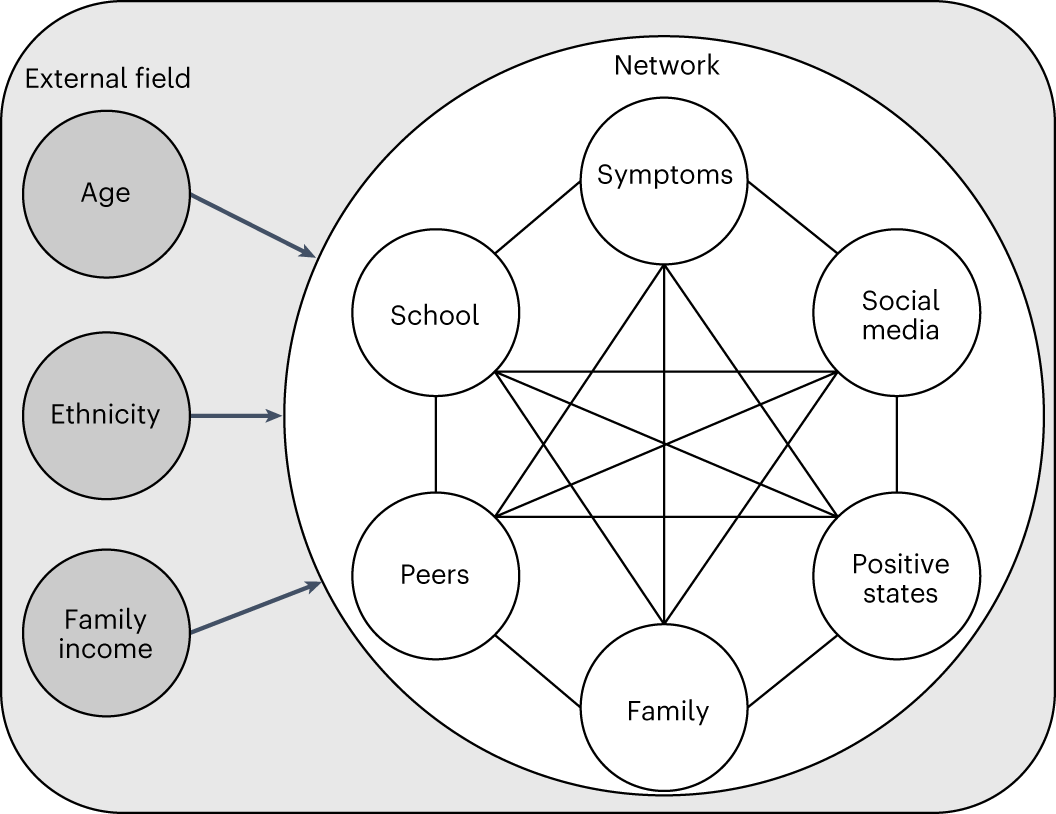
Time spent on social media among the least influential factors in adolescent mental health: preliminary results from a panel network analysis
There is growing concern about the role of social media use in the documented increase of adolescent mental health difficulties. However, the current evidence remains complex and inconclusive. While increasing research on this area of work has allowed for notable progress, the impact of social media use within the complex systems of adolescent mental health and development is yet to be examined. The current study addresses this conceptual and methodological oversight by applying a panel network analysis to explore the role of social media on key interacting systems of mental health, wellbeing and social life of 12,041 UK adolescents. Here we find that, across time, estimated time spent interacting with social media predicts concentration problems in female participants. However, of the factors included in the current network, social media use is one of the least influential factors of adolescent mental health, with others (for example, bullying, lack of family support and school work dissatisfaction) exhibiting stronger associations. Our findings provide an important exploratory first step in mapping out complex relationships between social media use and key developmental systems and highlight the need for social policy initiatives that focus on the home and school environment to foster resilience.
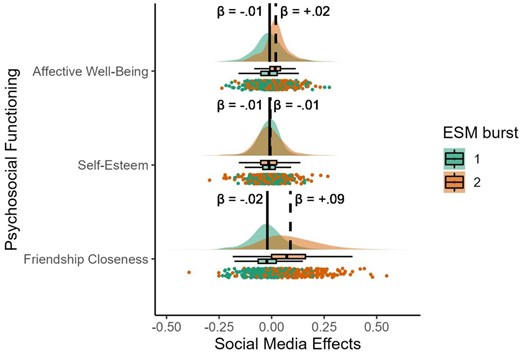
Changing or stable? The effects of adolescents' social media use on psychosocial functioning
Abstract To better understand the effects of social media use on adolescents' psychosocial functioning, this study examined the temporal stability of social media effects across two separate 3-week experience sampling methodology (ESM) studies conducted 6 months apart in 2019 and 2020. Participants were 297 adolescents (M age = 14.1 years, SD = 0.7, 58.9% girls; 41.1% boys; 0.1% other; 97% Dutch) who completed 126 momentary questionnaires on social media use, affective well-being, self-esteem, and friendship closeness in each of the two ESM studies. The effects of social media on psychosocial functioning had low rank-order stability (r = .05–.25). Findings indicated that the effects of social media use varied not only between individuals but also changed substantially within individuals over time.
The Impact of Internet and Social Media Use on Well-Being: A Longitudinal Analysis of Adolescents Across Nine Years
Abstract The present research examines the longitudinal average impact of frequency of use of Internet and social networking sites (SNS) on subjective well-being of adolescents in Germany. Based on five-wave panel data that cover a period of nine years, we disentangle between-person and within-person effects of media use on depressive symptomatology and life satisfaction as indicators of subjective well-being. Additionally, we control for confounders such as TV use, self-esteem, and satisfaction with friends. We found that frequency of Internet use in general and use of SNS in particular is not substantially related subjective well-being. The explanatory power of general Internet use or SNS use to predict between-person differences or within-person change in subjective well-being is close to zero. TV use, a potentially confounding variable, is negatively related to satisfaction with life, but it does not affect depressive symptomatology. However, this effect is too small to be of practical relevance.
Social Media and Depression Symptoms: a Meta-Analysis
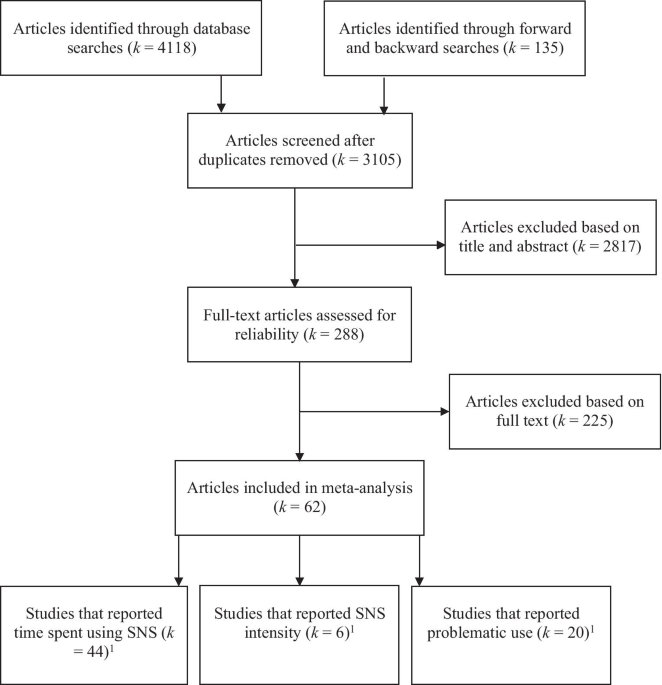
Social Networking Sites (SNS) have close to 3 billion users worldwide. Recently, however, SNS have come under media scrutiny for their potential association with depression. Two previous meta-analyses failed to find evidence for a robust concurrent association between SNS use and depression symptoms. However, these analyses focused primarily on the time spent using SNS. The current meta-analysis is the first to consider the multi-dimensional nature of SNS use, and examines separately the quantitative associations of depression symptoms to SNS use in three types of SNS studies examining three distinct constructs of SNS use: time spent using SNS, intensity of SNS use, and problematic SNS use. Sixty-two studies (N = 451, 229) met inclusion criteria. Depression symptoms were significantly, but weakly, associated with time spent using SNS (r = 0.11) and intensity of SNS use (r = 0.09). However, the association of depression symptoms to problematic SNS use was moderate (r = 0.29), was significantly higher than for time spent using SNS (Qbetween = 35.85, p < 0.001) or intensity of SNS use (Qbetween = 13.95, p < 0.001), and was not significantly moderated by age, gender, year of study publication, or mode of recruitment. These results suggest that future research examining causal models of the relation of SNS use and depression, as well as research on intervention and prevention, should focus in more detail on individuals who are engaging in a pattern of problematic SNS use.
Does Using Social Media Jeopardize Well-Being? The Importance of Separating Within- From Between-Person Effects
Social networking sites (SNS) are frequently criticized as a driving force behind rising depression rates. Yet empirical studies exploring the associations between SNS use and well-being have been predominantly cross-sectional, while the few existing longitudinal studies provided mixed results. We examined prospective associations between SNS use and multiple indicators of well-being in a nationally representative sample of Dutch adults ( N ∼ 10,000), comprising six waves of annual measures of SNS use and well-being. We used an analytic method that estimated prospective effects of SNS use and well-being while also estimating time-invariant between-person associations between these variables. Between individuals, SNS use was associated with lower well-being. However, within individuals, year-to-year changes in SNS use were not prospectively associated with changes in well-being (or vice versa). Overall, our analyses suggest that the conclusions about the causal impact of social media on rising mental health problems in the population might be premature.
Social Media Use and Well-Being Across Adolescent Development
Importance Social media’s association with adolescent well-being remains debated. Heavy use has been associated with distress, while abstinence may cause missed connections. Objective To investigate 3-year longitudinal associations between after-school social media use and adolescent well-being using a large longitudinal cohort dataset modeled within a repeated cross-sectional framework. Design, Setting, and Participants This cohort study included Australian students in grades 4 through 12 (2019-2022). After-school social media use was self-reported and grouped as none, moderate, or highest. Well-being was assessed using 8 validated indicators (eg, happiness, life satisfaction, emotional regulation), dichotomized as high vs low. Well-being was assessed concurrently with social media use during the annual school-based survey in each year of data collection. Data analysis was conducted from June to July 2025. Exposures Self-reported after-school social media use between 3 pm and 6 pm (weekdays), classified into 3 categories: none (0 h/wk), moderate (&gt;0 to &lt;12.5 h/wk), and highest (≥12.5 h/wk). Main Outcomes and Measures The primary outcome was overall well-being, measured as the mean score across 8 validated domains (happiness, optimism, life satisfaction, worry, sadness, perseverance, emotional regulation, and cognitive engagement), dichotomized as high vs low (&lt;3 on a scale of 1-5). Secondary outcomes were each individual well-being indicator, similarly dichotomized. Mixed-effects logistic models were used for analyses, stratified by sex and adjusted for demographic covariates. Results The analytic sample included 100 991 adolescents, contributing 173 533 observations (86 582 [49.9%] observations from female participants; mean [SD] age, 13.5 [2.2] years). A U-shaped association was observed between after-school social media use and well-being. Compared with moderate users, adolescents with the highest use had greater odds of low well-being (grades 7-9, girls: odds ratio [OR], 3.13 [95% CI, 2.88-3.39]; boys: OR, 2.25 [95% CI, 1.86-2.72]), while nonusers also had higher odds of low well-being in later adolescence (grades 10-12, girls: OR, 1.79 [95% CI, 1.41-2.27]; boys: OR, 3.00 [95% CI, 2.01-4.46]). These patterns were consistent across survey years and robust to sensitivity analyses. Conclusions and Relevance In this cohort study of students in grades 4 through 12, social media’s association with adolescent well-being was complex and nonlinear, varying by age and sex. While heavy use was associated with poorer well-being and abstinence sometimes coincided with less favorable outcomes, these findings are observational and should be interpreted cautiously.

20 shared papers
Hall JA Ten myths about the effect of social media use on well-being J. Med. Internet Res. • Dissing AS et al. Smartphone interactions and mental well-being in young adults: A longitudinal study based on objective high-resolution smartphone data Scand. J. Public Health • Beyens I et al. The effect of social media on well-being differs from adolescent to adolescent Sci. Rep. • Valkenburg PM Social media use and well-being: What we know and what we need to know Curr. Opin. Psychol. • Panova T et al. Is smartphone addiction really an addiction? J. Behav. Addict. • Heffer T et al. The longitudinal association between social-media use and depressive symptoms among adolescents and young adults: An empirical reply to Twenge et al. (2018) Clin. Psychol. Sci. • Stavrova O et al. Does using social media jeopardize well-being? The importance of separating within- from between-person effects Soc. Psychol. Personal. Sci. • Lawrence D et al. Reciprocal relationships between trajectories of loneliness and screen media use during adolescence J. Child Fam. Stud. • Cunningham S et al. Social media and depression symptoms: A meta-analysis Res. Child Adolesc. Psychopathol. • Hall JA et al. Experimentally manipulating social media abstinence: results of a four-week diary study Media Psychol. • Panayiotou M et al. Time spent on social media among the least influential factors in adolescent mental health: preliminary results from a panel network analysis Nat. Ment. Health • Johannes N et al. Objective, subjective, and accurate reporting of social media use: No evidence that daily social media use correlates with personality traits, motivational states, or well-being Technol. Mind Behav. • Johannes N et al. No effect of different types of media on well-being Sci. Rep. • Meier A et al. Computer-mediated communication, social media, and mental health: A conceptual and empirical meta-review Communic. Res. • Bruce LD et al. Loneliness in the United States: A 2018 national panel survey of demographic, structural, cognitive, and behavioral characteristics Am. J. Health Promot. • Schemer C et al. The impact of Internet and social media use on well-being: A longitudinal analysis of adolescents across nine years J. Comput. Mediat. Commun. • Hall JA et al. Two tests of social displacement through social media use Inf. Commun. Soc. • Hampton KN Social media and change in psychological distress over time: The role of social causation J. Comput. Mediat. Commun. • Steinsbekk S et al. The new social landscape: Relationships among social media use, social skills, and offline friendships from age 10-18 years Comput. Human Behav. • Odgers CL The great rewiring: is social media really behind an epidemic of teenage mental illness? Nature

Ten Myths About the Effect of Social Media Use on Well-Being
This viewpoint reviews the empirical evidence regarding the association between social media use and well-being, including life satisfaction and affective well-being, and the association between social media use and ill-being, including loneliness, anxiety, and depressive symptomology. To frame this discussion, this viewpoint will present 10 widely believed myths about social media, each drawn from popular discourse on the topic. In rebuttal, this viewpoint will offer a warranted claim supported by the research. The goal is to bring popular beliefs into dialogue with state-of-the-art quantitative social scientific evidence. It is the intention of this viewpoint to provide a more accurate and nuanced claim to challenge each myth. This viewpoint will bring attention to the importance of using rigorous scientific evidence to inform public debates about social media use and well-being, especially among adolescents and young adults.

Computer-Mediated Communication, Social Media, and Mental Health: A Conceptual and Empirical Meta-Review
Computer-mediated communication (CMC), and specifically social media, may affect the mental health (MH) and well-being of its users, for better or worse. Research on this topic has accumulated rapidly, accompanied by controversial public debate and numerous systematic reviews and meta-analyses. Yet, a higher-level integration of the multiple disparate conceptual and operational approaches to CMC and MH and individual review findings is desperately needed. To this end, we first develop two organizing frameworks that systematize conceptual and operational approaches to CMC and MH. Based on these frameworks, we integrate the literature through a meta-review of 34 reviews and a content analysis of 594 publications. Meta-analytic evidence, overall, suggests a small negative association between social media use and MH. However, effects are complex and depend on the CMC and MH indicators investigated. Based on our conceptual review and the evidence synthesis, we devise an agenda for future research in this interdisciplinary field.
How do social media use, gaming frequency, and internalizing symptoms predict each other over time in early-to-middle adolescence?
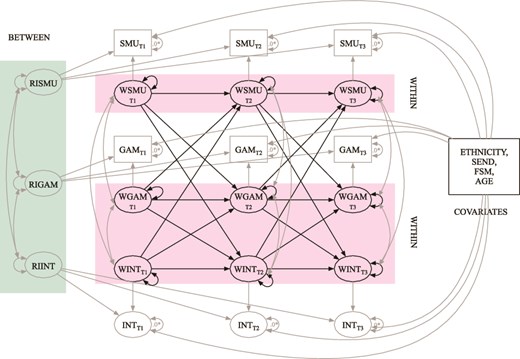
Abstract Background The effects of adolescent digital technology use (e.g. social media, gaming) on their mental health are a major public health concern, but existing evidence is of mixed quality and findings have been inconclusive. Methods Separating within-person effects from between-person effects, a random-intercept cross-lagged panel model was applied to three annual waves of data (T1, T2, T3) on social media use, gaming, and internalizing symptoms among N = 25 629 adolescents (51% girls, average age 12 years, 7 months (SD = 3.58 months) at baseline) in Greater Manchester, England. Results Longitudinal relationships varied by gender, such that more frequent gaming at T2 predicted less time spent on social media use at T3 in girls (but not boys), and more frequent internalizing symptoms at T2 predicted reductions in gaming frequency at T3 in boys (but not girls). There was no evidence that time spent on social media or gaming frequency predicted later internalizing symptoms among girls or boys. Sensitivity analyses that distinguished active versus passive social media use replicated these findings. Conclusions The findings of this study do not support the widely held view that adolescent technology use is a major causal factor in their mental health difficulties.
The Longitudinal Association Between Social-Media Use and Depressive Symptoms Among Adolescents and Young Adults: An Empirical Reply to Twenge et al. (2018)
Research by Twenge, Joiner, Rogers, and Martin has indicated that there may be an association between social-media use and depressive symptoms among adolescents. However, because of the cross-sectional nature of this work, the relationship among these variables over time remains unclear. Thus, in this longitudinal study we examined the associations between social-media use and depressive symptoms over time using two samples: 594 adolescents ( M age = 12.21) who were surveyed annually for 2 years, and 1,132 undergraduate students ( M age = 19.06) who were surveyed annually for 6 years. Results indicate that among both samples, social-media use did not predict depressive symptoms over time for males or females. However, greater depressive symptoms predicted more frequent social-media use only among adolescent girls. Thus, while it is often assumed that social-media use may lead to depressive symptoms, our results indicate that this assumption may be unwarranted.
Social media’s enduring effect on adolescent life satisfaction
In this study, we used large-scale representative panel data to disentangle the between-person and within-person relations linking adolescent social media use and well-being. We found that social media use is not, in and of itself, a strong predictor of life satisfaction across the adolescent population. Instead, social media effects are nuanced, small at best, reciprocal over time, gender specific, and contingent on analytic methods.

Reciprocal Relationships between Trajectories of Loneliness and Screen Media Use during Adolescence
Adolescence is the peak period for loneliness. Now a ubiquitous part of the adolescent landscape, electronic screens may provide avenues for ameliorating feelings of loneliness. Conversely, they may act as risk factors for the development of such feelings. Although cross-sectional studies to date have investigated the relationship between screen use and loneliness, longitudinal studies are needed if causal and directional associations are to be investigated. Utilising an accelerated longitudinal design and online survey we collected four waves of data from 1919 secondary school adolescents aged 10–15 years over two years. Random intercept cross-lagged panel models tested whether changes in five types of screen use (i.e., total screen time, social media use, gaming, passive screen use, and web use) are associated with changes in loneliness in the subsequent time-point, or changes in loneliness are associated with changes in screen use in the subsequent time-point. We found significant reciprocal associations between screen use and loneliness, with the strongest associations between social networking and electronic gaming and quality of friendships. These findings highlight that any significant increase in an adolescent’s screen use may be a potential indicator of changes in quality of friendships or feelings of isolation.
