

We develop a calculus for lazy functional programming based on recursion operators associated with data type definitions. For these operators we derive various algebraic laws that are useful in deriving and manipulating programs. We shall show that all example functions in Bird and Wadler's “Introduction to Functional Programming” can be expressed using these operators.
Integrating functional and imperative programming | Proceedings of the 1986 ACM conference on LISP and functional programming
We present a new model, based on monads, for performing input/output in a non-strict, purely functional language. It is composable, extensible, efficient, requires no extensions to the type system, and extends smoothly to incorporate mixed-language ...
Generic deriving of generic traversals | Proceedings of the ACM on Programming Languages
Functional programmers have an established tradition of using traversals as a design pattern to work with recursive data structures. The technique is so prolific that a whole host of libraries have been designed to help in the task of automatically ...

Foundations of Algebraic Specification and Formal Software Development
This book provides foundations for software specification and formal software development from the perspective of work on algebraic specification, concentrating on developing basic concepts and studying their fundamental properties. These foundations are built on a solid mathematical basis, using elements of universal algebra, category theory and logic, and this mathematical toolbox provides a convenient language for precisely formulating the concepts involved in software specification and development. Once formally defined, these notions become subject to mathematical investigation, and this interplay between mathematics and software engineering yields results that are mathematically interesting, conceptually revealing, and practically useful. The theory presented by the authors has its origins in work on algebraic specifications that started in the early 1970s, and their treatment is comprehensive. This book contains five kinds of material: the requisite mathematicalfoundations; traditional algebraic specifications; elements of the theory of institutions; formal specification and development; and proof methods. While the book is self-contained, mathematical maturity and familiarity with the problems of software engineering is required; and in the examples that directly relate to programming, the authors assume acquaintance with the concepts of functional programming. The book will be of value to researchers and advanced graduate students in the areas of programming and theoretical computer science.
Syntax and semantics of dependent types
In this chapter we fix a particular syntax for a dependently typed calculus and define an abstract notion of model as well as a general interpretation function mapping syntactical objects to entities in a model. This interpretation function is shown to be sound with respect to the syntax.
OCaml Programming: Correct + Efficient + Beautiful — OCaml Programming: Correct + Efficient + Beautiful
A textbook on functional programming and data structures in OCaml, with an emphasis on semantics and software engineering. This book is the textbook for CS 3110 Data Structures and Functional Programming at Cornell University. A past title of this book was “Functional Programming in OCaml”.
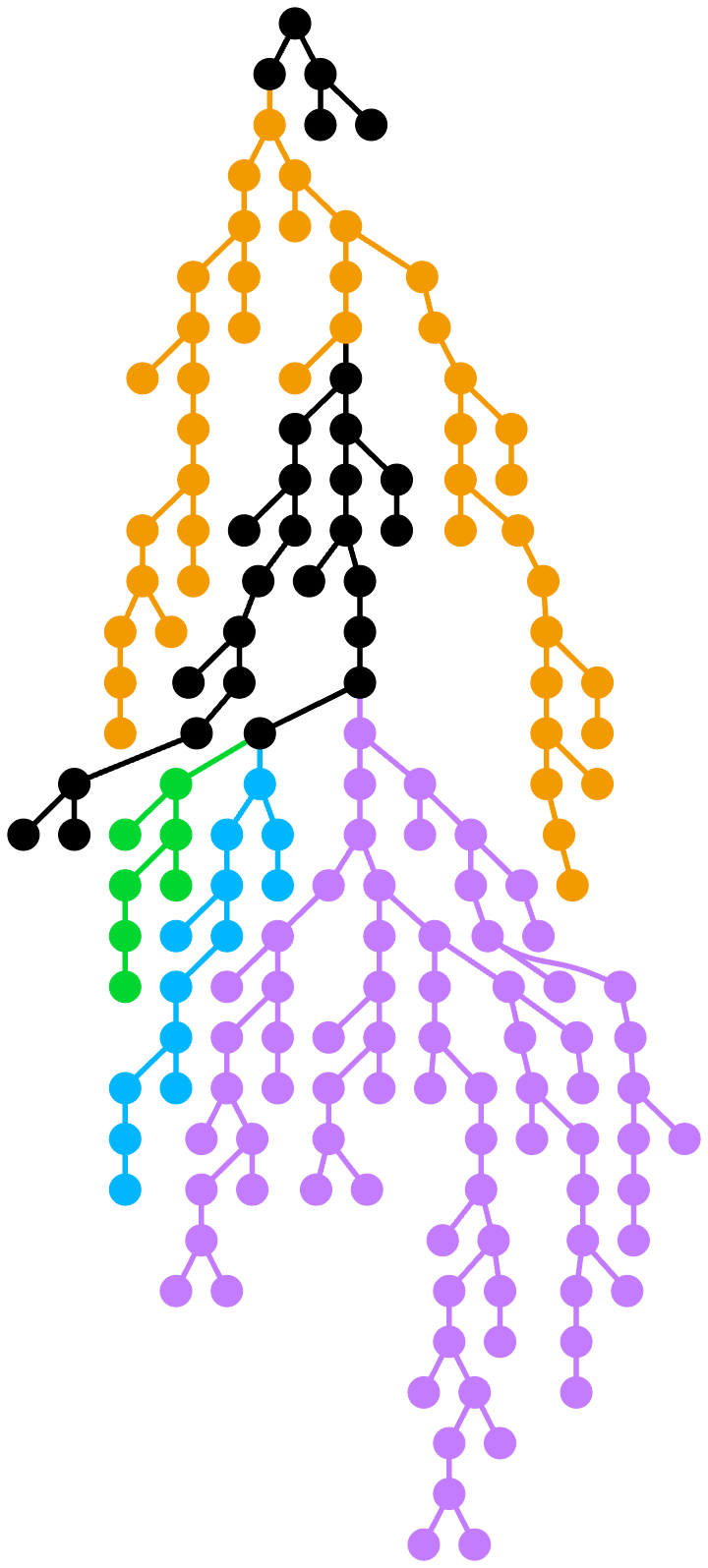
Implementing a Hindley-Milner Type System (Part 1) | Blog
First part of a tutorial on implementing a Hindley-Milner type system for a simple, purely functional programming language in Haskell. We go over syntax representation, how the Hindley-Milner type system is defined, polymorphism vs. monomorphism, generalization, and instantiation.
Theorems for free! | Proceedings of the fourth international conference on Functional programming languages and computer architecture
The polymorphic blame calculus integrates static typing, including universal types, with dynamic typing. The primary challenge with this integration is preserving parametricity: even dynamically-typed code should satisfy it once it has been cast to a ...
A formulation of the simple theory of types
The purpose of the present paper is to give a formulation of the simple theory of types which incorporates certain features of the calculus of λ-conversion. A complete incorporation of the calculus of λ-conversion into the theory of types is impossible if we require that λx and juxtaposition shall retain their respective meanings as an abstraction operator and as denoting the application of function to argument. But the present partial incorporation has certain advantages from the point of view of type theory and is offered as being of interest on this basis (whatever may be thought of the finally satisfactory character of the theory of types as a foundation for logic and mathematics).For features of the formulation which are not immediately connected with the incorporation of λ-conversion, we are heavily indebted to Whitehead and Russell, Hilbert and Ackermann, Hilbert and Bernays, and to forerunners of these, as the reader familiar with the works in question will recognize.The class of type symbols is described by the rules that ı and o are each type symbols and that if α and β are type symbols then (αβ) is a type symbol: it is the least class of symbols which contains the symbols ı and o and is closed under the operation of forming the symbol (αβ) from the symbols α and β.
Categories of Containers
We introduce the notion of containers as a mathematical formalisation of the idea that many important datatypes consist of templates where data is stored. We show that containers have good closure properties under a variety of constructions including the formation of initial algebras and final coalgebras. We also show that containers include strictly positive types and shapely types but that there are containers which do not correspond to either of these. Further, we derive a representation result classifying the nature of polymorphic functions between containers. We finish this paper with an application to the theory of shapely types and refer to a forthcoming paper which applies this theory to differentiable types.
Principal type-schemes for functional programs | Proceedings of the 9th ACM SIGPLAN-SIGACT symposium on Principles of programming languages
As part of the Digital Library's transition to Open Access, new features for researchers are available in the Premium Edition. Click here to learn more.
Algebraic data integration
In this paper, we develop an algebraic approach to data integration by combining techniques from functional programming, category theory, and database theory. In our formalism, database schemas and instances are algebraic (multi-sorted equational) theories of a certain form. Schemas denote categories, and instances denote their initial (term) algebras. The instances on a schema S form a category, S–Inst, and a morphism of schemas F : S → T induces three adjoint data migration functors: ΣF : S–Inst → T–Inst, defined by substitution along F, which has a right adjoint ΔF : T–Inst → S–Inst, which in turn has a right adjoint ΠF : S–Inst → T–Inst. We present a query language based on for/where/return syntax where each query denotes a sequence of data migration functors; a pushout-based design pattern for performing data integration using our formalism; and describe the implementation of our formalism in a tool we call AQL (Algebraic Query Language).
Functional Query Languages with Categorical Types
We study three category-theoretic types in the context of functional query languages (typed lambda-calculi extended with additional operations for bulk data processing). The types we study are:
A theory of type polymorphism in programming
The aim of this work is largely a practical one. A widely employed style of programming, particularly in structure-processing languages which impose n…