

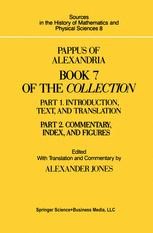
The seventh book of Pappus's Collection, his commentary on the Domain (or Treasury) of Analysis, figures prominently in the history of both ancient and modern mathematics: as our chief source of information concerning several lost works of the Greek geometers Euclid and Apollonius, and as a book that inspired later mathematicians, among them Viete, Newton, and Chasles, to original discoveries in their pursuit of the lost science of antiquity. This presentation of it is concerned solely with recovering what can be learned from Pappus about Greek mathematics. The main part of it comprises a new edition of Book 7; a literal translation; and a commentary on textual, historical, and mathematical aspects of the book. It proved to be convenient to divide the commentary into two parts, the notes to the text and translation, and essays about the lost works that Pappus discusses. The first function of an edition of this kind is, not to expose new discoveries, but to present a reliable text and organize the accumulated knowledge about it for the reader's convenience. Nevertheless there are novelties here. The text is based on a fresh transcription of Vat. gr. 218, the archetype of all extant manuscripts, and in it I have adopted numerous readings, on manuscript authority or by emendation, that differ from those of the old edition of Hultsch. Moreover, many difficult parts of the work have received little or no commentary hitherto.
Parmenides: Pre-Socratic Philosophy
Parmenides
Parmenides of Elea, active in the earlier part of the 5th c. BCE,authored a difficult metaphysical poem that has earned him areputation as early Greek philosophy’s most profound andchallenging thinker. His philosophical stance has typically beenunderstood as at once extremely paradoxical and yet crucial for thebroader development of Greek natural philosophy and metaphysics. Hehas been seen as a metaphysical monist (of one stripe or another) whoso challenged the naïve cosmological theories of his predecessorsthat his major successors among the Presocratics were all driven todevelop more sophisticated physical theories in response to hisarguments. The difficulties involved in the interpretation of his poemhave resulted in disagreement about many fundamental questionsconcerning his philosophical views, such as: whether he actually was amonist and, if so, what kind of monist he was; whether his systemreflects a critical attitude toward earlier thinkers such as theMilesians, Pythagoreans, and Heraclitus, or whether he was motivatedsimply by more strictly logical concerns, such as the paradox ofnegative existentials that Bertrand Russell detected at the heart ofhis thought; whether he considered the world of our everydayawareness, with its vast population of entities changing and affectingone another in all manner of ways, to be simply an illusion, and thuswhether the lengthy cosmological portion of his poem represented agenuine attempt to understand this world at all. This entry aims toprovide an overview of Parmenides’ work and of some of the majorinterpretive approaches advanced over the past few decades. Itconcludes by suggesting that understanding his thought and his placein the development of early Greek philosophy requires taking dueaccount of the fundamental modal distinctions that he was the first toarticulate and explore with any precision.

The Internet Classics Archive | The Republic by Plato
The Republic by Plato, part of the Internet Classics Archive
We need more tiny knowledge projects—here’s one
Crowdsourcing dynamic illustrations for a new astronomy book by Terry Tao and Tanya Klowden. The other day I was reading the sample chapter of a new book by Terence Tao and Tanya Klowden, on the so-called cosmic distance ladder. It’s a lovely piece of writing. The chapter tells the story of how Johannes Kepler, using data collected by Tycho Brahe, solved the puzzle of planetary motion. It puts us in the discoverers’ shoes: instead of working backwards from Kepler’s equations, we work forwards from the inexp

Terence Tao – Kepler, Newton, and the true nature of mathematical discovery
“And what those stories teach us about how AI will revolutionize math”
1177 BC: The Year Civilization Collapsed (Eric Cline, PhD)
Notes for a Theory | Alberto Garutti
Category Theory Illustrated - index
What does a debate between two ancient Greek philosophers have to do with the code running your computer? How can a simple map reveal the deepest secrets of the universe’s structure?

Interesting footnote on math arXiv arxiv.org/abs/2608.16066v1
Thoughtful and relevant outside math. A partial summary: Gowers thinks it’s important to sustain a human mathematical culture, but is unconvinced by the Leiden Declaration’s attempt to do that by reaffirming human ownership of specific *discoveries*.

tachikoma
an interesting blog post by Timothy Gowers on the Leiden declaration (on AI and Math), on why he didn't sign. it gets to a subtler aspect of control over AI and our future.
atproto tools 🔧

atproto explainers

Cyclospora 2026/Taylor Farms

Cyclospora outbreak in the US, May–August 2026. Also includes articles related to the cyclosopra outbreak in 2013 and the E. coli outbreak in 2025, and other subsequent recalls by Taylor Farms. Search terms: Taylor Farms, Taylor Fresh Foods, Cyclosporiasis, サイクロスポラ症

Brookie (@brookie.blog)

hiiii bluesky, my name is poe (◕‿◕)ノ i'm the potato from @atpota.to! i'm here to help you navigate the atmosphere, learn more about atproto…
Essential Resources for Getting Started with AT Protocol

ATProto Isn't What You Think

Here's my two minute explainer of atproto: it is in essence a water cycle. - Clouds hold water. - They precipitate water over mountains…
What is the Atmosphere? - Leaflet Lab Notes
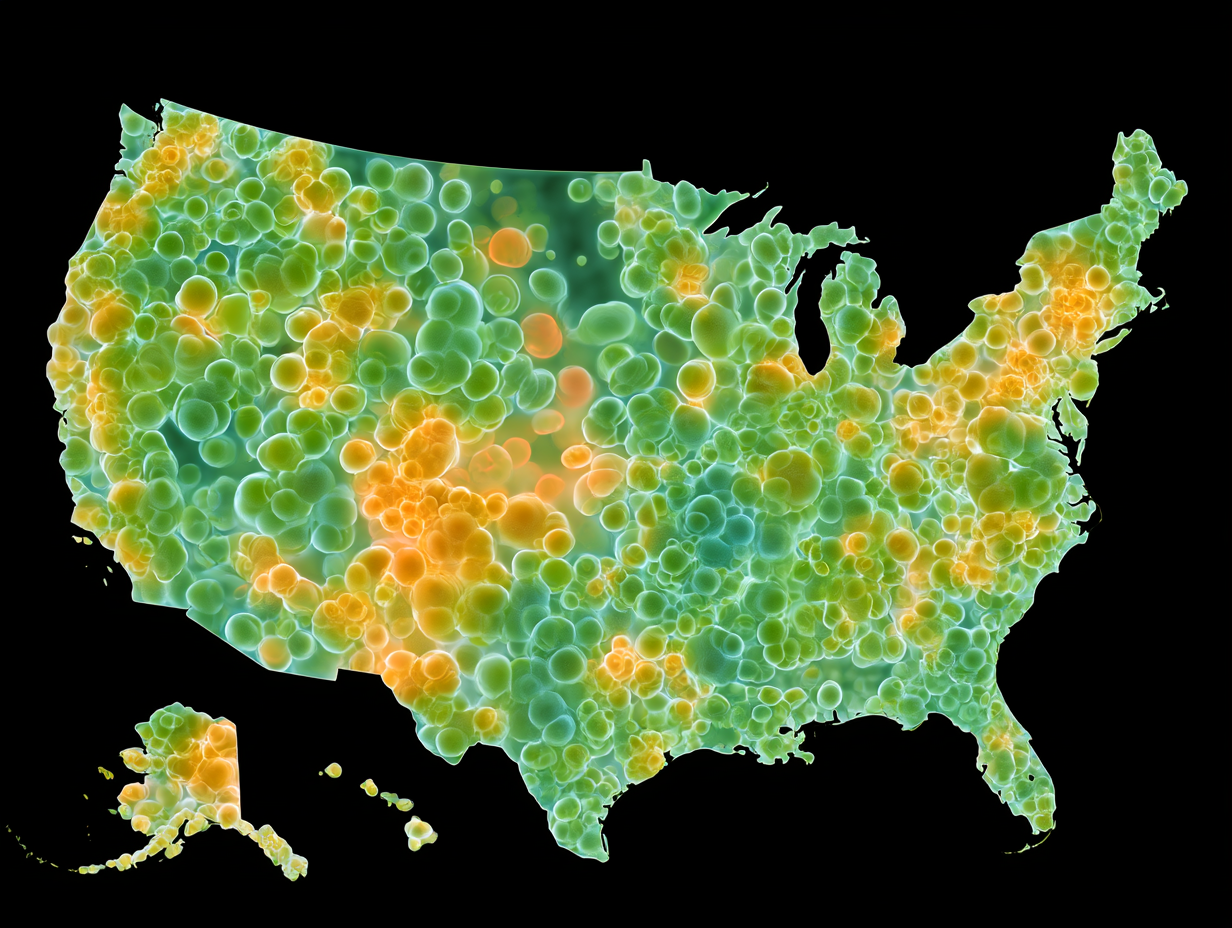
The Taylor Farms Cyclospora Outbreak Is Over: 12,883 Sick, 570 Hospitalized, Two Dead. FDA Wrote the Produce Industry a Letter. Here Is What It Will Take to Prevent the Next One.
Trump admin shelves Cyclospora research despite record-breaking outbreak

A summer of recalls exposes holes in the nation’s food safety net • Minnesota Reformer
Less than 2.5% of Taylor Farms' recalled lettuce went to Taco Bells
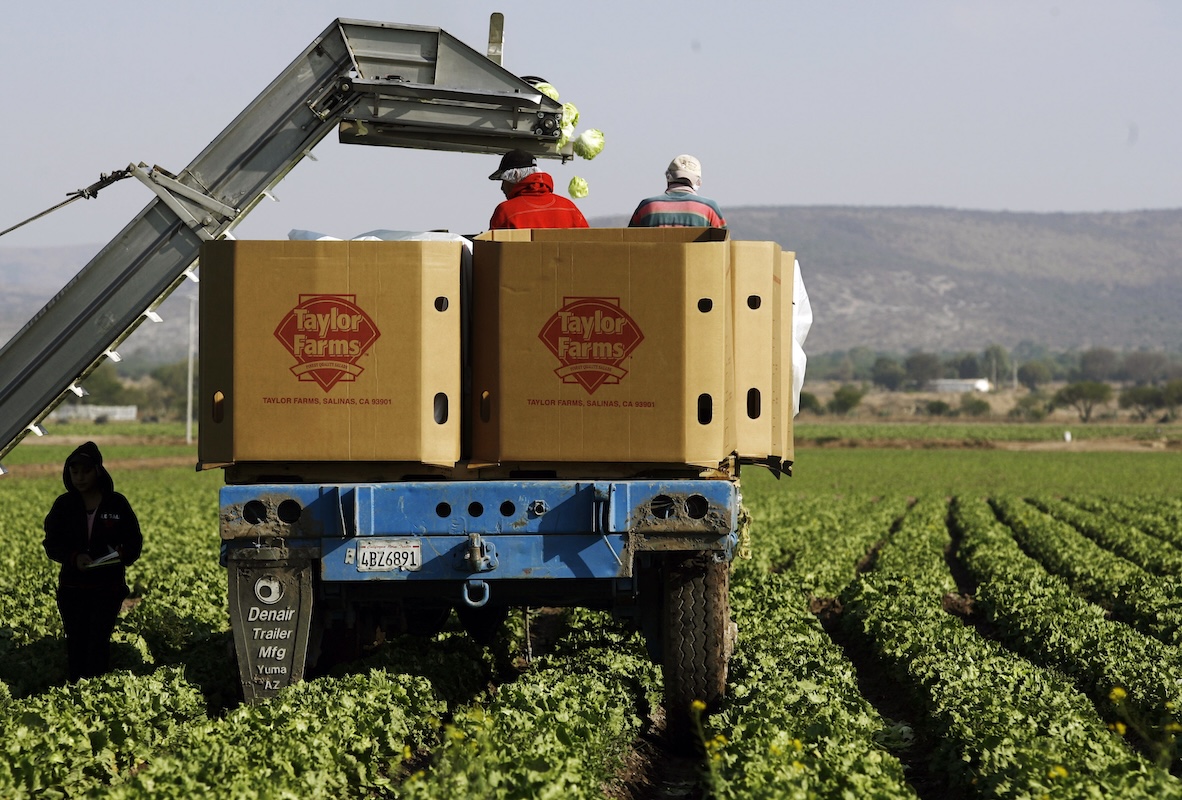
What we know on Taylor Farms donations to pro-Trump groups
Food recalls in 2026: What the data shows so far
What Can They Do?
