


When making many choices, a person can broadly bracket them by assessing the consequences of all of them taken together, or narrowly bracket them by making each choice in isolation. We integrate research conducted in a wide range of decision contexts which shows that choice bracketing is an important determinant of behavior. Because broad bracketing allows people to take into account all the consequences of their actions, it generally leads to choices that yield higher utility. The evidence that we review, however, shows that people often fail to bracket broadly when it would be feasible for them to do so. In addition to documenting the diverse effects of bracketing, we also discuss factors that determine whether people bracket narrowly or broadly. We conclude with a discussion of normative aspects of bracketing and argue that there are some situations in which narrower bracketing results in superior decision making.
Characterizing the causes, dynamics, and consequences of choice deferral
The fact that people often avoid making decisions is well known, and past research has helped to identify some of the conditions and reasons for doing so. For instance, people may forgo choices between bad options because they prefer not to end up with one of those options. It is much less clear when and why people avoid choosing in cases where they eventually will have to make a given decision. To study such instances of choice deferral, we presented participants with a series of choices, and for each choice they were allowed to either choose immediately or defer the decision until later in the experiment. Across six experiments and three choice domains (choices among consumer goods, artwork, and political candidates), we find that the strongest predictor of choice deferral is the overall value of a given set of options, with relative value (i.e., how hard it is to identify the best option) counterintuitively playing a smaller role. We show that the influence of overall value on choice deferral can be accounted for by a dynamic decision model according to which participants appraise the option set relative to a criterion before deciding whether to choose or defer, comparing this to a previous model whereby participants make such a decision based on a predetermined decision time limit. We further reveal that the influence of overall value on choice deferral is determined by how congruent options are with a given choice goal (choose-best or choose-worst) rather than simply how bad those options are. Collectively, our findings shed new light on how people decide to put off the inevitable.
A Behavioral Model of Rational Choice
Abstract. Introduction, 99. — I. Some general features of rational choice, 100.— II. The essential simplifications, 103. — III. Existence and uniqueness of

Behavioral Impediments to Valuing Annuities: Complexity and Choice Bracketing
Abstract This paper examines two behavioral factors that diminish people's ability to value a lifetime income stream or annuity, drawing on a randomized experiment with about 4,000 adults in a U.S. nationally representative sample. We find that increasing the complexity of the annuity choice reduces respondents' ability to value the annuity, measured by the difference between the sell and buy values they assign to the annuity. When we limit narrow choice bracketing by inducing people to think first about how quickly or slowly to spend down assets in retirement, their ability to value an annuity increases.
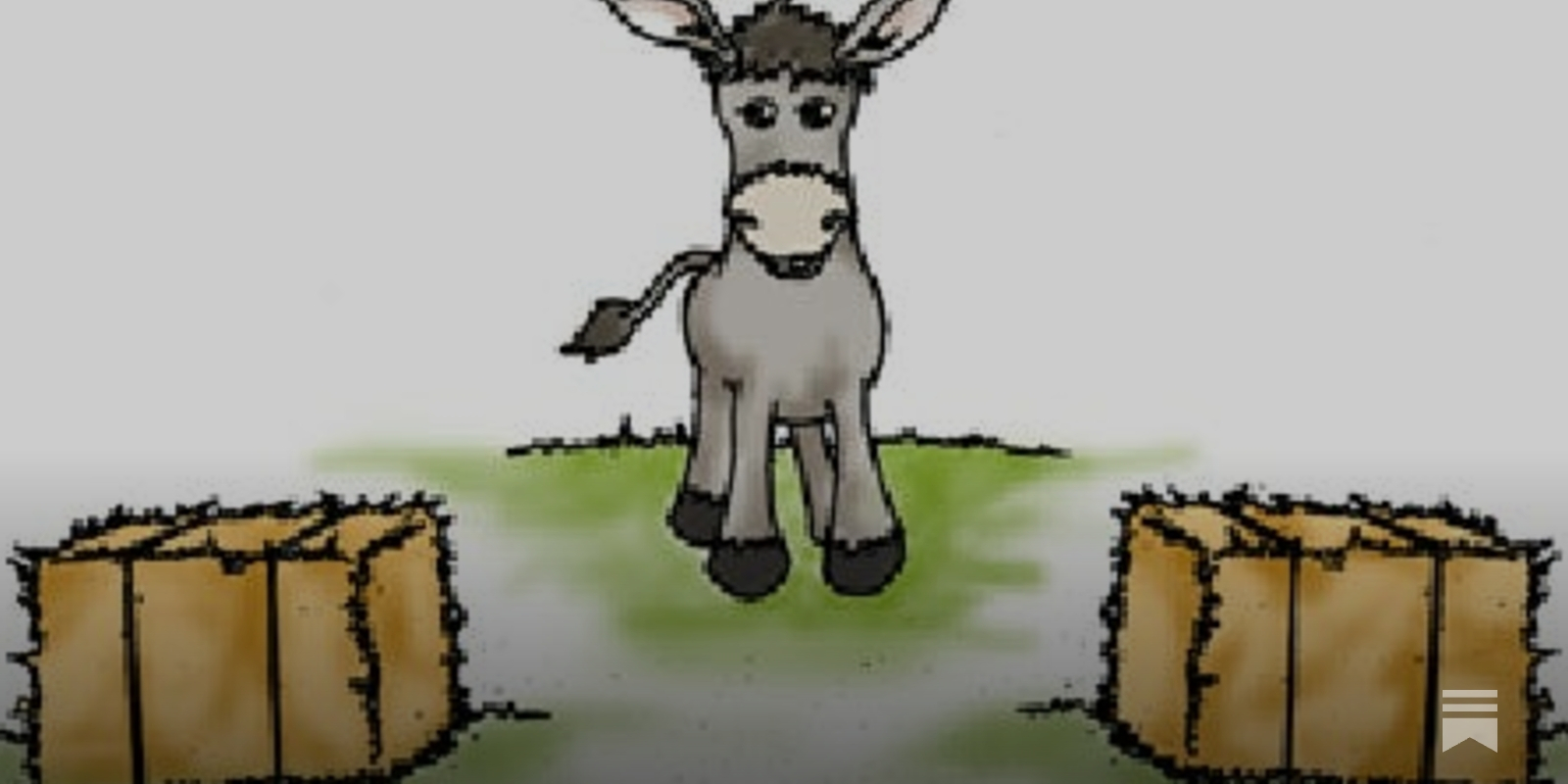
People Spend Too Much Time On Decisions with Equally Satisfying Outcomes
The pitfalls of analysis paralysis
Adult age differences in monetary decisions with real and hypothetical reward
Abstract Age differences in monetary decisions may emerge because younger and older adults perceive the value of outcomes differently. Yet, age‐differential effects of monetary rewards on decisions are not well understood. Most laboratory studies on aging and decision making have used scenarios in which rewards were merely hypothetical (decisions did not have any real consequences) or in which only small amounts of money were at stake. In the current study, we compared younger adults' (20–29 years) and older adults' (61–82 years) decisions in probabilistic choice problems with real or hypothetical rewards. Decision‐contingent rewards were in a typical range of previous studies (gains of up to ~4.25 USD) or substantially scaled up (gains of up to ~85 USD per participant). Reward type (real vs. hypothetical) affected decision quality, including value maximization, switching between options, and dominance violations (choices of an option that was inferior to another option in all respects). Decision quality was markedly better with real than hypothetical rewards in older adults and correlated with numeracy in both age groups. However, we found no evidence that reward type affected people's risk preferences. Overall, the findings portray a fairly positive picture regarding the use of hypothetical scenarios to assess preferences: With carefully prepared instructions, people from different age groups indicate preferences in hypothetical scenarios that match their decisions with real and much higher rewards. One advantage of using real rewards is that they help to reduce decision noise.

A Theory of Narrow Thinking
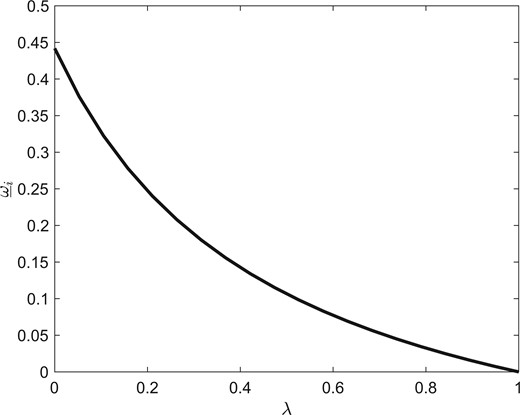
Abstract Unlike in standard models, decision makers often narrowly bracket and make each decision in isolation. I develop a new approach, which I term narrow thinking, to systematically model narrow bracketing. The definition of narrow thinking is that different decisions are based on different, non-nested, information. As a result, the narrow thinker makes each decision with imperfect knowledge of other decisions and faces difficulties coordinating her multiple decisions. The narrow thinker effectively cares less about her other decisions when making each decision. The main application of narrow thinking is to provide a smooth model of mental accounting without requiring the decision maker to have explicit budgets. My approach generates unique predictions about how the degree of mental accounting depends on expenditure shares and cognitive limitations. It also illustrates how narrow bracketing and mental accounting can be explained by the same underlying friction.
How Field Experiments in Economics Can Complement Psychological Research on Judgment Biases
This review summarizes results of field experiments examining individual behaviors across several market settings—from open-air markets to rideshare markets to tax-compliance markets—where people sort themselves into market roles wherein they make consequential decisions. Using three distinct examples from my own research on the endowment effect, left-digit bias, and omission bias, I showcase how field experiments can help researchers understand mediators, heterogeneity, and causal moderation involved in judgment biases in the field. In this manner, the review highlights that economic field experiments can serve an invaluable intellectual role alongside traditional laboratory research.

Putting nudges in perspective
Conventional economic policy focuses on ‘economic’ solutions (e.g. taxes, incentives, regulation) to problems caused by market-level factors such as externalities, misaligned incentives and information asymmetries. By contrast, ‘nudges’ provide behavioural solutions to problems that have generally been assumed to originate from limitations in human decision making, such as present bias. While policy-makers have good reason for exploiting the power of nudges, we argue that these extremes leave open a large space of policy options that have received less attention in the academic literature. First, there is no reason that solution and problem need have the same theoretical basis: there are promising behavioural solutions to problems that have causes that are well explained by traditional economics, and conventional economic solutions often offer the best line of attack on problems of behavioural origin. Second, there is a wide range of hybrid policy actions with both economic and behavioural components (e.g. framing a tax or incentive in a specific way), and there exist many societal problems – perhaps the majority – that arise from both economic and behavioural factors (e.g. firms’ exploitation of consumers’ behavioural biases). This paper aims to remind policy-makers that behavioural economics can influence policy in a variety of ways, of which nudges are the most prominent but not necessarily the most powerful.
Behavioural economics, consumer behaviour and consumer policy: state of the art
Counter to the traditional assumption of neoclassical economics that individuals are rational Homo oeconomici that always seek to maximize their utility and follow their ‘true’ preferences, research in behavioural economics has demonstrated that people's judgements and decisions are often subject to systematic biases and heuristics, and are strongly dependent on the context of the decision. In this article, we briefly review the transition of research from neoclassical economics to behavioural economics, and discuss how the latter has influenced research in consumer behaviour and consumer policy. In particular, we discuss the impacts of key principles such as status quo bias, the endowment effect, mental accounting and the sunk-cost effect, other heuristics and biases related to availability, salience, the anchoring effect and simplicity rules, as well as the effects of other supposedly irrelevant factors such as music, temperature and physical markers on consumers’ decisions. These principles not only add significantly to research on consumer behaviour – they also offer readily available practical implications for consumer policy to nudge behaviour in beneficial directions in consumption domains including financial decision making, product choice, healthy eating and sustainable consumption.
The persistence of cognitive biases in financial decisions across economic groups
While economic inequality continues to rise within countries, efforts to address it have been largely ineffective, particularly those involving behavioral approaches. It is often implied but not tested that choice patterns among low-income individuals may be a factor impeding behavioral interventions aimed at improving upward economic mobility. To test this, we assessed rates of ten cognitive biases across nearly 5000 participants from 27 countries. Our analyses were primarily focused on 1458 individuals that were either low-income adults or individuals who grew up in disadvantaged households but had above-average financial well-being as adults, known as positive deviants. Using discrete and complex models, we find evidence of no differences within or between groups or countries. We therefore conclude that choices impeded by cognitive biases alone cannot explain why some individuals do not experience upward economic mobility. Policies must combine both behavioral and structural interventions to improve financial well-being across populations.

Complexity and biases
We examine experimentally how complexity affects decision-making, when individuals choose among different products with varying benefits and costs. We find that complexity in costs leads to choosing a high-benefit product, with high costs and overall lower payoffs. In contrast, when complexity is in the benefits of the product, we cannot reject the hypothesis of random mistakes. We also examine the role of heterogeneous complexity. We find that individuals still (mistakenly) choose the high-benefit but costly product, even if cheaper and simple products are available. Our results suggest that salience is a main driver of choices under different forms of complexity.

Generalizability of choice architecture interventions
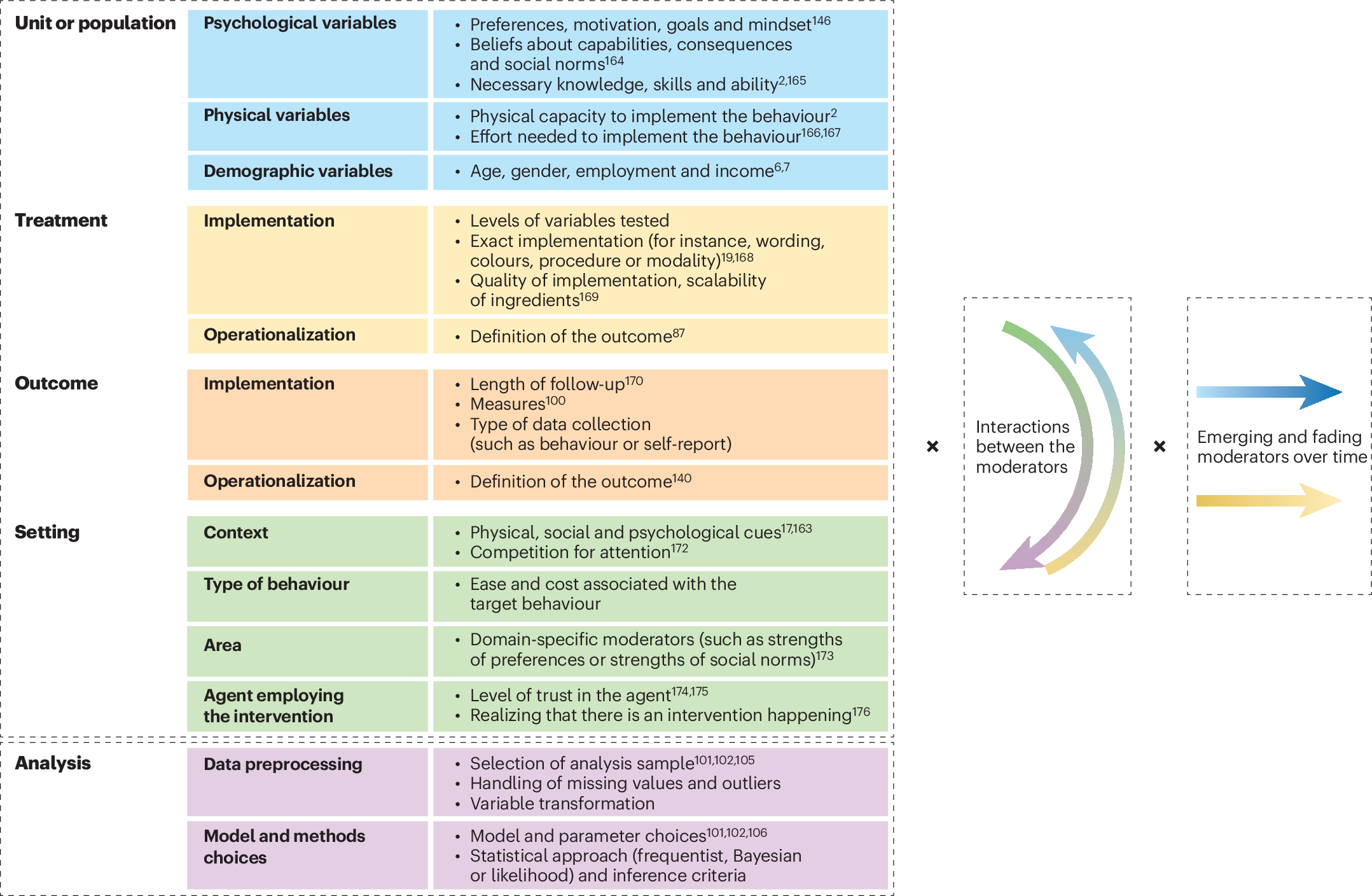
Although a given choice architecture intervention (a ‘nudge’) can be highly effective in some conditions, it can be ineffective or counterproductive in others. Critically, researchers and practitioners cannot reliably predict which of these outcomes will happen on the basis of current knowledge. In this Review, we present evidence that the average effectiveness of choice architecture interventions on behaviour is smaller than often reported and that there is substantial heterogeneity in their effects. We outline the obstacles to understanding the generalizability of these effects, such as the complex interaction of moderators and their changes over time. We then clarify dimensions of generalizability and research practices (including systematic exploration of the moderators and practices designed to enhance generalizability) that could enable evidence on generalizability to be gathered more efficiently. These practices are essential for advancing nuanced theories of behaviour change and for more accurately predicting the effectiveness of choice architecture interventions across diverse populations, settings, treatments, outputs and analytical approaches.
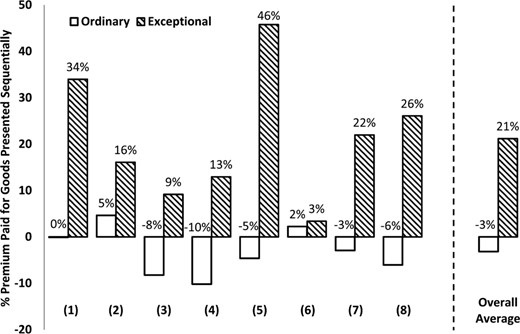
The Exception Is the Rule: Underestimating and Overspending on Exceptional Expenses
Abstract Purchases fall along a continuum from ordinary (common or frequent) to exceptional (unusual or infrequent), with many of the largest expenses (e.g., electronics, celebrations) being the most exceptional. Across seven studies, we show that, while people are fairly adept at budgeting and predicting how much they will spend on ordinary items, they both underestimate their spending on exceptional purchases overall and overspend on each individual purchase. Based on the principles of mental accounting and choice bracketing, we show that this discrepancy arises in part because consumers categorize exceptional expenses too narrowly, construing each as a unique occurrence and consequently overspending across a series of discretely exceptional expenses. We conclude by proposing an intervention that diminishes this tendency by helping consumers consider their spending on exceptional items as part of a larger set of purchases.
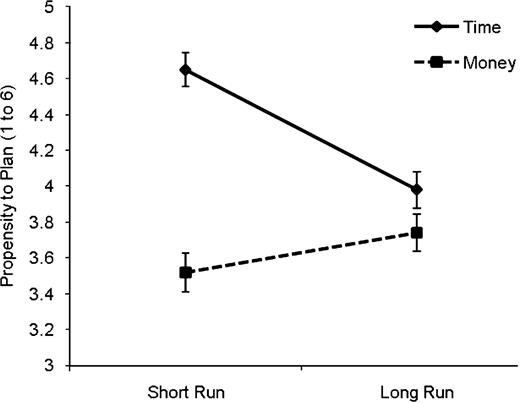
A Generalizable Scale of Propensity to Plan: The Long and the Short of Planning for Time and for Money
Abstract. Planning has pronounced effects on consumer behavior and intertemporal choice. We develop a six-item scale measuring individual differences in pr
We don’t have a hundred biases, we have the wrong model
Behavioral economics has identified dozens of cognitive biases that stop us from acting 'rationally'. But instead of building up a messier and messier picture of human behavior, we need a new model.

If you rise, I fall: Equality is prevented by the misperception that it harms advantaged groups
Nine preregistered studies ( n = 4197) demonstrate that advantaged group members misperceive equality as necessarily harming their access to resources and inequality as necessarily benefitting them. Only when equality is increased within their ingroup, instead of between groups, do advantaged group members accurately perceive it as unharmful. Misperceptions persist when equality-enhancing policies offer broad benefits to society or when resources, and resource access, are unlimited. A longitudinal survey of the 2020 U.S. voters reveals that harm perceptions predict voting against actual equality-enhancing policies, more so than voters’ political and egalitarian beliefs. Finally two novel-groups experiments reveal that advantaged participants’ harm misperceptions predict voting for inequality-enhancing policies that financially hurt them and against equality-enhancing policies that financially benefit them. Misperceptions persist even after an intervention to improve decision-making. This misperception that equality is necessarily zero-sum may explain why inequality prevails even as it incurs societal costs that harm everyone. , Advantaged groups misperceive equality as harming their resource access, which predicts voting against equality policies.
