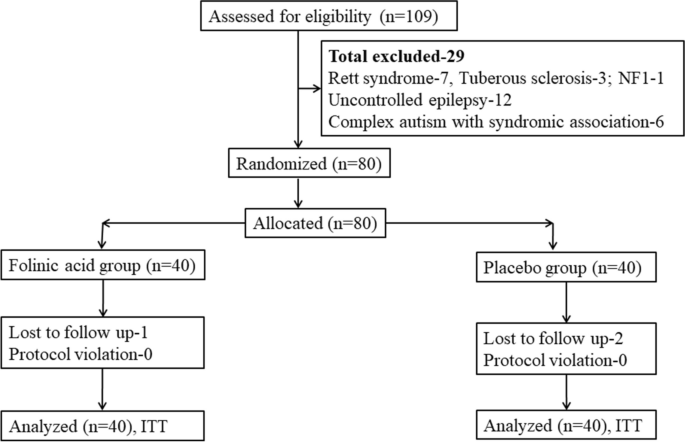
Oral folinic acid has shown potential to improve symptoms in childrenwith autism spectrum disorder (ASD). However, randomized controlled trials (RCTs)are limited. This double-blind, placebo-controlled RCT aimed to compare changes inChildhood Autism Rating Scale (CARS) scores in children with ASD aged 2–10 years,among folinic acid (2 mg/kg/day, maximum of 50 mg/day) and placebo groups at24 weeks, in comparison with baseline. Both the groups received standard care (ABAand sensory integration therapy). Secondary objectives included changes inbehavioral problems measured by the Child Behavior Checklist (CBCL) and serum levelsof anti-folate receptor autoantibodies and folic acid, correlated with changes inautism symptom severity. Out of the 40 participants recruited in each group, 39 and38 participants completed the 24-week follow-up in the folinic acid and placebogroups, respectively. The change in CARS score was higher in the folinic acid group(3.6 ± 0.8) compared to the placebo group (2.4 ± 0.7, p < 0.001). Changes in CBCL total score and CBCL internalizingscore were also better in the folinic acid group (19.7 ± 9.5 vs. 12.6 ± 8.4 and15.4 ± 7.8 vs. 8.5 ± 5.7, p < 0.001 for both).High-titer anti-folate receptor autoantibodies were positive in 32/40 and 33/40cases in the folinic acid and placebo groups, respectively (p = 0.78). In the placebo group, improvement in CARS score wascomparable regardless of autoantibody status (p = 0.11), but in the folinic acid group, improvement was morepronounced in the high-titer autoantibody group (p = 0.03). No adverse reactions were reported in either group.
PubPeer - Efficacy of oral folinic acid supplementation in children wi... | Ioana A. Cristea | 13 comments
Over the last week, I have privately been in contact with several friends and collaborators over the *SINGLE* study that was cited by the FDA in supporting the label extension of leucovorin for autism spectrum disorders. https://lnkd.in/dHpfCt_9 https://lnkd.in/dYWbHXyY Given the enormous importance of this study, and the fact that the results look too good to be true and there are various signals I would have thought would have raised a sleuth eyebrow (for example, Table 1 where all categorical values in each group except for 1 differ by exactly one unit), I am very surprised that until now the only Pubpeer comments are by two MDs and by myself, pointing to some inconsistencies between tables and figures. https://lnkd.in/duFQDccr I have also formally asked the authors for the individual participant data. Perhaps given this is not some random wacky study about how much food can one eat in a fast-food or some obscure paper citing another obscure retracted paper, but the SINGLE study that now underpins the retrospective post-marketing approval of an entire treatment, the very large community of people who want to correct science ASAP particularly when findings have huge policy implications could join me in scrutinizing this study to make sure findings are reliable and that the data are correct and analyzed correctly. | 13 comments on LinkedIn

Wenn Struktur und Grenzen schaden: Das PDA-Profil in der Autismus-Spektrum-Störung
Der Autismus-Verband Deutschland definiert die Autismus-Spektrum-Störung als „Störungen der Informations- und Wahrnehmungsverarbeitung, die sich auf die Entwicklung der sozialen Interaktion, der Kommunikation und des Verhaltensrepertoires auswirken“ (Autismus Deutschland e.V., 2022). Zumeist benötigen Menschen mit dieser Diagnose viel Struktur und vorhersehbare Rahmenbedingungen, um die Vielzahl an Reizen und Umweltinformationen ordnen und angemessen verarbeiten zu können. Hierfür werden nicht s

The use of wearable technology to measure and support abilities, disabilities and functional skills in autistic youth: a scoping review
Background: Wearable technology (WT) to measure and support social and non-social functioning in Autism Spectrum Disorder (ASD) has been a growing interest of researchers over the past decade. There is however limited understanding of the WTs currently available for autistic individuals, and how they measure functioning in this population. Objective: This scoping review explored the use of WTs for measuring and supporting abilities, disabilities and functional skills in autistic youth. Method: Four electronic databases were searched to identify literature investigating the use of WT in autistic youth, resulting in a total of 33 studies being reviewed. Descriptive and content analysis was conducted, with studies subsequently mapped to the ASD International Classification of Functioning, Disability and Health Core-sets and the ICF Child and Youth Version (ICF-CY). Results: Studies were predominately pilot studies for novel devices. WTs measured a range of physiological and behavioural functions to objectively measure stereotypical motor movements, social function, communication, and emotion regulation in autistic youth in the context of a range of environments and activities. Conclusions: While this review raises promising prospects for the use of WTs for autistic youth, the current evidence is limited and requires further investigation.

Cognitive and Affective Empathy in Autism Spectrum Disorders: A Meta-analysis
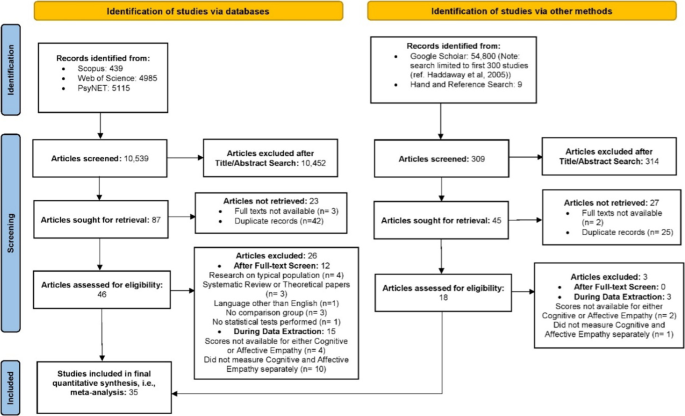
Research has consistently shown that individuals with Autism Spectrum Disorder (ASD) exhibit Empathy deficits. The aim of this study was to systematically review and meta-analyze the research conducted in the domain of cognitive and affective Empathy in Autism. The author also attempted to see the influence of moderators, such as age, culture, and measure-used, on the effect sizes. To fulfill the objective, the meta-analysis was performed on 35 studies that fulfilled the inclusion criteria with the help of the Meta-essentials, which is a free excel meta-analysis tool that facilitates the integration of effect sizes from various studies. The results indicated that the ASD group differs significantly from typically developing (TD) group in both cognitive and affective empathy. The effect size for cognitive empathy was very large (1.26), whereas, for affective empathy, the effect size was medium (0.58). Further, there was a significant moderating effect of the type of measure used on cognitive empathy. However, there are a few limitations of the present meta-analysis. Firstly, it does not shed light on how symptom severity in Autism influences empathy. Secondly, all the possible moderating variables influencing empathy could not be considered. Lastly, the generalizability of the findings may be limited owing to the limitations present in the included studies themselves. The present meta-analysis has implications for conceptualizing cognitive and affective empathy appropriately, and developing appropriate measures to assess empathy in the Autism population.
Beyond Deficits:
The FCLA-SFGA Model and a Paradigm Shift in Autism Understanding
Avoiding Ableist Language: Suggestions for Autism Researchers - Kristen Bottema-Beutel, Steven K. Kapp, Jessica Nina Lester, Noah J. Sasson, Brittany N. Hand, 2021
In this commentary, we describe how language used to communicate about autism within much of autism research can reflect and perpetuate ableist ideologies (i.e....

Fecal transplants for autism deliver success in clinical trials
Scientific research continues to uncover interesting connections between the gut microbiome and human health, including everything from depression to PTSD to autoimmune disease. Another example of this are emerging ties between gut health and autism. Exciting new research, now moving to Phase 3 human trials, has found boosting microbial diversity via fecal transplants can dramatically reduce autism symptoms in the long term.

Research Evidence Supporting the FCLA-SGFA Modes Framework
Comprehensive Literature Review: Mapping Autistic Cognitive States to the Six Modes
What Is Autistic Burnout? A Thematic Analysis of Posts on Two Online Platforms
Background: Compared with adults in the general population, autistic adults are more likely to experience poor mental health, which can contribute to increased suicidality. While the autistic community has long identified autistic burnout as a significant mental health risk, to date, only one study has been published. Early research has highlighted the harmful impact of autistic burnout among autistic adults and the urgent need to better understand this phenomenon. Methods: To understand the lived experiences of autistic adults, we used data scraping to extract public posts about autistic burnout from 2 online platforms shared between 2005 and 2019, which yielded 1127 posts. Using reflexive thematic analysis and an inductive “bottom-up” approach, we sought to understand the etiology, symptoms, and impact of autistic burnout, as well as prevention and recovery strategies. Two autistic researchers with self-reported experience of autistic burnout reviewed the themes and provided insight and feedback. Results: We identified eight primary themes and three subthemes across the data. (1) Systemic, pervasive lack of autism awareness. (1.1) Discrimination and stigma. (2) A chronic or recurrent condition. (3) Direct impact on health and well-being. (4) A life unlived. (5) A blessing in disguise? (6) Self-awareness and personal control influence risk. (6.1) “You need enough balloons to manage the weight of the rocks.” (7) Masking: Damned if you do, damned if you don't. (8) Ask the experts. (8.1) Stronger together. The overarching theme was that a pervasive lack of awareness and stigma about autism underlie autistic burnout. Conclusions: We identified a set of distinct yet interrelated factors that characterize autistic burnout as a recurring condition that can, directly and indirectly, impact autistic people's functioning, mental health, quality of life, and well-being. The findings suggest that increased awareness and acceptance of autism could be key to burnout prevention and recovery. , Community brief What was the purpose of this study? Although the autistic community has talked about autistic burnout for a long time, there has not been much research about the topic. This study aimed to investigate autistic burnout from the perspective of autistic adults to understand what they think causes it, the symptoms and impact on their lives, and what can be done to assist prevention and recovery. Why is this an important issue? This issue is important because autistic people have said that autistic burnout can severely affect their quality of life and well-being and contribute to poor mental health, including the risk of suicide. What did the researchers do? We used a computer program to collect public posts from two online platforms to look at how autistic adults described autistic burnout. We collected 1127 posts shared over a 12-year period by 683 users. To understand the adults' lived experiences, we analyzed their language at the surface level and looked for common themes across the data. What were the results of the study? The adults in this study said that autistic burnout was often first experienced during adolescence, lasted months or years, and was hard to recover from. They described severe direct and indirect consequences for their physical and mental health, capacity to function, and ability to achieve personal goals. They described a general lack of knowledge about autism, especially among health care professionals, which led to misdiagnosis and inadequate or inappropriate treatment. Masking or “camouflaging” to pass as nonautistic was the most common reason participants gave for autistic burnout. Many used strategies to manage energy levels to avoid burnout. The autistic community was an essential source of information and support for participants. Overall, stigma, discrimination, and low awareness and acceptance of autism were responsible for the cycle of autistic burnout. How do these findings add to what was already known? As one of the first studies about autistic burnout, we learned that it happens because of factors associated with being autistic and poor autism awareness and acceptance within society. We now know that autistic people often first experience autistic burnout when they are young, but it usually recurs, which can stop autistic people leading fulfilling lives. We learned that difficulty identifying emotions may be a risk factor and that online communication may help autistic people during recovery. We found that some positive consequences of autistic burnout include autism diagnosis in adulthood, finding the autistic community, and making empowering lifestyle changes. What are the potential weaknesses in the study? We had limited demographic information, so we do not know how diverse the sample was or how factors such as gender, age, race, or identifying as LGBTQI may have influenced some people's experience of autistic burnout. The adults in this study had access to online platforms and could communicate in writing, and so, people with higher communication support needs may not have been included. How will these recommendations help autistic adults now or in the future? The findings reinforce the personal stories of autistic people and show that autistic burnout is a common, consistent, and harmful experience. The findings show it is vital for health professionals to recognize autistic burnout to provide appropriate care and support because prevention and early detection could help stop the harmful cycle of autistic burnout. The findings underscore the importance of reducing discrimination and stigma against autistic people and increased acceptance.
What Is Autistic Burnout? A Thematic Analysis of Posts on Two Online Platforms
Background: Compared with adults in the general population, autistic adults are more likely to experience poor mental health, which can contribute to increased suicidality. While the autistic community has long identified autistic burnout as a significant mental health risk, to date, only one study has been published. Early research has highlighted the harmful impact of autistic burnout among autistic adults and the urgent need to better understand this phenomenon. Methods: To understand the lived experiences of autistic adults, we used data scraping to extract public posts about autistic burnout from 2 online platforms shared between 2005 and 2019, which yielded 1127 posts. Using reflexive thematic analysis and an inductive “bottom-up” approach, we sought to understand the etiology, symptoms, and impact of autistic burnout, as well as prevention and recovery strategies. Two autistic researchers with self-reported experience of autistic burnout reviewed the themes and provided insight and feedback. Results: We identified eight primary themes and three subthemes across the data. (1) Systemic, pervasive lack of autism awareness. (1.1) Discrimination and stigma. (2) A chronic or recurrent condition. (3) Direct impact on health and well-being. (4) A life unlived. (5) A blessing in disguise? (6) Self-awareness and personal control influence risk. (6.1) “You need enough balloons to manage the weight of the rocks.” (7) Masking: Damned if you do, damned if you don't. (8) Ask the experts. (8.1) Stronger together. The overarching theme was that a pervasive lack of awareness and stigma about autism underlie autistic burnout. Conclusions: We identified a set of distinct yet interrelated factors that characterize autistic burnout as a recurring condition that can, directly and indirectly, impact autistic people's functioning, mental health, quality of life, and well-being. The findings suggest that increased awareness and acceptance of autism could be key to burnout prevention and recovery. , Community brief What was the purpose of this study? Although the autistic community has talked about autistic burnout for a long time, there has not been much research about the topic. This study aimed to investigate autistic burnout from the perspective of autistic adults to understand what they think causes it, the symptoms and impact on their lives, and what can be done to assist prevention and recovery. Why is this an important issue? This issue is important because autistic people have said that autistic burnout can severely affect their quality of life and well-being and contribute to poor mental health, including the risk of suicide. What did the researchers do? We used a computer program to collect public posts from two online platforms to look at how autistic adults described autistic burnout. We collected 1127 posts shared over a 12-year period by 683 users. To understand the adults' lived experiences, we analyzed their language at the surface level and looked for common themes across the data. What were the results of the study? The adults in this study said that autistic burnout was often first experienced during adolescence, lasted months or years, and was hard to recover from. They described severe direct and indirect consequences for their physical and mental health, capacity to function, and ability to achieve personal goals. They described a general lack of knowledge about autism, especially among health care professionals, which led to misdiagnosis and inadequate or inappropriate treatment. Masking or “camouflaging” to pass as nonautistic was the most common reason participants gave for autistic burnout. Many used strategies to manage energy levels to avoid burnout. The autistic community was an essential source of information and support for participants. Overall, stigma, discrimination, and low awareness and acceptance of autism were responsible for the cycle of autistic burnout. How do these findings add to what was already known? As one of the first studies about autistic burnout, we learned that it happens because of factors associated with being autistic and poor autism awareness and acceptance within society. We now know that autistic people often first experience autistic burnout when they are young, but it usually recurs, which can stop autistic people leading fulfilling lives. We learned that difficulty identifying emotions may be a risk factor and that online communication may help autistic people during recovery. We found that some positive consequences of autistic burnout include autism diagnosis in adulthood, finding the autistic community, and making empowering lifestyle changes. What are the potential weaknesses in the study? We had limited demographic information, so we do not know how diverse the sample was or how factors such as gender, age, race, or identifying as LGBTQI may have influenced some people's experience of autistic burnout. The adults in this study had access to online platforms and could communicate in writing, and so, people with higher communication support needs may not have been included. How will these recommendations help autistic adults now or in the future? The findings reinforce the personal stories of autistic people and show that autistic burnout is a common, consistent, and harmful experience. The findings show it is vital for health professionals to recognize autistic burnout to provide appropriate care and support because prevention and early detection could help stop the harmful cycle of autistic burnout. The findings underscore the importance of reducing discrimination and stigma against autistic people and increased acceptance.
Seeming to belong: Camouflaging and pragmatic self-perception in twice-exceptional adults across neurodivergent profiles
Background and objective Social camouflaging and pragmatic self-perception are key aspects of communication in neurodivergent populations. However, little is known about how these processes manifest in adults with autism, high intellectual ability (HIA), or twice-exceptionality (2e: HIA+autism). This study aimed to examine group-based differences in communicative adaptation and perceived pragmatic competence across these profiles. Materials and methods A total of 109 Spanish-speaking adults participated. Social camouflaging was assessed using the Camouflaging Autistic Traits Questionnaire (CAT-Q), and pragmatic self-perception was measured with the Communicative Competence Profile (CCP). Statistical analyses explored differences across groups and by gender. Results Significant differences emerged in all CAT-Q dimensions. Autistic participants reported the highest levels of camouflaging, followed by the 2e group, while only the compensation subscale distinguished autism from 2e. Regarding pragmatic self-perception, the HIA group scored highest, suggesting stronger communicative confidence, whereas autistic adults scored lowest. The 2e profile consistently occupied an intermediate position, though closer to autism, especially in subtle pragmatic aspects. Gender effects were limited overall but more noticeable within the Autism group. Conclusions Findings reveal distinct patterns of social camouflaging and pragmatic self-perception across neurodivergent profiles. Twice-exceptional adults show intermediate but autism-leaning traits, underscoring the complexity of their communicative adaptation. Results emphasize the need for inclusive frameworks that account for diverse communication styles within neurodivergence. Resumen Antecedentes y objetivo El camuflaje social y la autopercepción pragmática son aspectos clave de la comunicación en poblaciones neurodivergentes. Sin embargo, se sabe poco sobre cómo se manifiestan estos procesos en adultos con autismo, alta capacidad intelectual (HCI) o doble excepcionalidad (2e: HCI+autismo). Este estudio tuvo como objetivo examinar las diferencias entre grupos en la adaptación comunicativa y la competencia pragmática percibida en estos perfiles. Material y métodos Un total de 109 adultos hispanohablantes participaron en el estudio. El camuflaje social se evaluó mediante el Camouflaging Autistic Traits Questionnaire (CAT-Q), y la autopercepción pragmática se midió con el Communicative Competence Profile (CCP). Los análisis estadísticos exploraron diferencias entre grupos y por género. Resultados Se encontraron diferencias significativas en todas las dimensiones del CAT-Q. Los participantes autistas reportaron los niveles más altos de camuflaje, seguidos por el grupo 2e, mientras que solo la subescala de compensación distinguió al autismo del 2e. En cuanto a la autopercepción pragmática, el grupo HCI obtuvo las puntuaciones más altas, lo que sugiere mayor confianza comunicativa, mientras que los adultos autistas puntuaron más bajo. El perfil 2e se situó de manera consistente en una posición intermedia, aunque más cercana al autismo, especialmente en aspectos pragmáticos sutiles. Los efectos de género fueron en general limitados, pero más notables dentro del grupo con autismo. Conclusiones Los hallazgos revelan patrones diferenciados de camuflaje social y autopercepción pragmática en los distintos perfiles neurodivergentes. Los adultos con doble excepcionalidad muestran características intermedias pero con tendencia hacia el autismo, lo que subraya la complejidad de su adaptación comunicativa. Los resultados enfatizan la necesidad de marcos inclusivos que contemplen estilos de comunicación diversos dentro de la neurodivergencia.
Red Blood Cell Folate Modifies the Association between Serum Per- and Polyfluoroalkyl Substances and Antibody Concentrations in U.S. Adolescents
Abstract. Per- and polyfluoroalkyl substances (PFAS) exposure has been associated with reduced antibody levels. Higher red blood cell (RBC) folate was prev


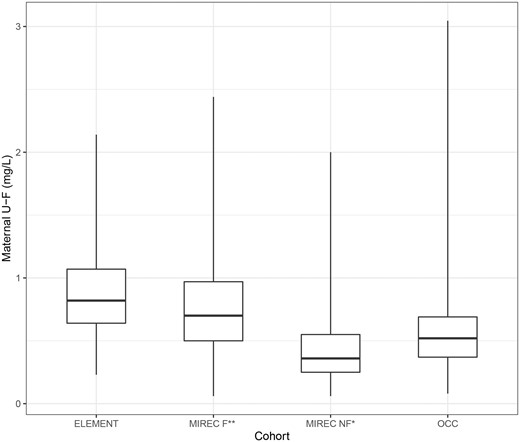
Dose dependence of prenatal fluoride exposure associations with cognitive performance at school age in three prospective studies
Abstract Background Fluoride may be a developmental neurotoxicant at elevated exposures. We merged new data from a prospective Odense Child Cohort (OCC) with results from two previous birth cohort studies from Mexico and Canada to characterize the dose–effect relationship in greater detail. Methods The OCC contributed 837 mother–child pairs to the total of >1500. We measured creatinine-adjusted urine-fluoride concentrations in maternal urine samples obtained during late pregnancy. Child IQ was determined at age 7 years using an abbreviated version of the Wechsler Intelligence Scales for Children. Findings from the three cohorts were used to calculate the joint benchmark concentration (BMC) and the lower confidence limit (BMCL) after adjustment for covariables. Results In the OCC, urine-fluoride concentrations varied between 0.08 and 3.04 mg/l (median 0.52 mg/l) but were not significantly associated with full-scale IQ at age 7 years (β = 0.08; 95% confidence interval −1.14 to 1.30 for a doubling in exposure). No difference was apparent between boys and girls. In the OCC, the BMC was 0.92 mg/l, with a BMCL of 0.30 mg/l. The joint analysis of all three cohorts showed a statistically significant association between urine-fluoride and IQ, with a BMC of 0.45 mg/l (BMCL, 0.28 mg/l), slightly higher than the BMC previously reported for the two North American cohorts alone. Conclusions As the BMCL reflects an approximate threshold for developmental neurotoxicity, the results suggest that pregnant women and children may need protection against fluoride toxicity.
Why “Autism Is Not A Spectrum” – But Not For the Reasons You May Have Heard
By Dr Chloe Farahar | Autistic Researcher, Project Manager for Learning Disability and Autism at Kent and Medway Mental Health NHS Trust, and Founder of Aucademy CIC The Spectrum Was Never Fit For …

Understanding the needs of Black families of children with autism
May Beaubrun MEd, BCBA brings awareness to the issues experienced by Black families with children with autism.