This research examines how the type of money (cash vs. digital) affects consumers’ perceived purchasing power (PPP) of the money and the mediating mechanisms of psychological ownership and psychological distance. Three lab experiments confirm that cash results in higher PPP than does digital money, and that both psychological ownership and psychological distance contribute to the effect of money type on PPP. Our findings provide theoretical implications for the psychological research on the type of money and its influence and practical implications for e-payment and online shopping behaviors.
Payment method and perceptions of ownership
How consumers pay influences how they feel about a transaction. In particular, paying by card has been argued to have an effect on the perception of cost, making it less salient and painful. We propose and show that payment method also influences how consumers feel about the acquired good. Specifically, we focus on effects of the payment method on psychological ownership, i.e., the perception of an object as “mine.” We propose that cash payment results in stronger psychological ownership because it influences the extent of perceived investment in an object. We provide evidence for the proposed effect from field and laboratory settings. Results of a longitudinal exit survey and an experiment show that cash payers report higher levels of immediate psychological ownership than card payers. However, this effect seems to depend on the meanings associated with a payment method. Asian students (who associate credit card payment with investment and debt) do not exhibit this effect. Moreover, the initial boost in psychological ownership seems to be comparably short-lived. While those paying in cash experience no further increase in psychological ownership over time, those paying by card do.

A Mega-Replication of the Effect of Cash Versus Card Payment on Pain of Paying: Magnitude, Behavioral Outcomes, and Moderators
Abstract We revisit the widely accepted finding that paying with cash is more painful than paying with card by conducting the first systematic mega-replication (including 13 large-scale preregistered replications; a total of 32,371 participants, 65 products, and 57 price points ranging from $1.09 to $400). The aggregate evidence reveals four insights: (1) leveraging a broad set of established paradigms, we replicate the finding that paying with cash is more psychologically painful than paying with card, even among today’s consumers who own multiple cards, digital wallets, and virtual currencies; (2) comparing two outcome variables—amount spent and willingness-to-pay (WTP), we find a more reliable and larger overall direct effect of payment method on amount spent than on WTP; (3) these direct effects of payment method on outcome variables are mediated by pain of paying; (4) the mode-of-payment effect on pain of paying (and thereby on outcome variables) is moderated by individual differences, particularly the relative frequency of using cash versus card. We outline actionable guidance and future directions for researchers and practitioners interested in examining mode-of-payment effects, and discuss the value of and suitable approaches for future theory-driven large-scale replications.

Gift Cards and Mental Accounting: Green‐lighting Hedonic Spending
ABSTRACT In three studies, we examine the mental accounting rules that govern how gift cards are used. We predicted that their identity as gift cards would shift consumption from utilitarian to hedonic goods even in contexts where both types of goods are available and the consumer's needs are unchanged. In Study 1a, participants were asked to imagine that they had both a gift card and a specified amount of cash and needed to purchase both a hedonic item and a utilitarian item. When asked which currency they would use to buy which item, respondents were significantly more likely to say they would use the gift card to buy the hedonic item. Study 1b replicated this result and found that it was tied to participants' beliefs how different types of money should be used. In Study 2, we found that participants who were required to spend a certain amount of their compensation in a laboratory store spent more on hedonic goods if their payment was in the form of a gift card. In Study 3, we analyzed transactions at a campus bookstore and found that shoppers tended to spend disproportionately on hedonic goods when using their gift cards than when making credit card purchases. Taken together, these studies indicate that people tend to assign the monetary value of a gift card to a hedonic mental account and spend it accordingly. Copyright © 2014 John Wiley & Sons, Ltd.

Do Payment Mechanisms Change the Way Consumers Perceive Products?
Abstract. Do payment mechanisms change the way consumers perceive products? We argue that consumers for whom credit cards (cash) have been primed focus mor
Payment Depreciation: the Behavioral Effects of Temporally Separating Payments From Consumption
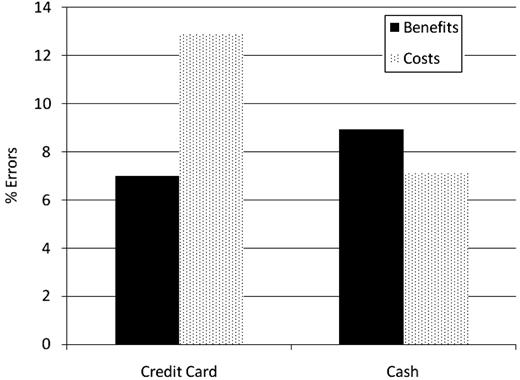
Abstract. Research suggests that individuals mentally track the costs and benefits of a consumer transaction for the purpose of reconciling those costs and
Evolution of Consumption: A Psychological Ownership Framework
Technological innovations are creating new products, services, and markets that satisfy enduring consumer needs. These technological innovations create value for consumers and firms in many ways, but they also disrupt psychological ownership––the feeling that a thing is “MINE.” The authors describe two key dimensions of this technology-driven evolution of consumption pertaining to psychological ownership: (1) replacing legal ownership of private goods with legal access rights to goods and services owned and used by others and (2) replacing “solid” material goods with “liquid” experiential goods. They propose that these consumption changes can have three effects on psychological ownership: they can threaten it, cause it to transfer to other targets, and create new opportunities to preserve it. These changes and their effects are organized in a framework and examined across three macro trends in marketing: (1) growth of the sharing economy, (2) digitization of goods and services, and (3) expansion of personal data. This psychological ownership framework generates future research opportunities and actionable marketing strategies for firms aiming to preserve the positive consequences of psychological ownership and navigate cases for which it is a liability.

The moderating role of income on consumers’ preferences and usage for online and offline payment methods
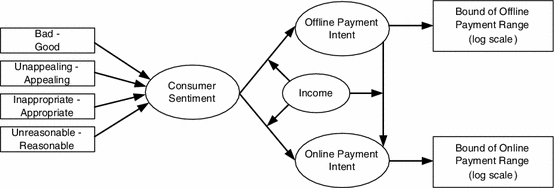
In this paper we examine consumer attitudes towards a payment method, which is a key factor affecting the probability of completing a transaction offline and online. More specifically, we constructed a model that surveyed the offline and online usage of prepaid e-cash, debit cards, credit cards and cash. User perceptions of the attractiveness of e-cash and various traditional payment means were also empirically assessed. Consumer attitudes towards a payment technology were found to be influential on users’ perceptions in both online and offline environments. User perceptions of offline purchases with a payment technology had significant and positive effects on the corresponding online usage perceptions. The effects of our research model are contingent on the income level of users. Our findings have significant implications, as they could help shed light on why consumers abandon their shopping carts and do not complete their transactions, which could potentially play a significant role when it comes to designing applications targeting sspecific consumer segments.
On the Mental Accounting of Restricted-Use Funds: How Gift Cards Change What People Purchase
Abstract. This article emphasizes the role of categorization in mental accounting and proposes that once a mental account is established, purchases that ar
The pain of payment: A review and research agenda
Abstract Pain of payment is the negative psychological affect consumers experience when they become cognizant that they have lost a certain amount of their financial resources (immediate pain) or when they become aware that they will or may lose a certain amount of their financial resources in the future (anticipated pain). Pain of payment plays a significant role in consumer decision making and has attracted substantial scholarly interest in recent years. In this article, we conduct a systematic literature review of the existing work on pain of payment. We advance theory in the field by proposing a new organizing framework that summarizes the antecedents, moderators, and consequences of pain of payment. Furthermore, we provide a formal definition of pain of payment that encompasses all facets of this construct. Subsequently, we identify knowledge gaps and outline research questions that could be explored to improve our understanding of this construct and advance consumer psychology.

Why Do Shoppers Use Cash? Evidence from Shopping Diary Data
Recent studies find that cash remains the dominant payment choice for small‐value transactions despite the prevalence of alternative payment methods such as debit and credit cards. An important policy question is whether consumers truly prefer using cash or merchants restrict card usage. Using unique shopping diary data, we estimate a payment choice model with individual heterogeneity, controlling for merchants' acceptance of cards. Based on a policy simulation imposing universal card acceptance among merchants, we find that overall cash usage would decrease by only 8.0 percentage points, implying that cash usage in small‐value transactions is driven mainly by consumer preferences.

The Hedonics of Debt
Psychologists and economists often discuss the “pain” of paying for our purchases. Four experiments examine how people evaluate prospective debt payments, analyzing how different features of a loan (down payment, final payment, duration, monthly payments) affect willingness to accept the loan. Akin to previous findings on physical pain, participants exhibited duration neglect and over-weighted final moments. However, participants also focused heavily on the monthly or average payment (unlike in retrospective studies of physical pain where only peak-end moments seem to count). In Experiment 2, participants’ willingness to accept the loan was not significantly diminished by making it more expensive through keeping the same monthly payment but extending the length of the loan by 40 percent (evincing duration neglect). Further, in Experiments 3 and 4, we show that participants increased their willingness to buy if loans were made longer and more expensive by adding smaller, less “painful” payments to the end.

Mental accounting of product returns
Abstract Product returns incur a substantial financial loss for retailers. We demonstrate how, when, and why cross‐selling during the product returns process can reduce this loss in revenue. We find consumers more readily spend money refunded from product returns than unspent money. We theorize that this refund effect occurs because consumers psychologically realize the loss of money when purchasing products and earmark that money for spending. Thus, consumers feel a smaller psychological loss when spending refunded money than unspent money on a subsequent purchase. In six experiments, we find consumers spend refunded money more freely than unspent money, even more than windfall gains like lottery winnings, on products in similar and different product categories (e.g., groceries vs. apparel). However, the refund effect only holds when consumers do not expect to return products at the point of purchase and before refunded money is commingled with money in other accounts. Our findings identify a new fungibility violation due to mental accounting (i.e., a new source effect), and illustrate its value for generating, validating, and explaining revenue retention strategies.

Differences in Consumer Purchase Behavior by Credit Card Payment System
Abstract. A conceptualization of the relationships between alternative payment systems and various environmental and behavioral variables, which may serve
The Impact of Payment Frequency on Consumer Spending and Subjective Wealth Perceptions
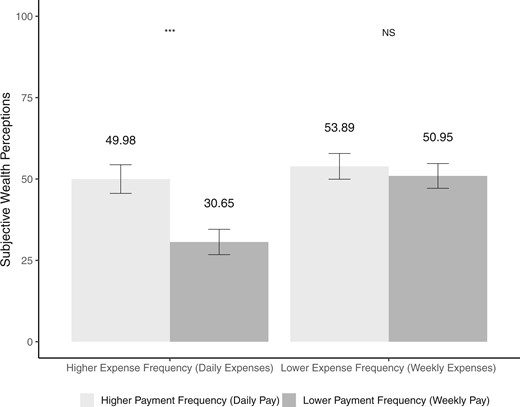
Abstract Payment frequency is a fundamental yet underexplored feature of consumers’ finances. As higher payment frequencies are becoming more prevalent, consumers are receiving more frequent yet smaller paychecks. An analysis of income and expenditure data of over 30,000 consumers from a financial services provider demonstrates a naturally occurring relationship between higher payment frequencies and increased spending. A series of lab studies support this finding, providing causal evidence that higher (vs. lower) payment frequencies increase spending. The effect of payment frequency on spending is driven by changes in consumers’ subjective wealth perceptions. Specifically, higher payment frequencies reduce consumers’ uncertainty in predicting whether they will have enough resources throughout a period, increasing their subjective wealth perceptions. As such, situational factors that reduce prediction uncertainty for those paid less frequently (e.g., the timing of consumers’ expenses, income levels) moderate the impact of payment frequency. The effects of payment frequency on subjective wealth and spending can occur even when objective wealth favors those with lower payment frequencies. More broadly, the current work underscores a need to understand how timing variations in consumers’ income impact their perceptions, behaviors, and general well-being.
Effects of mental accounting on purchase decision processes: A systematic review and research agenda
Abstract This paper aims to systematically analyze and synthesize the existing research published on mental accounting and purchase decision processes by conducting a systematic literature review. Specifically, the paper aims to answer the question: “What are the effects of mental accounting on purchase decision processes?” Therefore, it identified 110 papers which contribute to achieving the research objective and which were selected using the same data collection, data analysis, and quality standards. After reviewing the identified publications, the paper finds that the existing literature can be structured along four main themes impacting purchase decision‐making processes: (1) source of funds, (2) intended use of funds, (3) pricing, and (4) payments. The paper shows that for each of the four themes there are multiple mental accounting effects with an impact on for example willingness to pay, the experienced pain of paying or the ultimate purchase decision. Further, the paper identifies potential directions for future research in mental accounting, including the influence of product categories on mental accounting, flexibility in budget setting and its impact on mental accounting behavior, long‐term effects of mental budgeting on financial wealth, integration–segregation behavior in the context of pricing, the role of consumer characteristics on mental accounting behavior, and the impact of increased financial transparency through technology on mental accounting.

Always Leave Home Without It: A Further Investigation of the Credit-Card Effect on Willingness to Pay
In studies involving genuine transactions of potentially high value we show that willingness-to-pay can be increased when customers are instructed to use a credit card rather than cash. The effect may be large (up to 100%) and it appears unlikely that it arises due solely to liquidity constraints. In addition to demonstrating the effect, we provide a methodology for detecting it, and our findings suggest a source of variance to test alternative explanations.