

Young individuals rarely seek information about life insurance—a product that offers long-term benefits that might not motivate a desire to act now. Framing life insurance messaging as a gain in the present (e.g., “ensure your loved ones are protected today”) is thought to motivate younger individuals to seek information about insurance policies. A field experiment with a large life insurance issuer and a pre-registered experiment reveal that loss aversion and temporal orientation frames influences whether individuals aged 25–49 years shop for life insurance. Specifically, the results suggest that the superiority of gain frames over loss frames requires positioning the benefits well in the future, despite the need to act now. This study thus also contextualizes the realities and practical difficulty of framing financial products in ways that might interest a potentially vulnerable population.
Behavioral Impediments to Valuing Annuities: Complexity and Choice Bracketing
Abstract This paper examines two behavioral factors that diminish people's ability to value a lifetime income stream or annuity, drawing on a randomized experiment with about 4,000 adults in a U.S. nationally representative sample. We find that increasing the complexity of the annuity choice reduces respondents' ability to value the annuity, measured by the difference between the sell and buy values they assign to the annuity. When we limit narrow choice bracketing by inducing people to think first about how quickly or slowly to spend down assets in retirement, their ability to value an annuity increases.
Adult age differences in monetary decisions with real and hypothetical reward
Abstract Age differences in monetary decisions may emerge because younger and older adults perceive the value of outcomes differently. Yet, age‐differential effects of monetary rewards on decisions are not well understood. Most laboratory studies on aging and decision making have used scenarios in which rewards were merely hypothetical (decisions did not have any real consequences) or in which only small amounts of money were at stake. In the current study, we compared younger adults' (20–29 years) and older adults' (61–82 years) decisions in probabilistic choice problems with real or hypothetical rewards. Decision‐contingent rewards were in a typical range of previous studies (gains of up to ~4.25 USD) or substantially scaled up (gains of up to ~85 USD per participant). Reward type (real vs. hypothetical) affected decision quality, including value maximization, switching between options, and dominance violations (choices of an option that was inferior to another option in all respects). Decision quality was markedly better with real than hypothetical rewards in older adults and correlated with numeracy in both age groups. However, we found no evidence that reward type affected people's risk preferences. Overall, the findings portray a fairly positive picture regarding the use of hypothetical scenarios to assess preferences: With carefully prepared instructions, people from different age groups indicate preferences in hypothetical scenarios that match their decisions with real and much higher rewards. One advantage of using real rewards is that they help to reduce decision noise.

Save More Today or Tomorrow: The Role of Urgency in Precommitment Design
To encourage farsighted behaviors, previous research suggests that marketers should invite consumers to precommit to adopting these behaviors “later.” However, the authors propose that people will draw different inferences from different types of precommitment offers, and that these inferences can help explain when precommitment is (and is not) effective at increasing adoption of farsighted behaviors. Specifically, the authors theorize that simultaneously offering consumers the opportunity to adopt a farsighted behavior now or later (i.e., offering “simultaneous precommitment”) may signal that the behavior is not urgently recommended; however, offering consumers the opportunity to adopt that behavior immediately and then, only if they decline, inviting them to adopt it later (i.e., offering “sequential precommitment”) may signal just the opposite. In a multisite field experiment (N = 5,196), the authors find that simultaneously giving consumers the chance to increase their savings now or later reduced retirement savings. Two preregistered lab studies (N = 5,080) show that simultaneous precommitment leads people to infer that taking action is not urgently recommended, and such inferences predict less adoption of recommended behaviors. Importantly, offering sequential precommitment increases inferred urgency, predicting greater adoption. Together, this research advances knowledge about the limits and potential of precommitment.

Financial product sensitivity predicts financial health
Abstract Recent research has aimed to understand how people consider financial decisions because they have important consequences for well‐being. Yet existing research has largely failed to examine how attitudes and behaviors vary as a function of the specific financial product (e.g., debt type). We ask to what extent people differentiate between similarly categorized financial products (e.g., debt or investment) as a function of their terms (e.g., interest costs and expected returns) and whether such differentiation predicts financial health. Across four studies, we find not only that there are individual differences in attitudes toward similar financial products (e.g., two distinct loans), but also that the extent to which a consumer is averse to high‐cost versus low‐cost products predicts financial health. This relationship cannot be fully explained by financial literacy, numeracy, or intertemporal discounting. In addition, nudging people toward differentiating between financial products promotes decisions that are aligned with financial health.

Context-Dependent Drivers of Discretionary Debt Decisions: Explaining Willingness to Borrow for Experiential Purchases
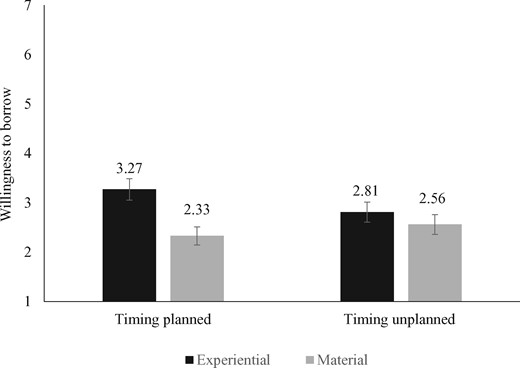
Abstract Mental accounting research suggests that consumers prefer borrowing for longer-lasting purchases in order to receive benefits from the purchases as they pay for them. In contrast, two sets of archival data and five lab studies show that consumers are more willing to borrow for experiential versus material purchases, even though experiential purchases tend to have a shorter physical duration. Further, framing the same purchase as more experiential than material increases willingness to borrow. This effect occurs because purchase timing is more important for experiential purchases—a function of consumers’ aversion to missing out on planned consumption. Thus, we moderate the proposed effect by varying whether the borrowing decision impacts planned consumption. Other differences between material and experiential purchases, such as scarcity or expected happiness, cannot similarly explain our results. Moreover, our conceptualization allows us to reconcile the apparent contradiction between the previous and current research by examining the relative impact of purchase-timing importance and payment-benefit duration matching in different contexts (i.e., “purchasing” and “source-of-funding” decisions).
The Benefits of Emergency Reserves: Greater Preference and Persistence for Goals that Have Slack with a Cost
Marketers of programs that are designed to help consumers reach goals face dual challenges of making the program attractive enough to encourage consumer signup while still motivating consumers to reach desirable goals and thus stay satisfied with the program. The authors offer a possible solution to this challenge: the emergency reserve, or slack with a cost. They demonstrate how an explicitly defined emergency reserve not only is preferred over other options for goal-related programs but can also lead to increased persistence. Study 1 demonstrates that consumers prefer programs with emergency reserves to programs that do not have them, and Study 2 further clarifies that consumers' preference for an emergency reserve depends on the presence of a superordinate goal. Study 3 reveals that consumers prefer goals with emergency reserves because they perceive them to have both higher attainability and value than other goals. Study 4 demonstrates that reserves can lead to increased goal persistence in a realistic task that involves persistence over time. Finally, Studies 5 and 6 reveal that consumers persist more with reserve goals because they want to avoid using the “emergency” reserve.
Can Consumers Make Affordable Care Affordable? The Value of Choice Architecture
Tens of millions of people are currently choosing health coverage on a state or federal health insurance exchange as part of the Patient Protection and Affordable Care Act. We examine how well people make these choices, how well they think they do, and what can be done to improve these choices. We conducted 6 experiments asking people to choose the most cost-effective policy using websites modeled on current exchanges. Our results suggest there is significant room for improvement. Without interventions, respondents perform at near chance levels and show a significant bias, overweighting out-of-pocket expenses and deductibles. Financial incentives do not improve performance, and decision-makers do not realize that they are performing poorly. However, performance can be improved quite markedly by providing calculation aids, and by choosing a “smart” default. Implementing these psychologically based principles could save purchasers of policies and taxpayers approximately 10 billion dollars every year.
The Realization Effect: Risk-Taking after Realized versus Paper Losses
Understanding how prior outcomes affect risk attitudes is critical for the study of choice under uncertainty. A large literature documents the significant influence of prior losses on risk attitudes. The findings appear contradictory: some studies find greater risk-taking after a loss, whereas others show the opposite—that people take on less risk. I reconcile these seemingly inconsistent findings by distinguishing between realized versus paper losses. Using new and existing data, I replicate prior findings and demonstrate that following a realized loss, individuals avoid risk; if the same loss is not realized, a paper loss, individuals take on greater risk.
The Effect of Credit on Spending Decisions: The Role of the Credit Limit and Credibility
The objective of the present research is to study consumer decisions to utilize a line of credit. The life-cycle hypothesis from economics argues that consumers should intertemporally reallocate their incomes over their life stream to maximize lifetime utility. One form of intertemporal allocation is to use past income (in the form of savings) in the future. A second form is the use of future income in the present. This can only be done if consumers have access to a temporary pool of money that they can draw from and replenish in the future—a function performed by consumer credit. However, our research reinforces prior findings that consumers are unable to correctly value their future incomes, and that they lack the cognitive capability to solve the intertemporal optimization problem required by the life-cycle hypothesis. Instead, we argue that consumers use information such as the credit limit as a signal of their future earnings potential. Specifically, if consumers have access to large amounts of credit, they are likely to infer that their lifetime income will be high and hence their willingness to use credit (and their spending) will also be high. Conversely, consumers who are granted lower amounts of credit are likely to infer that their lifetime income will be low and hence their spending will be lower. However, based on research in the area of consumer skepticism and inference making, we also argue for a moderating role of the credibility associated with the credit limit. Specifically, we argue that the above effect of credit availability would be particularly strong for consumers who believe that the credit limit credibly signals their future earnings potential (i.e., a naïve consumer who has limited experience with consumer credit). However, as consumers gain experience with credit, they start discounting credit availability as a predictor of their future and start questioning the validity of the process used to set the credit limit. Hence, with experience the effect of credit limit on the willingness to use credit should be attenuated. We test these predictions in five separate studies. In the first experimental study, we manipulate credit limit and credibility and pose subjects with a hypothetical purchase opportunity. Consistent with our prediction, credit limit impacted the propensity to spend, but only when the credibility was high. In the second experimental study, we replicate these findings even when subjects were given information about their expected future salaries, and also show that the credit limit influences their expectation of future earnings potential. In the third study, we show that the mere availability (and increase) of current liquidity cannot explain our findings. In the fourth study, we conduct a survey of consumers in which we measure a number of demographic characteristics and also ask them for their propensity to spend in a given purchase situation. In the fifth study we use the Survey of Consumer Finances (SCF) dataset, a triennial survey of U.S. families that is designed to provide detailed information on the use of financial services, spending behaviors, and selected demographic characteristics. Results from both studies 4 and 5 provide further support for our proposed framework—credit limits influence spending to a greater extent for consumers with lower credibility: younger consumers and less-educated consumers. Across all studies we achieved triangulation by using a variety of approaches (surveys and experiments), subjects types (young students and older consumers), nature of predictor variables (manipulated and measured), dependent measures (purchase likelihood, credit card balance, new charges), and methods of analysis (ANOVA and regression), and consistently found that increasing credit limits on a credit card increases spending, especially when the credibility of the limit is high. This paper joins a growing body of literature in marketing and behavioral decision theory that goes beyond the traditional domains of inquiry (e.g., product choice, effects of marketing mix variables) and focuses on consumer decisions relating to the appropriate use of income to finance consumption. Our framework differs from prior research on the effect of payment mechanisms on spending in two significant ways. First, we are interested in the effects of the availability of credit on spending, and not necessarily in the effect of the transaction format that is associated with each payment mechanism. Second, while prior research has studied the point-of-purchase and historic (i.e., prepurchase) effects of credit, the present research is concerned with the availability of credit in the future. Specifically, our framework is invariant to the current and prior usage of credit by the consumer.

Psychological Ownership in Financial Decisions
Policy makers have long intuitively realized the benefit of encouraging strong psychological ownership toward social programs. For example, Franklin D. Roosevelt in the 1930s purposely designed the Social Security program to include a high feeling of ownership by workers, to generate a sense of responsibility and protection from future legislation. Recent research suggests that this sense of ownership continues to be an important part of the SSA program and is a significant predictor of when retirees claim their benefits. Strong feelings of ownership also exist for other programs (e.g., Medicare) and financial services (e.g., investments), and there are significant implications of that psychological ownership on consumers’ decisions and behavior around these programs. Policy makers and marketers may wish to consider the role of interventions that affect consumers’ psychological ownership, along with feelings of trust and fairness, for such products.

A Generalizable Scale of Propensity to Plan: The Long and the Short of Planning for Time and for Money
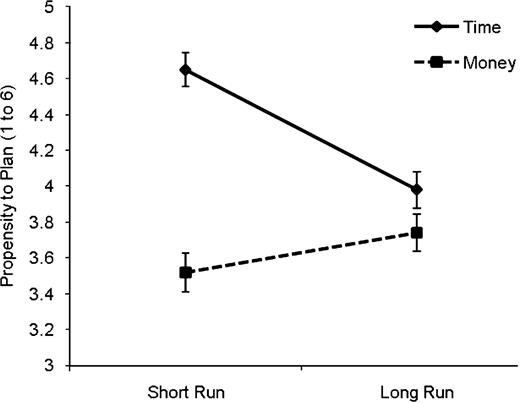
Abstract. Planning has pronounced effects on consumer behavior and intertemporal choice. We develop a six-item scale measuring individual differences in pr
The Credit Card Debt Puzzle: The Role of Preferences, Credit Access Risk, and Financial Literacy
Abstract. We use the 1979 National Longitudinal Survey of Youth to revisit what is termed the credit card debt puzzle: why consumers simultaneously co-hold high-interest credit card debt and low-interest assets that could be used to pay down this debt. Relative to individuals with no credit card debt but positive liquid assets, borrower-savers have very different perceptions of future credit access risk and use credit cards for precautionary motives. Moreover, changing perceptions about credit access risk are essential for predicting transitions among the two groups. Preferences and the composition of financial portfolios also play a role in these transitions.
Household Finance
Household financial decisions are complex, interdependent, and heterogeneous, and central to the functioning of the financial system. We present an overview of the rapidly expanding literature on household finance (with some important exceptions) and suggest directions for future research. We begin with the theory and empirics of asset market participation and asset allocation over the life cycle. We then discuss household choices in insurance markets, trading behavior, decisions on retirement saving, and financial choices by retirees. We survey research on liabilities, including mortgage choice, refinancing, and default, and household behavior in unsecured credit markets, including credit cards and payday lending. We then connect the household to its social environment, including peer effects, cultural and hereditary factors, intra-household financial decision-making, financial literacy, cognition, and educational interventions. We also discuss literature on the provision and consumption of financial advice.
Choose to Lose: Health Plan Choices from a Menu with Dominated Option*
Abstract We examine the health plan choices that 23,894 employees at a U.S. firm made from a large menu of options that differed only in financial cost-sharing and premium. These decisions provide a clear test of the predictions of the standard economic model of insurance choice in the absence of choice frictions because plans were priced so that nearly every plan with a lower deductible was financially dominated by an otherwise identical plan with a high deductible. We document that the majority of employees chose dominated plans, which resulted in excess spending equivalent to 24% of chosen plan premiums. Low-income employees were significantly more likely to choose dominated plans, and most employees did not switch into more financially efficient plans in the subsequent year. We show that the choice of dominated plans cannot be rationalized by standard risk preference or any expectations about health risk. Testing alternative explanations with a series of hypothetical-choice experiments, we find that the popularity of dominated plans was not primarily driven by the size and complexity of the plan menu, nor informed preferences for avoiding high deductibles, but by employees’ lack of understanding of health insurance. Our findings challenge the standard practice of inferring risk preferences from insurance choices and raise doubts about the welfare benefits of health reforms that expand consumer choice.
Estimating Discount Functions with Consumption Choices over the Lifecycle
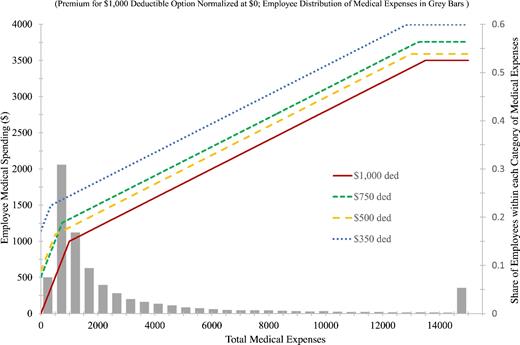
We estimate β-δ time preferences and relative risk aversion (RRA) using a lifecycle model including stochastic income, liquid and illiquid assets, credit cards, dependents, Social Security, mortality, and bequests. Preference parameters are identified by cross-tabulating four lifecycle age intervals and four balance sheet moments: the proportion of households carrying (i.e., revolving) credit card debt, average carried credit card debt, average net wealth among households carrying credit card debt, and average net wealth among households not carrying credit card debt. The sixteen moments are approximately matched by (MSM) parameter estimates β = 0:50, δ = 0:99, and RRA = 1:3.

Purchase Justifiability Drives Payment Choice: Consumers Pay with Card to Remember and Cash to Forget
AbstractAlthough consumers often have multiple payment methods at their fingertips, such as cash and credit/debit cards, prior research is silent on how consumers choose between them. We home in on a key element of purchase—purchase justifiability—that affects how consumers choose to pay. Analysis of 118,042 real-world purchases and six experiments reveals that when consumers are motivated to forget (vs. remember) a purchase because they see it as difficult (vs. easy) to justify, they have an increased preference to pay with cash (vs. card) because cards create a “paper/electronic trail” that aids memory retrieval. These payment preferences are strongest among consumers most likely to recall/track their card spending, and manifest only when card expenses are trackable. We reconcile our results with the classic effect of payment method on pain of paying and discuss implications for merchants and for financial institutions designing payment methods of the future.
