


In this paper, we introduce Integrity Games (https://integgame.eu/) – a freely available, gamified online teaching tool on academic integrity. In addition, we present results from a randomized controlled experiment measuring the learning outcomes from playing Integrity Games.
Play is doing its work even if we’re not keeping score | Aeon Essays
We are most human when we play freely, imaginatively, pointlessly. Gamification risks atrophying that most precious capacity

Game Theory | Open Yale Courses
This course is an introduction to game theory and strategic thinking. Ideas such as dominance, backward induction, Nash equilibrium, evolutionary stability, commitment, credibility, asymmetric information, adverse selection, and signaling are discussed and applied to games played in class and to examples drawn from economics, politics, the movies, and elsewhere.
A Dusting of Gamification
I had to think for a minute to realize that Stack Overflow has “gamification” too. Not a ton. Maybe a dusting of gamification, most of it around reputation.

Designing Games to Learn
As I've been writing this series of newsletters on learning and video games, there's been a spectre lurking in the background. Video games and education. Edutainment.
Curriculum Guide
Riot Games’ Game Design Curriculum is an entry-level course that teaches high school students the fundamental elements of game design using a framework and interactive workshops created by our own game designers. Students will ultimately utilize their newfound knowledge of core game design concepts like goals, types of fun, opposition, rules, interaction, and balance to create a paper prototype of a multiplayer game.

AI Quests
AI Quests: A game-based learning experience for middle schoolers (11-14) on AI. Code-free quests use real Google projects to solve societal issues.
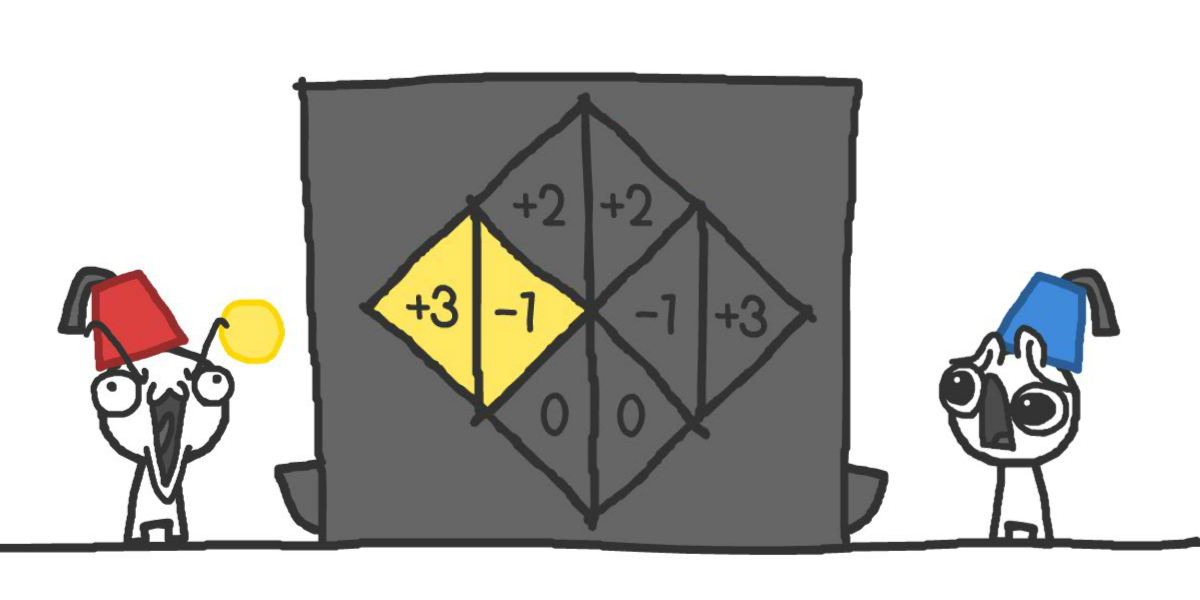
The Evolution of Trust
an interactive guide to the game theory of why & how we trust each other
When the Scoreboard Becomes the Game, It’s Time to Recalibrate Research Metrics - The Scholarly Kitchen
Today's guest post discusses research metrics and their relationship to research integrity, inclusivity, and long-term impact.

A negative-sum game: Policing Counter-Strike: GO cheaters with Overwatch
In battling cheaters, Valve crowdsources the judge, jury, and executioner.

the Enshittification of Cozy Games
Beyond the Pentakill: 21st Century Competition
There’s been a lot of discussion about how to prevent toxic behavior in players of online competitive games. Today I’d like to suggest a different approach.

Illustration of Harvard Mark III | Mastering the Game | Computer History Museum
Methodologies for Improving the Quality of AI Tutoring in K-12 Education
Many AI tutors leverage large language models (LLMs) today. Given that LLMs are opaque black boxes, robust evaluation and live experimentation to measure the impact of every change are essential. We pioneered AI-powered tutoring for K-12 with the launch of Khanmigo (Khan Academy 2023). We describe the metrics we use to measure AI tutoring quality and student engagement as well as various experiments we have run. We highlight the changes that have moved our metrics, including models, prompting, personalization and agents.

Alex Veremeyenko on Twitter / X
MIT published a brutally honest report on what AI is doing to students.A committee of professors and students spent five months studying how AI changed learning on campus, and the findings read like a warning to every university on the planet.Study groups are disappearing.… pic.twitter.com/kSxKk4h06o— Alex Veremeyenko (@alex_verem) September 12, 2026
Math Academy Wants To Supercharge Your Learning
A review of the online learning program

Exploitative Game Design: Beyond the F2P Debate
The past few months have seen a torrent of articles about Free-to-Play business models, often discussed alongside issues of ethics in games (for example: 1, 2, 3, 4, 5). These pieces have addressed the effect on addiction-prone players or children, the possibility of corrupting artistic intent, the sheer amount of money being spent, and other advantages and dangers of F2P. While all of this is relevant, I fear that we’re focusing too much on F2P and glossing over the wider ethical issues in game design.