


The content linked to this DOI is not currently available online
Scholarly blogs and their place in the research nexus - Crossref
If you are reading this blog on our website, you may have noticed that alongside each post we now list a Crossref DOI link, which was not the case a few months ago (though we have retroactively added DOIs to all older posts too). You can find the persistent link for this post right above this paragraph. Go on, click on it, we’ll wait.

Sci-Hub : {title} [{doi}]
Elsevier vs Meta: first science publisher sues over scraped research papers
Science publishing giant Elsevier has joined a class-action lawsuit against Meta that alleges the reproduction of copyrighted works in developing the Llama AI model.

Elsevier vs Meta: first science publisher sues over scraped research papers
Science publishing giant Elsevier has joined a class-action lawsuit against Meta that alleges the reproduction of copyrighted works in developing the Llama AI model.
COS goes FOSS The sorry state of scientific publishing and how we could move to an open and resilient infrastructure
“The data files remains our property and are not deposited for free access.”
Retracted coronavirus (COVID-19) papers
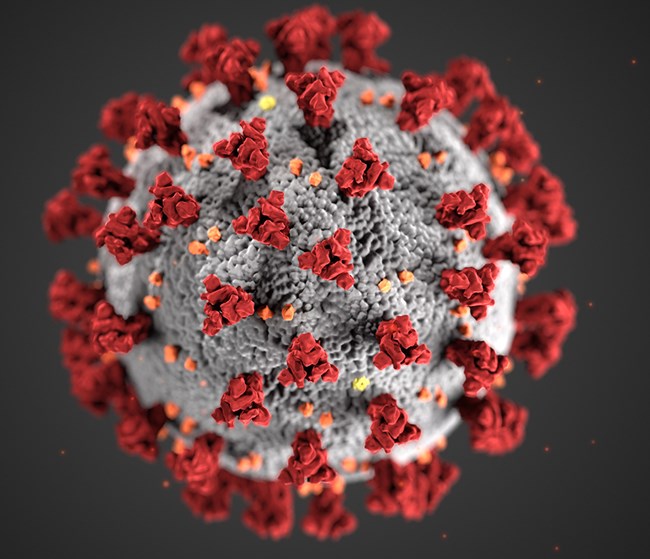
via CDC We’ve been tracking retractions of papers about COVID-19 as part of our database. Here’s a running list, which will be updated as needed. (For some context on these figures, see…
RegisterDOI | Simplified DOI Registration for Publishers & Researchers
Get genuine Digital Object Identifiers (DOIs) for your research articles, journals, and publications through our trusted registration service.
Who's downloading pirated papers? Everyone
Data from the controversial website Sci-Hub reveal that the whole world turns to it for journal articles.

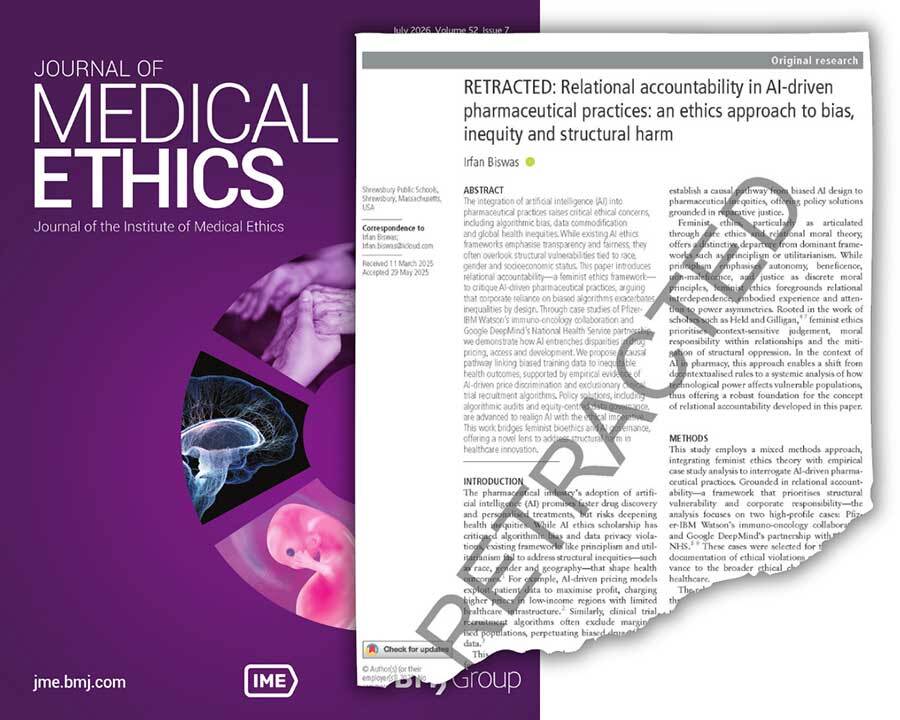
Ethics journal retracts paper by high school student for AI, peer review manipulation
The Journal of Medical Ethics has retracted a paper on the use of AI in the pharmaceutical industry for containing references that don’t exist. The article’s sole author: a high school student.&nbs…
Elena Rossini 🌈 (@_elena@mastodon.social)
Update from my source dev 2: "Miraculously - only hours after publishing your article Elena - the issue seems to be resolved" I will update my article now.
Rate limit reached
You've reached the limit for the number of requests that can be made in a short period of time. Please wait a moment and try again. If you believe this message was shown in error or need assistance, please contact us at Aitratelimit@archive.org
Wish there was a better academic publishing system? Bluesky and its underlying ATProto technology, along with services like @chive.pub and the broader @atproto.science ecosystem, could do the job. #AcademicSky 🧪 leaflet.pub/2f431faf-c125-4d34-ac52-e41a2…

Each academic paper should have its own Bluesky account
leaflet.pub
Chive
We're ramping up our alpha, and we'd love for you to join at chive.pub! Since we launched back in January, we've been adding a ton of fun features; and to introduce them, we're going to be doing a series of deep dives over the next couple weeks on chive.leaflet.pub.
Helpful reminder from Elsevier that they have the "legal power" to do what they want with your journals. You have the collective power to take your editorial work elsewhere.

Stephanie Wang
🚨Elsevier forces out Games and Economic Behavior (GEB) Editor, entire editorial board has resigned, current board only handling new submissions until Nov. 14 #econsky
Article now retracted. Retraction notice focuses on data sharing, but doesn't mention - the ethics review body is the author's own company - the tech used to to collect the data by intercepting users' LLM prompts does not exist ht @grinschglsandra.bsky.social psycnet.apa.org/fulltext/2027-53135-001.html
APA PsycNet
psycnet.apa.org
Ian Hussey
Retractionwatch coverage of this article retractionwatch.com/2026/06/16/technology-mind-be… @grinschglsandra.bsky.social @malte.the100.ci @jamiecummins.bsky.social
v1.122 is rolling out today, featuring a better way to discover and share articles, blog posts and newsletters across the Atmosphere via new, dynamic Standard.site link cards. 🧵
The New York Times is now blocking The Wayback Machine from accessing its articles. That means you'll no longer be able to view archived versions of NYT stories published in 2026 and beyond on archive.org. (All those posts you see tracking changes to NYT headlines and ledes? They relied on WBM).


