


Female white-necked jacobin hummingbirds are polymorphic—some express ornamented plumage like adult males. Falk et al. find that all juvenile females have male-like plumage, which some maintain as adults. Rather than being favored by sexual selection, male-like plumage benefits females by reducing social harassment from this and other species.
Male-like ornamentation in female hummingbirds results from social harassment rather than sexual selection
Female white-necked jacobin hummingbirds are polymorphic—some express ornamented plumage like adult males. Falk et al. find that all juvenile females have male-like plumage, which some maintain as adults. Rather than being favored by sexual selection, male-like plumage benefits females by reducing social harassment from this and other species.
Hummingbird hawk moths and ivy bees: The insects growing in number as temperatures rise
Hummingbird hawk moths - often mistaken for small birds - are being spotted in the West Midlands.

Reciprocal signaling in honeyguide-human mutualism
Honeyguide birds recognize human honey-hunters calls and help them find wild bees’ nests.

Katy t3h PeNgU1N oF d00m | Memepedia Wiki | Fandom
Please delete this page is a fictional internet meme concept originating from surreal wordplay involving the phrase “pigeon sex,” which evolved into a completely abstract, non-literal meme...

Advancing the Understanding of Phenotypic Mimicry in Men’s Conspicuous Consumption
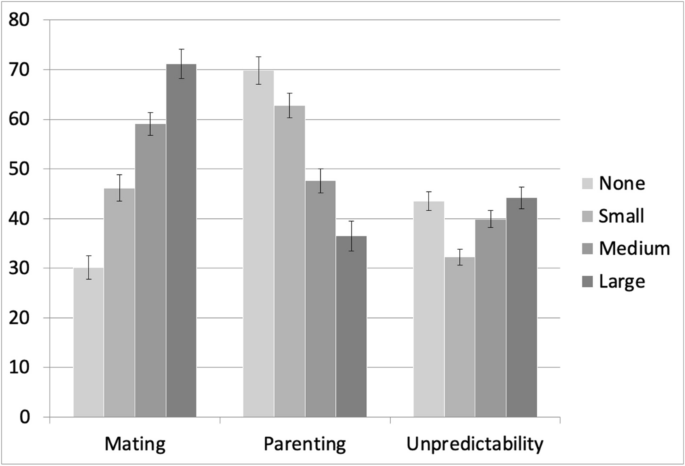
Two studies advance the understanding of phenotypic mimicry in consumer products. Product features mimicking more prominent male secondary sexual characteristics are associated with men’s behavioral strategies which are higher in mating effort and lower in paternal investment in offspring, in parallel with reproductive strategies across species and within the human population. The first study demonstrated a continuous relationship between the sizes of luxury brand logos and perceptions of the owners’ life histories. Two partial replications reproduced Study 1 results. Study 2 demonstrated that a manipulation of coloration, another fundamental dimension of variation in secondary sex characteristics, generates a similar pattern of results. In both studies, men owning shirts with more prominent sensory characteristics were believed to use authority and intimidation as strategies for advancing social status, whereas men owning shirts with less showy characteristics were believed to demonstrate useful abilities and foster cooperative alliances. Participants also recognized the strategic use of luxury display properties across social contexts.
Insights into Sexism: Male Status and Performance Moderates Female-Directed Hostile and Amicable Behaviour
Gender inequality and sexist behaviour is prevalent in almost all workplaces and rampant in online environments. Although there is much research dedicated to understanding sexist behaviour, we have almost no insight into what triggers this behaviour and the individuals that initiate it. Although social constructionist theory argues that sexism is a response towards women entering a male dominated arena, this perspective doesn’t explain why only a subset of males behave in this way. We argue that a clearer understanding of sexist behaviour can be gained through an evolutionary perspective that considers evolved differences in intra-sexual competition. We hypothesised that female-initiated disruption of a male hierarchy incites hostile behaviour from poor performing males who stand to lose the most status. To test this hypothesis, we used an online first-person shooter video game that removes signals of dominance but provides information on gender, individual performance, and skill. We show that lower-skilled players were more hostile towards a female-voiced teammate, especially when performing poorly. In contrast, lower-skilled players behaved submissively towards a male-voiced player in the identical scenario. This difference in gender-directed behaviour became more extreme with poorer focal-player performance. We suggest that low-status males increase female-directed hostility to minimize the loss of status as a consequence of hierarchical reconfiguration resulting from the entrance of a woman into the competitive arena. Higher-skilled players, in contrast, were more positive towards a female relative to a male teammate. As higher-skilled players have less to fear from hierarchical reorganization, we argue that these males behave more positively in an attempt to support and garner a female player’s attention. Our results provide the clearest picture of inter-sexual competition to date, highlighting the importance of considering an evolutionary perspective when exploring the factors that affect male hostility towards women.
Sex Redefined: The Idea of 2 Sexes Is Overly Simplistic
Biologists now think there is a larger spectrum than just binary female and male
Testosterone causes both prosocial and antisocial status-enhancing behaviors in human males | PNAS
Although popular discussion of testosterone’s influence on males often centers on aggression and antisocial behavior, contemporary theorists have p...

AI, gender bias and development
Generative AI is quietly reinforcing harmful gender stereotypes, shaping how we see the world and ourselves. How can we ensure it doesn't affect our development work in a biased way?

You can't "masculinity" your way out of oppression
Will Generative AI Disproportionately Affect the Jobs of Women?
Generative AI such as ChatGPT holds the potential to alter many kinds of work, but analysis of a new report shows the occupations most likely to be affected are populated by more women than men.
Social Constructs (or, 'What is A Woman, Really?')
Mute swan
The mute swan is a species of swan and a member of the family Anatidae within the waterfowl order. It is native to much of Europe and parts of Asia and the far north of Africa. It is an introduced species in North America, home to the largest populations outside of its native range, with additional smaller introductions in Australasia and Southern Africa. The name "mute" derives from it being less vocal than other swan species. Typically measuring 140 to 160 cm in length, this large swan is wholly white in plumage, with an orange beak bordered with black. It is recognisable by its pronounced knob atop the beak, which is larger in males.

Y a-t-il une malédiction des ressources naturelles ? Le cas du Cameroun annotationsbis.blogspot.com/2013/05/malediction-Cameroun.… Que nous enseignent les études empiriques ? annotationsbis.blogspot.com/2013/05/la-malediction-des-re… Les mécanismes de la malédiction des ressources annotationsbis.blogspot.com/2013/05/les-mecanismes-de-la-…

