


Osteolytic bone disease is one of the most debilitating manifestations of multiple myeloma (MM). Bortezomib is a proteasome inhibitor that shows both anticancer and bone anabolic properties and is being evaluated for its positive effects in MM patients with skeletal complications. Dexamethasone is a potent corticosteroid that is often given in combination with bortezomib for its antineoplastic effects; however, bone loss and osteoporosis are major adverse effects of long-term steroid-based therapies.
Denosumab versus zoledronic acid in bone disease treatment of newly diagnosed multiple myeloma: an international, double-blind, double-dummy, randomised, controlled, phase 3 study
In patients with newly diagnosed multiple myeloma, denosumab was non-inferior to zoledronic acid for time to skeletal-related events. The results from this study suggest denosumab could be an additional option for the standard of care for patients with multiple myeloma with bone disease.

Bone metastases
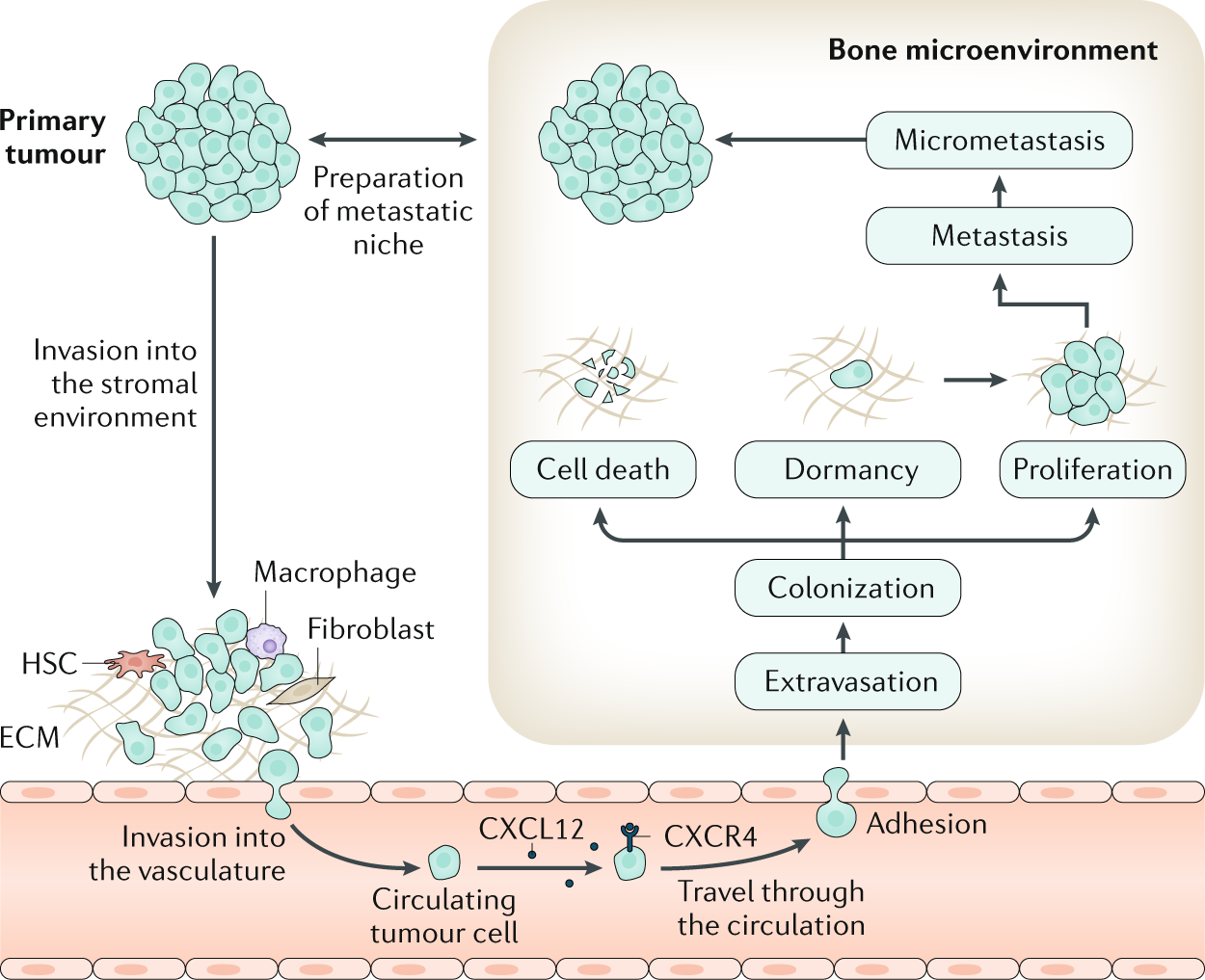
Bone is the most frequent site for metastasis for many cancers, notably for tumours originating in the breast and the prostate. Tumour cells can escape from the primary tumour site and colonize the bone microenvironment. Within the bone, these disseminated tumour cells, as well as those arising in the context of multiple myeloma, may assume a state of dormancy, remaining quiescent for years before resuming proliferation and causing overt metastasis, which causes bone destruction via activation of osteoclast-mediated osteolysis. This structural damage can lead to considerable morbidity, including pain, fractures and impaired quality of life. Although treatment of bone metastases and myeloma bone disease is rarely curative, disease control is often possible for many years through the use of systemic anticancer treatments on a background of multidisciplinary supportive care. This care should include bone-targeted agents to inhibit tumour-associated osteolysis and prevent skeletal morbidity as well as use of appropriate local treatments such as radiation therapy, orthopaedic surgery and specialist palliative care to minimize the impact of metastatic bone disease on physical functioning. In this Primer, we provide an overview of the clinical features, the pathophysiology and the specific treatment approaches to prevent and treat bone metastases from solid tumours as well as myeloma bone disease.
Integrated Cellular Bone Homeostasis Model for Denosumab Pharmacodynamics in Multiple Myeloma Patients
The purpose of this study is to couple a cellular bone homeostasis model with the pharmacokinetics (PK) and mechanism of action of denosumab, an inhibitor of receptor activator of nuclear factor-κB ligand, to characterize the time course of serum N-telopeptide (NTX), a bone resorption biomarker, following single escalating doses in multiple myeloma (MM) patients. Mean PK and median serum NTX temporal profiles were extracted from a previously conducted randomized, double-blind, double-dummy, active-controlled, multicenter study including 25 MM patients receiving escalating denosumab doses.

Mathematical modelling of the pathogenesis of multiple myeloma‐induced bone disease
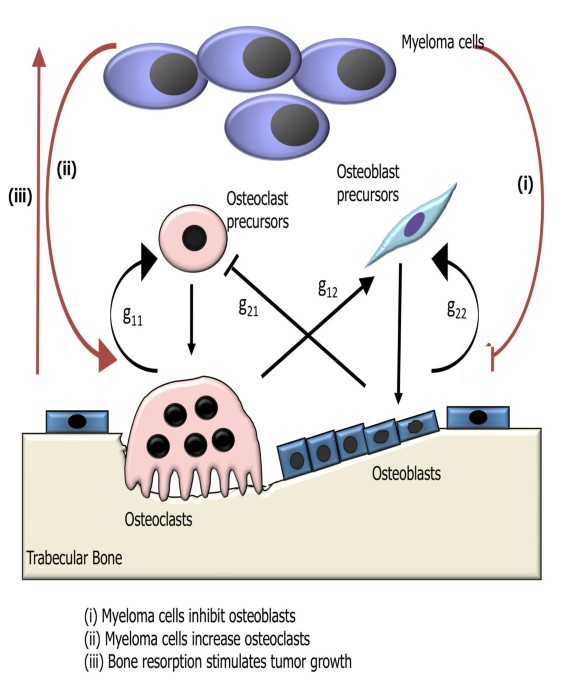
SUMMARY Multiple myeloma (MM) is the second most common haematological malignancy and results in destructive bone lesions. The interaction between MM cells and the bone microenvironment plays an important role in the development of the tumour cells and MM‐induced bone disease and forms a ‘vicious cycle’ of tumour development and bone destruction, intensified by suppression of osteoblast activity and promotion of osteoclast activity. In this paper, a mathematical model is proposed to simulate how the interaction between MM cells and the bone microenvironment facilitates the development of the tumour cells and the resultant bone destruction. It includes both the roles of inhibited osteoblast activity and stimulated osteoclast activity. The model is able to mimic the temporal variation of bone cell concentrations and resultant bone volume after the invasion and then removal of the tumour cells and explains why MM‐induced bone lesions rarely heal even after the complete removal of MM cells. The behaviour of the model compares well with published experimental data. The model serves as a first step to understand the development of MM‐induced bone disease and could be applied further to evaluate the current therapies against MM‐induced bone disease and even suggests new potential therapeutic targets. © 2014 The Authors. International Journal for Numerical Methods in Biomedical Engineering published by John Wiley & Sons Ltd

Integrated model for denosumab and ibandronate pharmacodynamics in postmenopausal women
ABSTRACT This study aims to characterize the pharmacodynamic properties of denosumab, a RANK ligand inhibitor, and ibandronate, a bisphosphonate, using an integrated bone homeostasis model in postmenopausal women. Mean temporal profiles of denosumab, serum and urine N‐telopeptide (sNTX, uNTX), lumbar spine bone mineral density (BMD) following denosumab administration, and urine C‐telopeptide (uCTX) and lumbar spine BMD upon ibandronate administration were extracted from the literature. A mechanistic model was developed that integrates denosumab pharmacokinetics with binding to RANK ligand and ibandronate inhibition of osteoclast precursor differentiation to active osteoclasts (AOC). Biomarker concentrations were linked to the AOC pool. The BMD was characterized by a turnover model with stimulation of bone formation and degradation by AOB (active osteoblasts) and AOC pools. The estimated basal sNTX, uNTX and uCTX concentrations were 7.24 n m , 14.4 nmol/mmolCr and 31 µg/mmolCr. The BMD degradation rate was 0.00161 day ‐1 with stimulation constants associated with AOB and AOC of 1214 and 790 p m ‐1 . The plasma ibandronate concentration producing 50% of maximum inhibition of osteoclast differentiation was 522 ng/l. The integrated model, which incorporates multiple pathways of therapeutic intervention, quantitatively describes changes in clinical biomarkers of bone turnover and BMD after denosumab and ibandronate exposures in postmenopausal women. Copyright © 2011 John Wiley & Sons, Ltd.

Modeling osteoporosis to design and optimize pharmacological therapies comprising multiple drug types
For the treatment of postmenopausal osteoporosis, several drug classes with different mechanisms of action are available. Since only a limited set of dosing regimens and drug combinations can be tested in clinical trials, it is currently unclear whether common medication strategies achieve optimal bone mineral density gains or are outperformed by alternative dosing schemes and combination therapies that have not been explored so far. Here, we develop a mathematical framework of drug interventions for postmenopausal osteoporosis that unifies fundamental mechanisms of bone remodeling and the mechanisms of action of four drug classes: bisphosphonates, parathyroid hormone analogs, sclerostin inhibitors, and receptor activator of NF-κB ligand inhibitors. Using data from several clinical trials, we calibrate and validate the model, demonstrating its predictive capacity for complex medication scenarios, including sequential and parallel drug combinations. Via simulations, we reveal that there is a large potential to improve gains in bone mineral density by exploiting synergistic interactions between different drug classes, without increasing the total amount of drug administered.

Bisphosphonates: Mechanism of Action and Role in Clinical Practice
Bisphosphonates are primary agents in the current pharmacological arsenal against osteoclast-mediated bone loss due to osteoporosis, Paget disease of bone, malignancies metastatic to bone, multiple myeloma, and hypercalcemia of malignancy. In addition to currently approved uses, bisphosphonates are commonly prescribed for prevention and treatment of a variety of other skeletal conditions, such as low bone density and osteogenesis imperfecta. However, the recent recognition that bisphosphonate use is associated with pathologic conditions including osteonecrosis of the jaw has sharpened the level of scrutiny of the current widespread use of bisphosphonate therapy.

A mathematical model of bone remodeling dynamics for normal bone cell populations and myeloma bone disease
Multiple myeloma is a hematologic malignancy associated with the development of a destructive osteolytic bone disease.
The Development of Molecular Biology of Osteoporosis
Osteoporosis is one of the major bone disorders that affects both women and men, and causes bone deterioration and bone strength. Bone remodeling maintains bone mass and mineral homeostasis through the balanced action of osteoblasts and osteoclasts, which are responsible for bone formation and bone resorption, respectively. The imbalance in bone remodeling is known to be the main cause of osteoporosis. The imbalance can be the result of the action of various molecules produced by one bone cell that acts on other bone cells and influence cell activity. The understanding of the effect of these molecules on bone can help identify new targets and therapeutics to prevent and treat bone disorders. In this article, we have focused on molecules that are produced by osteoblasts, osteocytes, and osteoclasts and their mechanism of action on these cells. We have also summarized the different pharmacological osteoporosis treatments that target different molecular aspects of these bone cells to minimize osteoporosis.

Randomized, Double-Blind Study of Denosumab Versus Zoledronic Acid in the Treatment of Bone Metastases in Patients With Advanced Cancer (Excluding Breast and Prostate Cancer) or Multiple Myeloma
Purpose This study compared denosumab, a fully human monoclonal anti-receptor activator of nuclear factor kappa-B ligand antibody, with zoledronic acid (ZA) for delaying or preventing skeletal-related events (SRE) in patients with advanced cancer and bone metastases (excluding breast and prostate) or myeloma. Patients and Methods Eligible patients were randomly assigned in a double-blind, double-dummy design to receive monthly subcutaneous denosumab 120 mg (n = 886) or intravenous ZA 4 mg (dose adjusted for renal impairment; n = 890). Daily supplemental calcium and vitamin D were strongly recommended. The primary end point was time to first on-study SRE (pathologic fracture, radiation or surgery to bone, or spinal cord compression). Results Denosumab was noninferior to ZA in delaying time to first on-study SRE (hazard ratio, 0.84; 95% CI, 0.71 to 0.98; P = .0007). Although directionally favorable, denosumab was not statistically superior to ZA in delaying time to first on-study SRE (P = .03 unadjusted; P = .06 adjusted for multiplicity) or time to first-and-subsequent (multiple) SRE (rate ratio, 0.90; 95% CI, 0.77 to 1.04; P = .14). Overall survival and disease progression were similar between groups. Hypocalcemia occurred more frequently with denosumab. Osteonecrosis of the jaw occurred at similarly low rates in both groups. Acute-phase reactions after the first dose occurred more frequently with ZA, as did renal adverse events and elevations in serum creatinine based on National Cancer Institute Common Toxicity Criteria for Adverse Events grading. Conclusion Denosumab was noninferior (trending to superiority) to ZA in preventing or delaying first on-study SRE in patients with advanced cancer metastatic to bone or myeloma. Denosumab represents a potential novel treatment option with the convenience of subcutaneous administration and no requirement for renal monitoring or dose adjustment.

Disease Systems Analysis of Bone Mineral Density and Bone Turnover Markers in Response to Alendronate, Placebo, and Washout in Postmenopausal Women
A previously established mechanism‐based disease systems model for osteoporosis that is based on a mathematically reduced version of a model describing the interactions between osteoclast (bone removing) and osteoblast (bone forming) cells in bone remodeling has been applied to clinical data from women ( n = 1,379) receiving different doses and treatment regimens of alendronate, placebo, and washout. The changes in the biomarkers, plasma bone‐specific alkaline phosphatase activity (BSAP), urinary N‐telopeptide (NTX), lumbar spine bone mineral density (BMD), and total hip BMD, were linked to the underlying mechanistic core of the model. The final model gave an accurate description of all four biomarkers for the different treatments. Simulations were used to visualize the dynamics of the underlying network and the natural disease progression upon alendronate treatment and discontinuation. These results complement the previous applications of this mechanism‐based disease systems model to data from various treatments for osteoporosis.

Osteoimmunology: The Nexus between bone and immune system
Osteoimmunology is an interdisciplinary research field which combines the existing fields of osteology (bone biology) and immunology under one umbrella. The observation that contributed enormously to the emergence of osteoimmunology as an independent field of investigation was the enhanced bone loss in various inflammatory bone diseases such as rheumatoid arthritis, osteoporosis and periodontitis. T helper cells (Th1, Th2, Treg and Th17) along with various other immune cells (B cells, DC, macrophages etc.) are actively involved in bone homeostasis. The present review thus provides an overview of the nexus between these two prominent systems (Bone and Immune system) of an organism, which reside in a common niche (bone marrow) and thus cross-communicate to modulate their respective development. Investigations in the field of osteoimmunology thus promise the advent of new era in the field with novel therapeutics for bone loss in various inflammatory conditions. A molecular insight into the field of osteoimmunology can lead to novel approaches for the prevention and treatment of diverse inflammatory conditions such as osteoporosis, rheumatoid arthritis and osteoarthritis.
Computational Modeling of Interactions between Multiple Myeloma and the Bone Microenvironment
Multiple Myeloma (MM) is a B-cell malignancy that is characterized by osteolytic bone lesions. It has been postulated that positive feedback loops in the interactions between MM cells and the bone microenvironment form reinforcing ‘vicious cycles’, resulting in more bone resorption and MM cell population growth in the bone microenvironment. Despite many identified MM-bone interactions, the combined effect of these interactions and their relative importance are unknown. In this paper, we develop a computational model of MM-bone interactions and clarify whether the intercellular signaling mechanisms implemented in this model appropriately drive MM disease progression. This new computational model is based on the previous bone remodeling model of Pivonka et al. [1], and explicitly considers IL-6 and MM-BMSC (bone marrow stromal cell) adhesion related pathways, leading to formation of two positive feedback cycles in this model. The progression of MM disease is simulated numerically, from normal bone physiology to a well established MM disease state. Our simulations are consistent with known behaviors and data reported for both normal bone physiology and for MM disease. The model results suggest that the two positive feedback cycles identified for this model are sufficient to jointly drive the MM disease progression. Furthermore, quantitative analysis performed on the two positive feedback cycles clarifies the relative importance of the two positive feedback cycles, and identifies the dominant processes that govern the behavior of the two positive feedback cycles. Using our proposed quantitative criteria, we identify which of the positive feedback cycles in this model may be considered to be ‘vicious cycles’. Finally, key points at which to block the positive feedback cycles in MM-bone interactions are identified, suggesting potential drug targets.
Application of a mechanism-based disease systems model for osteoporosis to clinical data
A recently proposed mechanism-based disease systems model for osteoporosis (Schmidt et al., J Pharmacokinet Pharmacodyn 38:873–900, 2011) was applied to clinical data from post-menopausal women (n = 767) receiving various doses of the selective estrogen receptor modulator tibolone. Plasma bone-specific alkaline phosphatase activity and urinary N-telopeptide were used as biomarkers reflecting the activity of osteoblasts (bone forming cells) and osteoclasts (bone removing cells), respectively. These data were analyzed in conjunction with data on osteocalcin and on bone mineral density (BMD) (both lumbar spine and total hip), which reflect the activity of both cell types. While the dynamics of bone turnover markers changes rapidly, closely following changes in the activity of bone cells, changes in BMD are slower and have their own dynamics. Application of the mechanism-based disease systems model to the clinical data allowed for an adequate description of the data and yielded parameter estimates that are consistent with physiological values reported in the literature (Lemaire et al., J Theor Biol 229:293–309, 2004). The fitted model enabled characterization of (i) the critical time scales involved in disease progression, (ii) the dynamics of the system during onset and offset of the therapeutic intervention, and (iii) the distinction between responders and low-responders to tibolone treatment.

Cardiovascular Outcomes of Romosozumab and Protective Role of Alendronate: A Conundrum or Clarification
Osteoporosis and cardiovascular diseases are major public health issues. Bone and cardiovascular remodeling share multiple biological markers and pathways. Medical intervention, such as using romosozumab, an antisclerostin antibody, improves the clinical outcome of osteoporosis. However, blocking sclerostin leads to Wnt (wingless/integrated) activation and participation in the cardiovascular remodeling process, which could potentially lead to adverse events. Based on the opposing roles of bisphosphonates and the Wnt pathway on endothelial dysfunction, lipid accumulation and calcification of the vessel walls, the combination of romosozumab and bisphosphonates could be a new therapeutic approach to reducing the risks of adverse cardiovascular events in romosozumab receivers. Visual Overview— An online visual overview is available for this article.

Predicting Nonlinear Changes in Bone Mineral Density Over Time Using a Multiscale Systems Pharmacology Model
A mathematical model component that extends an existing physiologically based multiscale systems pharmacology model (MSPM) of calcium and bone homeostasis was developed, enabling prediction of nonlinear changes in lumbar spine bone mineral density (LSBMD). Data for denosumab, a monoclonal antibody osteoporosis treatment, dosed at several levels and regimens, was used for fitting the BMD component. Bone marker and LSBMD data extracted from the literature described on/off‐treatment effects of denosumab over 48 months [Miller, P.D. et al . Effect of denosumab on bone density and turnover in postmenopausal women with low bone mass after long‐term continued, discontinued, and restarting of therapy: a randomized blinded phase 2 clinical trial. Bone 43, 222–229 (2008)]. An indirect model linking bone markers to LSBMD was embedded in the existing MSPM, reasonably predicting nonlinear increases in LSBMD during treatment (24 months); LSBMD declines following discontinuation and increases upon treatment reinstitution. This study demonstrates the utility of MSPM extension to describe a phenomena of interest not originally in a model, and the ability of this updated MSPM to predict nonlinear longitudinal changes in the clinically relevant endpoint, LSBMD, with denosumab treatment. CPT: Pharmacometrics & Systems Pharmacology (2012) 1, e14; doi: 10.1038/psp.2012.15 ; advance online publication 14 November 2012
