

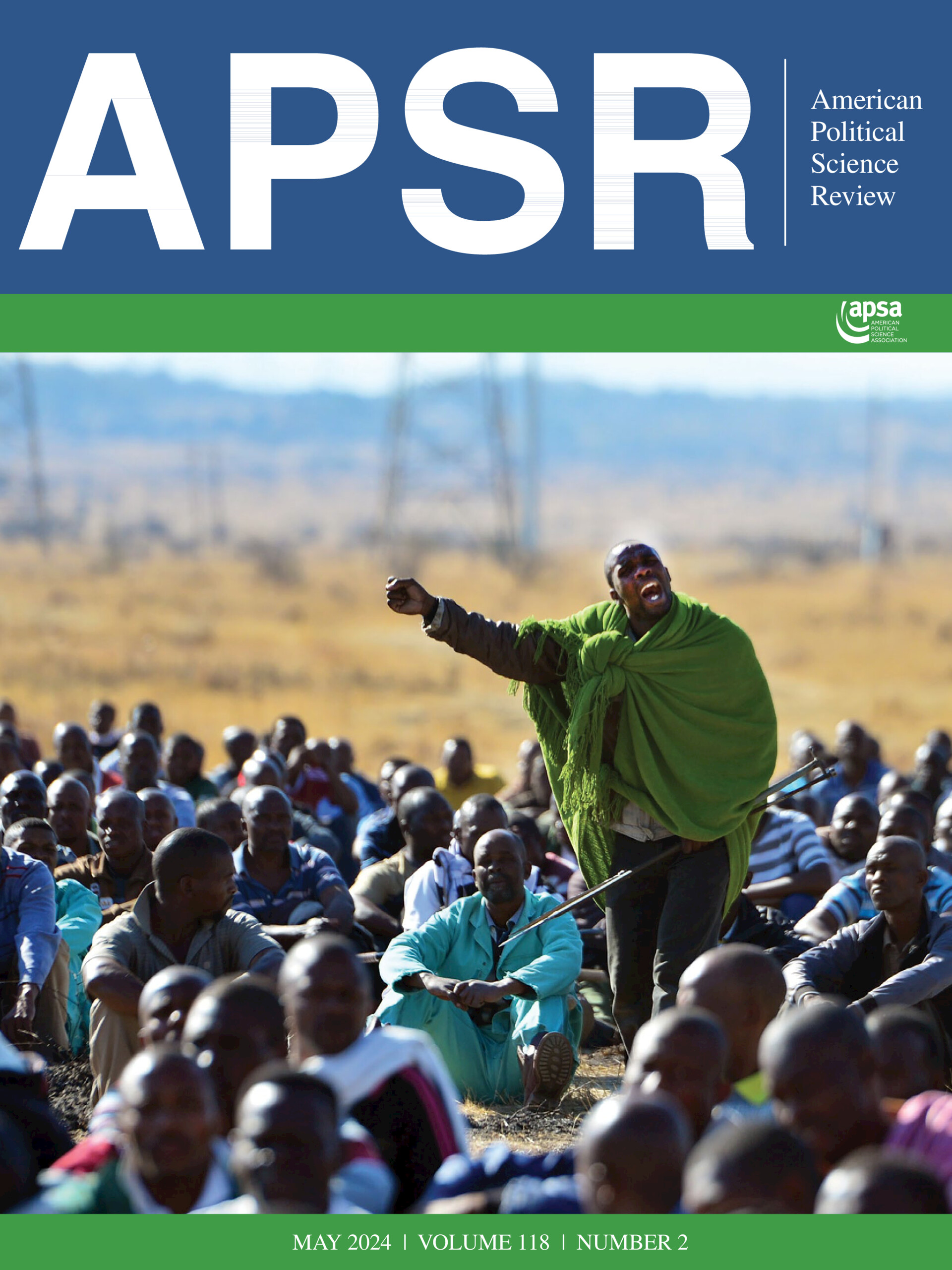
Deference and dissent strike a delicate balance in any polity. Insufficient deference to authority may incapacitate government, whereas too much may allow leaders to orchestrate mass violence. Although cross-national and cross-temporal variation in deference to authority and willingness to express dissent has long been studied in political science, rarely have scholars studied programs designed to change these aspects of political culture. This study, situated in post-genocide Rwanda, reports a qualitative and quantitative assessment of one such attempt, a radio program aimed at discouraging blind obedience and reliance on direction from authorities and promoting independent thought and collective action in problem solving. Over the course of one year, this radio program or a comparable program dealing with HIV was randomly presented to pairs of communities, including communities of genocide survivors, Twa people, and imprisoned génocidaires. Changes in individual attitudes, perceived community norms, and deliberative behaviors were assessed using closed-ended interviews, focus group discussions, role-play exercises, and unobtrusive measures of collective decision making. Although the radio program had little effect on many kinds of beliefs and attitudes, it had a substantial impact on listeners' willingness to express dissent and the ways they resolved communal problems.
Propaganda and Conflict: Evidence from the Rwandan Genocide *
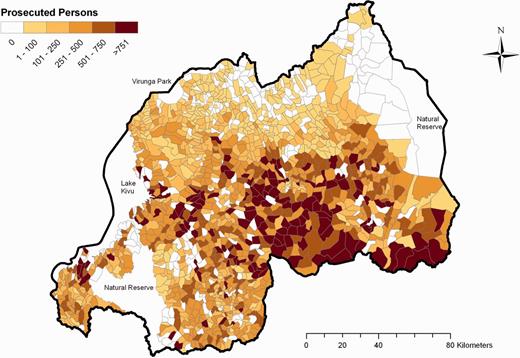
Abstract This article investigates the role of mass media in times of conflict and state-sponsored mass violence against civilians. We use a unique village-level data set from the Rwandan genocide to estimate the impact of a popular radio station that encouraged violence against the Tutsi minority population. The results show that the broadcasts had a significant effect on participation in killings by both militia groups and ordinary civilians. An estimated 51,000 perpetrators, or approximately 10% of the overall violence, can be attributed to the station. The broadcasts increased militia violence not only directly by influencing behavior in villages with radio reception but also indirectly by increasing participation in neighboring villages. In fact, spillovers are estimated to have caused more militia violence than the direct effects. Thus, the article provides evidence that mass media can affect participation in violence directly due to exposure and indirectly due to social interactions.
How Radio Affects Violent Conflict: New Evidence from Rwanda
Researchers have long debated how radio broadcasts affected the dynamics of the 1994 genocide in Rwanda, with some arguing that the radio was highly consequential, and others suggesting such effects have been overstated. This article contributes to these debates—as well as to debates regarding the role of old and new media in collective action—by examining whether and how Radio Télévision Libre des Mille Collines (Radio RTLM) coverage was associated with two core aspects of the violence: (1) subnational onset of genocidal violence and (2) participation in genocidal violence across subnational spaces. Drawing on new data on Radio RTLM coverage, we find that areas with coverage were more likely to experience immediate onset of violence. However, our analysis of participation in the genocide—which uses more accurate measures of participation and of radio coverage than prior studies—finds no significant association between Radio RTLM coverage and subnational levels of participation. After illustrating that these results are robust to numerous model specifications, we theorize that information broadcast over the radio’s airways contributed to the creation of a critical mass that initiated genocide in localized spaces. We conclude by considering the importance of understanding the role of media in the subnational onset of violence.

The Charge of Genocide - Dissent Magazine
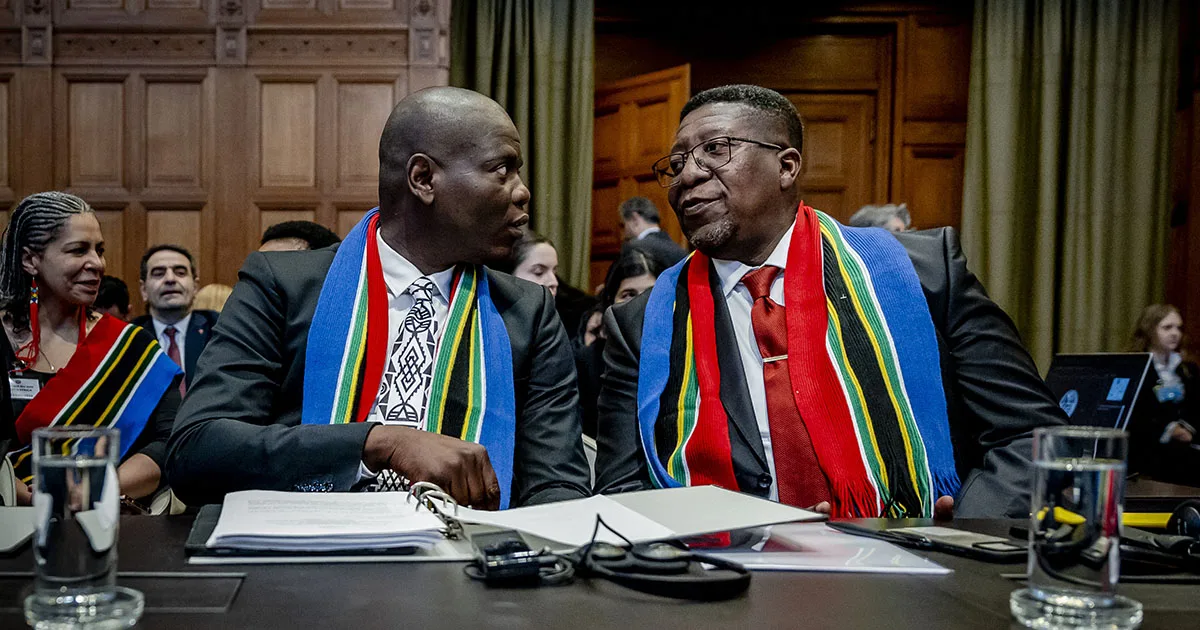
South Africa’s willingness to file a case with the International Court of Justice is a sign that the old tactics used to police discourse about genocide have lost much of their power.
How Does Media Influence Social Norms? Experimental Evidence on the Role of Common Knowledge
How does media influence beliefs, attitudes, and behaviors? While many scholars have studied the effect of media on social and political outcomes, we know surprisingly little about the channels through which this effect operates. I argue that two mechanisms can account for its impact. Media provides new information that persuades individuals to accept it (individual channel), but also, media informs listeners about what others learn, thus facilitating coordination (social channel). Combining a field experiment with a plausibly natural experiment in Mexico, I disentangle these effects analyzing norms surrounding violence against women. I examine the effect of a radio program when it is transmitted privately versus when it is transmitted publicly. I find no evidence supporting the individual mechanism. The social channel, however, increased rejection of violence against women and increased support for gender equality, but unexpectedly increased pessimism about whether violence would decline in the future.
Free Speech on the Internet: The Crisis of Epistemic Authority
Abstract. Much of our knowledge of the world comes not from direct sensory experience, but from reliance on epistemic authorities: individuals or institutions that tell us what we ought to believe. For example, what most of us believe about natural selection, climate change, or the Holocaust comes from our reliance on epistemic authorities (scientists, historians). Sustaining epistemic authority depends, crucially, on social institutions that inculcate reliable second-order norms about whom to believe about what. The traditional media were crucial, in the age of mass democracy, with promulgating and sustaining such norms. The internet has obliterated the intermediaries who made that possible, and, in the process, undermined the epistemic standing of actual experts. This essay considers some possible changes to existing free speech doctrine to remedy the epistemological crisis brought about by the internet.
npj on Twitter / X
> The genocide hasn’t jolted the West into either awareness or guilt; there is only the instinct for self-preservation. It’s similar to what Karl Kraus observed about the First World War: “What is revealing is not the occurrence itself, but the numbing that supports and allows… https://t.co/Q0i4dex0Fh— npj (@TiltingatM3) April 30, 2026
Social Media Vs Democracy
The Role of Media in Political Polarization| Inoculation Can Reduce the Perceived Reliability of Polarizing Social Media Content
Little research is available on psychological interventions that counter susceptibility to polarizing online content. We conducted 3 studies (n1 = 472, n2 = 193, n3 = 772) to evaluate whether psychological resistance against polarizing social media content can be conferred, using the Bad News game, a “technique-based inoculation” intervention that simulates a social media feed. We investigate (1) whether technique-based inoculation can reduce susceptibility to content designed to fuel intergroup polarization; (2) whether technique-based inoculation can offer cross-protection against misinformation techniques that people were not inoculated against; and (3) whether political ideology plays a role in how people engage with anti-misinformation interventions. In Studies 1 and 3 (but not Study 2), we found that technique-based inoculation significantly reduces the perceived reliability of polarizing content and offers partial cross-protection against untreated misinformation techniques. We found no effect for attitudinal certainty and news-sharing intentions. Finally, we report preliminary evidence that people may choose to engage with politically congruent news topics within the intervention.
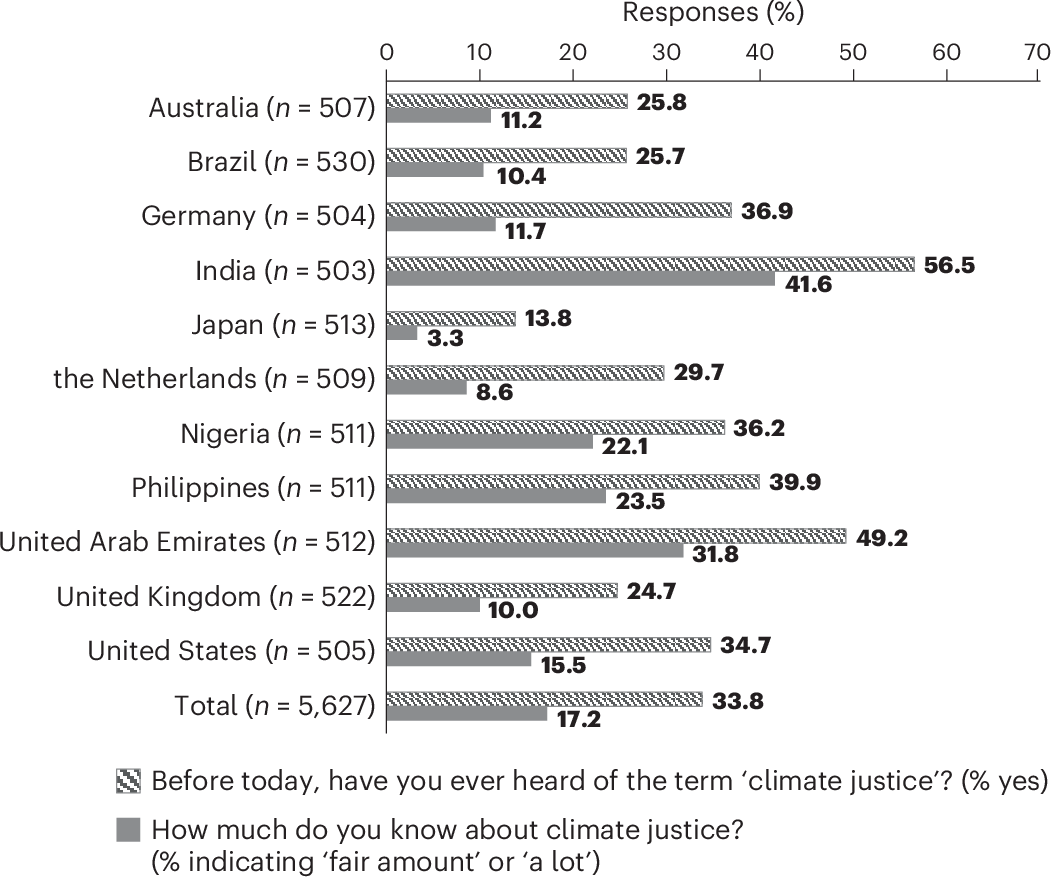
Climate justice beliefs related to climate action and policy support around the world
Climate justice is increasingly prominent in climate change communication and advocacy but little is known about public understanding of the concept or how widely it resonates with different groups. In our global survey of 5,627 adults in 11 countries spanning the global north and south, most participants (66.2%) had never heard of climate justice. Nonetheless, endorsement of climate justice beliefs was widespread (for example, acknowledging the disproportionate impact of climate change on poor people and the underpinning roles of capitalism and colonialism in the climate crisis). Climate justice beliefs were also associated with various indices of climate action and policy support. These associations tended to be stronger in countries with high GHG emissions and where social inequality is also more politically salient. The results highlight the value of climate justice as a motive for climate action across diverse geographical contexts.
Psychological Perspectives on Legitimacy and Legitimation
Legitimacy is a psychological property of an authority, institution, or social arrangement that leads those connected to it to believe that it is appropriate, proper, and just. Because of legitimacy, people feel that they ought to defer to decisions and rules, following them voluntarily out of obligation rather than out of fear of punishment or anticipation of reward. Being legitimate is important to the success of authorities, institutions, and institutional arrangements since it is difficult to exert influence over others based solely upon the possession and use of power. Being able to gain voluntary acquiescence from most people, most of the time, due to their sense of obligation increases effectiveness during periods of scarcity, crisis, and conflict. The concept of legitimacy has a long history within social thought and social psychology, and it has emerged as increasingly important within recent research on the dynamics of political, legal, and social systems.

Manufacturing Consent: The Political Economy of the Mass Media
A bold and eye-opening exposé on how power and propaganda distort the news, now more relevant than ever • With an updated introduction“[A] compelling indictment of the news media’s role in covering up errors and deceptions in American foreign policy.”—The New York Times Book Review Renowned scholars Edward S. Herman and Noam Chomsky reveal how U.S. news media, far from being independent watchdogs, often function as tools of elite influence. With probing analysis, they present their Propaganda Model, a framework that explains how systemic bias shapes the stories we’re told, the voices we hear, and the truths that remain hidden.Through deeply researched case studies, from the Vietnam War to coverage of “worthy” vs. “unworthy” victims, Manufacturing Consent exposes the structural forces that drive news organizations to reinforce power rather than question it. It’s a sobering portrait of a media system more interested in maintaining order than informing the public.This edition includes an introduction updating key examples and expanding the Propaganda Model’s relevance to issues like the coverage of NAFTA, the media’s treatment of global protests, and environmental regulation.Manufacturing Consent is a powerful assessment of how propagandistic the U.S. mass media are, how they systematically fail to live up to their self-image as providers of the kind of information that people need to make sense of the world, and how we can understand their function in a radically new way.Whether you’re a student, activist, or citizen looking to see beyond the headlines, this book will transform how you understand the media—and the world around you.

To Repress or to Co‐opt? Authoritarian Control in the Age of Digital Surveillance
This article studies the consequences of digital surveillance in dictatorships. I first develop an informational theory of repression and co-optation. I argue that digital surveillance resolves dicta...

"Pushed into the Shadows": Evidencing Digital Surveillance Chilling Effects and the Erosion of the Rights to Freedom of Assembly and of Association
SummaryThe United Nations Special Rapporteur on the Rights to Freedom of peaceful assembly and of association, Gina Romero, presents "Pushed into the Shadows: Evidencing digital surveillance chilling effects and the erosion of the rights to freedom of assembly and of association". This Global Study documents the profound impact that pervasive digital monitoring exerts on fundamental public freedoms. Moving beyond traditional privacy-centric narratives, the Study details how contemporary surveillance ecosystems induce serious chilling effects.
Hold the Line: A Guide to Defending Democracy
A practical guide for organizers, communities, and individuals defending democracy.

Sudan Witness
We expose human rights violations & protect democracy through open-source investigations. We partner with local groups to document war crimes & disinformation, driving real change worldwide.
If you care about fighting misinformation, strengthening information integrity and safeguarding democracy, you should read this account I've written about the journalist-creator lab my colleagues and I have just delivered in Kenya. Spoiler: it was an absolute success.

What happens when content creators and journalists come together?
www.trust.org