


The level of journalistic resources dedicated to coverage of local politics is in a long-term decline in the US news media, with readership shifting to national outlets. We investigate whether this trend is demand- or supply-driven, exploiting a recent wave of local television station acquisitions by a conglomerate owner. Using extensive data on local news programming and viewership, we find that the ownership change led to (1) substantial increases in coverage of national politics at the expense of local politics, (2) a significant rightward shift in the ideological slant of coverage, and (3) a small decrease in viewership, all relative to the changes at other news programs airing in the same media markets. These results suggest a substantial supply-side role in the trends toward nationalization and polarization of politics news, with negative implications for accountability of local elected officials and mass polarization.
Local News and National Politics
The level of journalistic resources dedicated to coverage of local politics is in a long-term decline in the US news media, with readership shifting to national outlets. We investigate whether this trend is demand- or supply-driven, exploiting a recent wave of local television station acquisitions by a conglomerate owner. Using extensive data on local news programming and viewership, we find that the ownership change led to (1) substantial increases in coverage of national politics at the expense of local politics, (2) a significant rightward shift in the ideological slant of coverage, and (3) a small decrease in viewership, all relative to the changes at other news programs airing in the same media markets. These results suggest a substantial supply-side role in the trends toward nationalization and polarization of politics news, with negative implications for accountability of local elected officials and mass polarization.
Reimagining American public media: A key infrastructure for local journalism
As the state of U.S. local journalism continues to deteriorate, contributing to growing news deserts and the proliferation of mis- and disinformation, alternative models for sustaining local news are increasingly paramount. One such alternative to the failing commercial model that deserves more attention, we argue, is the American public media system. While less robust than its international counterparts, the U.S. public media system tends to be less reliant on market support, less subject to commercial pressures, and more devoted to a universal service mission. This study explores to what extent the American public media system may serve to lessen the severity of the local journalism crisis. Drawing on interviews and conversations with two dozen public media practitioners and analysts, our research examines how public media could be reimagined and repurposed to better serve local information needs. We conclude that a renewed investment in the existing system in tandem with structural reforms presents a possible pathway towards a more sustainable future for local news.
Newspapers with a partisan aim filling the void of traditional media
As independent local papers collapse, a new industry is being fueled by ideological donors seeking to further political agendas.

Americans Trust Local News. That Belief Is Being Exploited. (Published 2019)
A growth in impostor local news that promotes ideological agendas.

The Metric Media network runs more than 1,200 local news sites. Here are some of the non-profits funding them.
<p>This is the first part of a two-part investigation. The second piece can be found here. As local news outlets across the US struggle to stay afloat, pop-up newsrooms are filling the void. Organizations with ties to political parties, special-interest groups, and lobbyists have emerged under the guise of news. One of the biggest such […]</p>

Don’t dwell on “democracy,” and other new findings about how to market local news
"Here’s the paradox: 93% of people believe reliable local news is necessary for democracy, yet many of these same people react negatively to explicit 'democracy' messaging."

Opinion: Losing the Local Journalism Initiative leaves communities in the dark
With more outlets vying for federal funding, why are national outlets opening up new bureaus in communities with healthy media ecosystems?

Local U.S. TV News Will Soon Be Entirely Right Wing Propaganda
Thanks to the destruction of media consolidation limits, Republicans will soon enjoy propaganda and market domination over what's left of local U.S. news.

Political Bias in the Media – Evidence from the Universe of French Broadcasts, 2002-2020 | ifo Institute | CESifo
How does the media bias the news? And in particular, how much does it cost owners to ensure that journalists comply with their stance? We compile a unique dataset of journalists and guests appearing on French television and radio shows between 2002 and 2020 to quantify the role played by journalist selection and compliance in political coverage. First, we leverage the movements of thousands of journalists between media outlets, and estimate a model in which the share of coverage for each political group is determined both by journalist and outlet components. We find that outlet-level decisions account for three-fourths of the differences in political coverage; in contrast, journalists’ personal editorial preferences play only a minor role. Second, we examine how journalists respond to a major takeover-induced editorial change. Using a difference-in-differences strategy, we show that while many journalists left in response to the shock, those who stayed largely adapted to the new editorial direction. Notably, exploiting unique data on journalist salaries, we show that this compliance came at nearly no cost for the new owner, reflecting journalists’ low bargaining power in an industry in crisis.

Hundreds of hyperpartisan sites are masquerading as local news. This map shows if there’s one near you.
We found that while the (few) left-leaning sites prioritize statewide reporting, right-leaning sites are more focused on local reporting, indicating the potential for these sites to exacerbate polarization in local communities.

The Growth and Impact of Cable News
Cable news has had a tremendous impact on how people consume news. We discuss the growth and impact of cable news including the good, bad and downright ugly.
News Deserts Leave Voters Vulnerable to Election Misinformation
The disappearance of local news outlets means Americans across the country turn to less reliable online sources for election information.

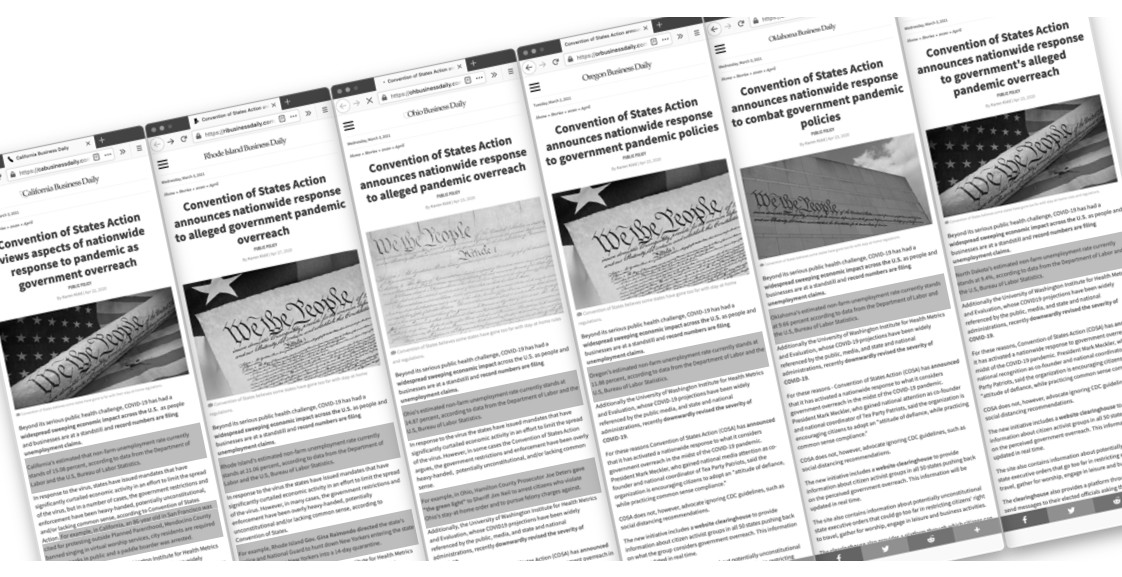
Advocacy groups and Metric Media collaborate on local ‘community news’
<p>This is the second part of a two-part investigation. The first piece can be found here. Metric Media launched “Community Newsmaker” in 2020 using the language of citizen journalism. However, what appeared to be grassroots news is part of a sprawling network that promotes political agendas and corporate interests, without disclosing those ties to the […]</p>
The Left’s Nonprofit Journalism Empire: The Nonprofit News Sector
In 2019 and 2021, Capital Research Center surveyed the changing media landscape, taking note of the increasing role of nonprofit and benefactor-driven “for-loss” media investments that are beginning to replace the 20th century’s commercial press empires. Since our last analysis, Fox News has held its national prominence among national-level right-leaning broadcast media even as it paid dearly for its post-2020 election content, liberal foundations have vowed a half-billion-dollar initiative to “revitalize” liberal-leaning local outlets, and Elon Musk, the world’s richest and perhaps most controversial man, upended the social media landscape.

Why local US newspapers are sounding the alarm
In the past decade, hundreds of local US newspapers have closed or merged. What happens to the communities they leave behind?
