Consumption of caffeine-rich beverages, which have diuretic properties, may decrease serum uric acid concentrations. We examined cross-sectionally the relationship of coffee and green tea consumption to serum uric acid concentrations in 2240 male self-defence officials who received a pre-retirement health examination at four hospitals of the Self-Defence Forces between 1993 and 1994. The mean levels of coffee and green tea consumption were 2·3 and 3·1 cups/d respectively. There was a clear inverse relationship between coffee consumption and serum uric acid concentration. When adjusted for hospital only, those consuming less than one cup of coffee daily had a mean serum uric acid concentration of 60 mg/l, while that of those drinking five or more cups of coffee daily was 56 mg/l (P < 0·0001). No such relationship was observed for green tea, another major dietary source of caffeine in Japan. The relationship between coffee consumption and serum uric acid concentration was independent of age, rank in the Self-Defence Forces, BMI, systolic blood pressure, serum creatinine, serum total cholesterol and serum HDL-cholesterol concentrations, smoking status, alcohol use, beer consumption and intake of dairy products. These findings suggest that coffee drinking may be associated with lower concentrations of serum uric acid, and further studies are needed to confirm the association.
Coffee, tea, and caffeine consumption and serum uric acid level: The third national health and nutrition examination survey
Coffee consumption and risk of incident gout in women: the Nurses’ Health Study123
Background: Coffee is one of the most widely consumed beverages in the world and may affect the risk of gout via various mechanisms, but prospective data on the relation between coffee intake and the risk of incident gout are limited. Design: Over a 26-y period, we prospectively examined the relation between coffee intake and risk of incident gout in 89,433 female participants in the Nurses’ Health Study. We assessed the consumption of coffee, decaffeinated coffee, tea, and total caffeine in participants every 2–4 y through validated questionnaires. We used a supplementary questionnaire to ascertain whether participants met the survey criteria of the American College of Rheumatology for gout. Results: During the 26 y of follow-up, we documented 896 confirmed incident cases of gout. There was an inverse association between higher coffee intake and the risk of gout. The multivariate relative risks (RRs) for incident gout according to coffee-consumption categories [ie, 0, 1–237, 238–947, and ≥948 mL coffee/d (237 mL = one 8-ounce cup)] were 1.00, 0.97, 0.78 (95% CI: 0.64, 0.95), and 0.43 (95% CI: 0.30, 0.61; P for trend < 0.0001), respectively. For decaffeinated coffee, the multivariate RRs according to consumption categories (0, 1–237, and ≥237 mL decaffeinated coffee/d) were 1.00, 1.02, and 0.77 (95% CI: 0.63, 0.95; P for trend = 0.02), respectively. There was an inverse association between total caffeine from all sources and the risk of gout; the multivariate RR of the highest quintile compared with the lowest quintile was 0.52 (95% CI: 0.41, 0.68; P for trend
Coffee consumption and risk of incident gout in men: A prospective study
Objective Coffee is one of the most widely consumed beverages in the world and may affect the risk of gout via various mechanisms. We prospectively evaluated the relationship between coffee intake a...

Soy consumption and serum uric acid levels: A systematic review and meta-analysis
BackgroundSoy consumption has health benefits, but the relationship between soy and uric acid remains uncertain. This meta-analysis and systematic review evaluated effects of soy intake on plasma uric acid.MethodsPubMed, Embase, CNKI, and the Cochrane Library were searched for studies evaluating the effects of soy, soy products, soy protein, and soy isoflavones on uric acid levels. The primary outcome was serum or plasma uric acid concentration. Study quality was evaluated by the Cochrane Collaboration and SYRCLE risk-of-bias tools.ResultsSeventeen studies were included. Qualitative analysis of three human clinical studies of acute effects revealed that soy consumption increased serum uric acid concentration; however, soy-derived products, including tofu, bean curd cake, and dried bean curd sticks, had no significant effect on serum uric acid. Meta-analysis of five long-term human studies (10 data sets) revealed that soy protein and soy isoflavones had no significant effects on uric acid levels (weighted mean difference [WMD] = −2.11; 95% confidence interval [CI]: −8.78, 4.55; p = 0.53). However, most epidemiological data revealed that soy intake is inversely associated with uric acid levels. Meta-analysis of nine animal trials (29 data sets) revealed that soy protein and soy isoflavones significantly reduced serum uric acid concentrations (vs. controls; MD = −38.02; 95% CI: −50.60, −25.44; p < 0.001). ConclusionSoy and its products have different effects on serum uric acid. Soy products like tofu, bean curd cake, and dried bean curd sticks could be high-quality protein sources for individuals with hyperuricemia or gout. It can be beneficial to nutritionists and health-care decision makers reconsider their conceptions about the relationship between soy and uric acid levels according to latest and further scientific study results.

Acute Effects of Coffee Consumption on Health among Ambulatory Adults
Coffee is one of the most commonly consumed beverages in the world, but the acute health effects of coffee consumption remain uncertain. We conducted a prospective, randomized, case-crossover trial...

Nut intake and hyperuricemia risk in young adults
Objective:The relationship between dietary nut intake and hyperuricemia risk remains unclear. The aim of this study was to investigate the relationship between different nut intake and hyperuricemia risk with a cross-sectional study.Design:A semi-quantitative FFQ was adopted to collect dietary information. Biochemical and anthropometric parameters were measured by standard methods. Multivariate-adjusted logistic regression models were implemented to analyse the relationship between individual nut intake and hyperuricemia risk.Setting:Qingdao University in Shandong Province, China.Participants:During 2018–2019, a total of 14 056 undergraduates (6862 males and 7194 females) aged 15–25 years participated in the study.Results:After adjusting for multiple confounding factors, compared with the lowest quartile, the highest quartile intakes of pine nut (95 % CI (0·51, 0·98)) was significantly associated with 29 % reduction in hyperuricemia risk, the highest quartile intake of walnut (OR = 0·78; 95 % CI (0·58, 1·05)) was marginally negatively associated with hyperuricemia risk.Conclusions:The present study showed that the relationships between intakes of different nuts and hyperuricemia risk were different. Increased dietary intakes of walnut and pine nut are negatively associated with the hyperuricemia.
Tap Water Contributions to Plasma Concentrations of Poly- and Perfluoroalkyl Substances (PFAS) in a Nationwide Prospective Cohort of U.S. Women
Abstract Background: Between 2013 and 2015, concentrations of poly- and perfluoroalkyl substances (PFAS) in public drinking water supplies serving at least six million individuals exceeded the level set forth in the health advisory established by the U.S. Environmental Protection Agency. Other than data reported for contaminated sites, no systematic or prospective data exist on the relative source contribution (RSC) of drinking water to human PFAS exposures. Objectives: This study estimates the RSC of tap water to overall PFAS exposure among members of the general U.S. population. Methods: We measured concentrations of 15 PFAS in home tap water samples collected in 1989–1990 from 225 participants in a nationwide prospective cohort of U.S. women: the Nurses’ Health Study (NHS). We used a one-compartment toxicokinetic model to estimate plasma concentrations corresponding to tap water intake of PFAS. We compared modeled results with measured plasma PFAS concentrations among a subset of 110 NHS participants. Results: Tap water perfluorooctanoic acid (PFOA) and perfluorononanoic acid (PFNA) were statistically significant predictors of plasma concentrations among individuals who consumed ≥8 cups of tap water per day. Modeled median contributions of tap water to measured plasma concentrations were: PFOA 12% (95% probability interval 11%–14%), PFNA 13% (8.7%–21%), linear perfluorooctanesulfonic acid (nPFOS) 2.2% (2.0%–2.5%), branched perfluorooctanesulfonic acid (brPFOS) 3.0% (2.5%–3.2%), and perfluorohexanesulfonic acid (PFHxS) 34% (29%–39%). In five locations, comparisons of PFASs in community tap water collected in the period 2013–2016 with samples from 1989–1990 indicated increases in quantifiable PFAS and extractable organic fluorine (a proxy for unquantified PFAS). Conclusions: Our results for 1989–1990 compare well with the default RSC of 20% used in risk assessments for legacy PFAS by many agencies. Future evaluation of drinking water exposures should incorporate emerging PFAS. https://doi.org/10.1289/EHP4093
Food Sources of Protein and Risk of Incident Gout in the Singapore Chinese Health Study
Objective Prospective studies evaluating diet in relation to the risk of gout in Asian populations are lacking. The purpose of this study was to examine the relationship between the consumption of d...

U.S. Montmorency Tart Cherry Juice Decreases Bone Resorption in Women Aged 65–80 Years
Pre-clinical studies have demonstrated that tart cherries, rich in hydroxycinnamic acids and anthocyanins, protect against age-related and inflammation-induced bone loss. This study examined how daily consumption of Montmorency tart cherry juice (TC) alters biomarkers of bone metabolism in older women. Healthy women, aged 65–80 years (n = 27), were randomly assigned to consume ~240 mL (8 fl. oz.) of juice once (TC1X) or twice (TC2X) per day for 90 d. Dual-energy x-ray absorptiometry (DXA) scans were performed to determine bone density at baseline, and pre- and post-treatment serum biomarkers of bone formation and resorption, vitamin D, inflammation, and oxidative stress were assessed. Irrespective of osteoporosis risk, the bone resorption marker, tartrate resistant acid phosphatase type 5b, was significantly reduced with the TC2X dose compared to baseline, but not with the TC1X dose. In terms of indicators of bone formation and turnover, neither serum bone-specific alkaline phosphatase nor osteocalcin were altered. No changes in thiobarbituric acid reactive substances or high sensitivity C-reactive protein were observed in response to either TC1X or TC2X. We conclude that short-term supplementation with the higher dose of tart cherry juice decreased bone resorption from baseline without altering bone formation and turnover biomarkers in this cohort.

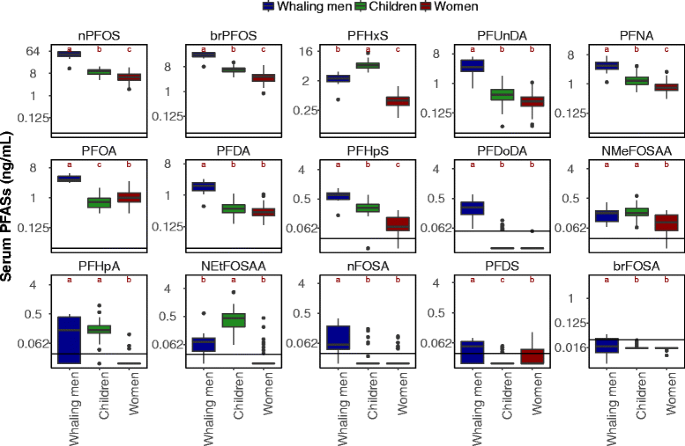
Can profiles of poly- and Perfluoroalkyl substances (PFASs) in human serum provide information on major exposure sources?
Humans are exposed to poly- and perfluoroalkyl substances (PFASs) from diverse sources and this has been associated with negative health impacts. Advances in analytical methods have enabled routine detection of more than 15 PFASs in human sera, allowing better profiling of PFAS exposures. The composition of PFASs in human sera reflects the complexity of exposure sources but source identification can be confounded by differences in toxicokinetics affecting uptake, distribution, and elimination. Common PFASs, such as perfluorooctanoic acid (PFOA), perfluorooctane sulfonic acid (PFOS) and their precursors are ubiquitous in multiple exposure sources. However, their composition varies among sources, which may impact associated adverse health effects.
Alcohol Quantity and Type on Risk of Recurrent Gout Attacks: An Internet-based Case-crossover Study
Although beer and liquor have been associated with risk of incident gout, wine has not. Yet anecdotally, wine is thought to trigger gout attacks. Further, how much alcohol intake is needed to increase the risk of gout attack is not known. We examined the quantity and type of alcohol consumed on risk of recurrent gout attacks.

Weight loss relapse associated with exposure to perfluorinated alkylate substances
Abstract Objective The purpose of this study was to test the hypothesis that perfluorinated alkylate substance (PFAS) exposures are associated with body weight increases in a dietary intervention study. Methods In the DioGenes trial, adults with obesity first lost at least 8% of their body weight and then completed at least 26 weeks on a specific diet. Concentrations of five major PFASs were assessed in plasma samples from study baseline. Results In 381 participants with complete data, plasma concentrations averaged 2.9 ng/mL and 1.0 ng/mL for perfluorooctanoic acid (PFOA) and perfluorohexanesulfonic acid (PFHxS), respectively. A doubling in plasma PFOA was associated with an increase in weight at 26 weeks by 1.50 kg (95% CI: 0.88–2.11), with an increase of 0.91 kg (95% CI: 0.54–1.27) for PFHxS, independent of diet groups and sex. Associations for other PFASs were in the same direction and significant, although not after adjustment for PFOA and PFHxS. Weight changes associated with elevated PFAS exposures were similar to or larger than average changes ascribed to the different diet groups. Conclusions Elevated plasma concentrations of PFOA and PFHxS were associated with increased weight gain that exceeded those related to the diets. Obesogenic PFASs may cause weight gain and thus contribute to the obesity pandemic.

Nikhil Krishnan on Twitter / X
yeah there used to be a company called Eureka that powered these types of observational, more lifestyle style studies (here's an example looking at coffee's effect on different biomarkers/conditions)https://t.co/urQRvTVTb7I think it can work if you have enough people in…— Nikhil Krishnan (@nikillinit) September 14, 2025
A Benchmark Dose Analysis for Maternal Pregnancy Urine‐Fluoride and IQ in Children
Abstract As a guide to establishing a safe exposure level for fluoride exposure in pregnancy, we applied benchmark dose modeling to data from two prospective birth cohort studies. We included mother–child pairs from the Early Life Exposures in Mexico to Environmental Toxicants (ELEMENT) cohort in Mexico and the Maternal‐Infant Research on Environmental Chemicals (MIREC) cohort in Canada. Maternal urinary fluoride concentrations (U‐F, in mg/L, creatinine‐adjusted) were measured in urine samples obtained during pregnancy. Children were assessed for intelligence quotient (IQ) at age 4 ( n = 211) and between six and 12 years ( n = 287) in the ELEMENT cohort, and three to four years ( n = 407) in the MIREC cohort. We calculated covariate‐adjusted regression coefficients and their standard errors to assess the association of maternal U‐F concentrations with children's IQ measures. Assuming a benchmark response of 1 IQ point, we derived benchmark concentrations (BMCs) and benchmark concentration levels (BMCLs). No deviation from linearity was detected in the dose–response relationships, but boys showed lower BMC values than girls. Using a linear slope for the joint cohort data, the BMC for maternal U‐F associated with a 1‐point decrease in IQ scores was 0.31 mg/L (BMCL, 0.19 mg/L) for the youngest boys and girls in the two cohorts, and 0.33 mg/L (BMCL, 0.20 mg/L) for the MIREC cohort and the older ELEMENT children. Thus, the joint data show a BMCL in terms of the adjusted U‐F concentrations in the pregnant women of approximately 0.2 mg/L. These results can be used to guide decisions on preventing excess fluoride exposure in pregnant women.

High organofluorine concentrations in municipal wastewater affect downstream drinking water supplies for millions of Americans
Wastewater receives per- and polyfluoroalkyl substances (PFAS) from diverse consumer and industrial sources, and discharges are known to be a concern for drinking water quality. The PFAS family includes thousands of potential chemical structures containing organofluorine moieties. Exposures to a few well-studied PFAS, mainly perfluoroalkyl acids (PFAA), have been associated with increased risk of many adverse health outcomes, prompting federal drinking water regulations for six compounds in 2024. Here, we find that the six regulated PFAS (mean = 7 to 8%) and 18 measured PFAA (mean = 11 to 21%) make up only a small fraction of the extractable organofluorine (EOF) in influent and effluent from eight large municipal wastewater treatment facilities. Most of the EOF in influent (75%) and effluent (62%) consists of mono- and polyfluorinated pharmaceuticals. The treatment technology and sizes of the treatment facilities in this study are similar to those serving 70% of the US population. Despite advanced treatment technologies, the maximum EOF removal efficiency among facilities in this work was <25%. Extrapolating our measurements to other large facilities across the United States results in a nationwide EOF discharge estimate of 1.0 to 2.8 million moles F y −1 . Using a national model that simulates connections between wastewater discharges and downstream drinking water intakes, we estimate that the sources of drinking water for up to 23 million Americans could be contaminated above regulatory thresholds by wastewater-derived PFAS alone. These results emphasize the importance of further curbing ongoing PFAS sources and additional evaluations of the fate and toxicity of fluorinated pharmaceuticals.