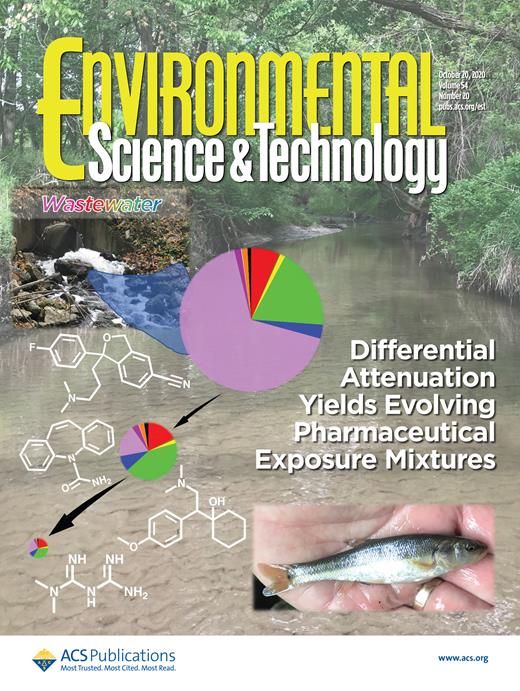
Abstract. Natural waters can contain diverse per- and polyfluoroalkyl substances (PFAS) with contrasting chemistries, presenting challenges for using a sin
Addressing Urgent Questions for PFAS in the 21st Century
Abstract. Despite decades of research on per- and polyfluoroalkyl substances (PFAS), fundamental obstacles remain to addressing worldwide contamination by

Stability of Per- and Polyfluoroalkyl Substances in Solvents Relevant to Environmental and Toxicological Analysis
Abstract. Per- and polyfluoroalkyl substances (PFASs) are widely used anthropogenic chemicals. For environmental and toxicological analysis, it is importan
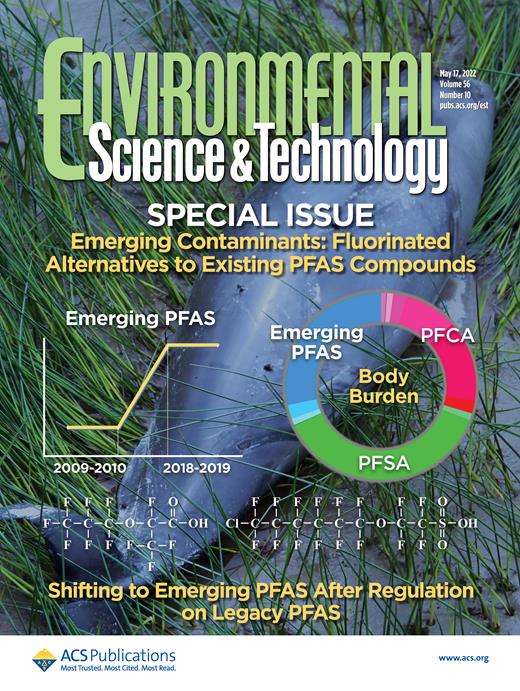
Poly- and Perfluoroalkyl Substances in Seawater and Plankton from the Northwestern Atlantic Margin
Abstract. The ocean is thought to be the terminal sink for poly- and perfluoroalkyl substances (PFAS) that have been produced and released in large quantit

Transport of Legacy Perfluoroalkyl Substances and the Replacement Compound HFPO-DA through the Atlantic Gateway to the Arctic Ocean—Is the Arctic a Sink or a Source?
Abstract. The spatial distribution of 29 per- and polyfluoroalkyl substances (PFASs) in seawater was investigated along a sampling transect from Europe to
Calibration of Perfluorinated Alkyl Acid Uptake Rates by a Tube Passive Sampler in Water
Abstract. Per- and polyfluoroalkyl substances (PFAS) are a group of 4000+ man-made compounds of great concern due to their environmental ubiquity and adver
Passive Sampler Derived Profiles and Mass Flows of Perfluorinated Alkyl Substances (PFASs) across the Fram Strait in the North Atlantic
Abstract. Per- and polyfluorinated alkyl substances (PFAS) are a family of pollutants of high concern due to their ubiquity and negative human health impac
Isolating the AFFF Signature in Coastal Watersheds Using Oxidizable PFAS Precursors and Unexplained Organofluorine
Abstract. Water supplies for millions of U.S. individuals exceed maximum contaminant levels for per- and polyfluoroalkyl substances (PFAS). Contemporary an

Furthering the Capabilities of Diffusive-Gradient Passive Samplers for Per- and Polyfluoroalkyl Substances
Abstract. Per- and polyfluoroalkyl substances (PFAS) are chemical pollutants of growing concern for many stakeholders. Due to their ubiquity, persistence i

Sociodemographic Factors Are Associated with the Abundance of PFAS Sources and Detection in U.S. Community Water Systems
Abstract. Drinking water contaminated by per- and polyfluoroalkyl substances (PFAS) is a widespread public health concern, and exposure–response relationsh

PFAS and Precursor Bioaccumulation in Freshwater Recreational Fish: Implications for Fish Advisories
Abstract. Per- and polyfluoroalkyl substances (PFAS) are a diverse class of fluorinated anthropogenic chemicals that include perfluoroalkyl acids (PFAA), w

Diffusive-Gradient Passive Samplers for Per- and Polyfluoroalkyl Substances.
Per- and polyfluoroalkyl substances (PFAS) are chemical pollutants of growing concern. Due to their ubiquity, persistence in the environment, and potential for toxicity at low environmental concentrations, it is necessary to have convenient and reliable methods to measure PFAS in natural waters. Passive sampling methods (in situ pre-concentration of PFAS) are investigated for monitoring purposes. The following dataset specifically deals with the calibration and application of a diffusive gradient in thin film (DGT) passive sampler, as well as comparisons to previously designed microporous polyethylene tube (MPT) passive samplers and water grab samples. Concentrations are measured with tandem liquid-chromatography mass spectrometry (LC-MS/MS) for all sampling methods. The dataset comprises: (i) a list of 25 PFAS compounds considered for the study at hand, (ii) method detection limits of considered PFAS compounds, (iii) calibration experiments of the DGT passive sampler, as well as results from modelling approaches to determine sampling rates, (iv) lab deployment of the developed DGT to challenge determined sampling rates, (v) field deployments of the developed DGT in an assortment of streams, ponds, and lakes in Minnesota and Maine, where concentrations of PFAS compounds are compared to concentrations measured by MPT, and water grab samples.
A Statistical Approach for Identifying Private Wells Susceptible to Perfluoroalkyl Substances (PFAS) Contamination
Abstract. Drinking water concentrations of per- and polyfluoroalkyl substances (PFAS) exceed provisional guidelines for millions of Americans. Data on priv

Field‐testing polyethylene passive samplers for the detection of neutral polyfluorinated alkyl substances in air and water
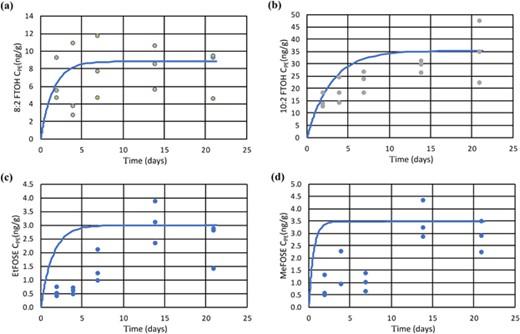
Abstract . Fluorotelomer alcohols (FTOHs), perfluorooctane‐sulfonamidoethanols (FOSEs), perfluorooctane‐sulfonamides (FOSAs), and other poly‐ and perfluori
Interlaboratory Comparison of Extractable Organofluorine Measurements in Groundwater and Eel ( <i>Anguilla rostrata</i> ): Recommendations for Methods Standardization
Abstract. Research on per- and polyfluoroalkyl substances (PFAS) frequently incorporates organofluorine measurements, particularly because they could suppo

Guideline levels for PFOA and PFOS in drinking water: the role of scientific uncertainty, risk assessment decisions, and social factors
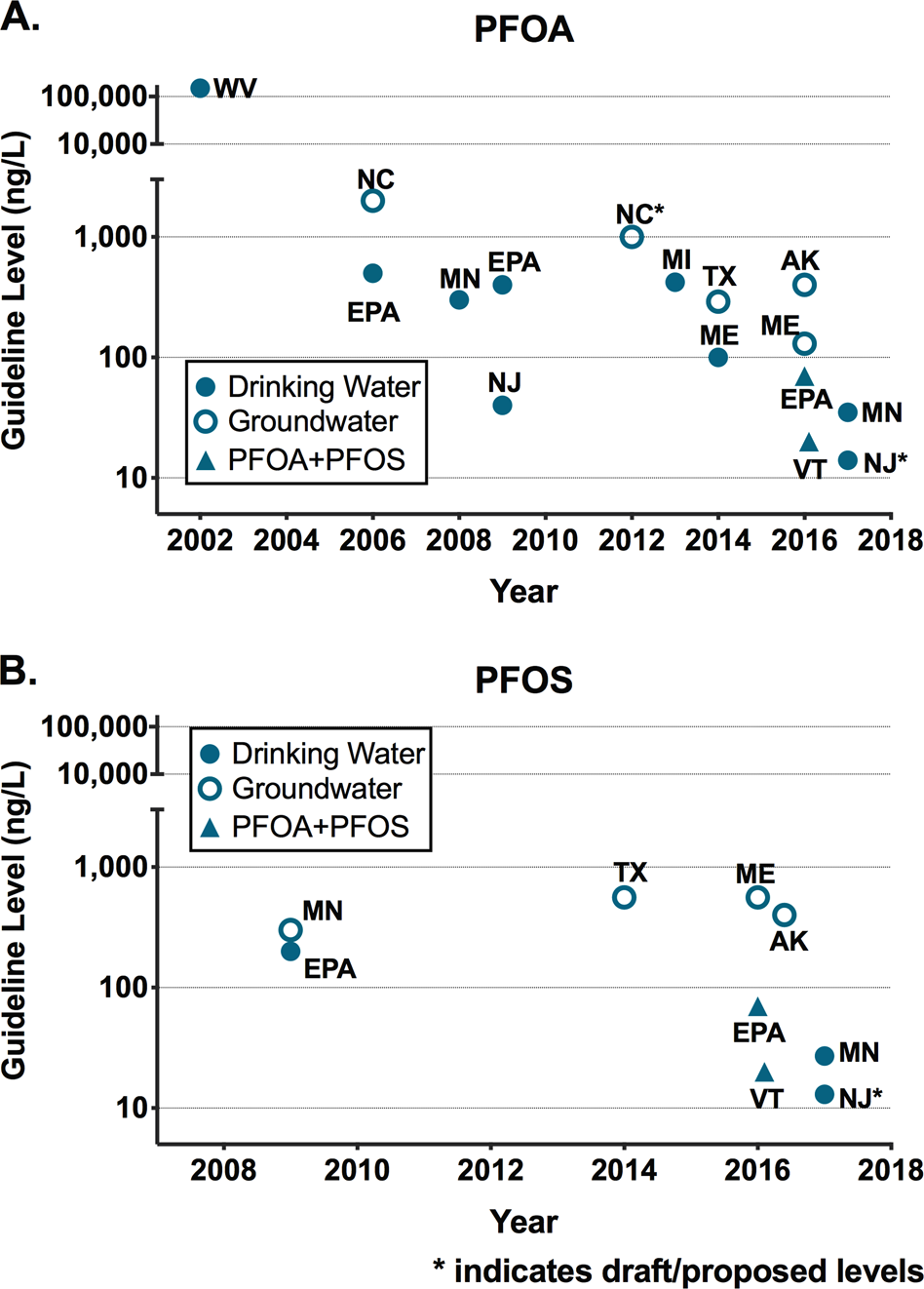
Communities across the U.S. are discovering drinking water contaminated by perfluoroalkyl and polyfluoroalkyl substances (PFAS) and determining appropriate actions. There are currently no federal PFAS drinking water standards despite widespread drinking water contamination, ubiquitous population-level exposure, and toxicological and epidemiological evidence of adverse health effects. Absent federal PFAS standards, multiple U.S. states have developed their own health-based water guideline levels to guide decisions about contaminated site cleanup and drinking water surveillance and treatment. We examined perfluorooctanoic acid (PFOA) and perfluorooctane sulfonate (PFOS) water guideline levels developed by the U.S. Environmental Protection Agency (EPA) and state agencies to protect people drinking the water, and summarized how and why these levels differ. We referenced documents and tables released in June 2018 by the Interstate Technology and Regulatory Council (ITRC) to identify states that have drinking water and groundwater guideline levels for PFOA and/or PFOS that differ from EPA’s health advisories (HAs). We also gathered assessment documents from state websites and contacted state environmental and health agencies to identify and confirm current guidelines. Seven states have developed their own water guideline levels for PFOA and/or PFOS ranging from 13 to 1000 ng/L, compared to EPA’s HA of 70 ng/L for both compounds individually or combined. We find that the development of PFAS guideline levels via exposure and hazard assessment decisions is influenced by multiple scientific, technical, and social factors, including managing scientific uncertainty, technical decisions and capacity, and social, political, and economic influences from involved stakeholders. Assessments by multiple states and academic scientists suggest that EPA’s HA is not sufficiently protective. The ability of states to develop their own guideline levels and standards provides diverse risk assessment approaches as models for other state and federal regulators, while a sufficiently protective, scientifically sound, and enforceable federal standard would provide more consistent protection.
Are Fluoropolymers Really of Low Concern for Human and Environmental Health and Separate from Other PFAS?
Abstract. Fluoropolymers are a group of polymers within the class of per- and polyfluoroalkyl substances (PFAS). The objective of this analysis is to evalu