
Abstract. Per- and polyfluoroalkyl substances (PFAS) are a diverse class of highly persistent anthropogenic chemicals that are detectable in the serum of m
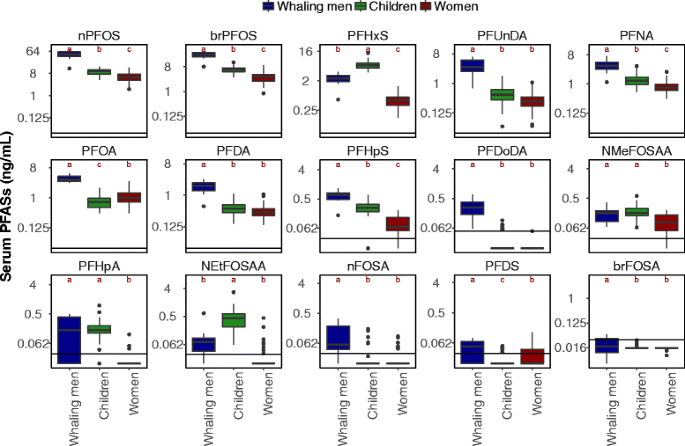
Can profiles of poly- and Perfluoroalkyl substances (PFASs) in human serum provide information on major exposure sources?
Humans are exposed to poly- and perfluoroalkyl substances (PFASs) from diverse sources and this has been associated with negative health impacts. Advances in analytical methods have enabled routine detection of more than 15 PFASs in human sera, allowing better profiling of PFAS exposures. The composition of PFASs in human sera reflects the complexity of exposure sources but source identification can be confounded by differences in toxicokinetics affecting uptake, distribution, and elimination. Common PFASs, such as perfluorooctanoic acid (PFOA), perfluorooctane sulfonic acid (PFOS) and their precursors are ubiquitous in multiple exposure sources. However, their composition varies among sources, which may impact associated adverse health effects.
Understanding Mechanisms of PFAS Absorption, Distribution, and Elimination Using a Physiologically Based Toxicokinetic Model
Abstract. Exposures to some per- and polyfluoroalkyl substances (PFAS), including perfluoroalkyl acids (PFAA), have been associated with diverse adverse he

Unbound Fractions of PFAS in Human and Rodent Tissues: Rat Liver a Suitable Proxy for Evaluating Emerging PFAS?
Abstract. Adverse health effects associated with exposures to perfluoroalkyl and polyfluoroalkyl substances (PFAS) are a concern for public health and are

Occurrence of Major Perfluorinated Alkylate Substances in Human Blood and Target Organs
Abstract. Human exposure to perfluorinated alkylate substances (PFASs) is usually assessed from the concentrations in serum or plasma, assuming one-compart

How Do We Measure Poly- and Perfluoroalkyl Substances (PFASs) at the Surface of Consumer Products?
Abstract. Exposures to poly- and perfluoroalkyl substances (PFASs) have been linked to metabolic disruption, immunotoxicity, and cancer in humans. PFASs ar

Stability of Per- and Polyfluoroalkyl Substances in Solvents Relevant to Environmental and Toxicological Analysis
Abstract. Per- and polyfluoroalkyl substances (PFASs) are widely used anthropogenic chemicals. For environmental and toxicological analysis, it is importan
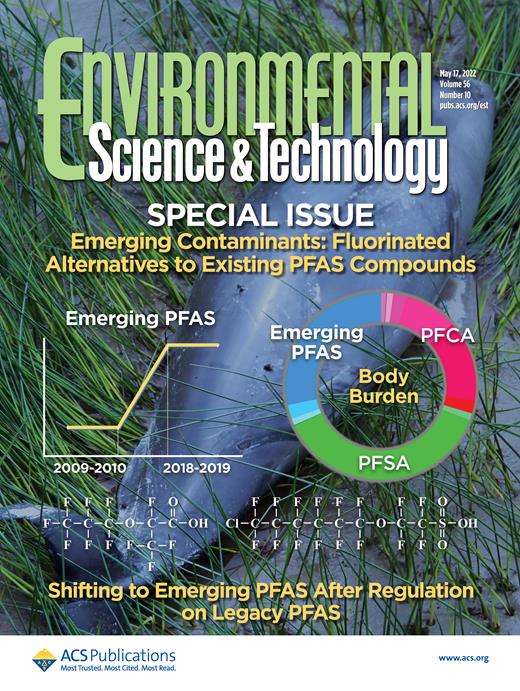
Addressing Urgent Questions for PFAS in the 21st Century
Abstract. Despite decades of research on per- and polyfluoroalkyl substances (PFAS), fundamental obstacles remain to addressing worldwide contamination by

Species-Specific Unbound Fraction Differences in Highly Bound PFAS: A Comparative Study across Human, Rat, and Mouse Plasma and Albumin
Per- and polyfluoroalkyl substances (PFAS) are a diverse group of fluorinated compounds which have yet to undergo comprehensive investigation regarding potential adverse health effects and bioaccumulative properties. With long half-lives and accumulative properties, PFAS have been linked to several toxic effects in both non-clinical species such as rat and mouse as well as human. Although biological impacts and specific protein binding of PFAS have been examined, there is no study focusing on the species-specific fraction unbound (fu) in plasma and related toxicokinetics. Herein, a presaturation equilibrium dialysis method was used to measure and validate the binding of 14 individual PFAS with carbon chains containing 4 to 12 perfluorinated carbon atoms and several functional head-groups to albumin and plasma of mouse (C57BL/6 and CD-1), rat, and human. Equivalence testing between each species-matrix combination showed positive correlation between rat and human when comparing fu in plasma and binding to albumin. Similar trends in binding were also observed for mouse plasma and albumin. Relatively high Spearman correlations for all combinations indicate high concordance of PFAS binding regardless of matrix. Physiochemical properties of PFAS such as molecular weight, chain length, and lipophilicity were found to have important roles in plasma protein binding of PFAS.

A review of the pathways of human exposure to poly- and perfluoroalkyl substances (PFASs) and present understanding of health effects
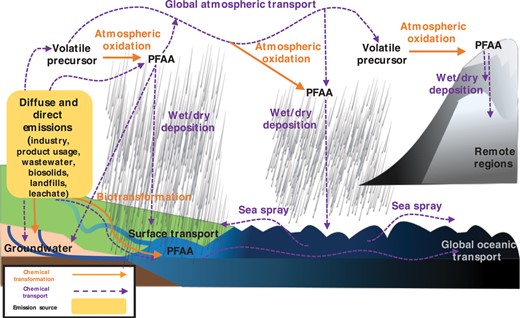
Here, we review present understanding of sources and trends in human exposure to poly- and perfluoroalkyl substances (PFASs) and epidemiologic evidence for impacts on cancer, immune function, metabolic outcomes, and neurodevelopment. More than 4000 PFASs have been manufactured by humans and hundreds have been detected in environmental samples. Direct exposures due to use in products can be quickly phased out by shifts in chemical production but exposures driven by PFAS accumulation in the ocean and marine food chains and contamination of groundwater persist over long timescales. Serum concentrations of legacy PFASs in humans are declining globally but total exposures to newer PFASs and precursor compounds have not been well characterized. Human exposures to legacy PFASs from seafood and drinking water are stable or increasing in many regions, suggesting observed declines reflect phase-outs in legacy PFAS use in consumer products. Many regions globally are continuing to discover PFAS contaminated sites from aqueous film forming foam (AFFF) use, particularly next to airports and military bases. Exposures from food packaging and indoor environments are uncertain due to a rapidly changing chemical landscape where legacy PFASs have been replaced by diverse precursors and custom molecules that are difficult to detect. Multiple studies find significant associations between PFAS exposure and adverse immune outcomes in children. Dyslipidemia is the strongest metabolic outcome associated with PFAS exposure. Evidence for cancer is limited to manufacturing locations with extremely high exposures and insufficient data are available to characterize impacts of PFAS exposures on neurodevelopment. Preliminary evidence suggests significant health effects associated with exposures to emerging PFASs. Lessons learned from legacy PFASs indicate that limited data should not be used as a justification to delay risk mitigation actions for replacement PFASs.
Liver and Intestinal Fatty Acid Binding Proteins Are Not Critical for Perfluorooctanesulfonate (PFOS) Tissue Distribution and Elimination in Mice
Abstract. Perfluorooctanesulfonate (PFOS) is a persistent environmental pollutant in the per- and polyfluoroalkyl substances (PFAS) class, known to accumul
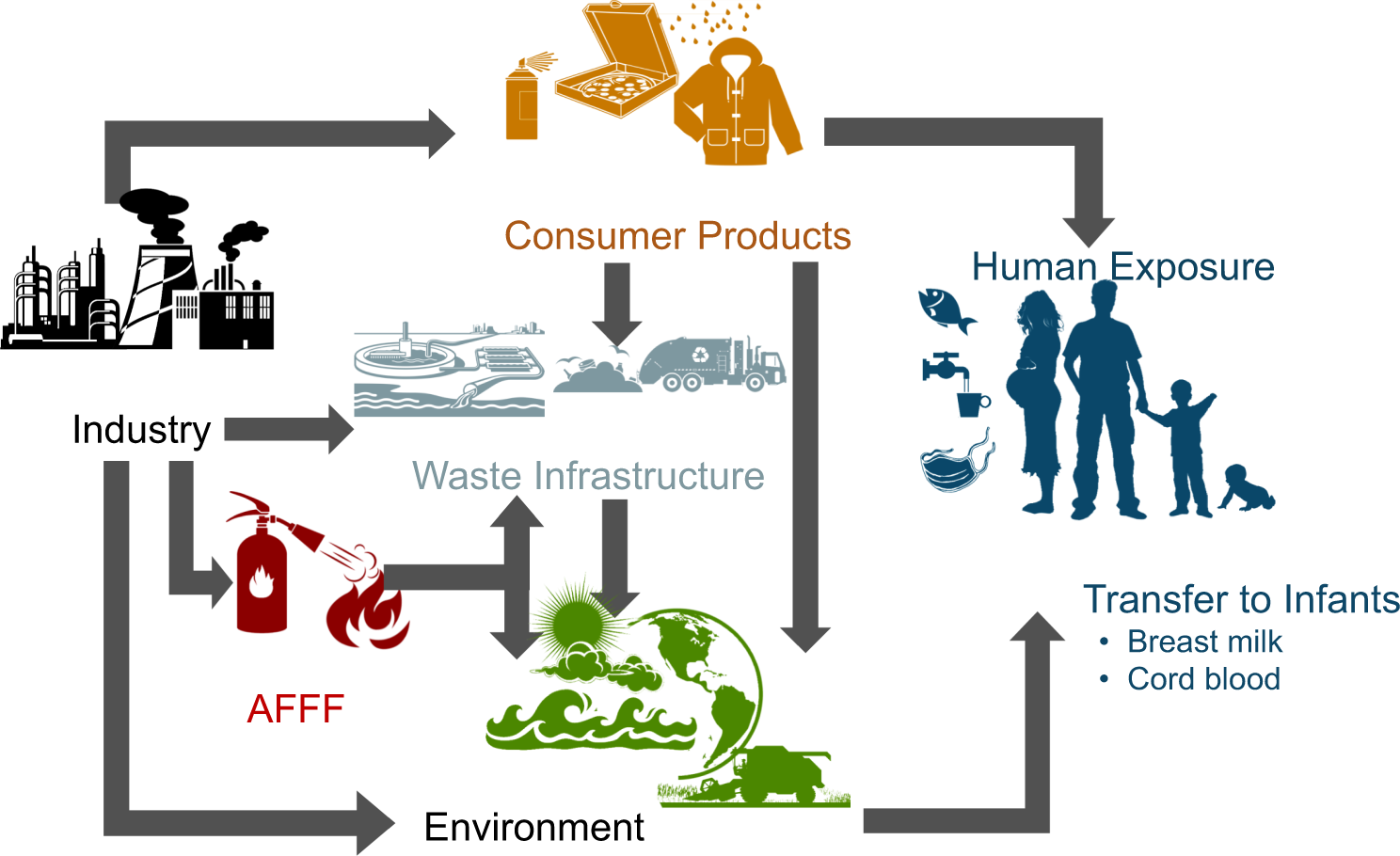
PFAS Exposure Pathways for Humans and Wildlife: A Synthesis of Current Knowledge and Key Gaps in Understanding
Abstract. We synthesize current understanding of the magnitudes and methods for assessing human and wildlife exposures to poly‐ and perfluoroalkyl substanc
Per- and Polyfluoroalkyl Substances in Human Liver and Serum
<p> This dataset contains measured concentrations of 54 targeted per- and polyfluoroalkyl substances (PFAS) in 211 human liver samples and 18 matched serum samples, determined using liquid chromatography–tandem high-resolution mass spectrometry (LC-HRMS/MS). The dataset is supplemented with anonymized demographic and physiological information for the matched samples. </p> <p>The dataset comprises:</p> <ul> <li>(i) a list of targeted PFAS compounds included in the LC-MS/MS analyses for both liver and serum,</li> <li>(ii) 12 raw data files generated from LC-MS/MS analyses,</li> <li>(iii) information on individual samples, including quality control samples such as blanks, continuous calibration verification samples, and matrix spikes,</li> <li>(iv) quality control criteria thresholds for extracted internal standard recoveries, ion abundance ratios, and retention time shifts, as well as the input parameters used to process the raw data files,</li> <li>(v) combined processed results of PFAS contamination levels, and</li> <li>(vi) anonymized demographic and physiological information.</li> </ul> <p> The combined processed results (v) were generated by processing the raw data files (ii) using a Jupyter-based data cleaning and QA/QC pipeline for targeted PFAS LC-MS/MS, as referenced in the Related Publications. Sample information (iii), quality control criteria thresholds, and processing input parameters (iv) were used as inputs to run this pipeline. </p> <p> Raw data files are tagged as <em>raw data</em>. File names indicate the date of sample preparation for each batch (YYYYMMDD), the matrix type (liver or serum), and the analytical method used (core or extended). </p> <p> The <strong>core method</strong> measures contamination levels of the following PFAS compounds: </p> <p> PFBA, PFPeA, PFHxA, PFHpA, PFOA, PFNA, PFDA, PFUdA, PFDoA, PFTrDA, PFTeDA, PFBS, PFPeS, L-PFHxS, Br-PFHxS, PFHpS, L-PFOS, Br-PFOS, PFNS, PFDS, FBSA, FPeSA, FHxSA, FHpSA, FOSA, 4:2 FTS, 6:2 FTS, 8:2 FTS, 10:2 FTS. </p> <p> The <strong>extended method</strong> measures contamination levels of: </p> <p> PFPrA, 3:3 FTCA, 5:3 FTCA, 7:3 FTCA, FOEA, PFPrS, MeFBSA, N-EtFBSA-M, L-N-MeFOSAA, Br-N-MeFOSAA, L-N-EtFOSAA, Br-N-EtFOSAA, MeFOSA, EtFOSA, HFPO-DA, DONA, 9ClPF3ONS, 11ClPF3OUdS, 3,6-OPFHpA, PF4OPeA, PF5OHxA, PFECHS, PFEESA, N-AP-FHxSA, N-TAmP-FHxSA. </p> <p> Sample information, quality control thresholds, and simulation parameters are tagged as <em>simulation input</em>. Files ending in <em>_liver.csv</em> or <em>_serum.csv</em> apply only to liver or serum samples, respectively; files without these suffixes apply to both matrix types. </p> <p> Combined processed results across all batches for liver and serum samples are tagged as <em>processed data</em>. Specimen demographic data are tagged accordingly. </p>
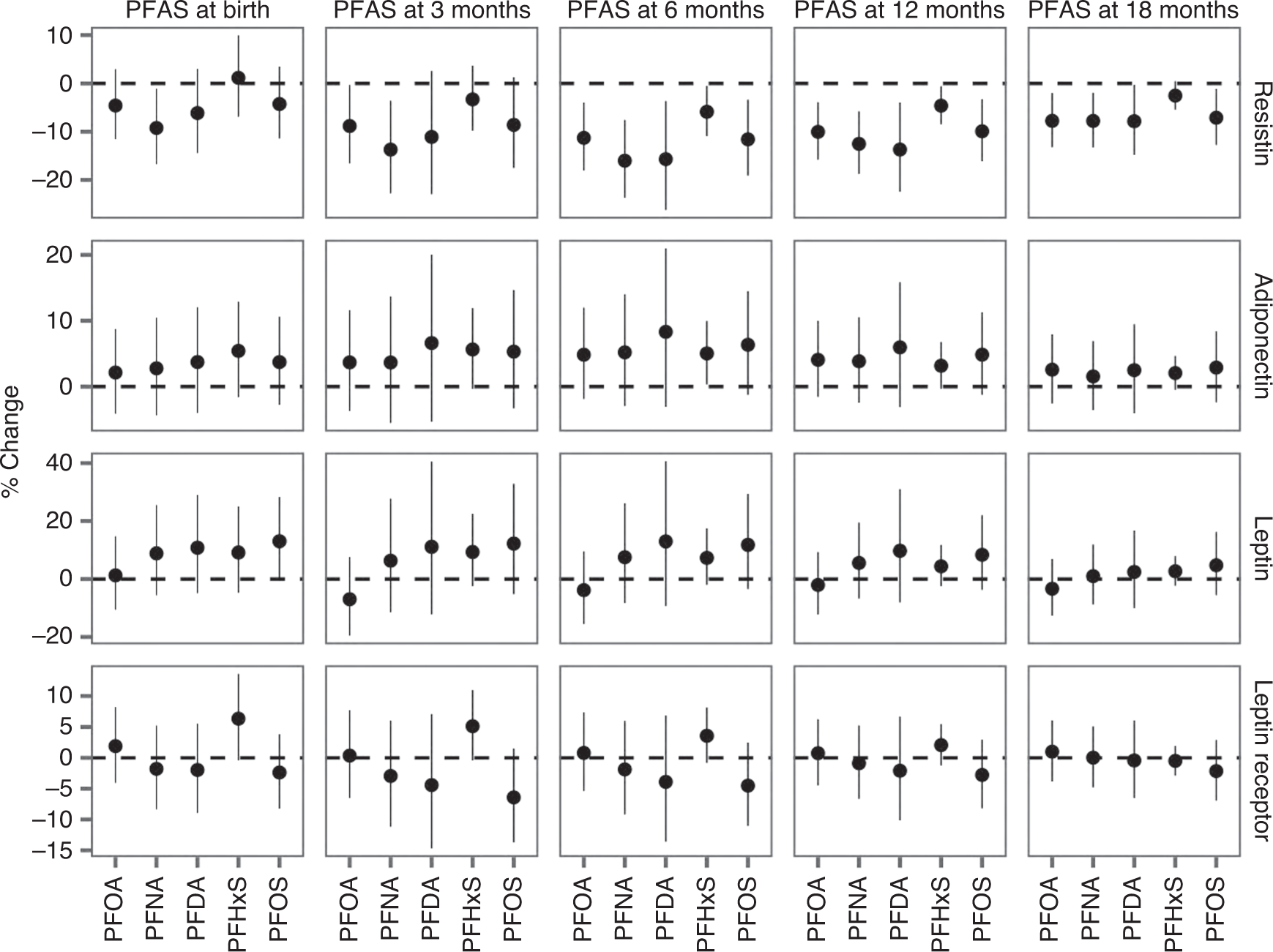
Estimated exposure to perfluoroalkyl substances during infancy and serum-adipokine concentrations in later childhood
Perfluoroalkyl substances (PFASs) are transferred through human milk and may cause elevated exposure during infancy. Given the lack of early postnatal blood samples, PFAS concentrations can be estimated to serve as predictors of subsequent metabolic toxicity.
Exposure to per-fluoroalkyl and polyfluoroalkyl substances leads to immunotoxicity: epidemiological and toxicological evidence
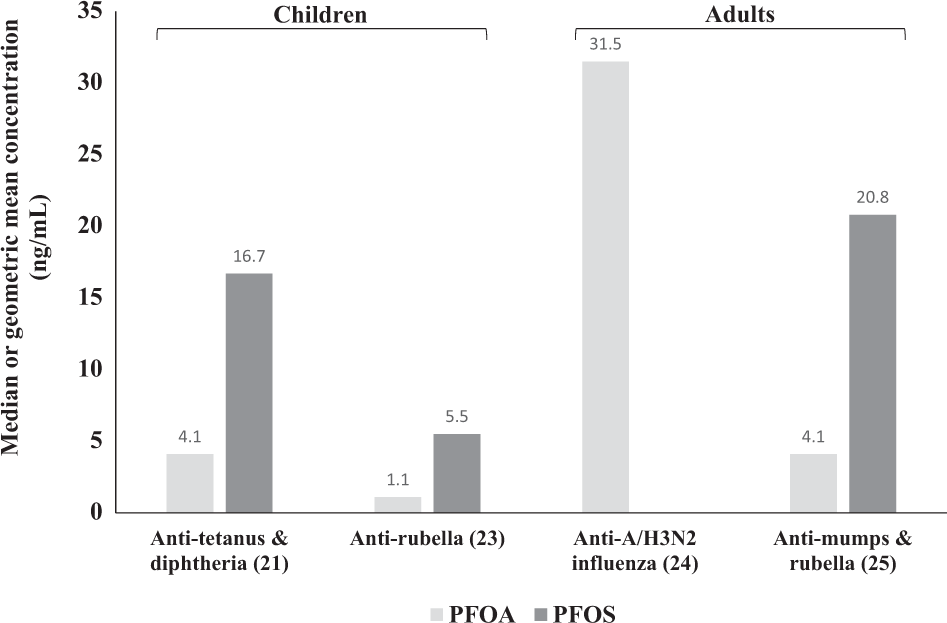
In this perspective, we evaluate key and emerging epidemiological and toxicological data concerning immunotoxicity of perfluorooctanoic acid (PFOA) and perfluorooctane sulfonate (PFOS) and seek to reconcile conflicting conclusions from two reviews published in 2016. We summarize ways that immunosuppression and immunoenhancement are defined and explain how specific outcomes are used to evaluate immunotoxicity in humans and experimental animals. We observe that different approaches to defining immunotoxicological outcomes, particularly those that do not produce clinical disease, may lead to different conclusions from epidemiological and toxicological studies. The fundamental point that we make is that aspects of epidemiological studies considered as limitations can be minimized when data from toxicological studies support epidemiological findings. Taken together, we find that results of epidemiological studies, supported by findings from toxicological studies, provide strong evidence that humans exposed to PFOA and PFOS are at risk for immunosuppression.
Perfluorinated Carbon Chain Length Drives Uptake of Diverse Per- and Polyfluoroalkyl Substances in Field-Deployed Passive Samplers
Abstract. Per- and polyfluoroalkyl substances (PFAS) are a group of compounds of high concern due to their ubiquity, persistence, and adverse health impact

Furthering the Capabilities of Diffusive-Gradient Passive Samplers for Per- and Polyfluoroalkyl Substances
Abstract. Per- and polyfluoroalkyl substances (PFAS) are chemical pollutants of growing concern for many stakeholders. Due to their ubiquity, persistence i