Abstract Per- and polyfluoroalkyl substances (PFAS) are present in drinking water consumed by ∼200 million United States (US) residents, but many are not detected by routine monitoring methods. Here, we aimed to better characterize the organofluorine mass budget in US drinking water samples from 19 sites in eastern Massachusetts. Extractable organofluorine (EOF) was detected at 16/17 sites served by community water systems (CWS) using conventional treatment techniques (coagulation, flocculation, clarification, and filtration). At these sites, a suite of 37 targeted PFAS accounted for 6–68% of the EOF and suspect screening identified fluorinated agrochemicals in almost all samples. High EOF concentrations in untreated source waters for two CWS that used granular activated carbon (GAC) and ion-exchange (IX) treatment, were reduced below detection in finished drinking water samples. Our EOF measurements were not selective for trifluoroacetic acid (TFA), so we measured concentrations in triplicate samples at one conventional treatment site and from the IX and GAC sites. At these sites, TFA concentrations were higher than those of EOF and were unaffected by the treatment type. Results of this pilot study show GAC and IX treatment removed virtually all organofluorine in drinking water other than TFA.
High organofluorine concentrations in municipal wastewater affect downstream drinking water supplies for millions of Americans
Wastewater receives per- and polyfluoroalkyl substances (PFAS) from diverse consumer and industrial sources, and discharges are known to be a concern for drinking water quality. The PFAS family includes thousands of potential chemical structures containing organofluorine moieties. Exposures to a few well-studied PFAS, mainly perfluoroalkyl acids (PFAA), have been associated with increased risk of many adverse health outcomes, prompting federal drinking water regulations for six compounds in 2024. Here, we find that the six regulated PFAS (mean = 7 to 8%) and 18 measured PFAA (mean = 11 to 21%) make up only a small fraction of the extractable organofluorine (EOF) in influent and effluent from eight large municipal wastewater treatment facilities. Most of the EOF in influent (75%) and effluent (62%) consists of mono- and polyfluorinated pharmaceuticals. The treatment technology and sizes of the treatment facilities in this study are similar to those serving 70% of the US population. Despite advanced treatment technologies, the maximum EOF removal efficiency among facilities in this work was <25%. Extrapolating our measurements to other large facilities across the United States results in a nationwide EOF discharge estimate of 1.0 to 2.8 million moles F y −1 . Using a national model that simulates connections between wastewater discharges and downstream drinking water intakes, we estimate that the sources of drinking water for up to 23 million Americans could be contaminated above regulatory thresholds by wastewater-derived PFAS alone. These results emphasize the importance of further curbing ongoing PFAS sources and additional evaluations of the fate and toxicity of fluorinated pharmaceuticals.

Isolating the AFFF Signature in Coastal Watersheds Using Oxidizable PFAS Precursors and Unexplained Organofluorine
Abstract. Water supplies for millions of U.S. individuals exceed maximum contaminant levels for per- and polyfluoroalkyl substances (PFAS). Contemporary an

Interlaboratory Comparison of Extractable Organofluorine Measurements in Groundwater and Eel ( <i>Anguilla rostrata</i> ): Recommendations for Methods Standardization
Abstract. Research on per- and polyfluoroalkyl substances (PFAS) frequently incorporates organofluorine measurements, particularly because they could suppo
Guideline levels for PFOA and PFOS in drinking water: the role of scientific uncertainty, risk assessment decisions, and social factors
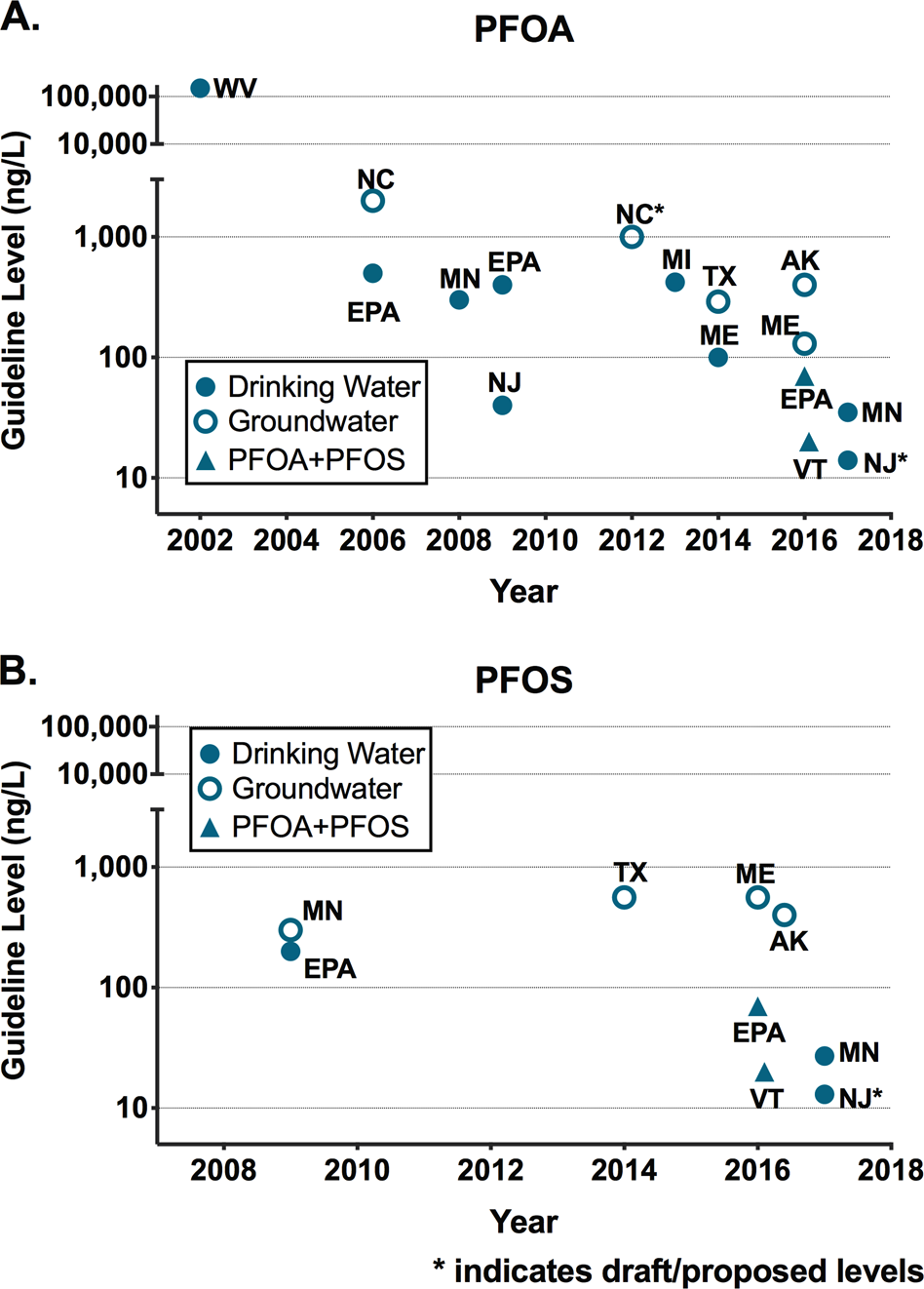
Communities across the U.S. are discovering drinking water contaminated by perfluoroalkyl and polyfluoroalkyl substances (PFAS) and determining appropriate actions. There are currently no federal PFAS drinking water standards despite widespread drinking water contamination, ubiquitous population-level exposure, and toxicological and epidemiological evidence of adverse health effects. Absent federal PFAS standards, multiple U.S. states have developed their own health-based water guideline levels to guide decisions about contaminated site cleanup and drinking water surveillance and treatment. We examined perfluorooctanoic acid (PFOA) and perfluorooctane sulfonate (PFOS) water guideline levels developed by the U.S. Environmental Protection Agency (EPA) and state agencies to protect people drinking the water, and summarized how and why these levels differ. We referenced documents and tables released in June 2018 by the Interstate Technology and Regulatory Council (ITRC) to identify states that have drinking water and groundwater guideline levels for PFOA and/or PFOS that differ from EPA’s health advisories (HAs). We also gathered assessment documents from state websites and contacted state environmental and health agencies to identify and confirm current guidelines. Seven states have developed their own water guideline levels for PFOA and/or PFOS ranging from 13 to 1000 ng/L, compared to EPA’s HA of 70 ng/L for both compounds individually or combined. We find that the development of PFAS guideline levels via exposure and hazard assessment decisions is influenced by multiple scientific, technical, and social factors, including managing scientific uncertainty, technical decisions and capacity, and social, political, and economic influences from involved stakeholders. Assessments by multiple states and academic scientists suggest that EPA’s HA is not sufficiently protective. The ability of states to develop their own guideline levels and standards provides diverse risk assessment approaches as models for other state and federal regulators, while a sufficiently protective, scientifically sound, and enforceable federal standard would provide more consistent protection.
PFAS Statewide Sampling Dataset: PFAS drinking water sampling data from U.S. community water systems
This repository contains a sample of U.S. community water systems (CWS) included in the PFAS statewide sampling dataset. In the first versions of this dataset, 18 states were included as part of Liddie et al., 2023. The statewide sampling dataset now includes compiled data from 28 U.S. statewide sampling campaigns of CWS for per- and polyfluoroalkyl substances (PFAS) in drinking water. The full dataset of samples spans the 2016-2024 period. All data were either publicly available or provided by state agencies upon request. The full dataset contains approximately 98,000 samples from 11,138 CWS in Alabama, Arizona, California, Colorado, Georgia, Illinois, Indiana, Iowa, Kentucky, Maine, Maryland, Massachusetts, Michigan, Minnesota, Missouri, New Hampshire, New Jersey, New York, Ohio, Pennsylvania, Rhode Island, South Carolina, Tennessee, Utah, Vermont, Virginia, Washington, and Wisconsin. Concentrations of 5-40 targeted PFAS were analyzed by multiple labs contracted by the states using comparable methods, including either US EPA Method 537, 537.1, or 533. We assigned a conservative, uniform detection limit at the 98th percentile of all reports detection limits (5 ng/L) for the 5 PFAS that were measured in all states consistently. This dataset also incorporates data from the US EPA’s Safe Drinking Water Information System, including the source water type, county served, zip code, system city, and total population served. The 8-digit hydrological unit code in which a CWS intake is estimated to reside is also provided using data from the United States Geological Survey. This was done by geocoding each CWS using geographical data provided by state agencies, reported zip codes (when available), or based on additional information provided by each system (e.g., system name, city, city served). At this time, the full datasets (either system-level or sample-level) are available by request (see contact information below). Note that additional fields, such continuous concentration data, reported detection limits, concentrations of other PFAS analytes, are also available. Proper citation of both this repository and the original associated paper (see recommended citations below) are required for use of these data. Due to the significant time investment required to curate these data, additional data requests beyond the scope of the details listed here are welcomed but should be agreed upon (e.g., in terms of co-authorship) with the primary point of contact. Please contact Jahred Liddie (jliddie@g.harvard.edu) for questions/suggestions, access to additional variables, or access to the full sampling datasets.
Tap Water Contributions to Plasma Concentrations of Poly- and Perfluoroalkyl Substances (PFAS) in a Nationwide Prospective Cohort of U.S. Women
Abstract Background: Between 2013 and 2015, concentrations of poly- and perfluoroalkyl substances (PFAS) in public drinking water supplies serving at least six million individuals exceeded the level set forth in the health advisory established by the U.S. Environmental Protection Agency. Other than data reported for contaminated sites, no systematic or prospective data exist on the relative source contribution (RSC) of drinking water to human PFAS exposures. Objectives: This study estimates the RSC of tap water to overall PFAS exposure among members of the general U.S. population. Methods: We measured concentrations of 15 PFAS in home tap water samples collected in 1989–1990 from 225 participants in a nationwide prospective cohort of U.S. women: the Nurses’ Health Study (NHS). We used a one-compartment toxicokinetic model to estimate plasma concentrations corresponding to tap water intake of PFAS. We compared modeled results with measured plasma PFAS concentrations among a subset of 110 NHS participants. Results: Tap water perfluorooctanoic acid (PFOA) and perfluorononanoic acid (PFNA) were statistically significant predictors of plasma concentrations among individuals who consumed ≥8 cups of tap water per day. Modeled median contributions of tap water to measured plasma concentrations were: PFOA 12% (95% probability interval 11%–14%), PFNA 13% (8.7%–21%), linear perfluorooctanesulfonic acid (nPFOS) 2.2% (2.0%–2.5%), branched perfluorooctanesulfonic acid (brPFOS) 3.0% (2.5%–3.2%), and perfluorohexanesulfonic acid (PFHxS) 34% (29%–39%). In five locations, comparisons of PFASs in community tap water collected in the period 2013–2016 with samples from 1989–1990 indicated increases in quantifiable PFAS and extractable organic fluorine (a proxy for unquantified PFAS). Conclusions: Our results for 1989–1990 compare well with the default RSC of 20% used in risk assessments for legacy PFAS by many agencies. Future evaluation of drinking water exposures should incorporate emerging PFAS. https://doi.org/10.1289/EHP4093
Sociodemographic Factors Are Associated with the Abundance of PFAS Sources and Detection in U.S. Community Water Systems
Abstract. Drinking water contaminated by per- and polyfluoroalkyl substances (PFAS) is a widespread public health concern, and exposure–response relationsh

Large declines in organofluorine contamination indicated by subarctic marine mammal tissues
The ocean is thought to be the terminal sink for per- and polyfluoroalkyl substances (PFAS), persistent organofluorine chemicals used widely in modern commerce for decades. Industry and stewardship programs phased out the most abundantly produced legacy PFAS in the early 2000s due to toxicity concerns. However, they have since been replaced by shorter carbon chain and “novel” chemistries, and past work hypothesized likely increases in these replacement PFAS that were not previously quantifiable. To address this gap, we measured bulk extractable organofluorine (EOF) in archived liver and muscle tissues from pelagic Subarctic pilot whales over the last several decades. Results show EOF concentrations peaked in 2011 and declined by over 60% by 2023. Among a broad suite of targeted and suspect PFAS measured using high-resolution mass spectrometry, only one was consistently increasing through 2023. Tissue concentrations of four main legacy PFAS that accounted for over 75% of EOF were all decreasing by 2023. The timing of peak concentrations depended primarily on whether they were transported to the subarctic by ocean circulation or atmospheric deposition, with the latter declining much faster. Oceanic transport and bioaccumulation modeling suggests that decadal-scale lags between production and food web bioaccumulation are primarily driven by marine transport processes. Large declines in tissue concentrations in this study reinforce the effectiveness of phase-outs in chemical production. However, other work showing stable or increasing EOF in human serum suggests many emerging PFAS with more neutral physicochemical properties may be preferentially accumulating in terrestrial and nearshore environments compared to legacy PFAS.

A review of the pathways of human exposure to poly- and perfluoroalkyl substances (PFASs) and present understanding of health effects
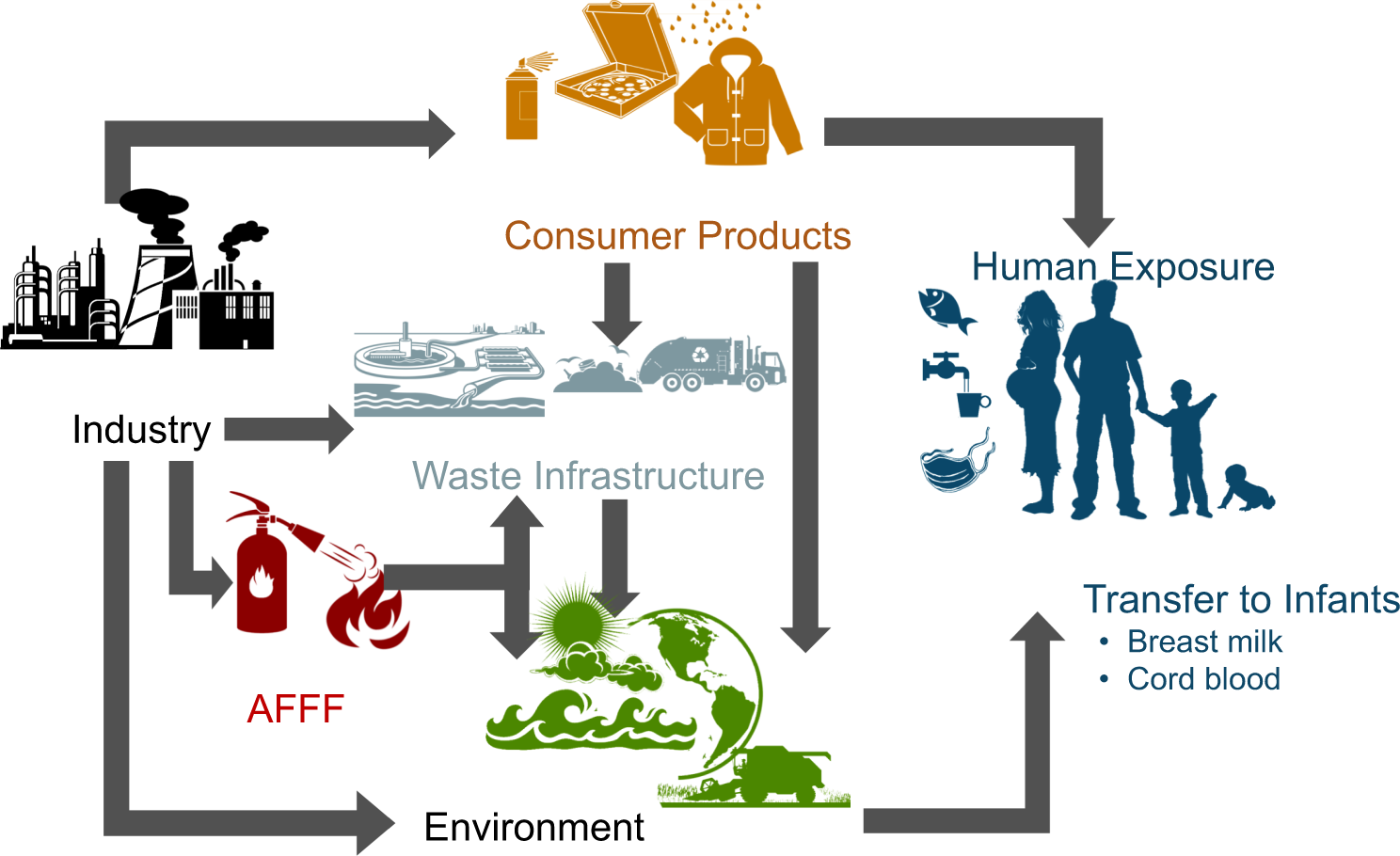
Here, we review present understanding of sources and trends in human exposure to poly- and perfluoroalkyl substances (PFASs) and epidemiologic evidence for impacts on cancer, immune function, metabolic outcomes, and neurodevelopment. More than 4000 PFASs have been manufactured by humans and hundreds have been detected in environmental samples. Direct exposures due to use in products can be quickly phased out by shifts in chemical production but exposures driven by PFAS accumulation in the ocean and marine food chains and contamination of groundwater persist over long timescales. Serum concentrations of legacy PFASs in humans are declining globally but total exposures to newer PFASs and precursor compounds have not been well characterized. Human exposures to legacy PFASs from seafood and drinking water are stable or increasing in many regions, suggesting observed declines reflect phase-outs in legacy PFAS use in consumer products. Many regions globally are continuing to discover PFAS contaminated sites from aqueous film forming foam (AFFF) use, particularly next to airports and military bases. Exposures from food packaging and indoor environments are uncertain due to a rapidly changing chemical landscape where legacy PFASs have been replaced by diverse precursors and custom molecules that are difficult to detect. Multiple studies find significant associations between PFAS exposure and adverse immune outcomes in children. Dyslipidemia is the strongest metabolic outcome associated with PFAS exposure. Evidence for cancer is limited to manufacturing locations with extremely high exposures and insufficient data are available to characterize impacts of PFAS exposures on neurodevelopment. Preliminary evidence suggests significant health effects associated with exposures to emerging PFASs. Lessons learned from legacy PFASs indicate that limited data should not be used as a justification to delay risk mitigation actions for replacement PFASs.
Characteristics of ‘early adopters’ of water treatment capacity needed to remove PFAS and other emerging contaminants in the United States
Larger CWS were 7–8 times more likely than smaller systems to adopt advanced treatment processes over 2004–2022. , Past work shows exposures to drinking water contaminants can differ among regions with varying sociodemographic composition, in part due to disparities in siting of pollution sources. Drinking water treatment by reverse osmosis, ion exchange, or activated carbon has been recommended by United States (US) regulatory agencies for community water systems (CWS) with elevated concentrations of emerging chemical toxicants such as per- and polyfluoroalkyl substances (PFAS). However, barriers faced by CWS in implementing such technologies are not well understood. Here we used a national scale ( n = 36 611 CWS) Kaplan–Meier “survival” analysis, as well as adjusted piecewise logistic regression models, to retrospectively examine characteristics of CWS that were “early adopters” of these treatment technologies between 2004–2022. Results showed the largest CWS serving >100 000 customers adopted the treatment technologies considered here 7–8 times faster than small and very small CWS serving <3300 customers from 2004–2022. Nationally and for a case study of CWS with elevated PFAS concentrations, the odds of CWS adopting the treatment technologies considered in this study between 2004–2022 were significantly lower (10–25%) for each 10% higher proportion of non-Hispanic Black residents. Results were generally consistent when focusing on CWS with prior MCL violations and in CWS across different US regions , system sizes, and source water types. The proportion of American Indian and Alaskan Native residents was also inversely associated with adoption of the treatment technologies for certain groups of CWS. These results suggest managerial and financial barriers to removal of high levels of emerging contaminants in drinking water may be most pronounced for some small CWS and those serving selected historically marginalized communities.
County-level associations between drinking water PFAS contamination and COVID-19 mortality in the United States
Epidemiologic and animal studies both support relationships between exposures to per- and polyfluoroalkyl substances (PFAS) and harmful effects on the immune system. Accordingly, PFAS have been identified as potential environmental risk factors for adverse COVID-19 outcomes.
Uptake of Per- and Polyfluoroalkyl Substances by Fish, Mussel, and Passive Samplers in Mobile Laboratory Exposures using Groundwater from a Contamination Plume at a Historical Fire Training Area, Cape Cod, Massachusetts - Chemical and Biological Data from August to September 2018
This data release presents chemical and biological results from an investigation of the uptake of per- and polyfluoroalkyl substances (PFAS) from groundwater contaminated by fire training activities on Cape Cod, Massachusetts. Exposure experiments were conducted from August 29 to September 21, 2018 using groundwater from a relatively uncontaminated reference site and a fire training area contaminated site. To assess the uptake characteristics of the PFAS mixtures present in the 2 groundwater sources, 21-day mobile laboratory exposure experiments were conducted using fathead minnows (Pimephales promelas), polar organic chemical integrative samplers, and polyethylene tube samplers. Freshwater mussel (Ligumia subrostrata) exposure experiments were conducted for 14 days, beginning on day 7 of the fish and passive sampler exposures. Groundwater samples were collected daily (with a few exceptions). Samples for male fish and passive samplers were collected on days 0, 4, 7, 14, and 21. Samples for female fish were collected on days 0, 7, 14, and 21. The 14 day mussel exposures began on day 7 of the fish and passive sampler exposures, and mussel samples were collected on days 7, 11, 14, and 21. Groundwater site locations and well characteristics are presented in Table 1. Information on the various PFAS and co-occurring contaminants measured in the different media are presented in Table 2. Quality assurance results for PFAS analysis of the different media are presented in Table 3. Results for PFAS in groundwater are presented in Table 4. Results for co-occurring contaminants in groundwater are presented in Table 5. Results for fish biomarkers are presented in Table 6. Results for PFAS in male and female fish tissue are presented in Table 7. Results for PFAS in mussel tissue are presented in Table 8. Results for PFAS in polar organic chemical integrative samplers are presented in Table 9. Results for PFAS in polyethylene tube samplers are presented in Table 10.
Field Validation of a Novel Passive Sampler for Dissolved PFAS in Surface Waters
Abstract Numerous per- and polyfluoroalkyl substances (PFAS) are of growing concern worldwide due to their ubiquitous presence, bioaccumulation and adverse effects. Surface waters in the United States have displayed elevated concentrations of PFAS, but so far discrete water sampling has been the commonly applied sampling approach. In the present study we field-tested a novel integrative passive sampler, a microporous polyethylene tube, and derived sampling rates (Rs) for nine PFAS in surface waters. Three sampling campaigns were conducted, deploying polyethylene tube passive samplers in the effluent of two wastewater treatment plant (WWTP) effluents and across Narragansett Bay (Rhode Island, USA) for 1 month each in 2017 and 2018. Passive samplers exhibited linear uptake of PFAS in the WWTP effluents over 16–29 days, with in situ Rs for nine PFAS ranging from 10 ml day−1 (perfluoropentanoic acid) to 29 ml day−1 (perfluorooctanesulfonic acid). Similar sampling rates of 19 ± 4.8 ml day−1 were observed in estuarine field deployments. Applying these Rs values in a different WWTP effluent predicted dissolved PFAS concentrations mostly within 50% of their observations in daily composite water samples, except for perfluorobutanoic acid (where predictions from passive samplers were 3 times greater than measured values), perfluorononanoic acid (1.9 times), perfluorodecanoic acid (1.7 times), and perfluoropentanesulfonic acid (0.1 times). These results highlight the potential use of passive samplers as measurement and assessment tools of PFAS in dynamic aquatic environments. Environ Toxicol Chem 2022;41:2375–2385. © 2022 SETAC Abstract A novel integrative passive sampler was field-tested and sampling rates derived for nine per- and polyfluoroalkyl substances in two wastewater treatment plant effluents and in Narragansett Bay surface waters.

A sensitive method for the detection of legacy and emerging per- and polyfluorinated alkyl substances (PFAS) in dairy milk
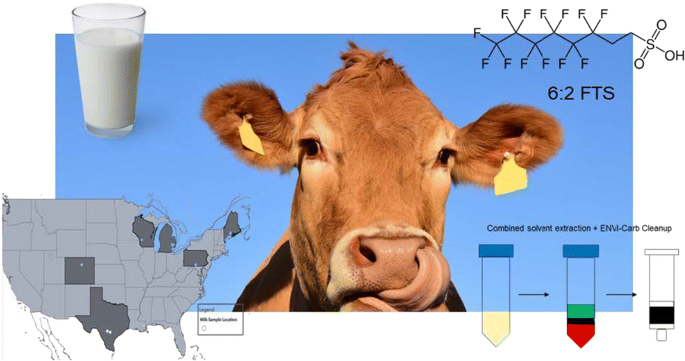
There is widespread contamination by per- and polyfluoroalkyl substances (PFAS) across the globe, with adverse effects on human and environmental health. For human exposure, drinking water and dietary exposure have been recognized as important PFAS exposure pathway for the general population. Several documented cases of dairy milk contamination by PFAS have raised concerns over this exposure pathway in general. A sensitive method for determination of 27 PFAS in milk was hence modified and applied on raw and processed milk samples from 13 farms across the United States (U.S.). A combination of acid and basic extraction method and ENVI-Carb clean-up achieved recoveries of targeted PFAS between 70 and 141%. The method detection limits (MDL) ranged from 0.8 to 22 ng/L (for 26 PFAS) and 144 ng/L for perfluorobutanoic acid (PFBA). The uniqueness of this method is considered in the targeted screening of a broad range of legacy PFAS, as well as perfluorinated sulfonamide species and fluorotelomer sulfonates. No legacy PFAS were detected in 13 milk samples from regions of concern given local use of biosolids or proximity to fire training areas. Overall, then, the uptake of perfluoroalkyl acids (PFAA) from dairy milk in the U.S. is considered low.
Bioconcentration of Per- and Polyfluoroalkyl Substances and Precursors in Fathead Minnow Tissues Environmentally Exposed to Aqueous Film-Forming Foam–Contaminated Waters
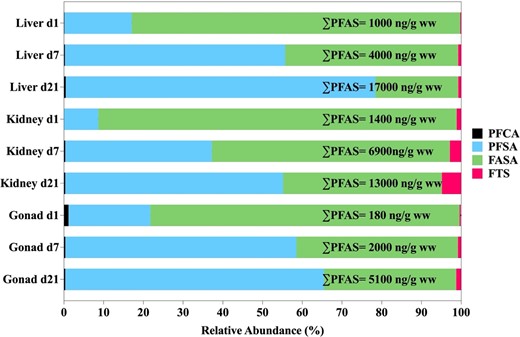
Abstract Exposure to per- and polyfluoroalkyl substances (PFAS) has been associated with toxicity in wildlife and negative health effects in humans. Decades of fire training activity at Joint Base Cape Cod (MA, USA) incorporated the use of aqueous film-forming foam (AFFF), which resulted in long-term PFAS contamination of sediments, groundwater, and hydrologically connected surface waters. To explore the bioconcentration potential of PFAS in complex environmental mixtures, a mobile laboratory was established to evaluate the bioconcentration of PFAS from AFFF-impacted groundwater by flow-through design. Fathead minnows (n = 24) were exposed to PFAS in groundwater over a 21-day period and tissue-specific PFAS burdens in liver, kidney, and gonad were derived at three different time points. The ∑PFAS concentrations in groundwater increased from approximately 10,000 ng/L at day 1 to 36,000 ng/L at day 21. The relative abundance of PFAS in liver, kidney, and gonad shifted temporally from majority perfluoroalkyl sulfonamides (FASAs) to perfluoroalkyl sulfonates (PFSAs). By day 21, mean ∑PFAS concentrations in tissues displayed a predominance in the order of liver > kidney > gonad. Generally, bioconcentration factors (BCFs) for FASAs, perfluoroalkyl carboxylates (PFCAs), and fluorotelomer sulfonates (FTS) increased with degree of fluorinated carbon chain length, but this was not evident for PFSAs. Perfluorooctane sulfonamide (FOSA) displayed the highest mean BCF (8700 L/kg) in day 21 kidney. Suspect screening results revealed the presence of several perfluoroalkyl sulfinate and FASA compounds present in groundwater and in liver for which pseudo-bioconcentration factors are also reported. The bioconcentration observed for precursor compounds and PFSA derivatives detected suggests alternative pathways for terminal PFAS exposure in aquatic wildlife and humans. Environ Toxicol Chem 2024;43:1795–1806. © 2024 The Author(s). Environmental Toxicology and Chemistry published by Wiley Periodicals LLC on behalf of SETAC. Flow-through dosing experiments utilizing aqueous film-forming foam (AFFF)–contaminated groundwater revealed positive linear correlations between fluorinated carbon chain length and logarithm-transformed bioconcentration factors (BCFs) for perfluoroalkyl sulfonamides identified in fathead minnow (Pimephales promelas) liver via target analysis and suspect screening using high-resolution mass spectrometry. FBSA = perfluorobutane sulfonamide; FHxSA = perfluorohexane sulfonamide; FOSA = perfluorooctane sulfonamide; FPeSA= perfluoropentane sulfonamide; FPrSA = perfluoropropane sulfonamide.
Delayed discovery, dissemination, and decisions on intervention in environmental health: a case study on immunotoxicity of perfluorinated alkylate substances
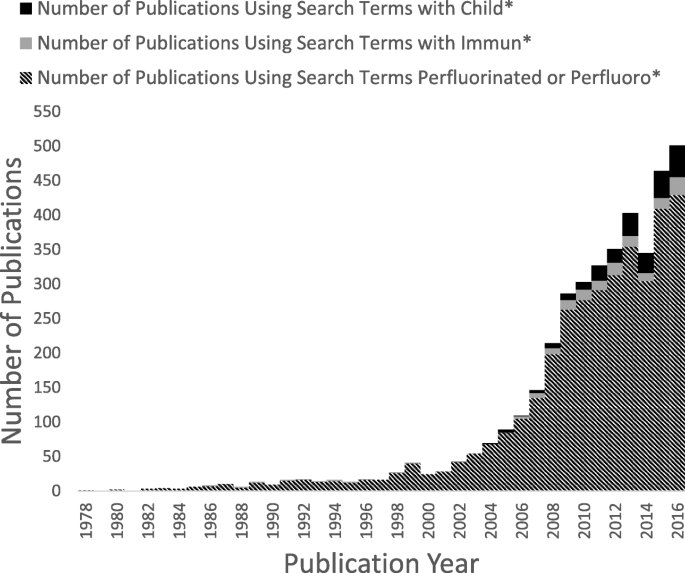
Identification and characterization of environmental hazards that impact human health must rely on the best possible science to inform and inspire appropriate public health intervention. The perfluorinated alkylate substances (PFASs) are persistent emerging pollutants that are now being recognized as important human health hazards. Although the PFASs have been produced for over 60 years, academic research on environmental health aspects has appeared only in the most recent 10 years or so. In the meantime, these persistent chemicals accumulated in the global environment. Some early studies e.g., on population exposures and toxicity, were not released to the public until after year 2000. Still, the first PFAS risk assessments ignored these reports and relied on scant journal publications. The first guidelines and legal limits for PFAS exposure, e.g., from drinking water, were proposed 10 years ago. They have decreased substantially since then, but remain higher than suggested by data on human adverse effects, especially on the immune system, that occur at background exposure levels. By now, the best-known PFASs are being phased out, and related PFASs are being introduced as substitutes. Given the substantial delays in discovery of PFAS toxicity, in dissemination of findings, and in regulatory decisions, PFAS substitutes and other persistent industrial chemicals should be subjected to prior scrutiny before widespread usage.