

The great rewiring: is social media really behind an epidemic of teenage mental illness?
The evidence is equivocal on whether screen time is to blame for rising levels of teen depression and anxiety — and rising hysteria could distract us from tackling the real causes.

The great rewiring: is social media really behind an epidemic of teenage mental illness?
The evidence is equivocal on whether screen time is to blame for rising levels of teen depression and anxiety — and rising hysteria could distract us from tackling the real causes.
Despair and anxiety among UK youth
For years, the age profile of mental ill health was hump-shaped, peaking when people were in their late 40s or early 50s. But in recent years the mental health of the young has deteriorated to such an extent that, today, anxiety and despair peak when UK citizens are in their mid-20s. In most international surveys, adolescents in England, Scotland, and Wales are among the least happy in the world. This column focuses on one of the many likely contributory factors to young people’s mental health – the rise in social media, underpinned by the smartphone.

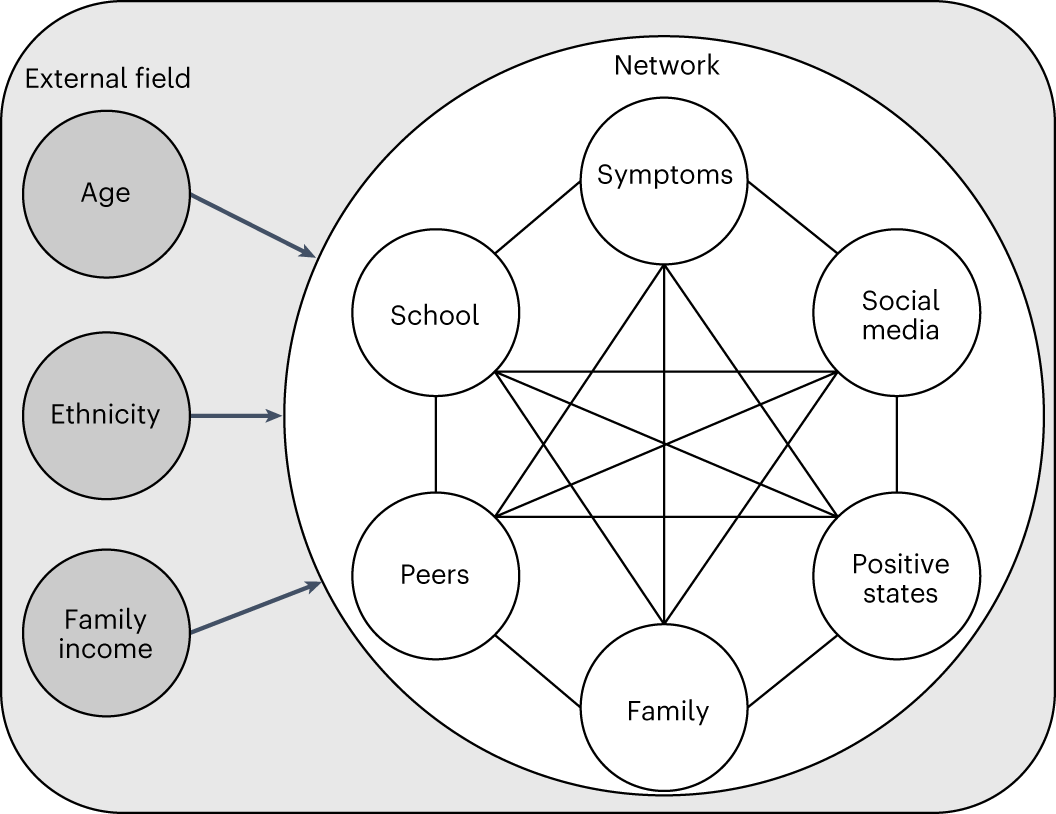
Time spent on social media among the least influential factors in adolescent mental health: preliminary results from a panel network analysis
There is growing concern about the role of social media use in the documented increase of adolescent mental health difficulties. However, the current evidence remains complex and inconclusive. While increasing research on this area of work has allowed for notable progress, the impact of social media use within the complex systems of adolescent mental health and development is yet to be examined. The current study addresses this conceptual and methodological oversight by applying a panel network analysis to explore the role of social media on key interacting systems of mental health, wellbeing and social life of 12,041 UK adolescents. Here we find that, across time, estimated time spent interacting with social media predicts concentration problems in female participants. However, of the factors included in the current network, social media use is one of the least influential factors of adolescent mental health, with others (for example, bullying, lack of family support and school work dissatisfaction) exhibiting stronger associations. Our findings provide an important exploratory first step in mapping out complex relationships between social media use and key developmental systems and highlight the need for social policy initiatives that focus on the home and school environment to foster resilience.
Do social media experiments prove a link with mental health: A methodological and meta-analytic review.
The Impact of Social Media on Adolescent Mental Health: A Meta-Analysis
Introduction: The proliferation of social media has raised significant concerns about its potential effects on the mental health of adolescents. This meta-analysis aims to provide a comprehensive assessment of the existing research on the relationship between social media use and various mental health outcomes in adolescents. Methods: A systematic search of electronic databases (PubMed, PsycINFO, Scopus, Web of Science) from January 2018 to June 2024 was conducted to identify relevant studies. Studies were included if they examined the association between social media use and mental health outcomes in adolescents (aged 10-19) and reported quantitative data. Effect sizes were calculated and pooled using random-effects models. Results: A total of 45 studies (N = 153,285 adolescents) met the inclusion criteria. The meta-analysis revealed small but significant associations between increased social media use and increased depressive symptoms (r = 0.12), anxiety (r = 0.10), and loneliness (r = 0.15). Furthermore, a significant negative association was found between social media use and self-esteem (r = -0.08). The analysis also identified several moderators of these effects, including gender, age, and type of social media platform. Conclusion: The findings of this meta-analysis suggest that increased social media use is associated with a range of negative mental health outcomes in adolescents. However, the effects are small, and the relationship is complex, with several moderating factors. Further research is needed to understand the mechanisms underlying these associations and to develop effective interventions to mitigate the potential negative effects of social media on adolescent mental health.
Why Protecting Kids from Social Media May Make Things Worse — Douglas Rushkoff
I’m supposed to give a talk next week about kids and social media and the need for more media literacy education, more regulation of platforms, and more substantive discussion about how to keep our kids from media-induced self-harm. The whole event is well-meaning, but is characterized by a sense of worry and protection. And for some reason, after years of making those sorts of arguments in my articles and documentaries, I have a strong impulse to pivot the other way.
How the Meta Settlement Silences Youth Activism
Since its integration into our digital world, social media has played a pivotal role in youth organizing and social mobilization. Yet, people’s access to these platforms is increasingly coming under
The Harms of Social Media Restrictions and Bans for Minors
How Age-Based Social Media Bans and Restrictions can Negatively impact Youth. The Benefits of Social Media for Youth - Education, Activism & Creating Community
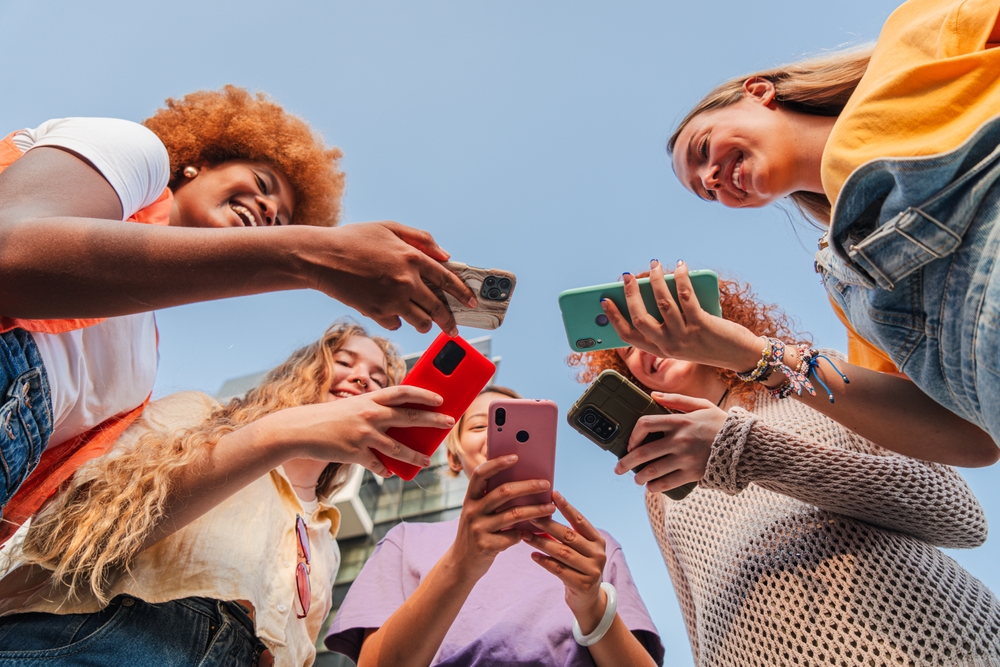
Teen Life on Social Media in 2022: Connection, Creativity and Drama
Majorities of teens credit social media with strengthening their friendships and providing support while also noting the emotionally charged side of these platforms.
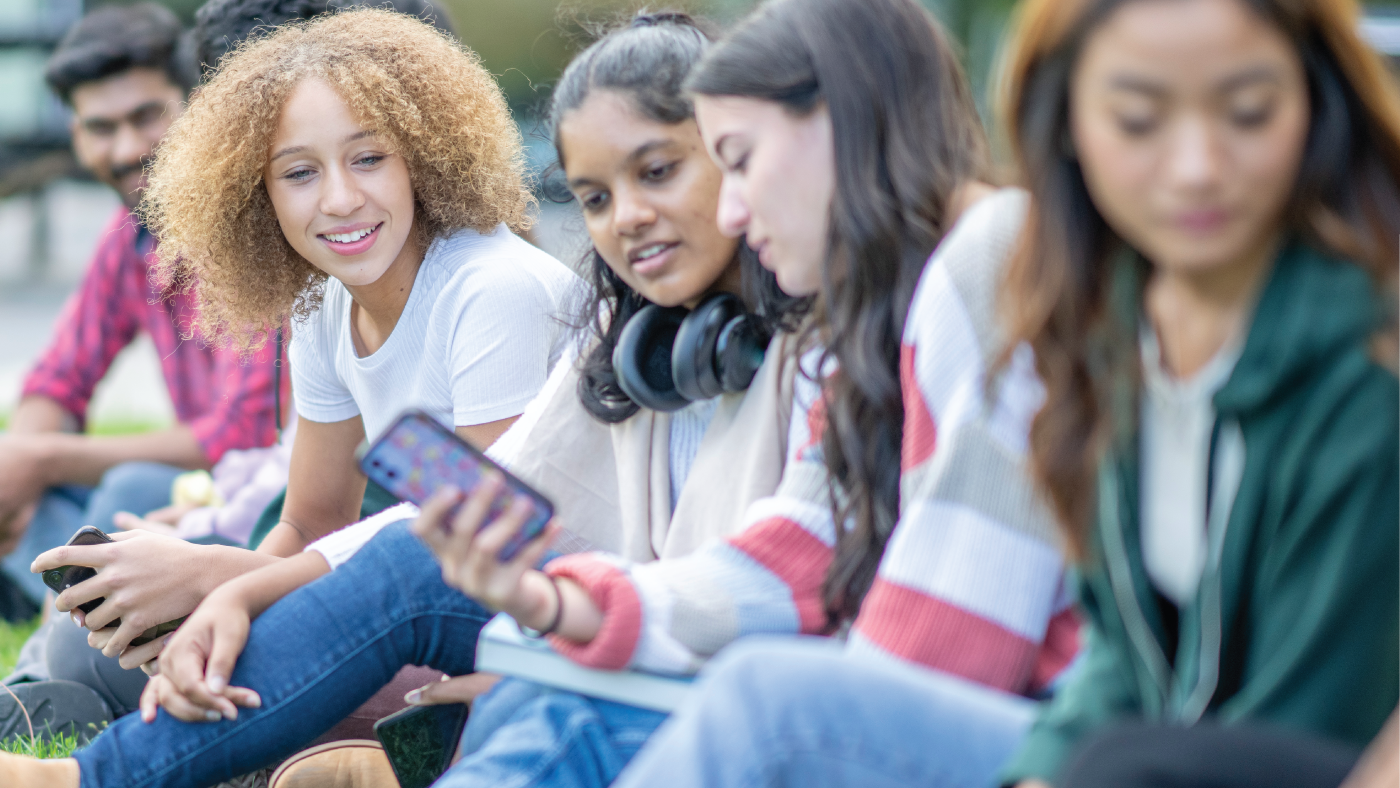
Ten Myths About the Effect of Social Media Use on Well-Being
This viewpoint reviews the empirical evidence regarding the association between social media use and well-being, including life satisfaction and affective well-being, and the association between social media use and ill-being, including loneliness, anxiety, and depressive symptomology. To frame this discussion, this viewpoint will present 10 widely believed myths about social media, each drawn from popular discourse on the topic. In rebuttal, this viewpoint will offer a warranted claim supported by the research. The goal is to bring popular beliefs into dialogue with state-of-the-art quantitative social scientific evidence. It is the intention of this viewpoint to provide a more accurate and nuanced claim to challenge each myth. This viewpoint will bring attention to the importance of using rigorous scientific evidence to inform public debates about social media use and well-being, especially among adolescents and young adults.

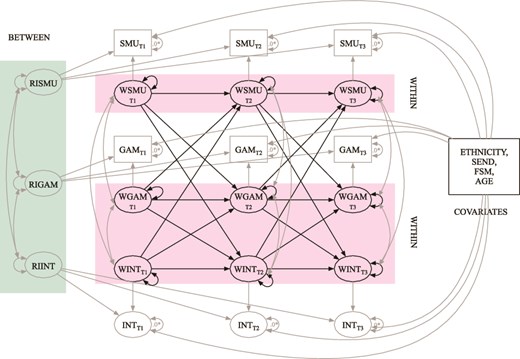
How do social media use, gaming frequency, and internalizing symptoms predict each other over time in early-to-middle adolescence?
Abstract Background The effects of adolescent digital technology use (e.g. social media, gaming) on their mental health are a major public health concern, but existing evidence is of mixed quality and findings have been inconclusive. Methods Separating within-person effects from between-person effects, a random-intercept cross-lagged panel model was applied to three annual waves of data (T1, T2, T3) on social media use, gaming, and internalizing symptoms among N = 25 629 adolescents (51% girls, average age 12 years, 7 months (SD = 3.58 months) at baseline) in Greater Manchester, England. Results Longitudinal relationships varied by gender, such that more frequent gaming at T2 predicted less time spent on social media use at T3 in girls (but not boys), and more frequent internalizing symptoms at T2 predicted reductions in gaming frequency at T3 in boys (but not girls). There was no evidence that time spent on social media or gaming frequency predicted later internalizing symptoms among girls or boys. Sensitivity analyses that distinguished active versus passive social media use replicated these findings. Conclusions The findings of this study do not support the widely held view that adolescent technology use is a major causal factor in their mental health difficulties.
Use of Consumer Chatbots for Emergent Adolescent Health Concerns
This cross-sectional study examines content policies and assesses behaviors of consumer chatbots in response to adolescent health crises.

Social media’s enduring effect on adolescent life satisfaction
In this study, we used large-scale representative panel data to disentangle the between-person and within-person relations linking adolescent social media use and well-being. We found that social media use is not, in and of itself, a strong predictor of life satisfaction across the adolescent population. Instead, social media effects are nuanced, small at best, reciprocal over time, gender specific, and contingent on analytic methods.

Social Media Use and Well-Being Across Adolescent Development
Importance Social media’s association with adolescent well-being remains debated. Heavy use has been associated with distress, while abstinence may cause missed connections. Objective To investigate 3-year longitudinal associations between after-school social media use and adolescent well-being using a large longitudinal cohort dataset modeled within a repeated cross-sectional framework. Design, Setting, and Participants This cohort study included Australian students in grades 4 through 12 (2019-2022). After-school social media use was self-reported and grouped as none, moderate, or highest. Well-being was assessed using 8 validated indicators (eg, happiness, life satisfaction, emotional regulation), dichotomized as high vs low. Well-being was assessed concurrently with social media use during the annual school-based survey in each year of data collection. Data analysis was conducted from June to July 2025. Exposures Self-reported after-school social media use between 3 pm and 6 pm (weekdays), classified into 3 categories: none (0 h/wk), moderate (>0 to <12.5 h/wk), and highest (≥12.5 h/wk). Main Outcomes and Measures The primary outcome was overall well-being, measured as the mean score across 8 validated domains (happiness, optimism, life satisfaction, worry, sadness, perseverance, emotional regulation, and cognitive engagement), dichotomized as high vs low (<3 on a scale of 1-5). Secondary outcomes were each individual well-being indicator, similarly dichotomized. Mixed-effects logistic models were used for analyses, stratified by sex and adjusted for demographic covariates. Results The analytic sample included 100 991 adolescents, contributing 173 533 observations (86 582 [49.9%] observations from female participants; mean [SD] age, 13.5 [2.2] years). A U-shaped association was observed between after-school social media use and well-being. Compared with moderate users, adolescents with the highest use had greater odds of low well-being (grades 7-9, girls: odds ratio [OR], 3.13 [95% CI, 2.88-3.39]; boys: OR, 2.25 [95% CI, 1.86-2.72]), while nonusers also had higher odds of low well-being in later adolescence (grades 10-12, girls: OR, 1.79 [95% CI, 1.41-2.27]; boys: OR, 3.00 [95% CI, 2.01-4.46]). These patterns were consistent across survey years and robust to sensitivity analyses. Conclusions and Relevance In this cohort study of students in grades 4 through 12, social media’s association with adolescent well-being was complex and nonlinear, varying by age and sex. While heavy use was associated with poorer well-being and abstinence sometimes coincided with less favorable outcomes, these findings are observational and should be interpreted cautiously.

Every time I make the (correct) statement that social media use is not universally bad for teenagers, or state that the best consensus is that it's beneficial-to-neutral for many and any negative effects are a small subset of teenagers, people demand citations (and then refuse to believe them, sigh)
