

A psychologically rich life: Beyond happiness and meaning.
Ten Steps Towards Happiness - Hintjens.com
Biography | Portfolio | GitHub Books | Videos | Slides | Stories | Wiki Contact
A compass for a Life-Affirming Economy
This is an invitation to stand at the intersection of Self, Culture, and Science and imagine what flourishing in a life-affirming economy…

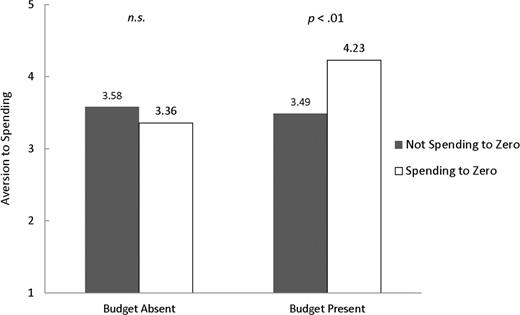
The Bottom Dollar Effect: The Influence of Spending to Zero on Pain of Payment and Satisfaction
Abstract. Spending that exhausts a budget is shown to decrease satisfaction with purchased products relative to spending when resources remain in the budge
Payment method and perceptions of ownership
How consumers pay influences how they feel about a transaction. In particular, paying by card has been argued to have an effect on the perception of cost, making it less salient and painful. We propose and show that payment method also influences how consumers feel about the acquired good. Specifically, we focus on effects of the payment method on psychological ownership, i.e., the perception of an object as “mine.” We propose that cash payment results in stronger psychological ownership because it influences the extent of perceived investment in an object. We provide evidence for the proposed effect from field and laboratory settings. Results of a longitudinal exit survey and an experiment show that cash payers report higher levels of immediate psychological ownership than card payers. However, this effect seems to depend on the meanings associated with a payment method. Asian students (who associate credit card payment with investment and debt) do not exhibit this effect. Moreover, the initial boost in psychological ownership seems to be comparably short-lived. While those paying in cash experience no further increase in psychological ownership over time, those paying by card do.

Cash versus Debit Card: The Role of Budget Control
Due to the financial crisis, an increasing number of households face financial problems. This may lead to an increasing need for monitoring spending and budgets. We demonstrate that both cash and the debit card are perceived as helpful in this respect. We show that, on average, consumers responsible for financial decision making within a household find cash and the debit card equally helpful for monitoring their household finances. Individuals differ in major respects, however. In particular, low earners and the liquidity‐constrained prefer cash as a budgeting tool. Finally, we present evidence that at an aggregated level, such preferences strongly affect consumer payment behavior. These findings suggest that the substitution of cash by cards may slow down because of the financial crisis.

Right on Time: How Cash Helps Families Move Through Life's Transitions - Economic Security Project
Executive Summary Over the past decade, more than 250 guaranteed income pilots, programs that provide people with regular cash with no restrictions on how they use it, have run across 40 states and the District of Columbia. That research has revealed many learnings, and this report focuses on one clear takeaway: cash has its largest…
The Case for Lowering Your Expectations
It may be the key to happiness and sustainable performance

Why older people are happier and what we can learn from them | Psyche Ideas
Around the world, happiness tends to peak later in life. It has more to do with balancing priorities than elderly wisdom

A Mega-Replication of the Effect of Cash Versus Card Payment on Pain of Paying: Magnitude, Behavioral Outcomes, and Moderators
Abstract We revisit the widely accepted finding that paying with cash is more painful than paying with card by conducting the first systematic mega-replication (including 13 large-scale preregistered replications; a total of 32,371 participants, 65 products, and 57 price points ranging from $1.09 to $400). The aggregate evidence reveals four insights: (1) leveraging a broad set of established paradigms, we replicate the finding that paying with cash is more psychologically painful than paying with card, even among today’s consumers who own multiple cards, digital wallets, and virtual currencies; (2) comparing two outcome variables—amount spent and willingness-to-pay (WTP), we find a more reliable and larger overall direct effect of payment method on amount spent than on WTP; (3) these direct effects of payment method on outcome variables are mediated by pain of paying; (4) the mode-of-payment effect on pain of paying (and thereby on outcome variables) is moderated by individual differences, particularly the relative frequency of using cash versus card. We outline actionable guidance and future directions for researchers and practitioners interested in examining mode-of-payment effects, and discuss the value of and suitable approaches for future theory-driven large-scale replications.

Tightwads and spendthrifts: An interdisciplinary review
Consumers rely on a “pain of paying” to help deter their spending. While this is beneficial for some consumers, others experience levels of pain that create problems. “Tightwads” experience too much pain when considering spending and therefore spend less than they would ideally like to spend. By contrast, “spendthrifts” experience too little pain and therefore spend more than they would ideally like to spend. Neither are happy with how they handle money. In the decade since the tightwad‐spendthrift construct was introduced, much has been learned about what it is and is not (e.g., frugality, greed), what contextual factors are likely to reduce its importance, how it plays a role within romantic relationships, and when it might first emerge in childhood. This paper reviews the wide range of interdisciplinary research relevant to the tightwad‐spendthrift construct and proposes several directions for new research.

Is cash perceived as more valuable than digital money? The mediating effect of psychological ownership and psychological distance
This research examines how the type of money (cash vs. digital) affects consumers’ perceived purchasing power (PPP) of the money and the mediating mechanisms of psychological ownership and psychological distance. Three lab experiments confirm that cash results in higher PPP than does digital money, and that both psychological ownership and psychological distance contribute to the effect of money type on PPP. Our findings provide theoretical implications for the psychological research on the type of money and its influence and practical implications for e-payment and online shopping behaviors.

The pain of payment: A review and research agenda
Abstract Pain of payment is the negative psychological affect consumers experience when they become cognizant that they have lost a certain amount of their financial resources (immediate pain) or when they become aware that they will or may lose a certain amount of their financial resources in the future (anticipated pain). Pain of payment plays a significant role in consumer decision making and has attracted substantial scholarly interest in recent years. In this article, we conduct a systematic literature review of the existing work on pain of payment. We advance theory in the field by proposing a new organizing framework that summarizes the antecedents, moderators, and consequences of pain of payment. Furthermore, we provide a formal definition of pain of payment that encompasses all facets of this construct. Subsequently, we identify knowledge gaps and outline research questions that could be explored to improve our understanding of this construct and advance consumer psychology.

The Red and the Black: Mental Accounting of Savings and Debt
In the standard economic account of consumer behavior the cost of a purchase takes the form of a reduction in future utility when expenditures that otherwise could have been made are forgone. The reality of consumer hedonics is different. When people make purchases, they often experience an immediate pain of paying, which can undermine the pleasure derived from consumption. The ticking of the taxi meter, for example, reduces one's pleasure from the ride. We propose a “double-entry” mental accounting theory that describes the nature of these reciprocal interactions between the pleasure of consumption and the pain of paying and draws out their implications for consumer behavior and hedonics. A central assumption of the model, which we call prospective accounting, is that consumption that has already been paid for can be enjoyed as if it were free and that the pain associated with payments made prior to consumption (but not after) is buffered by thoughts of the benefits that the payments will finance. Another important concept is coupling, which refers to the degree to which consumption calls to mind thoughts of payment, and vice versa. Some financing methods, such as credit cards, tend to weaken coupling, whereas others, such as cash payment, produce tight coupling. Our model makes a variety of predictions that are at variance with economic formulations. Contrary to the standard prediction that people will finance purchases to minimize the present value of payments, our model predicts strong debt aversion—that they should prefer to prepay for consumption or to get paid for work after it is performed. Such pay-before sequences confer hedonic benefits because consumption can be enjoyed without thinking about the need to pay for it in the future. Likewise, when paying beforehand, the pain of paying is mitigated by thoughts of future consumption benefits. Contrary to the economic prediction that consumers should prefer to pay, at the margin, for what they consume, our model predicts that consumers will find it less painful to pay for, and hence will prefer, flat-rate pricing schemes such as unlimited Internet access at a fixed monthly price, even if it involves paying more for the same usage. Other predictions concern spending patterns with cash, charge, or credit cards, and preferences for the earmarking of purchases. We test these predictions in a series of surveys and in a conjoint-like analysis that pitted our double-entry mental accounting model against a standard discounting formulation and another benchmark that did not incorporate hedonic interactions between consumption and payments. Our model provides a better fit of the data for 60% of the subjects; the discounting formulation provides a better fit for only 29% of the subjects (even when allowing for positive and negative discount rates). The pain of paying, we argue, plays an important role in consumer self-regulation, but is hedonically costly. From a hedonic perspective the ideal situation is one in which payments are tightly coupled to consumption (so that paying evokes thoughts about the benefits being financed) but consumption is decoupled from payments (so that consumption does not evoke thoughts about payment). From an efficiency perspective, however, it is important for consumers to be aware of what they are paying for consumption. This creates a tension between hedonic efficiency and what we call decision efficiency. Various institutional arrangements, such as financing of public parks through taxes or usage fees, play into this tradeoff. A producer developing a pricing structure for their product or service should be aware of these two conflicting objectives, and should try to devise a structure that reconciles them.

A Deceptively Simple Way to Find More Happiness at Work (Published 2019)
You don’t need to change everything about your job to see major benefits. A few changes here and there can be all you need.

Purchase Justifiability Drives Payment Choice: Consumers Pay with Card to Remember and Cash to Forget
AbstractAlthough consumers often have multiple payment methods at their fingertips, such as cash and credit/debit cards, prior research is silent on how consumers choose between them. We home in on a key element of purchase—purchase justifiability—that affects how consumers choose to pay. Analysis of 118,042 real-world purchases and six experiments reveals that when consumers are motivated to forget (vs. remember) a purchase because they see it as difficult (vs. easy) to justify, they have an increased preference to pay with cash (vs. card) because cards create a “paper/electronic trail” that aids memory retrieval. These payment preferences are strongest among consumers most likely to recall/track their card spending, and manifest only when card expenses are trackable. We reconcile our results with the classic effect of payment method on pain of paying and discuss implications for merchants and for financial institutions designing payment methods of the future.
