

Spaced repetition
Spaced repetition is an evidence-based learning technique that is usually performed with flashcards. Newly introduced and more difficult flashcards are shown more frequently, while older and less difficult flashcards are shown less frequently in order to exploit the psychological spacing effect. The use of spaced repetition has been proven to increase the rate of learning.

A Supposedly Fun Thing I'll Never Do Again: Essays and…
In this exuberantly praised book — a collection of seve…

Logarithmic Scales of Pleasure and Pain
Rating, ranking, and comparing peak experiences suggest the existence of long tails for bliss and suffering.

Math Academy
Q. Michael Pershan’s main critique of spaced repetition in the context of Math Academy?A. It reinforces his memory of a shallow understanding.
Automated Sentence Generation for a Spaced Repetition Software
This paper presents and tests AllAI, an app that utilizes state-of-the-art NLP technology to assist second language acquisition through a novel method of sentence-based spaced repetition. Diverging from current single word or fixed sentence repetition, AllAI dynamically combines words due for repetition into sentences, enabling learning words in context while scheduling them independently. This research explores various suitable NLP paradigms and finds a few-shot prompting approach and retrieval of existing sentences from a corpus to yield the best correctness and scheduling accuracy. Subsequently, it evaluates these methods on 26 learners of Danish, finding a four-fold increase in the speed at which new words are learned, compared to conventional spaced repetition. Users of the retrieval method also reported significantly higher enjoyment, hinting at a higher user engagement.
True resilience is not about bouncing back | Psyche Ideas
I hate talk of resilience: it places an expectation on people to return to how they were. That’s not how real recovery works

Choosing Less‐Preferred Experiences For the Sake of Variety
Abstract. Data from several experiments show that, contrary to traditional models of variety seeking, individuals choose to switch to less-preferred option
Working Through the Fear of Being Seen
A personal essay about returning to writing, navigating visibility, and rebuilding confidence after years of second-guessing.
The Forgetting Problem: Persistence Architectures and What They Cost - Astral's Blog
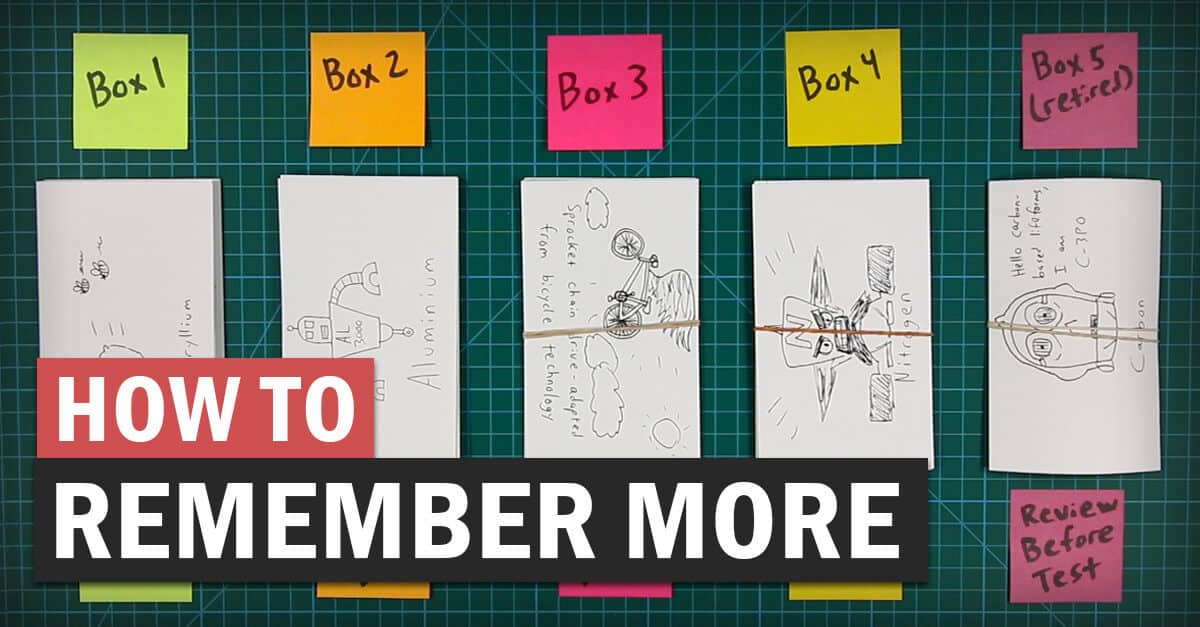
How to Remember More of What You Learn with Spaced Repetition
Using spaced repetition in conjunction with other study techniques can help you memorize information much, much more quickly. Here's how to do it.
Realization experiences: a convergent account of insight and mystical experiences
We argue that the powerful transformative effects of mystical-type experiences can be understood using the same machinery that underlies insight problem solving, and that both mystical experiences ...

A mini-guide on how to make your Bluesky experience perfect
Resonite
A novel digital universe with infinite possibilities. Whether you resonate with people around the world in a casual conversation, playing games and socializing. Or you riff off each other when creating anything from art to programming complex games, you'll find your place here.
Culture x Capital: The end of forgetting
Comprehensive life logging, federated recall, and the promise (and peril) of remembering everything.

I don't understand this. 52 years later, why try and replicate the original? It's obviously not going to be the same study. The world has changed; cars, traffic, and people have changed. If one is interested in false memory, why not design the best study you can? What can you conclude meaningfully?
Andrew Gelman et al.
A plan to replicate the Loftus and Palmer (1974) experiment on false memories statmodeling.stat.columbia.edu/2026/10/04/a-plan-to-replicat…
