

Ten more unintuitive things about impact philanthropy fundraising
some more lessons I’ve learned, for the $free.99

Fundraising Software For Nonprofits | Givebutter
Not another fundraising tool. All of them. Givebutter brings together everything you need for smoother fundraising, marketing, and donor management under one roof.

Giving Altruism a Bad Name
Effective Altruism’s metrics-driven model of philanthropy is elitist, condescending and — most damning of all — extremely ineffective.
Give Lively - A Free Fundraising Platform For Nonprofits
We built and support a powerful and practical fundraising platform that is free for nonprofits and intuitively easy to use for donors. Sign up today for Fundraising Pages, Text-to-Donate, Peer-to-Peer, Event Ticketing, and more!
Are donations effective for open source projects?
The other day I came across a new initiative for funding open source development called the Bitcoin Grant. While interesting at first sight, I was wondering: How is this better than the traditional donation button most open source projects have? The Bitcoin Grant then seems to limit who can donate and how you can use those donations (you can’t pay rent with bitcoins just yet).

Reasonable
A straightforward funding mechanism that rewards innovators and risk-takers while remaining sensitive to the social impact of new…

Philanthropy 2.0: What the Evolution of For-Profit Investment Tells Us About the Future of Giving
Gaps in philanthropic funding for era-defining science and discovery demand a new approach. In this piece, we look at how learning from venture capital is a game changer for catalytic philanthropy.

Philanthropy 2.0: What the Evolution of For-Profit Investment Tells Us About the Future of Giving
Gaps in philanthropic funding for era-defining science and discovery demand a new approach. In this piece, we look at how learning from venture capital is a game changer for catalytic philanthropy.
The Smart Family Fund provides angel philanthropy funding to early-stage nonprofit organizations with the potential for positive, scalable impact that have not yet built the evidence base or… | Shawnta Jackson, MPH | 36 comments
The Smart Family Fund provides angel philanthropy funding to early-stage nonprofit organizations with the potential for positive, scalable impact that have not yet built the evidence base or sustainability model needed for larger growth funding. Eligible applicants must be U.S.-based 501(c)(3) organizations in good standing with the IRS that can clearly explain how they will measure effectiveness, quantify impact, and demonstrate how their approach is distinct from other organizations in the field. Applications are submitted through the “Send Us a Pitch” portal and require organizational information and a one-page elevator pitch aligned with the fund’s mission. Funding amounts are not publicly listed. Applications are accepted on a rolling basis. Learn more at https://lnkd.in/eYNhqsVB | 36 comments on LinkedIn

Can One Donation a Day Keep Depression Away? Three Randomized Controlled Trials of an Online Micro-Charitable Giving Intervention
Prosocial interventions grounded in social interactions have shown limited effectiveness in alleviating depressive symptoms, possibly because of the discomfort and unease that depressed individuals experience during such interactions. We developed and examined an innovative prosocial intervention—an online micro-charitable giving intervention, in which individuals voluntarily donated at least one Chinese cent (¥0.01, or about $0.0014) daily. We conducted three preregistered, 2-month randomized controlled trials with depressed individuals (Sample 1: N = 125, Sample 2: N = 296, Sample 3: N = 462). Results showed that, compared with the waitlist group, the intervention group exhibited significantly greater improvements in both depressive symptoms (Cohen’s d s = −0.19 to −0.46) and emotional positivity (Cohen’s d s = 0.22 to 0.49), and that emotional positivity mediated the intervention’s effect on the reduction of depressive symptoms. Exploratory analysis found a slightly larger intervention effect for generous donors than for minimal donors. This low-cost, easily accessible prosocial intervention holds potential for the prevention of depression. Statement of Relevance Can donating one cent (specifically one Chinese cent, or about $0.0014) alleviate depressive symptoms? We have developed a practical and effective intervention—donating at least one cent daily on an online charity platform—and have discovered that this intervention effectively mitigates depressive symptoms in depressed individuals. Despite the nominal purchasing power of one cent in contemporary society, this act of giving has been shown to significantly enhance mental health. Our findings could be relevant to everyone in society; charitable donations promote societal harmony and, in addition, offer a cost-effective way to alleviate depressive symptoms. As the intervention instruction asserts, “Charity encompasses love, regardless of its size, as even one cent holds value.”

Giving What We Can, 80,000 Hours, and Meta-Charity - Less Wrong
Disclaimer: I’m somewhat nervous about posting this, for fear of down-voting on my first LW post, given that this post explicitly talks in a positive light about organisations that I have helped to set up. But I think that the topic is of interest to LW-ers, and I’m hoping to start a rational discussion. So here it goes…
EA is worse than traditional philanthropy in the way it excludes we the poor.
Effective altruism is worse than traditional philanthropy in the way it excludes the extreme poor in the global south. By Anthony Kalulu @KaluluAnthony | December 3, 2022: —- I have spent the vast portion of my life in ultra poverty. My region Busoga, is also Uganda’s most impoverished, yet Uganda itself is among the poorest countries … Continue reading ""

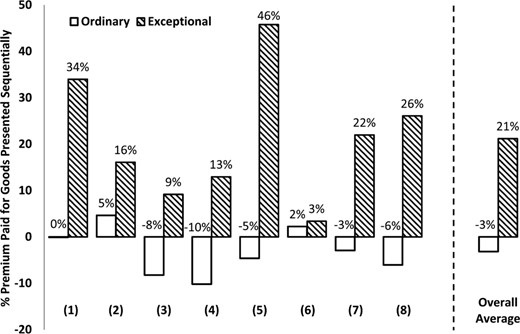
The Exception Is the Rule: Underestimating and Overspending on Exceptional Expenses
Abstract Purchases fall along a continuum from ordinary (common or frequent) to exceptional (unusual or infrequent), with many of the largest expenses (e.g., electronics, celebrations) being the most exceptional. Across seven studies, we show that, while people are fairly adept at budgeting and predicting how much they will spend on ordinary items, they both underestimate their spending on exceptional purchases overall and overspend on each individual purchase. Based on the principles of mental accounting and choice bracketing, we show that this discrepancy arises in part because consumers categorize exceptional expenses too narrowly, construing each as a unique occurrence and consequently overspending across a series of discretely exceptional expenses. We conclude by proposing an intervention that diminishes this tendency by helping consumers consider their spending on exceptional items as part of a larger set of purchases.
Funding / contribution structures

Alternative org, funding, finance, contribution structures towards... improving society somewhat
novel funding mechanisms

funding models that doesn't depend on VC. funding models that keep things accessible and open but yet provide enough incentive for people to pay
Otipêy | Indigenous-Led Investment Platform

How to Finance Community-Led Solutions (SSIR)
Driving Finance for Sustainable Food Systems: A Roadmap to Implementation for Financial Institutions and Policy Makers
Founders Hub | Transform Finance
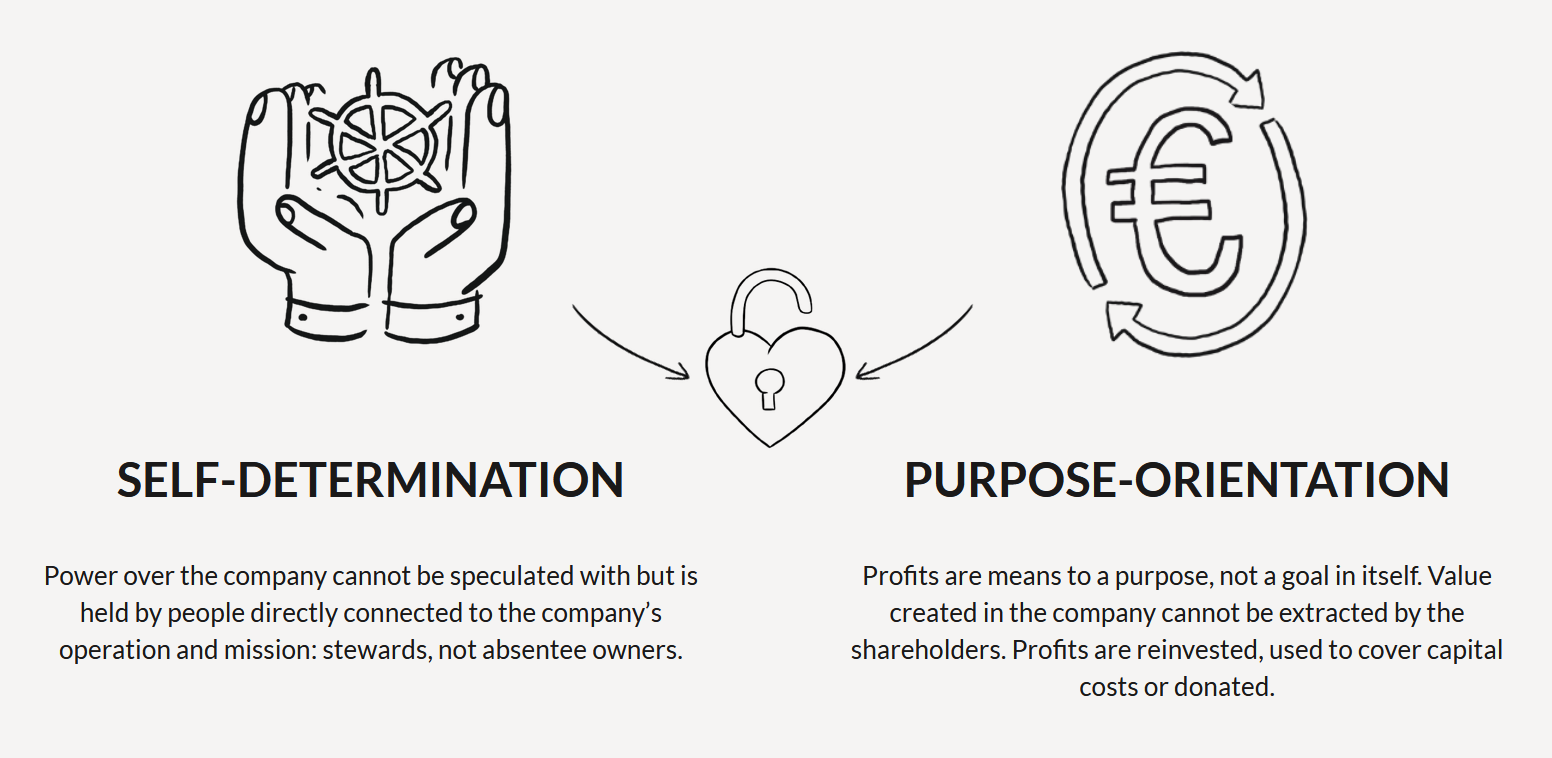
Company as a Commons

x402
Let's Talk Money - Interlinked

Home | Sovereign Tech Agency

The future is low-tech: lessons from the early 2000s ft. Jésabel DC | Config 2026
The Real Reason that Substack is Collapsing