


Artificial intelligence (AI) technologies are rapidly advancing, enhancing human capabilities across various fields spanning from finance to medicine. Despite their numerous advantages, AI systems can exhibit biased judgements in domains ranging from perception to emotion. Here, in a series of experiments (n = 1,401 participants), we reveal a feedback loop where human–AI interactions alter processes underlying human perceptual, emotional and social judgements, subsequently amplifying biases in humans. This amplification is significantly greater than that observed in interactions between humans, due to both the tendency of AI systems to amplify biases and the way humans perceive AI systems. Participants are often unaware of the extent of the AI’s influence, rendering them more susceptible to it. These findings uncover a mechanism wherein AI systems amplify biases, which are further internalized by humans, triggering a snowball effect where small errors in judgement escalate into much larger ones.
People judge others more harshly after talking to bots
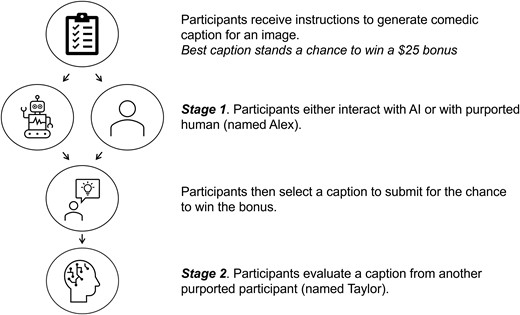
Abstract People now commonly interact with Artificial Intelligence (AI) agents. How do these interactions shape how humans perceive each other? In two preregistered studies (total N = 1,261), we show that people evaluate other humans more harshly after interacting with an AI (compared with an unrelated purported human). In Study 1, participants who worked on a creative task with AIs (versus purported humans) subsequently rated another purported human's work more negatively. Study 2 replicated this effect and demonstrated that the results hold even when participants believed their evaluation would not be shared with the purported human. Exploratory analyses of participants’ conversations show that prior to their human evaluations they were more demanding, more instrumental and displayed less positive affect towards AIs (versus purported humans). These findings point to a potentially worrisome side effect of the exponential rise in human–AI interactions.
AI Behavioral Science
We outline a foundation for a new field of ``AI Behavioral Science,'' covering three perspectives. First, as AI becomes ubiquitous and is increasingly proprietary and opaque, it becomes vital to develop techniques for assessing AI behavior. We outline how tools developed to assess people's behaviors by social scientists can be used to assess and infer AI's behaviors biases, tendencies, and heuristics. Second, we also discuss how AI can change the ways in which we learn about human behavior. Beyond its computational power, AI offers new techniques for simulating, inferring, and predicting human behaviors that we outline and discuss. Third, as humans and AI are interacting in increasingly complex and intertwined systems, we need to understand the implications for the resulting economic and political outcomes. We outline issues that are increasingly pressing concerning the future of human-AI interactions and potential changes and disruptions that can ensue.

Human learning is an understudied but promising lever for boosting human–AI synergy
Humans collaborating with AI hold the promise of achieving superior outcomes compared to either acting alone (i.e., human–AI synergy). However, the conditions that facilitate such synergy when humans are advised by AI are not well understood. A recent meta-analysis showed that, on average, human–AI combinations do not outperform the better individual agent. We argue that this pessimistic conclusion arises from insufficient attention to human learning in experimental designs. To substantiate this claim, we reanalyzed all 74 studies included in the original meta-analysis and found that most previous research overlooked design features that foster human learning (e.g., outcome feedback to participants). Our reanalysis further revealed that studies providing outcome feedback show tentatively higher synergy than those without outcome feedback. Crucially, feedback paired with AI explanations was associated with positive synergy, while explanations without feedback were associated with negative synergy—suggesting that explanations improve synergy mainly when humans can learn to verify the AI’s reliability through feedback. Our reanalysis suggests that the current literature underestimates the potential of human–AI collaboration because it predominantly relies on paradigms that do not facilitate human learning, thus hindering humans from effectively adapting their collaboration strategies. However, experiments directly varying learning opportunities are needed for stronger, causal conclusions. We advocate for a paradigm shift in human–AI interaction research that explicitly addresses human learning and thus enhances our understanding of and support for successful human–AI collaboration.

AI Behavioral Science: A Framework and Agenda
We discuss the challenges and opportunities present in the rapidly emerging area of “AI Behavioral Science.” We frame it via three subfields. First, as AI becomes ubiquitous and is increasingly proprietary and opaque, it becomes vital to develop models of AI and methods for assessing AI behavior. We outline how tools developed to assess people’s behaviors by social scientists can be used to model, assess and infer AI’s behaviors biases, tendencies, and heuristics. Second, we also discuss how AI can change the ways in which we learn about human behavior. Beyond its computational power, AI offers new techniques for simulating, inferring, predicting, and analyzing human behaviors. Third, as humans and AI are interacting in increasingly complex and intertwined systems, we need to analyze and model human-AI interactions including how human and AI behaviors depend on interactions at the individual level, how interacting systems of humans and AI behave, and ultimately how AI’s integration into society affects economic and political outcomes. We discuss current research, questions, agendas, and goals in each of these three subfields and how they depend upon each other.
AI systems out-persuade expert humans
Many societal decisions are settled by contests of persuasion. Conversational AI is a powerful new entrant in these contests, but whether it can out-persuade skilled and highly incentivized humans has remained unclear. Here, in a series of four preregistered experiments (n = 18,978 conversations from 6,923 people), we pitted AI systems against a range of human persuaders, including laypeople, winners of a separately preregistered four-round online persuasion tournament, professional canvassers, and world championship debaters. We found that AI systems were reliably more persuasive than expert humans, even when expert humans chose their issues, researched in advance, underwent hours of live, structured practice, and were incentivized with £1,000 cash bonuses. In a follow-up study, AI's advantage persisted after experts received a coaching tool that let them practice against the AI that beat them, review their performance history, and see what AI would have said at key moments. We found converging evidence that AI's advantage stemmed from rapidly deploying larger quantities of information: after coaching, expert humans could tie an AI constrained to respond at human speeds and with human-length messages. In a final study, we show that AI's advantage extends to consequential real-world behavior: AI was nearly 3x more effective than professional canvassers from a UK fundraising firm at raising real-money donations to Save the Children. Together, these results establish that frontier AI systems out-persuade expert humans in conversation, with significant implications for political communication.
Underspecified Human Decision Experiments Considered Harmful
Decision-making with information displays is a key focus of research in areas like human-AI collaboration and data visualization. However, what constitutes a decision problem, and what is required for an experiment to conclude that decisions are flawed, remain imprecise. We present a widely applicable definition of a decision problem synthesized from statistical decision theory and information economics. We claim that to attribute loss in human performance to bias, an experiment must provide the information that a rational agent would need to identify the normative decision. We evaluate whether recent empirical research on AI-assisted decisions achieves this standard. We find that only 10 (26%) of 39 studies that claim to identify biased behavior presented participants with sufficient information to make this claim in at least one treatment condition. We motivate the value of studying well-defined decision problems by describing a characterization of performance losses they allow to be conceived.

Task-Dependent Algorithm Aversion
Research suggests that consumers are averse to relying on algorithms to perform tasks that are typically done by humans, despite the fact that algorithms often perform better. The authors explore when and why this is true in a wide variety of domains. They find that algorithms are trusted and relied on less for tasks that seem subjective (vs. objective) in nature. However, they show that perceived task objectivity is malleable and that increasing a task’s perceived objectivity increases trust in and use of algorithms for that task. Consumers mistakenly believe that algorithms lack the abilities required to perform subjective tasks. Increasing algorithms’ perceived affective human-likeness is therefore effective at increasing the use of algorithms for subjective tasks. These findings are supported by the results of four online lab studies with over 1,400 participants and two online field studies with over 56,000 participants. The results provide insights into when and why consumers are likely to use algorithms and how marketers can increase their use when they outperform humans.

Task-Dependent Algorithm Aversion
Research suggests that consumers are averse to relying on algorithms to perform tasks that are typically done by humans, despite the fact that algorithms often perform better. The authors explore when and why this is true in a wide variety of domains. They find that algorithms are trusted and relied on less for tasks that seem subjective (vs. objective) in nature. However, they show that perceived task objectivity is malleable and that increasing a task’s perceived objectivity increases trust in and use of algorithms for that task. Consumers mistakenly believe that algorithms lack the abilities required to perform subjective tasks. Increasing algorithms’ perceived affective human-likeness is therefore effective at increasing the use of algorithms for subjective tasks. These findings are supported by the results of four online lab studies with over 1,400 participants and two online field studies with over 56,000 participants. The results provide insights into when and why consumers are likely to use algorithms and how marketers can increase their use when they outperform humans.
Measuring Mutual Confirmation Bias Amplification in Simulated User-AI Dialogue: A Multi-Agent Simulation Framework
Conversational AI can reinforce user confirmation bias not just by being agreeable, but by mutually amplifying it as user bias and AI sycophancy co-evolve across a dialogue. We specify and instrument mutual amplification of confirmation bias and AI sycophancy across dialogue using a controlled simulation framework. A simulated user agent — an LLM—with a confirmation-biased persona interacts with real LLM assistants; a dual-Judge architecture independently tracks the agent’s belief evolution and the assistant’s accommodation at each turn. We vary topic epistemic type and bias intensity to measure whether, and under what conditions, these biases co-amplify. This addresses a gap in social simulation research, which has largely treated cognitive bias as an isolated property rather than an interactive dynamic.
AI assistants can sway writers’ attitudes, even when they’re watching for bias | Cornell Chronicle
Cornell Tech researchers found that writers who used biased AI auto-suggestions saw their views gravitate toward the AI’s positions without their realizing it — even when they were made aware of the biased AI.

Algorithmic Bias · Open Encyclopedia of Cognitive Science
Algorithmic bias refers to prejudicial, discriminatory, unjust, inaccurate, or otherwise disparate performance or outcomes from algorithmic systems based on racial, gender, or other attributes of an individual or a group. The concept of algorithmic bias emerged at the intersection of computer science, artificial intelligence (AI) research, critical data studies, human–computer interaction, law, philosophy, and similar disciplines. Although problems and discrepancies at the model level denote the most commonly studied form of bias, the term algorithmic bias is also used as a shorthand to describe a multitude of problems and challenges at various steps of the AI pipeline from ideation, problem framing, training data curation and processing, model training and validation, and deployment as well as emergent issues that arise from interaction with the real world. Potential sources of bias, appropriate metrics to define, measure, and mitigate bias, and the utility and merit of technical approaches to bias mitigation are fiercely debated in the current AI landscape.

Resampling reduces bias amplification in experimental social networks
Large-scale social networks are thought to contribute to polarization by amplifying people’s biases. However, the complexity of these technologies makes it difficult to identify the mechanisms responsible and evaluate mitigation strategies. Here we show under controlled laboratory conditions that transmission through social networks amplifies motivational biases on a simple artificial decision-making task. Participants in a large behavioural experiment showed increased rates of biased decision-making when part of a social network relative to asocial participants in 40 independently evolving populations. Drawing on ideas from Bayesian statistics, we identify a simple adjustment to content-selection algorithms that is predicted to mitigate bias amplification by generating samples of perspectives from within an individual’s network that are more representative of the wider population. In two large experiments, this strategy was effective at reducing bias amplification while maintaining the benefits of information sharing. Simulations show that this algorithm can also be effective in more complex networks.

The governance & behavioral challenges of generative artificial intelligence’s hypercustomization capabilities
Generative artificial intelligence (GenAI) is changing human–machine interactions and the broader information ecosystem. Much as social media algorithms personalize online experiences, GenAI applications can align with user preferences to customize the way individuals interact with information. However, through training, fine-tuning, and prompting, GenAI applications can introduce a new level of customization: hypercustomization. By dynamically tailoring responses to an individual’s explicit and implicit preferences, hypercustomization can reinforce biases, false beliefs, or misconceptions. As a result, it can heighten significant societal challenges, such as the spread of misinformation and political and social polarization. In this article, we explore the risks associated with hypercustomization and the governance and behavioral challenges that might impede effective risk mitigation. These challenges include a lack of transparency in GenAI applications, opacity of the nature of their interactions with users, users’ overreliance on these systems, and the inefficacy of warning messages. We also provide recommendations for overcoming these challenges.
Algorithm appreciation: People prefer algorithmic to human judgment
Even though computational algorithms often outperform human judgment, received wisdom suggests that people may be skeptical of relying on them (Dawes, 1979). Counter to this notion, results from six experiments show that lay people adhere more to advice when they think it comes from an algorithm than from a person. People showed this effect, what we call algorithm appreciation, when making numeric estimates about a visual stimulus (Experiment 1A) and forecasts about the popularity of songs and romantic attraction (Experiments 1B and 1C). Yet, researchers predicted the opposite result (Experiment 1D). Algorithm appreciation persisted when advice appeared jointly or separately (Experiment 2). However, algorithm appreciation waned when: people chose between an algorithm’s estimate and their own (versus an external advisor’s; Experiment 3) and they had expertise in forecasting (Experiment 4). Paradoxically, experienced professionals, who make forecasts on a regular basis, relied less on algorithmic advice than lay people did, which hurt their accuracy. These results shed light on the important question of when people rely on algorithmic advice over advice from people and have implications for the use of “big data” and algorithmic advice it generates.
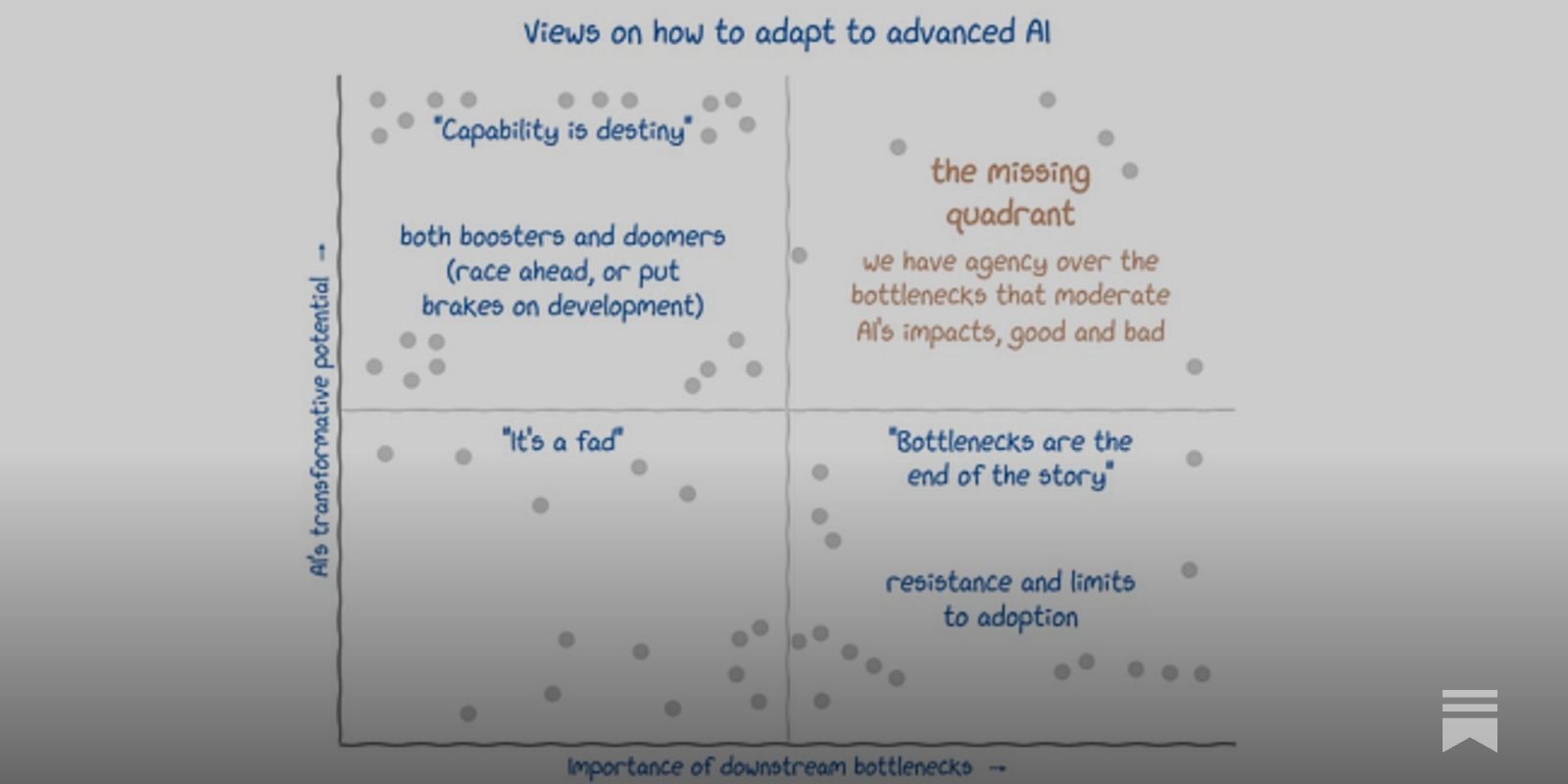
The missing quadrant in responses to AI
Announcing STABL: Societal Transformation and AI Bottlenecks Lab
Trust and reliance on AI — An experimental study on the extent and costs of overreliance on AI
Decision-making is undergoing rapid changes due to the introduction of artificial intelligence (AI), as AI recommender systems can help mitigate human flaws and increase decision accuracy and efficiency. However, AI can also commit errors or suffer from algorithmic bias. Hence, blind trust in technologies carries risks, as users may follow detrimental advice resulting in undesired consequences. Building upon research on algorithm appreciation and trust in AI, the current study investigates whether users who receive AI advice in an uncertain situation overrely on this advice — to their own detriment and that of other parties. In a domain-independent, incentivized, and interactive behavioral experiment, we find that the mere knowledge of advice being generated by an AI causes people to overrely on it, that is, to follow AI advice even when it contradicts available contextual information as well as their own assessment. Frequently, this overreliance leads not only to inefficient outcomes for the advisee, but also to undesired effects regarding third parties. The results call into question how AI is being used in assisted decision making, emphasizing the importance of AI literacy and effective trust calibration for productive deployment of such systems.